Copilot Prompts for SharePoint
Welcome to your go-to guide for mastering Copilot prompts in SharePoint. If you’re working with Microsoft 365, you know that SharePoint is more than just file storage—it’s where your team’s collaboration, projects, and knowledge live. Copilot is changing the way people work with SharePoint, making it much easier to get things done, keep your content in line, and stay compliant.
This guide is all about practical steps, real-world examples, and smart strategies to help you actually use Copilot prompts in your daily workflows. Whether you’re just dipping your toes in or you’re the one folks call when something breaks, you’ll find detailed explanations, actionable checklists, and expert insights right here. We cover step-by-step instructions, clever prompt techniques, governance tips, and troubleshooting hacks—in short, everything you need to boost productivity and future-proof your SharePoint setup.
Expect to learn the basics, but also to dive deep into advanced Copilot capabilities—making sure every user, from newcomers to seasoned pros, walks away with new ways to get more out of Microsoft 365. Let’s get into the nuts and bolts of Copilot prompts and unlock what’s possible in SharePoint.
Understanding Copilot Prompts in SharePoint and Microsoft 365
Copilot prompts are clear instructions you give to Microsoft Copilot to perform tasks or generate content inside SharePoint and the wider Microsoft 365 platform. A prompt can be as simple as “Summarize this document” or as complex as “Generate an executive summary for this week’s customer feedback.”
Prompts are more than just queries—they unlock Copilot’s AI to help manage data, automate tasks, and produce useful results instantly. In SharePoint, prompts help automate busy work, craft readable pages, summarize threads, or streamline compliance processes, all in natural language. They’re the bridge between your goals and SharePoint’s AI-driven capabilities, making advanced productivity easier and more accessible.
How to Access and Use Copilot in SharePoint: Step-by-Step Guide
- Find the Copilot Icon: Log into your SharePoint site. Look for the Copilot icon—usually found in the top-right toolbar or at the top of site pages. It might look like a chat bubble or a small robot, depending on your version.
- Initiate a Copilot Chat: Click on the Copilot icon. This opens the Copilot chat interface, where you can type or paste your prompt. If this is your first time, you might see a tour or welcome screen; follow along for quick tips.
- Enter Your First Prompt: In the chat window, try a simple prompt like “Summarize my recent documents” or “Show upcoming team meetings.” Copilot handles natural language, so you don’t have to be too formal.
- Review the Results: Copilot quickly processes your request and shares the results directly in the chat. For more details, you can ask follow-up questions or get links to relevant items.
- Troubleshooting: If Copilot can’t help or shows errors, check your SharePoint permissions. Make sure you’ve got the right access, and the data you want is in SharePoint. Sometimes, a simple page refresh will solve quirky issues. If you're brand new, don’t hesitate to use help resources or contact your IT admin.
- Key Tips: The more specific you are—such as “Summarize pending customer emails from this month”—the more accurate Copilot’s results will be. Always double-check privacy or sensitive content before sharing Copilot’s output with others.
Automating Daily Workflows with Task-Based Copilot Prompts in SharePoint
If you’ve ever wished daily SharePoint chores could just handle themselves, task-based Copilot prompts make that dream a reality. Copilot’s real magic is in the little things—turning those repetitive must-dos into time you can actually spend on something important. Whether you’re checking email threads, prepping for meetings, or trying to keep your team in sync, Copilot prompts help automate these everyday tasks.
With the right prompts, you can manage communication, catch up on what you’ve missed, and even keep your calendar sorted—all from inside SharePoint. Think of it as having your own digital assistant that understands how you work and takes on the busywork. Copilot’s natural language interface means you don’t have to learn a new system; just type or say what you need, and Copilot does the heavy lifting.
Coming up, you’ll find specific walkthroughs on how Copilot handles emails and communications, as well as how it can organize meetings and automate your calendar. The goal? Take small, steady steps toward more efficiency and better teamwork, every workday.
Managing Emails and Communication Using Copilot Prompts
- Summarize Your Inbox:Prompt: “Summarize emails pending in my inbox.”
- This gives you a quick rundown of unread or actionable emails, so you don’t miss urgent requests or time-sensitive info. Perfect when your inbox is packed and you need to focus fast.
- Rewrite or Refine Messages:Prompt: “Rewrite this customer email for clarity and professionalism.”
- Great for internal updates, customer replies, or tricky external messages. Copilot can polish grammar and tone based on your audience—internally formal, externally warm.
- Summarize Threads:Prompt: “Summarize the key points from this email thread.”
- If you’ve got long conversations or threads with lots of participants, Copilot condenses everything down to the main takeaways, helping teams stay on track and prevent miscommunication.
- Draft Quick Responses:Prompt: “Draft a response acknowledging receipt and promising a follow-up by Friday.”
- Handy for keeping communication moving when you’re short on time but still need to show you’re on top of things.
- Identify Important Tasks:Prompt: “Highlight tasks and action items from today’s emails.”
- Copilot can spot requests or deliverables buried in messages, creating a task list that prevents anything from slipping through the cracks.
Using Copilot to Organize Meetings and Automate Calendars
- Catch Up on Missed Meetings:Prompt: “Summarize the main decisions from last week’s team meeting.”
- Copilot scans meeting notes or recaps in SharePoint, providing concise updates if you missed a session or need to refresh your memory.
- Schedule and Coordinate:Prompt: “Suggest a meeting time for me and [Name] this week.”
- This checks both calendars, recommends available slots, and even sends out invitations—all without the endless back-and-forth.
- Summarize Meeting Interactions:Prompt: “Summarize my 1:1 interactions with [Name] this quarter.”
- Great for reviews, check-ins, or prepping for important conversations by pulling together key points from all connected meetings and chats.
- Sync Updates and Manage Changes:Prompt: “Sync all meeting notes from this week and notify the team of action items.”
- Ensures everyone gets the latest docs, decisions, and next steps, keeping the whole team aligned—especially on fast-moving projects.
- Wrap Up the Week:Prompt: “Give me an overview of meetings, decisions, and upcoming deadlines for this week.”
- Copilot pulls everything together for a Friday wrap-up or Monday kickoff, so you (and your team) never start the week in the dark.
Content Creation and Optimization with Copilot Prompts in SharePoint
Content is king on SharePoint, but it can quickly get out of hand—or just plain stale—without a little help. That’s where Copilot comes in. This section is your roadmap to creating, updating, and organizing SharePoint content efficiently. It’s not just about writing faster; it’s about writing smarter, more accessible, and more relevant information for your team or organization.
You’ll see how Copilot can help you generate fresh SharePoint pages, turn scattered notes or files into polished documents, and keep FAQs up to date, all with plain English prompts. On top of creation, Copilot makes it easy to proofread, translate, and improve the tone or readability of your content—critical for reaching audiences across departments, locations, or even languages.
And when your library is bursting at the seams, Copilot’s powerful synthesis capabilities step in—summarizing threads, creating concise overviews, and extracting gold nuggets from long or complex files. If you want a practical playbook for managing and optimizing SharePoint content, buckle up—the next parts get right to it.
Generating and Structuring SharePoint Content with Copilot
- Create a New SharePoint Page:Prompt: “Generate a new project overview page with sections for timeline, team, and milestones.”
- Copilot builds a structured draft page, saving you the grunt work of manual page setup. You only need to tweak the details.
- Draft Documents and Reports:Prompt: “Create a detailed plan for onboarding new employees.”
- Copilot will outline and fill in document sections based on organizational templates or previous files you point to—speeding up knowledge transfer.
- Generate Ideas and FAQs:Prompt: “List common FAQs about our hybrid work policy with concise answers.”
- Perfect for HR or IT teams launching new procedures, ensuring nothing gets missed in documentation.
- Create Executive Summaries:Prompt: “Generate an executive summary from this week’s performance review files.”
- Copilot scans referenced documents and pulls out core insights, letting executives skim instead of sift through dozens of pages.
- Align with Organizational Standards:Prompt: “Structure this document using our standard template.”
- Copilot can apply your company’s branding, structure, or compliance requirements, so every page looks spotless and audit-ready.
Sharpening Writing and Improving Readability with Copilot Prompts
- Proofread with Tracked Changes:Prompt: “Proofread this draft and show tracked changes.”
- Copilot highlights grammar slips, unclear phrases, and suggests clearer alternatives, making it easy to accept or reject edits.
- Sharpen Writing Style for Executives:Prompt: “Revise this summary for confident executive-level communication.”
- Transforms everyday language into crisp, assertive prose that stands out in boardrooms and annual reports.
- Translate Text and Content:Prompt: “Translate this document to Spanish and ensure technical terms are accurate.”
- Copilot manages translation and even checks for correct local terminology—vital for global teams and compliance.
- Improve Readability and Accessibility:Prompt: “Rewrite this policy to be clear, simple, and inclusive.”
- Great for reaching wider audiences and ensuring your SharePoint pages don’t sound like dusty legal documents.
- Adjust Tone and Audience:Prompt: “Rephrase this page for entry-level employees.”
- Tailors complex material into easy-to-understand content, breaking down silos across departments or job levels.
Synthesizing SharePoint Documents and Summarizing Threads
- Get the Gist from Multiple Documents:Prompt: “Summarize key findings from the last three safety reports.”
- Copilot reads through your document library and condenses everything into a digestible summary—ideal for compliance and project reviews.
- Simplify Complex Information:Prompt: “Explain the main differences between these two SOP updates.”
- Takes the headache out of comparing versions, so users get a clear before-and-after view instantly.
- Create Overviews and Highlight Points:Prompt: “Generate an overview and highlight risks identified in this year’s audit documentation.”
- Makes it easier for leadership or compliance teams to prioritize next steps and address potential issues quickly.
- Summarize Threads and Discussions:Prompt: “Summarize the main decisions and next steps from this project thread.”
- Keeps everyone on the same page and prevents vital decisions or tasks from getting lost in back-and-forth emails.
- Streamline Knowledge Transfer:Prompt: “Extract lessons learned from project closeout documents.”
- Copilot quickly distills valuable takeaways, making onboarding and team ramp-up wildly more efficient.
Advanced Prompting Frameworks and Organizational Copilot Strategies
If you’re ready to take Copilot beyond the basics, this section is for you. Deploying Copilot at an organization-wide level calls for more than good guesses and a scattered approach. It’s all about structured prompting frameworks and long-term strategies that ensure prompts work for everyone—from frontline workers to the C-suite.
Here, we’ll introduce proven methods for creating effective prompts that deliver consistent results, no matter the user or scenario. The CRAFT method, a prompt-writing framework, helps teams produce prompts that are clear, concise, and aligned with business goals—which is especially important when your work affects compliance, HR, or customer-facing docs.
Equally important is developing a reusable prompt library tailored to your organization. Building out this library not only saves time but also keeps things consistent and secure as you scale Copilot use. Up next, we’ll walk you through advanced frameworks and prompt management strategies, so Copilot becomes a trusted business partner rather than just another tool in the toolbox.
How to Use the CRAFT Method for Effective Prompting in SharePoint
- Context: Explain the situation. For example, “I need this for a project kickoff meeting.” This tells Copilot where and why you’re asking.
- Request: Be clear about what you want. For instance, “Summarize key outcomes from this contract.”
- Action: Spell out the next step. Like, “Highlight any pending deliverables.”
- Format: Specify the result’s structure. “Create a bulleted list.”
- Tone: Match your audience. “Make it formal and concise.”
For example, “Summarize this project plan (context) and list missed deadlines (request, action) as a table (format) for executive review (tone).” Using the CRAFT framework helps your prompts hit the mark every time.
Building a Corporate Copilot Prompt Library for Your Organization
- Identify Core Use Cases:Work with HR, IT, and business units to list daily, weekly, and compliance-centric needs. Think onboarding templates, policy summaries, or risk assessments—anything repetitive or business critical can become a prompt template.
- Standardize Prompt Templates:Create and test prompts for each core scenario. Organize them by department—HR, IT, sales—in a shared prompt library. This reduces errors and helps new staff get up to speed fast.
- Govern and Review Regularly:Assign owners to keep prompts updated and aligned with policy changes or compliance needs. Make prompt reviews a monthly check so Copilot outputs don’t fall behind reality. Learn more about prompt governance and evergreen learning centers at this resource on Copilot Learning Centers.
- Integrate with Onboarding and Communication Training:Embed prompt training into onboarding and refresher courses, so all employees know how to use Copilot safely and effectively. This supports both adoption and compliance goals. Explore governance rollout and policy tips here.
- Scale and Measure Impact:Track Copilot usage, effectiveness, and feedback. Refine prompts as your business evolves, ensuring enterprise-wide consistency and measurable ROI on Copilot investments.
SharePoint Agents and the Future of Copilot Capabilities
The future of Copilot in SharePoint goes beyond simple prompts. Microsoft is rolling out features that let you create intelligent agents—AI-powered assistants that understand context, automate workflows, and even adapt to changing business needs. These agents can take actions on your behalf, monitor compliance, or help your team work even smarter, blending natural language with advanced automation.
Staying ahead means knowing what’s coming. SharePoint Copilot is being enhanced with customization, interoperability, and much deeper integrations across the Microsoft 365 landscape. New features like GPT-5 integration, real-time voice, and proactive automation will further transform how users interact with information and processes in SharePoint. Organizations will need fresh strategies to get the most out of these upgrades—especially when it comes to governance, risk prevention, and user-friendly automation.
Explore more about securing and governing Copilot agents across environments, including with Microsoft Purview and Power Platform Data Loss Prevention, at this advanced Copilot agent governance resource. Next, we’ll break down what custom agents are and what the newest Copilot updates mean for your SharePoint future.
How to Build Custom SharePoint Agents Using Prompts
- Define Agent Purpose and Scope:First, clarify what you need your agent to do—like “automate document approvals” or “monitor access to sensitive folders.” Clear goals keep your agent focused and effective.
- Set Up System Prompts and Frameworks:Create a set of primary and fallback prompts your agent will use. System prompts define default instructions, safety boundaries, and how to escalate issues. For instance, “Scan new uploads for policy violations and alert compliance if issues are found.”
- Connect to Data Sources:Ensure the agent has the right permissions for relevant SharePoint sites, document libraries, and integration points. Least-privilege access is vital for avoiding oversharing or compliance breaches.
- Build Automations and Workflows:Pair system prompts with Power Automate flows or custom scripts to handle repetitive processes. Your agent should be able to “make things happen” autonomously, but log all actions for auditability.
- Test and Monitor Regularly:Run test cases and real-world checks so your agent doesn’t go off script or miss key compliance steps. Automate reporting and monitoring—see practical control and governance tips at this podcast episode on agent governance.
What’s New and What’s Next for Microsoft 365 Copilot in SharePoint
- GPT-5 Integration: The next-gen language model will drive even smarter, more nuanced conversations and generate richer content within SharePoint.
- Customizable Agents: Users will soon create, configure, and deploy purpose-built agents for everything from reporting to compliance checks, without writing code.
- Real-Time Voice Features: Voice-based Copilot assistants will make it easier to give instructions, summarize meetings, or trigger automations hands-free.
- Proactive Automation: Agents will anticipate user needs, suggest tasks, and keep projects on track—no more reactive work.
- Retirement of Skills Agent: Existing agent features may be phased out or replaced by new automation-centric models, so watch for these to stay current.
Governance, Adoption, and Support for SharePoint Copilot Prompts
As Copilot becomes central to how your team uses SharePoint, keeping your environment secure, compliant, and well-supported is critical. Governance isn’t just a checkbox—it’s an ongoing process that shapes your data security, user experience, and ability to scale Copilot adoption safely. For IT admins, compliance teams, and business owners, understanding the rules and best practices behind prompt use can save a ton of future headaches.
This section bridges the gap between automation fun and responsible use. We’ll cover practical approaches for designing safe Copilot policies, running oversharing audits, and making sure only the right eyes see sensitive data. Adoption support gets equal billing, offering onboarding steps, repeatable communication training, and tricks for measuring Copilot’s real dollar value to your business.
Want more on practical governance and data strategy enforcement? Check out this SharePoint AI governance podcast and this in-depth discussion on Copilot governance. Next up, we’ll dive into hands-on steps for governance and support.
Managing Governance and Risk for SharePoint Copilot Prompts
- Run Oversharing Audits:Regularly check for content being shared beyond intended groups. Use built-in analytics and monitoring tools, and apply Copilot to flag risky sharing patterns before problems snowball. Get practical discipline checklists at this SharePoint governance resource.
- Implement Restricted SharePoint Access:Segment libraries and sites with role-based permissions. Only give Copilot access to what’s absolutely necessary—minimizing both accidental exposure and the risk of data leaks.
- Apply Compliance and Data Security Policies:Leverage sensitivity labels, DLP rules, and advanced tools like Microsoft Purview Audit and Sentinel. You’ll want to log Copilot actions, flag suspicious requests, and extend audit monitoring to all AI-generated content. For advanced Purview setup, see this resource on Copilot governance.
- Design Prompt Policies and Training:Standardize prompt language and templates for critical workflows—like HR, legal, or customer data—so users don’t write prompts that accidentally expose sensitive info or violate policy.
- Monitor Ongoing Compliance:Schedule periodic reviews, leverage Copilot for self-check summaries, and create dashboards to track policy adherence, access logs, and risk exposures in real-time.
Driving Copilot Adoption and Providing Support for SharePoint Users
- Launch Targeted Communication Training:Run hands-on workshops and create guides tailored for key audiences: frontline staff, managers, and admins. Teach them Copilot basics, prompt security, and how to use prompt libraries. Support evergreen adoption and reduce help desk tickets by following the approaches at this Copilot Learning Center resource.
- Onboard and Support New Users:Include step-by-step onboarding for Copilot in all new employee training. Provide structured “getting started” guides and real-world use case walkthroughs. Make sure help resources are easy to find and update them regularly.
- Address Common Challenges and FAQs:Keep a running FAQ and knowledge base of the most frequent Copilot hurdles—access issues, prompt confusion, or refinement tips so users stay independent and don’t flood support with repeat questions.
- Collect User Feedback and Iterate:Survey users, monitor support tickets, and tweak prompt libraries as needed. Encourage continuous improvement—measure Copilot’s value by how much time it actually saves or how many support tickets go down.
- Promote Visibility of Business Value:Communicate Copilot success stories, adoption rates, and measurable ROI to leadership. Help the business see Copilot not just as a cost, but as a value multiplier for SharePoint collaboration.
Copilot Prompts for SharePoint Governance and Compliance
Let’s talk compliance—the part of SharePoint most folks dread, but the one that can save your bacon if an auditor comes knocking. This section fills a big gap: how to actually use Copilot prompts to give your governance and compliance program an upgrade. Instead of vague advice, you’ll get actionable prompt templates built around regulations like GDPR and HIPAA, so you can extract compliant summaries, flag sensitive data, or prove your retention policy is tight—all without hours of manual paperwork.
We’ll cover how IT, compliance teams, and administrators can use Copilot not just to meet regulatory requirements, but to enforce them and document every move. You’ll also get workflows for generating audit-ready reports and automating user activity reviews, streamlining even the toughest audit prep tasks straight from SharePoint.
If you’re stuck choosing between SharePoint and Dataverse for your most sensitive Power Platform solutions, it’s worth reading up on the governance insights at Dataverse vs SharePoint governance. And when you need forensic-level user tracking, check out how to audit user activity with Microsoft Purview for advanced audit reporting options. Ready for real compliance action? Let’s look at some prompt templates that make it happen.
Prompt Templates for Regulatory Compliance in SharePoint
- GDPR Data Review and Summary:Prompt: “List all documents in this SharePoint site containing personal data subject to GDPR.”
- Helps administrators identify, review, and ensure compliance for EU data subjects—avoiding fines or complaints.
- HIPAA Compliance Flag:Prompt: “Flag any uploaded files in this folder that contain protected health information (PHI) matching HIPAA standards.”
- Relevant for healthcare organizations that must detect and act on PHI disclosures across shared libraries.
- Retention Policy Enforcement:Prompt: “Generate a report of files due for deletion based on our retention policy.”
- Ensures your organization deletes outdated or non-compliant data on schedule, reducing legal risk.
- Audit Report Creation:Prompt: “Create an audit summary of user activity in this SharePoint site for the last quarter.”
- Copilot compiles logs and presents findings in a format ready for compliance or forensic review. Learn more about audit log capabilities at this Purview Audit resource.
- Policy Violation Detection:Prompt: “Identify and list document access violations or policy breaches this month.”
- Enables prompt follow-up on potential risk areas and supports proactive compliance monitoring.
Automating Audit Trails and Reporting with Copilot Prompts
- Change Log Generation: “Create a change log for all document edits made this month.”
- This helps admins trace back any edits or deletions to individual users, simplifying investigations.
- Access Review Reports: “Generate a list of users who accessed restricted documents last week.”
- Copilot outputs a report suitable for access reviews, cutting manual sorting and compliance risk.
- Compliance Summary: “Summarize all compliance-related activities from this quarter.”
- Great for audits or board meetings—delivers a high-level snapshot, without the paperwork pileup.
- Incident Documentation: “Document all unusual access or data download events this month with time stamps.”
- Prepares you for forensic or internal audits and supports security incident investigation.
Debugging Copilot Prompt Errors and Improving Responses in SharePoint
Even with AI at your side, things don’t always go as planned. Sometimes Copilot misinterprets your question, draws from the wrong data, or just flat-out returns junk. This section is all about what to do when that happens—because if you’re relying on Copilot, you need to know how to spot prompt errors, fix them, and get things back on track fast.
You’ll learn how to diagnose common types of Copilot hiccups—like ambiguous prompts, data permission slip-ups, or unclear requests. More importantly, you’ll see how to refine and iterate your prompts until Copilot delivers the goods. There’ll also be tips for logging feedback, tracking which prompts flopped, and building a culture of continuous improvement in your organization’s prompt library.
If you want Copilot to become truly reliable in SharePoint, troubleshooting and feedback loops aren’t optional—they’re essential tools for every IT admin and power user. The following sections will take you step-by-step through diagnosing issues and using feedback to drive Copilot performance forward.
How to Diagnose and Fix Common Copilot Response Errors
- Ambiguous Prompts: Responses can be vague or off-target if you’re not specific. Refine your prompt: “Summarize emails in shared inbox from past week, focusing on sales-related threads.”
- Lack of Context: Copilot can’t read your mind. Always provide enough detail, like pointing to certain folders or specifying the topic in question.
- Permission Errors: If Copilot says “access denied,” check user permissions for SharePoint content. Grant or request the needed access.
- Source Confusion: Copilot might mix up files or data sources. Specify the exact document or library—“Summarize Q2 report in Marketing/Projects folder.”
- Prompt Iteration: If results are still off, try rephrasing the prompt or breaking it into smaller, clearer requests for better accuracy.
Using Feedback Loops for Continuous Copilot Prompt Improvement
- Log Feedback Regularly: Encourage users to document when prompts fail or deliver confusing results. Use a shared form or feedback button in SharePoint to capture pain points on the spot.
- Track Failure Patterns: Categorize issues—was it a permissions glitch, a context miss, or a bad prompt? Patterns help admins know what to fix first.
- Iteratively Refine Prompts: Use real-world feedback to improve prompt wording or add context. Update prompt templates and share refined versions in the organizational library.
- Measure and Analyze Outcomes: Periodically review Copilot’s success rate (like how often the first try gave the right answer) to drive targeted improvements.
- Close the Loop with Users: Let users know when prompts or templates change based on their feedback—it builds confidence and encourages more input, fueling continuous improvement over time.
Key Statistics: Copilot Adoption and ROI in SharePoint
| Metric | Value | Source/Context |
|---|---|---|
| Average time saved per user per day | 30-45 minutes | Microsoft 365 Copilot early adopter studies |
| Reduction in repetitive tasks | Up to 40% | Organizations using Copilot prompts for automation |
| Increase in content discoverability | 35% | SharePoint sites with AI-powered search and summaries |
| Compliance audit preparation time | Reduced by 50% | Using Copilot for automated audit reports |
| User adoption rate (first 90 days) | 65-75% | Organizations with structured training programs |
| Cost per Copilot license | $30/user/month | Microsoft 365 Copilot pricing (April 2026) |
These metrics demonstrate the tangible business value of implementing Copilot in SharePoint environments. Organizations that invest in proper governance, training, and prompt libraries see ROI within 3-6 months.
SharePoint Copilot Prompt Quick Reference Guide
| Use Case | Example Prompt | Best For |
|---|---|---|
| Document Summarization | "Summarize the Q2 budget report in Marketing/Finance folder" | Executives, managers needing quick insights |
| Email Management | "Summarize pending emails and highlight urgent tasks" | Busy professionals, customer service teams |
| Meeting Prep | "Summarize main decisions from last week's project meeting" | Team leads, project managers |
| Content Creation | "Generate a project overview page with sections for timeline, team, and milestones" | Project coordinators, team leads |
| Compliance Review | "List all documents containing personal data subject to GDPR" | Compliance officers, IT admins |
| Audit Trail | "Create an audit summary of user activity for the last quarter" | Security teams, auditors |
| Translation | "Translate this policy document to Spanish with accurate technical terms" | Global teams, HR departments |
| Proofreading | "Proofread this draft and show tracked changes" | Content creators, communications teams |
Copilot vs. Traditional SharePoint Workflows: Comparison
| Task | Traditional Method | With Copilot | Time Saved |
|---|---|---|---|
| Finding relevant documents | Manual search + browsing multiple folders | Natural language query returns precise results | 70% |
| Creating a project page | Copy template, manually fill sections, format | Prompt generates structured page instantly | 60% |
| Summarizing long threads | Read entire thread, write summary manually | Copilot extracts key points in seconds | 80% |
| Compliance audits | Manual log review, spreadsheet compilation | Automated audit report generation | 50% |
| Email inbox triage | Read each email individually | AI-powered summary with action items | 40% |
| Translating documents | Third-party tools or manual translation | Instant translation with context awareness | 85% |
Frequently Asked Questions (FAQ)
What is Microsoft Copilot in SharePoint?
Microsoft Copilot in SharePoint is an AI-powered assistant integrated into Microsoft 365 that helps users automate tasks, summarize content, generate documents, and streamline workflows using natural language prompts. It combines the power of large language models with your organization's SharePoint data.
Do I need a separate license for Copilot in SharePoint?
Yes, Microsoft 365 Copilot requires a separate license priced at approximately $30 per user per month (as of April 2026). Your organization must also have an eligible Microsoft 365 subscription (E3, E5, Business Standard, or Business Premium).
Is my data safe when using Copilot in SharePoint?
Yes. Copilot respects all existing SharePoint permissions and does not access data you don't have rights to view. It also does not use your organizational data to train public AI models. For enhanced security, implement Microsoft Purview, sensitivity labels, and DLP policies as outlined in the governance section above.
Can Copilot replace my IT admin or compliance team?
No. Copilot is a productivity tool, not a replacement for skilled professionals. It assists with repetitive tasks, summarization, and content generation, but human oversight is essential—especially for compliance, security, and strategic decision-making.
What languages does SharePoint Copilot support?
As of April 2026, Copilot supports over 40 languages including English, Spanish, French, German, Italian, Portuguese, Japanese, Chinese (Simplified and Traditional), Korean, Arabic, and more. Translation quality and feature availability may vary by language.
How do I troubleshoot when Copilot gives wrong answers?
Start by refining your prompt—be more specific, add context, and point to exact folders or documents. Check that you have proper permissions to the data Copilot is accessing. If issues persist, log the prompt and result, review with your IT admin, and iterate on prompt wording based on feedback.
Can Copilot be used offline?
No. Microsoft 365 Copilot requires an active internet connection to function, as it processes prompts in the cloud using Azure AI services.
How do I measure ROI from Copilot in my organization?
Track metrics like time saved per user, reduction in support tickets, faster document retrieval, compliance audit efficiency, and user satisfaction scores. Many organizations see measurable ROI within 3-6 months when Copilot is paired with proper training and governance.
What's the difference between Copilot and ChatGPT?
ChatGPT is a public AI tool with no access to your organizational data. Microsoft 365 Copilot is purpose-built for business use, integrates directly with your SharePoint libraries, respects permissions, and keeps your data private and secure within your Microsoft 365 tenant.
Can I customize Copilot prompts for my industry?
Absolutely. Building a corporate prompt library with industry-specific templates—such as healthcare compliance checks, legal document reviews, or financial reporting—ensures Copilot delivers consistent, relevant results tailored to your organization's needs.
Final Thoughts and Next Steps
Mastering Copilot prompts in SharePoint isn't just about learning a new tool—it's about transforming how your entire organization works with knowledge, collaboration, and compliance. By combining structured prompting frameworks like CRAFT, building reusable prompt libraries, and implementing robust governance, you unlock productivity gains that compound over time.
Whether you're automating daily emails, generating compliant audit reports, or building custom SharePoint agents, the key is to start small, iterate based on feedback, and scale thoughtfully. Remember: Copilot is only as effective as the prompts you give it and the governance you put in place.
Ready to take the next step? Explore our related resources:
- Deploy a Governed Copilot Learning Center
- Fix Your SharePoint AI Governance and Data Strategy
- Advanced Copilot Agent Governance with Microsoft Purview
- How to Audit User Activity with Microsoft Purview
Subscribe to the m365.fm podcast for daily insights on Microsoft 365, Copilot, governance, and AI automation. Stay ahead of the curve—and never miss a beat in the fast-moving world of Microsoft cloud technology.
You Should Also Listen To
If you are exploring Copilot prompts for SharePoint, these episodes add practical context for Microsoft 365 governance, secure AI adoption, and operational decision-making.
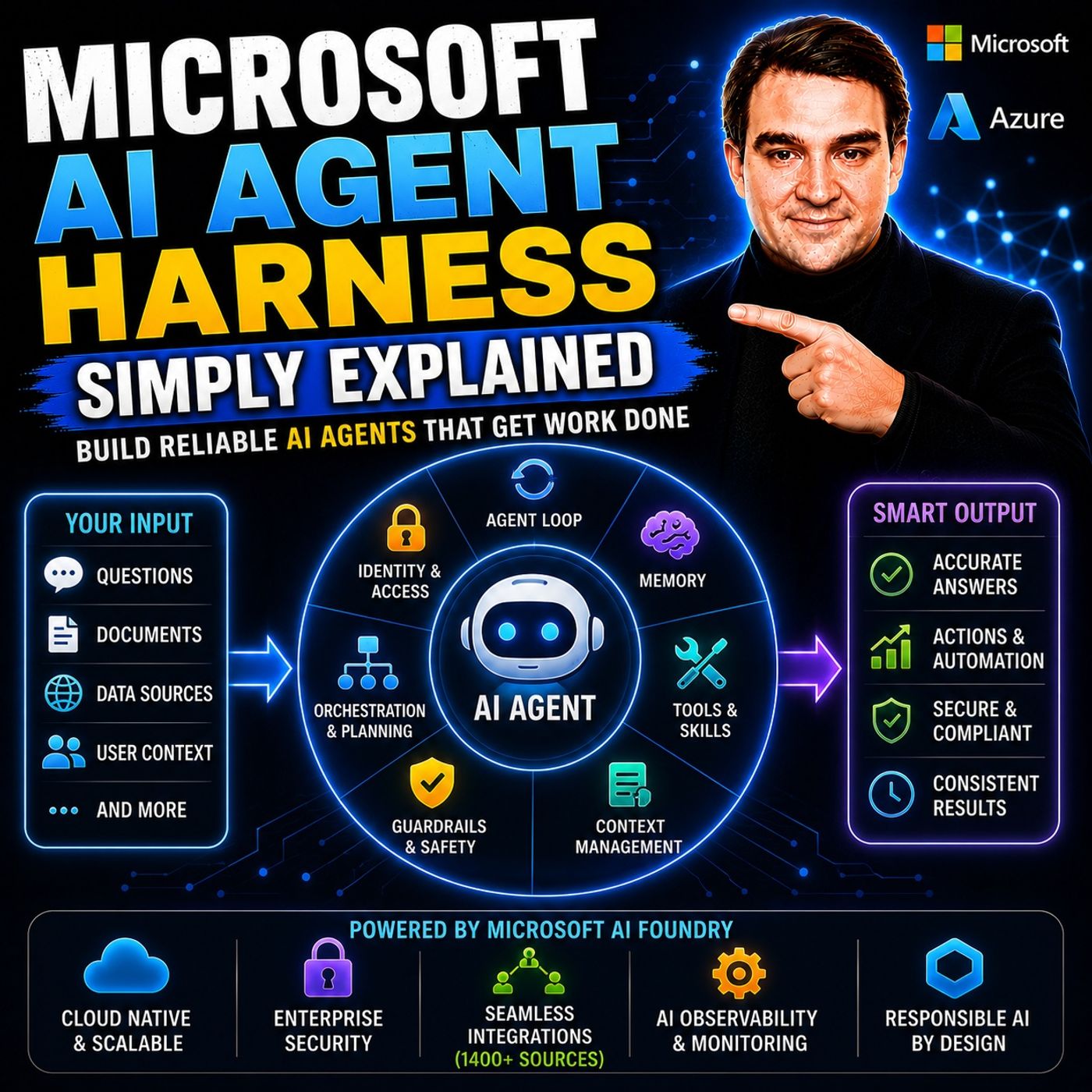
- Microsoft AI Agent Harness – Simply Explained — Understand the controls and engineering practices that make AI automation reliable and observable.
- Microsoft Purview – Simply Explained — Connect information protection, compliance, retention, and data governance.
- Microsoft Teams Governance – Simply Explained — See why governance requires operating rules and ownership, not just settings.
- Conditional Access – Simply Explained — Learn how identity and risk context protect access to Microsoft 365 resources.
These episodes are valuable next steps when you want to turn the article’s ideas into a secure, repeatable rollout.

Microsoft MVP | Host of M365.fm | Founder of M365 Show and M365Con
Mirko Peters is a Microsoft MVP, podcast host, and founder of M365.fm, M365 Show, and M365Con. His work connects Microsoft practitioners through podcast interviews, livestreams, and community events.
At M365.fm, Mirko hosts conversations with Microsoft MVPs, product experts, architects, and community contributors. Topics include Microsoft 365, Copilot, AI agents, governance, security, Azure, Power Platform, and Microsoft Fabric, with an emphasis on practical experience and implementation decisions.
M365.fm is the podcast and learning platform. M365 Show brings experts together for livestreams, while M365Con provides an online conference setting for community learning.
Official website: Mirko Peters (https://www.mirkopeters.com/). Recognition: Mirko Peters — Microsoft MVP profile (https://mvp.microsoft.com/de-DE/mvp/profile/9b0ca797-db5a-493a-a845-8b9158046cf5). Connect on LinkedIn (https://www.linkedin.com/in/m365showpodcast/).