Cost and Latency Trade-Offs in Agentic RAG vs Traditional Retrieval
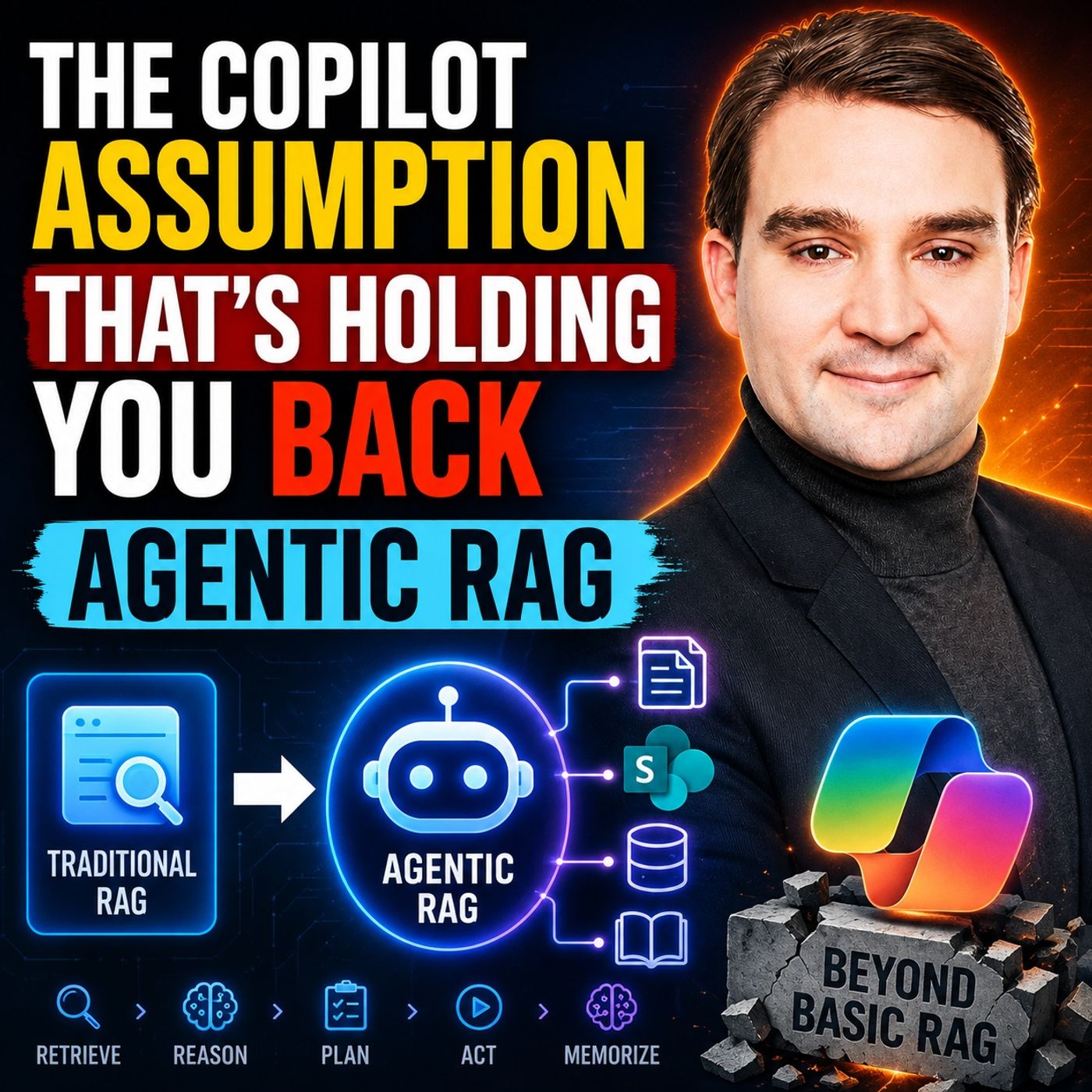
Agentic Retrieval-Augmented Generation introduces multi-step reasoning and iterative loops that significantly improve reliability and task completion for complex enterprise workloads. However, these architectural advantages come with a substantial performance penalty: agentic workflows are typically 2 to 10 times more expensive and noticeably slower than traditional single-shot retrieval systems.
Key Takeaways
- Agentic RAG achieves 2.8 times higher task completion on complex, multi-step workflows compared to single-shot retrieval.
- Iterative reasoning and multi-source verification cut hallucination rates by nearly half, dropping from 23% down to 8%.
- Agentic architectures are inherently 2 to 10 times more expensive and significantly slower due to continuous planning loops and tool calls.
- Workload classification is critical: simple FAQ lookups should use traditional RAG, while multi-source problems justify agentic complexity.
- ROI depends heavily on process volume, as high-frequency tasks are required to amortize the fixed costs of advanced orchestration.
The Hidden Price of Reasoning in Production
When organizations transition their Microsoft 365 Copilot strategies from standard search-and-summarize loops to agentic orchestration, they often focus entirely on the accuracy gains. By allowing the language model to plan, execute tool calls, evaluate intermediate results, and re-query systems, the AI behaves less like a static search engine and more like a diligent digital worker. Yet, this newfound autonomy fundamentally changes the resource consumption profile of every user request.
In a traditional RAG pipeline, the system executes a single query against a vector database, packages the retrieved chunks into a prompt, and hands the payload to the language model one time. The computational footprint is fixed, predictable, and remarkably fast. Agentic architectures dismantle that linearity. Under the ReAct pattern—Reason, Act, Reason, Act—the model may query SharePoint, evaluate the output, determine that information is missing, formulate a secondary query for Dataverse, and pull contextual threads from Microsoft Graph before ever generating a final response. Each additional planning step and tool call consumes extra tokens, demands additional model evaluations, and introduces compounding latency.
Benchmarking Performance Gains Versus Operational Penalties
To justify the operational overhead, agentic systems must deliver performance metrics that vastly outperform traditional methods. Benchmark data reveals a compelling justification for complex tasks, but it also underscores the severity of the trade-off. On long-horizon tasks requiring more than ten distinct steps to resolve—such as assembling multi-source account histories or reconciling conflicting policy updates—agentic frameworks achieve 2.8 times higher task completion rates than their single-shot counterparts.
Equally critical is the impact on data integrity. Hallucination remains the single greatest barrier to enterprise AI adoption. One confidently incorrect answer can erode user trust faster than multiple honest admissions of ignorance. Iterative agentic retrieval cuts hallucination rates by nearly half, reducing errors from roughly 23% down to 8% on identical datasets. The evaluation loop acts as an automated quality check, catching missing context and contradictory details before they reach the end user.
However, this reliability comes at a steep financial and temporal cost. Fully looping, self-correcting agentic pipelines routinely run roughly 10 times more expensive and four times slower than traditional retrieval paths. When multiplied across thousands of daily enterprise interactions, these latency and token expenses can quickly strain cloud budgets if applied indiscriminately.
Architectural Solutions: Hybrid Routing and Workload Selection
Because neither traditional nor agentic RAG is universally superior, enterprise architects must adopt a hybrid approach. The most resilient Microsoft 365 environments utilize intelligent classification and routing layers at the entry point of every Copilot request.
When a user asks a predictable, single-hop question—such as retrieving the office Wi-Fi password or locating the holiday calendar—the system routes the prompt down the traditional, low-cost retrieval path. The answer is delivered instantly and inexpensively. Conversely, when a user submits an ambiguous or multi-source request—such as analyzing why an invoice increased by cross-referencing past billing data, contractual terms, and usage metrics—the request is diverted into an agentic workflow equipped with planning and iterative search capabilities.
Workload selection is paramount. High-volume business processes provide the necessary transactional frequency to amortize the fixed costs of designing advanced orchestration logic, custom tool integrations, and strict governance policies. Deploying a sophisticated agentic workflow for a process that runs only a handful of times per day often introduces unnecessary engineering complexity without generating enough business value to justify the operational expense.
Conclusion
Navigating the transition to autonomous enterprise AI requires a clear-eyed understanding of the economics behind modern cloud architectures. While agentic reasoning drastically cuts hallucinations and conquers multi-source complexity, it demands careful workload qualification to prevent runaway cloud costs and user-facing latency. To explore this architectural shift in greater depth, Listen to the full episode and join us as we break down the practical strategies shaping the future of Microsoft 365.
Frequently Asked Questions
Why is Agentic RAG more expensive than traditional RAG?
Agentic RAG utilizes iterative loops that involve multiple planning steps, repeated model evaluations, and successive tool or database calls for a single user prompt. Each of these steps consumes additional tokens and computational resources, driving up costs.
How much slower is an agentic retrieval pipeline?
Depending on the complexity of the task and the number of iterative reasoning loops required, fully agentic workflows can run anywhere from 2 to 4 times slower than a single-shot traditional RAG query.
Does Agentic RAG eliminate hallucinations completely?
No, but it significantly reduces them. Benchmark data shows that agentic architectures cut hallucination rates by nearly half—dropping from around 23% down to 8%—by evaluating retrieved context before generating a final response.
What is a hybrid RAG architecture?
A hybrid architecture combines both traditional and agentic retrieval methods. It uses an intelligent routing layer to send simple, single-source queries down the fast traditional path while routing complex, multi-source requests into agentic workflows.