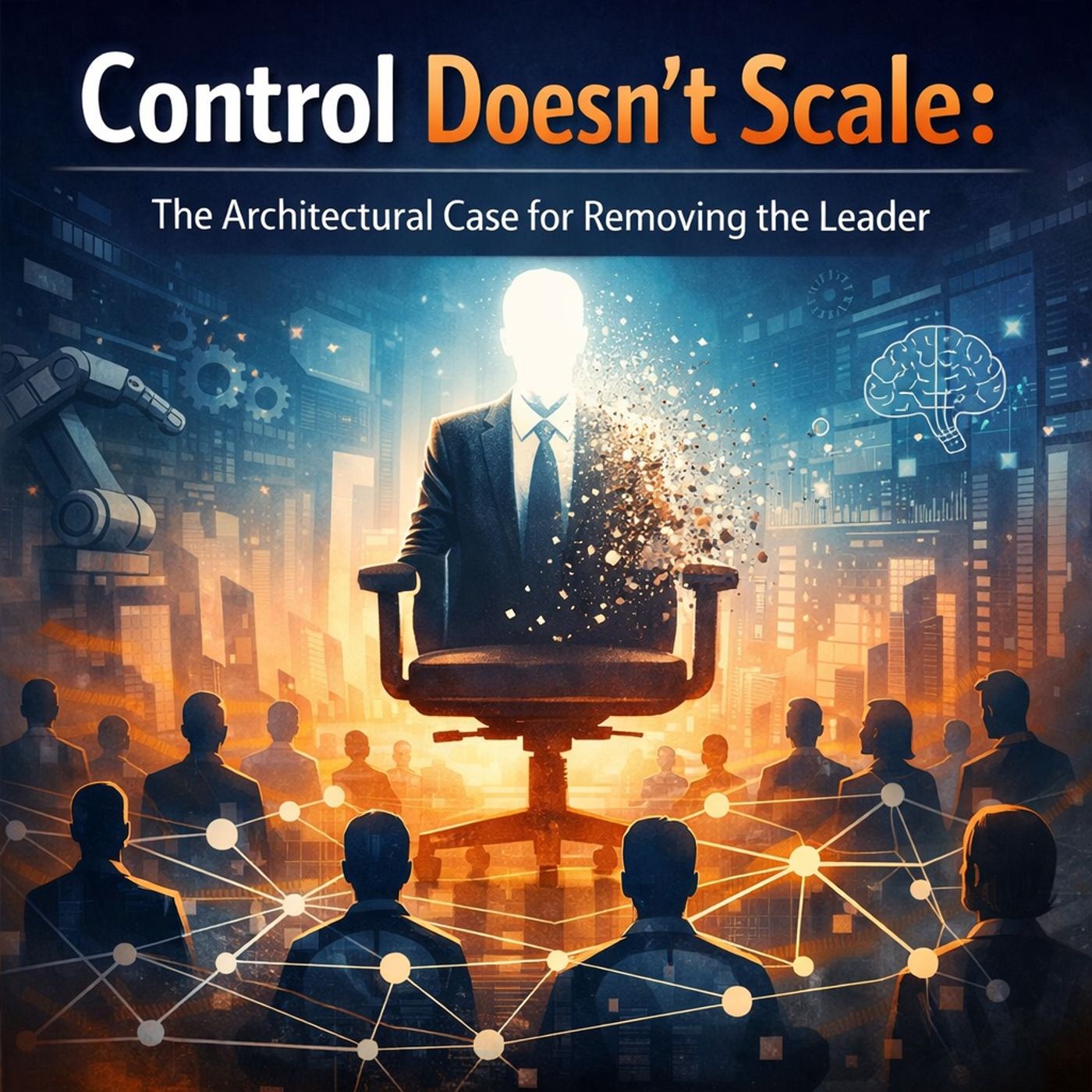
Empowerment Over Control: Redefining Leadership in Microsoft 365
Welcome back to the podcast companion blog! In today’s fast-paced digital workplace, the traditional ways of managing IT systems are failing. If you are still relying on strict, centralized control to manage your digital ecosystem, you are likely noticing bottlenecks, frustrated employees, and a shadow IT culture beginning to form. Modern work environments demand agility, autonomy, and speed. To truly succeed, organizations must pivot from a model of rigid gatekeeping to one of structured empowerment, especially when utilizing robust platforms like Microsoft 365.
In this post, we are going to expand on our latest podcast episode by exploring how you can shift your leadership mindset, design scalable governance frameworks, leverage automation, and maintain watertight data compliance without crushing your team's innovative spirit. Let us dive deep into what it means to redefine leadership in the era of Microsoft 365, Teams, Viva, and Copilot.
Rethinking Leadership for Microsoft 365
When organizations first transition to cloud-based productivity platforms, leadership often panics. The instinct is to lock down permissions, restrict workspace creation, and route every minor request through a central IT queue. However, this creates an environment of dependency and sluggishness. To thrive, you must shift your perspective from control to empowerment.
From Control to Empowerment
Empowering your workforce means trusting your teams with the tools and autonomy they need to make decisions locally while operating within secure, pre-defined boundaries. Decision-making autonomy leads to faster responses, higher morale, and deeper engagement. Rather than forcing every team to wait weeks for a SharePoint site or a Microsoft Team to be provisioned, you can set up guardrails that allow self-service creation safely.
Tools like Microsoft Viva and Cortana provide personal productivity insights and daily briefing emails that help employees take ownership of their daily tasks and schedules. By decentralizing routine decisions and embedding accountability directly into business units, you eliminate the single points of failure that traditional IT bottlenecks represent.
Coordination vs. Control
Leadership in Microsoft 365 is no longer about monitoring every click or micro-managing permissions. It is about coordination. When you coordinate, your goal is to align teams around shared organizational objectives, clear guidelines, and common communication channels. Relying too heavily on control often backfires—users will find workarounds, introduce unauthorized applications, or bypass security altogether simply to get their jobs done. By using collaboration tools effectively, you foster an environment where security and speed walk hand in hand.
Governance Frameworks and Best Practices
Empowerment does not mean a free-for-all. True empowerment requires a resilient governance framework that provides structure without sacrificing flexibility. Many successful enterprises adopt a Federated Hub and Spoke governance model. In this setup, a central IT and security team establishes the overarching policies, compliance guardrails, and core architecture, while local business units are granted the autonomy to manage their day-to-day operations and projects.
Structured vs. Flexible Approaches
A structured governance approach guarantees that your information architecture stays organized, secure, and compliant as your organization scales. Without structure, you risk workspace sprawl, duplicate content, and orphaned Microsoft Teams. By utilizing built-in Microsoft 365 admin controls—such as role-based access control, multi-factor authentication, and conditional access policies—you can create a secure playground where innovation can flourish safely.
Establishing clear policies for workspace creation, naming conventions, guest access, and acceptable use ensures that everyone understands the boundaries. Furthermore, involving stakeholders from IT, security, compliance, and various business units early in your governance planning ensures that your framework meets the actual needs of the organization rather than just theoretical IT requirements.
Data Compliance and Security
As organizations embrace collaborative AI tools and cloud storage, data compliance and security become increasingly complex. You must navigate multi-jurisdiction regulatory requirements like GDPR and HIPAA while ensuring that sensitive information remains shielded from unauthorized access or accidental leaks.
Labeling and Classification
One of the most effective ways to protect your data is through sensitivity labels and automated policy enforcement. Sensitivity labels allow you to classify documents, emails, and Microsoft Teams sites based on their confidentiality. Once applied, the protection travels with the file, ensuring that even if a sensitive document is shared externally, unauthorized individuals cannot open or edit it.
Automated policy enforcement via Microsoft Purview scans your environment for sensitive data patterns the moment content is created. This reduces the risk of human error, streamlines audit preparation, and closes security gaps proactively, allowing your organization to maintain continuous compliance without manual intervention.
Empowering Teams and Training
Governance and security policies are only as good as the people executing them. To build a resilient digital workplace, you must foster a culture of shared responsibility. Your employees need to understand that data protection is not just an IT problem—it is everyone's responsibility.
Ongoing Training and Adoption Strategies
Training should never be treated as a one-time onboarding event. Because technology, AI capabilities, and compliance regulations evolve rapidly, your training programs must be continuous and dynamic. Pair your governance strategy with strong adoption initiatives. Enable self-service workspace creation, but couple it with mandatory training modules or automated approvals. When you treat governance as an enabler rather than a blocker, your employees will enthusiastically adopt best practices and become active defenders of your organization's data.
Automation in Microsoft 365 Governance
Scaling governance manually is virtually impossible for modern enterprises. Automation is the secret weapon that allows you to manage thousands of users, groups, and sites without burning out your IT staff.
Automated Lifecycle Management and Remediation
Automated provisioning and deprovisioning ensure that every new Microsoft Team or SharePoint site is created with the correct naming conventions, sensitivity labels, and assigned owners from day one. When projects wrap up, automated lifecycle workflows can archive or delete inactive workspaces, dramatically reducing digital clutter.
Furthermore, continuous monitoring tools like Unified Audit Logs, Secure Score Dashboards, and Sentinel Analytics allow you to detect policy violations and security anomalies instantly. Automated remediation scripts can fix misconfigurations or alert administrators before a minor risk turns into a major breach.
Secure Collaboration and Data Sharing
Organizations live and die by their ability to collaborate—not just internally, but with external partners, vendors, and clients. However, opening your environment to the outside world introduces significant security risks unless properly managed.
External Sharing Controls and Guest Access
Leveraging Azure AD B2B collaboration and guest access allows external stakeholders to interact securely within your Microsoft 365 environment using their own verified identities. You can enforce multi-factor authentication for guests, restrict them from downloading sensitive files, and block them from creating new channels.
Data Loss Prevention (DLP) policies and Information Rights Management (IRM) further safeguard your information by restricting printing, forwarding, or copying on confidential files. By striking the right balance between openness and security, you can build seamless cross-organizational partnerships without putting your core intellectual property at risk.
Conclusion
Redefining leadership in Microsoft 365 means letting go of the illusion that strict central control equals security. By shifting toward an empowerment-based model, you unlock team agility, boost employee morale, and scale your governance effectively through automation, clear policies, and continuous training. Remember that governance is a journey, not a destination—it requires regular reviews, executive sponsorship, and a commitment to balancing innovation with protection.
If you want to dive deeper into this topic and hear expert insights on navigating cloud leadership, make sure to listen to our complete discussion in the related podcast episode: Leadership and Microsoft 365 Governance Beyond Central Control. Tune in to discover practical strategies you can apply to your organization today!

Microsoft MVP | Host of M365.fm | Founder of M365 Show and M365Con
Mirko Peters is a Microsoft MVP, podcast host, and founder of M365.fm, M365 Show, and M365Con. His work connects Microsoft practitioners through podcast interviews, livestreams, and community events.
At M365.fm, Mirko hosts conversations with Microsoft MVPs, product experts, architects, and community contributors. Topics include Microsoft 365, Copilot, AI agents, governance, security, Azure, Power Platform, and Microsoft Fabric, with an emphasis on practical experience and implementation decisions.
M365.fm is the podcast and learning platform. M365 Show brings experts together for livestreams, while M365Con provides an online conference setting for community learning.
Official website: Mirko Peters (https://www.mirkopeters.com/). Recognition: Mirko Peters — Microsoft MVP profile (https://mvp.microsoft.com/de-DE/mvp/profile/9b0ca797-db5a-493a-a845-8b9158046cf5). Connect on LinkedIn (https://www.linkedin.com/in/m365showpodcast/).