
From Java 8 to Java 21: Why AI is a Game-Changer for Legacy Modernization
Welcome to our deep dive into the evolving world of enterprise software development! If you manage enterprise technology, you likely know the looming weight of maintaining aging infrastructure. For years, jumping from an older runtime environment like Java 8 to the robust capabilities of Java 21 felt like a monumental, high-risk undertaking. Projects dragged on for months, budgets ballooned, and internal teams drowned in dependency hell and deprecated APIs. But the rules of the game have fundamentally changed. Today, artificial intelligence is rewriting the playbook, turning grueling months-long upgrade projects into streamlined sprints that take only weeks. To explore this exciting paradigm shift further and hear expert insights on leveraging automated tools, make sure to listen to our dedicated podcast episode, Upgrade Java 8 Apps to Java 21 with AI Agents.
Challenges in Fixing Legacy Java Applications
When you embark on fixing legacy Java applications, you encounter several challenges. These challenges can hinder your modernization efforts and impact the overall performance of your applications.
Compatibility Issues
Outdated Libraries
One of the primary compatibility issues arises from outdated libraries. Many legacy Java applications rely on older versions of libraries that may not work with modern Java versions. Before upgrading, you must identify the current Java version and check for deprecated or version-specific APIs. This step is crucial to avoid breaking changes, such as removed or modified APIs, which can lead to instability in your application.
- Common compatibility hurdles include:
- Behavioral incompatibilities caused by subtle changes in Java libraries and APIs.
- The need to upgrade or replace older libraries and frameworks that lack support for modern Java versions.
- The risk of encountering high costs or infeasibility when upgrading applications to versions compatible with the latest Java release.
Enterprise Java migration often fails due to incomplete dependency discovery and unverified refactoring. Legacy code complexity adds to this challenge.
Integration with Modern Systems
Integrating legacy Java applications with modern systems presents another layer of complexity. You may find that older systems do not easily connect with newer technologies, leading to further compatibility issues. This lack of integration can limit your ability to leverage new features and functionalities that modern systems offer.
Performance Bottlenecks
Performance bottlenecks are another significant challenge when fixing legacy Java applications. These bottlenecks can stem from various factors, impacting user experience and operational efficiency.
Inefficient Code
Inefficient code is a common culprit behind performance issues. Legacy applications often contain outdated algorithms that lead to high CPU utilization during peak periods. Additionally, poorly written database queries can cause latency, further degrading performance.
- Key factors contributing to inefficient code include:
- Architectural limitations that hinder performance.
- Memory leaks that can cause applications to crash after running smoothly for a while.
- Thread contention due to improper management of multithreading, leading to operational halts.
Resource Limitations
Resource limitations can exacerbate performance bottlenecks. Legacy systems may not effectively utilize multi-core processors, leading to processor bottlenecks. High CPU usage often indicates inefficient algorithms or missed caching opportunities.
- Consequences of performance bottlenecks include:
- Slow application response times that frustrate users and decrease productivity.
- Increased operational costs due to the need for more resources to manage inefficient systems.
- Reduced user satisfaction, which can harm customer retention and negatively impact brand perception.
AI Solutions to Modernize Legacy Java Applications
Modernizing legacy Java applications can seem daunting, but AI tools simplify the process significantly. These tools automate many tasks, allowing you to focus on more strategic aspects of your projects. One standout solution is the AI Legacy Java Modernization by m365.fm.
AI Legacy Java Modernization by m365.fm
Automated Upgrade Process
The AI Legacy Java Modernization solution from m365.fm automates the upgrade process for legacy Java applications. This tool minimizes manual intervention, which can often slow down modernization efforts. By employing AI agents, it streamlines various stages of the modernization process, reducing timelines that traditionally take months to just a few weeks. This efficiency allows you to transition from older versions of Java to the latest versions of Java seamlessly.
Security Enhancements
Security is a critical concern when dealing with legacy software. Many legacy Java applications harbor security vulnerabilities due to outdated libraries and unpatched issues. The AI Legacy Java Modernization solution identifies these vulnerabilities and applies necessary updates automatically. This proactive approach not only enhances the security of your applications but also ensures compliance with modern security standards.
Other AI Tools for Legacy Java
In addition to m365.fm's solution, several other AI tools can assist in modernizing legacy Java applications. Here are a few notable options:
-
GitHub Copilot: This tool accelerates legacy Java application modernization by automating upgrades, detecting breaking changes, and applying fixes. It can reduce months of work to just days. For example, Microsoft Teams used GitHub Copilot to upgrade multiple projects to .NET 8, cutting months of effort down to hours.
-
IBM JSphere Suite: This suite offers an end-to-end solution for modernizing legacy Java applications quickly and securely. It includes automated discovery, refactoring, and performance tuning tools, making it suitable for hybrid cloud environments.
-
IBM Watsonx Code Assistant: This tool focuses on enterprise legacy application modernization, emphasizing deep refactoring while preserving business logic.
-
vFunction: This tool targets architectural modernization, analyzing runtime behavior to break down monoliths into microservices, which enhances structural changes.
-
GAPVelocity AI: This combines deterministic and generative AI for high-fidelity migrations, ensuring logic preservation and production-ready outputs.
By leveraging these AI tools, you can effectively modernize legacy Java applications, improve maintainability, and enhance overall performance.
Case Studies of Successful Legacy Java Modernization
Case Study 1: Global Retail Corporation
Challenges Faced
The Global Retail Corporation faced significant hurdles with its legacy software. The application was built with Java 1.6, which could not support modern technology standards. Here’s a summary of the challenges they encountered:
| Aspect | Details |
|---|---|
| Initial State | Built with Java 1.6; architecture not sustainable by modern technology standards |
| Modernization Challenges | - Lack of consistent standards (no RESTful design, inconsistent documentation, binary files) |
| - Database upgrade and migration needed to modernize data model while preserving UX | |
| - Scattered development team across Italy, France, and US causing coordination difficulties |
Solutions Implemented
To tackle these challenges, the corporation adopted AI-driven modernization techniques. They automated the upgrade process, which led to:
- Improved performance of the system
- Enhanced maintainability of the system
- Enhanced user experience through modern UI controls
- Migration from ASP .NET Web Forms to React facilitated by AI-driven code analysis and migration planning
Case Study 2: Financial Services Firm
Challenges Faced
The Financial Services Firm also faced modernization challenges with its legacy code. The aging infrastructure required urgent attention. Below are the key challenges they encountered:
| Challenge | Solution |
|---|---|
| Aging infrastructure maintenance | Comprehensive assessment of existing applications and API dependencies. |
| Migration of legacy applications | Migration to GitHub and upgrading critical systems to modern platforms. |
| Dependencies on legacy APIs and databases | Development of new scalable APIs to replace deprecated services. |
| Transition to modern infrastructure | Migration to AWS-based infrastructure and implementation of microservices-based architectures. |
Solutions Implemented
The firm utilized AI tools to address these challenges effectively. The results were impressive, showcasing significant performance gains:
| Performance Metric | Gain Percentage |
|---|---|
| Developer Speed | 25% (new repos) |
| Developer Speed | 10% (experienced) |
| Code Review Turnaround Time | 67% reduction |
| Pull Requests Output | 70% increase |
| Onboarding Efficiency | Dramatic improvement |
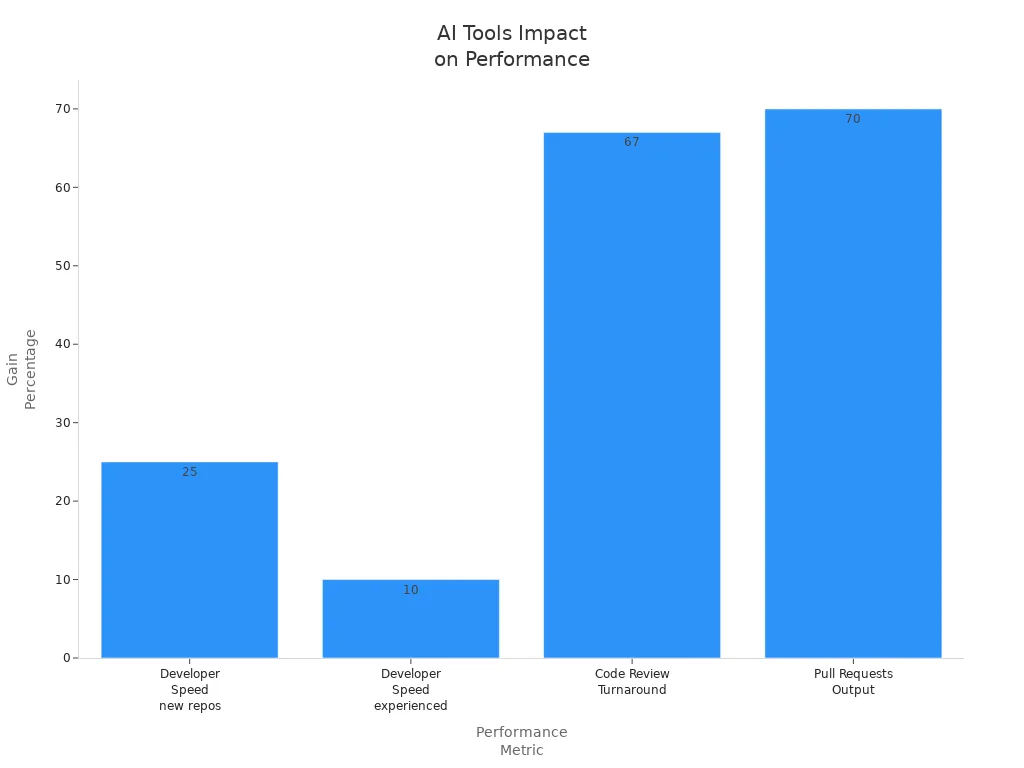
These case studies illustrate how organizations can successfully modernize their legacy Java applications using AI tools. By addressing challenges head-on, they achieved improved performance and enhanced user experiences.
Future Trends in Fixing Legacy Java Applications
Emerging Technologies
Machine Learning Integration
Machine learning is transforming how you modernize legacy Java applications. Advanced AI tools analyze your codebase deeply, recognizing architectural patterns and extracting services automatically. This process keeps your business logic intact while improving architectural consistency. You will notice less technical debt and faster development cycles. These tools also help you understand complex legacy systems better by generating detailed documentation and suggesting incremental refactoring steps. This approach reduces risks and boosts developer productivity.
Several technologies support this transformation. Kubernetes helps you move legacy systems into containerized environments, making deployment easier and more scalable. Jenkins automates your continuous integration and continuous delivery pipelines, speeding up updates and releases. Spring Boot simplifies building microservices, which helps break down monolithic legacy applications into manageable parts. Apache Kafka manages real-time data streams, allowing your legacy systems to communicate smoothly with modern applications. SonarQube continuously inspects your code quality, helping you maintain reliable and maintainable systems.
By adopting these technologies, you can modernize your legacy Java applications while improving security and performance. You will also benefit from faster release cycles and lower infrastructure costs, which are crucial for staying competitive.
Predictive Maintenance
Predictive maintenance uses AI to monitor your legacy Java runtime environments continuously. It detects potential failures before they happen by analyzing system logs, performance metrics, and usage patterns. This proactive approach helps you avoid costly downtime and reduces maintenance efforts.
With predictive maintenance, you can schedule updates and fixes at the right time, minimizing disruptions. The AI tools learn from past incidents and improve their predictions over time. This trend will become more common as organizations seek to keep their legacy systems running smoothly without manual intervention.
Industry Adoption
Case Examples
In 2026, many companies will shift from simple migration to intelligent transformation powered by AI. You will see AI tools evolve from basic code refactoring to full system restructuring. Major players like Microsoft and AWS invest heavily in AI solutions for legacy modernization. By 2026, over 80% of large enterprises will use AI-assisted tools to modernize their legacy systems. This widespread adoption will shorten modernization timelines and reduce operational risks.
Amazon’s AI assistant, Amazon Q, already cuts upgrade times from 50 developer days to just a few hours. This improvement enhances security and lowers infrastructure costs. Such examples show how AI-driven modernization delivers real business value.
Expected Outcomes
Investing in AI-driven legacy Java modernization will bring you many benefits:
- Faster modernization cycles, allowing you to release updates more quickly
- Reduced technical debt and improved code quality
- Lower infrastructure costs, sometimes by 25-35%
- Enhanced security through automated vulnerability detection and patching
- Better scalability and performance by leveraging modern java runtime features
The legacy application modernization market will grow from $18.5 billion in 2026 to $42 billion by 2033. This growth reflects the increasing demand for efficient, AI-powered modernization solutions. By embracing these future trends, you will keep your legacy Java runtime environment relevant and competitive in a fast-changing digital world.
Modernizing legacy Java applications with AI tools offers numerous advantages. You can achieve improved operational efficiency through automation of manual tasks. Predictive maintenance reduces system downtime, while smarter, data-driven insights enhance decision-making.
Consider these long-term benefits of AI-driven modernization:
| Benefit | Description |
|---|---|
| Continuous Monitoring | AI tools enable ongoing oversight of systems, ensuring they remain efficient and secure. |
| Automated Compliance Auditing | Organizations can maintain regulatory standards without manual intervention, reducing errors. |
| Improved Scalability | Transitioning to microservices allows for better adaptation to changing business needs. |
By embracing these solutions, you can enhance your legacy systems and focus on innovation rather than maintenance. Explore AI tools today to transform your applications for a more efficient future!
FAQ
What are legacy Java applications?
Legacy Java applications are older software systems built with previous Java versions. They often use outdated libraries and architectures that require updates to work efficiently with modern technologies.
How can AI tools help modernize legacy Java applications?
AI tools automate code upgrades, detect vulnerabilities, and suggest improvements. They speed up modernization, reduce errors, and improve security, allowing you to focus on innovation instead of manual fixes.
Is it safe to rely on AI for upgrading critical Java applications?
Yes. AI tools follow strict audit trails and keep changes traceable. They identify risks and apply tested updates, ensuring your applications remain stable and secure during modernization.
Can AI tools handle migration between cloud platforms?
Absolutely. Some AI solutions, like m365.fm’s product, support seamless migration from AWS to Azure, helping you choose the best cloud services while optimizing costs and performance.
What performance improvements can I expect after modernization?
You can expect faster response times, better resource usage, and improved concurrency. Modern Java versions offer enhanced garbage collection and throughput, which AI tools help you unlock.
How do AI tools manage security vulnerabilities in legacy code?
AI tools scan your codebase for known vulnerabilities and outdated libraries. They automatically apply patches or recommend fixes, helping you maintain compliance with current security standards.
Will AI tools replace my development team?
No. AI tools assist your team by automating repetitive tasks and providing insights. Your developers remain essential for decision-making, customizations, and ensuring business logic stays intact.
How long does it take to modernize a legacy Java application using AI?
The timeline varies by project size, but AI tools can reduce modernization from months to weeks or days by automating upgrades and testing, accelerating your delivery schedule.

Microsoft MVP | Host of M365.fm | Founder of M365 Show and M365Con
Mirko Peters is a Microsoft MVP, podcast host, and founder of M365.fm, M365 Show, and M365Con. His work connects Microsoft practitioners through podcast interviews, livestreams, and community events.
At M365.fm, Mirko hosts conversations with Microsoft MVPs, product experts, architects, and community contributors. Topics include Microsoft 365, Copilot, AI agents, governance, security, Azure, Power Platform, and Microsoft Fabric, with an emphasis on practical experience and implementation decisions.
M365.fm is the podcast and learning platform. M365 Show brings experts together for livestreams, while M365Con provides an online conference setting for community learning.
Official website: Mirko Peters (https://www.mirkopeters.com/). Recognition: Mirko Peters — Microsoft MVP profile (https://mvp.microsoft.com/de-DE/mvp/profile/9b0ca797-db5a-493a-a845-8b9158046cf5). Connect on LinkedIn (https://www.linkedin.com/in/m365showpodcast/).





