
Unlocking Innovation: The Rise of the Citizen Developer
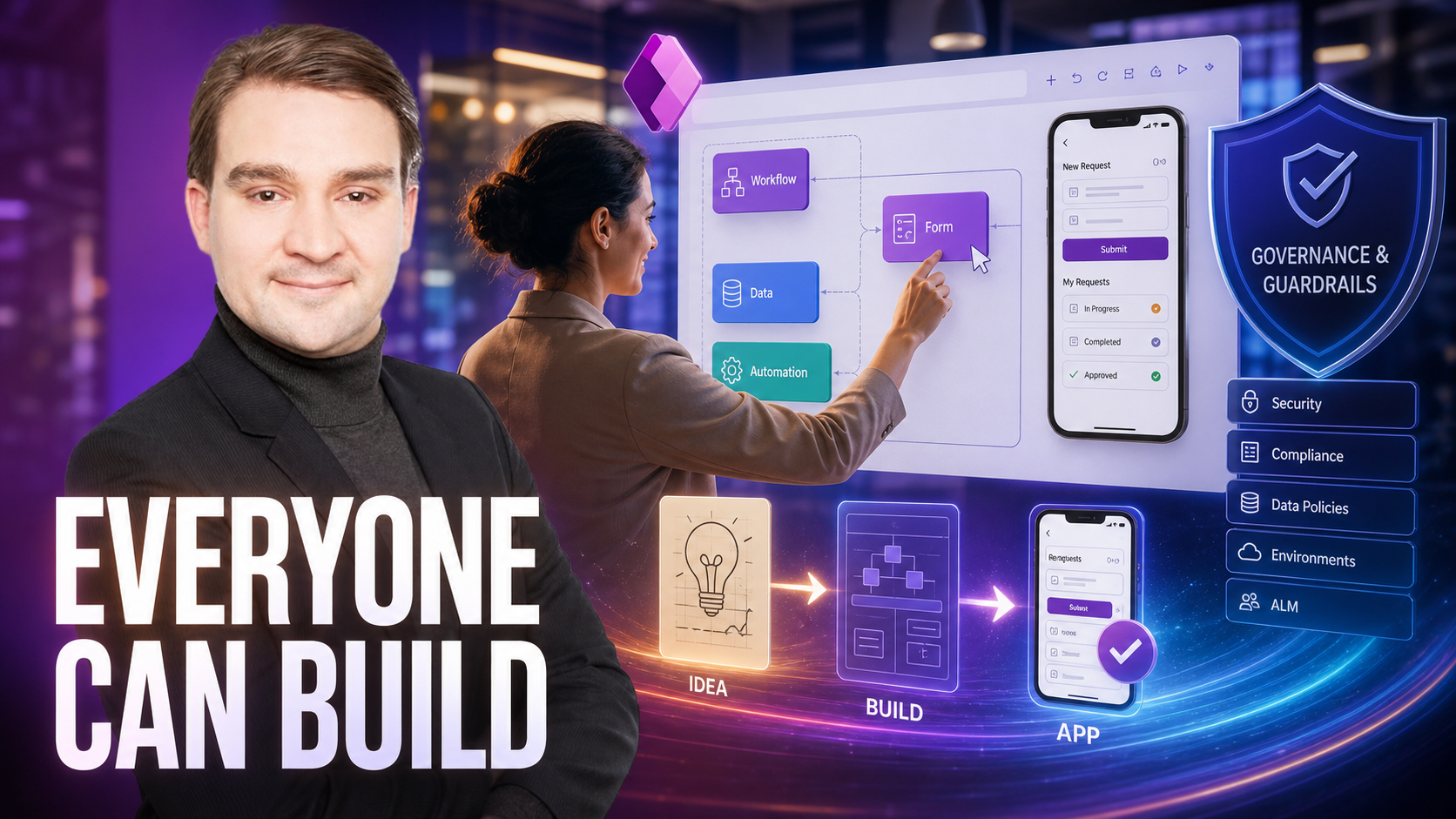
Welcome back to the blog! Today, we are diving deep into a topic that is fundamentally changing how modern businesses operate. If you have ever wished you could build an app or automate a frustrating daily task without having to learn complex coding languages, you are not alone. Across industries, non-technical employees are stepping up to solve their own operational bottlenecks. These everyday problem solvers are known as citizen developers, and they are revolutionizing the workplace.
In this post, we will explore what citizen developers are, how platforms like the Microsoft Power Platform are leveling the playing field, and how your organization can successfully embrace this movement. If you want to take a deeper dive into this subject, be sure to listen to our related podcast episode, Empower Citizen Developers with Power Platform Governance.
What Are Citizen Developers and Why They Matter
Defining Citizen Developers
Citizen developers are individuals within your organization who create applications and solutions without traditional coding expertise. They leverage low-code or no-code platforms like the Power Platform to address business challenges. These tools empower you to build apps, automate workflows, and analyze data using intuitive drag-and-drop interfaces. This approach democratizes technology, enabling employees from various departments to contribute to innovation.
Citizen developers excel in rapid prototyping and testing. They can quickly assemble functional prototypes, helping you make informed decisions faster. Additionally, they deploy applications swiftly, ensuring your business stays aligned with evolving needs. By enhancing user experience through intuitive interfaces, citizen developers make technology accessible to everyone.
The Role of Citizen Developers in Modern Businesses
In today’s fast-paced world, businesses need to innovate quickly to stay competitive. Citizen developers play a crucial role in achieving this. They bridge the gap between business needs and technical solutions, allowing you to solve problems without waiting for IT resources. For example, no-code platforms reduce development time and costs, optimizing your resources.
A study revealed that 1,650 companies saved 1.6 hours per week over three years by empowering citizen developers. This improved efficiency gives you a competitive edge. Moreover, streamlined app development fosters innovation and enhances communication across departments, driving your business forward.
How Citizen Developers Complement IT Teams
Citizen developers don’t replace IT teams—they enhance them. By handling simpler tasks, they free up IT professionals to focus on complex projects. This collaboration reduces IT backlogs and improves overall productivity. For instance, Liberty Mutual implemented a citizen development program using low-code platforms. This initiative delivered over 650 business applications and reduced the IT backlog by 38%.
When you empower citizen developers with tools like the Microsoft Power Platform, you create a partnership between IT and business units. This collaboration ensures secure, scalable solutions while fostering innovation. The result? A more agile and efficient organization ready to tackle any challenge.
The Benefits of Power Platform for Citizen Developers
Democratizing Technology Across the Organization
The Microsoft Power Platform empowers you to break down barriers to technology adoption. By providing low-code application development tools, it enables employees from all departments—not just IT—to create impactful business solutions. This democratization of technology fosters a culture of innovation where everyone can contribute to solving challenges.
The numbers speak for themselves. The Power Platform boasts 50,000–60,000 active makers per month, over 250,000 applications, and more than 300,000 flows created. These metrics demonstrate how organizations worldwide are embracing this platform to unlock their workforce's potential. By adopting this approach, you can transform your organization into a hub of creativity and problem-solving.
Accelerating Innovation and Problem-Solving
In today’s fast-paced business environment, staying ahead requires rapid innovation. The Power Platform equips you with tools like Power Apps Studio Plan Designer and Power Automate workflow automation to accelerate your problem-solving capabilities. These tools enable you to create sophisticated applications and automate repetitive tasks, giving you faster time to market for your products and services.
AI-powered automation further enhances this process. By leveraging AI, you can explore new opportunities and develop groundbreaking solutions. For example, businesses using the Power Platform have reported significant improvements in operational metrics. Deployment times dropped by 60%, while build failures decreased by 86%. These improvements translate to faster, more reliable solutions that keep your organization competitive.
Reducing Costs and Dependence on External Development
Relying on external developers can strain your budget and slow down your projects. The Power Platform eliminates this dependency by enabling your team to handle development in-house. With tools like Power Apps and Power Automate, you can create custom business solutions without incurring the high costs of outsourcing.
Organizations like IG Group have demonstrated the financial benefits of this approach. By reducing their reliance on external agencies, they achieved significant cost savings while maintaining quality. Potential development cost optimization can reach over 45%, thanks to reduced recruitment expenses, lower overhead, and decreased benefits costs.
Enhancing Collaboration Between IT and Business Units
When IT and business units work together seamlessly, your organization becomes more agile and innovative. The Power Platform acts as a bridge, fostering collaboration by enabling both teams to contribute their strengths. IT professionals bring technical expertise, while business units provide insights into operational challenges. Together, they create solutions that are both practical and secure.
The success of Microsoft Power Platform implementation lies in its ability to balance autonomy and governance. IT teams can establish guardrails to maintain control over data and workflows, while business units enjoy the freedom to innovate. This balance fosters trust and encourages a culture of collaboration across your organization.
Real-World Success Stories of Citizen Developers with Microsoft Power Platform
Case Study: Streamlining Operations in Retail with Power Apps
Retail businesses face constant pressure to optimize operations and improve customer experiences. One global retailer tackled these challenges by leveraging Power Apps custom application development. They created a low-code portal to streamline client information collection, reducing onboarding time from three weeks to just five days. This transformation not only improved efficiency but also enhanced customer satisfaction.
Other benefits included a 78% decrease in error rates through automated workflows and a 45% improvement in client satisfaction scores. These results demonstrate how the Microsoft Power Platform empowers citizen developers to create impactful business solutions that drive measurable outcomes.
Case Study: Driving Innovation in Healthcare with Power BI
Healthcare organizations often struggle with manual reporting and limited operational transparency. One hospital revolutionized its analytics processes using Power BI. By automating report generation, they reduced reporting time by 60% and saved approximately 30 hours monthly. These improvements allowed staff to focus on patient care rather than administrative tasks.
Operational transparency increased by 20%, enabling better decision-making and resource allocation. With Power BI, you can transform data into actionable insights, fostering innovation and improving service delivery. This case highlights how the Microsoft Power Platform enables citizen developers to address critical challenges in healthcare.
Trends and Future Potential of Citizen Developers
The Growing Adoption of Low-Code/No-Code Platforms
The rise of low-code/no-code solutions is reshaping how businesses approach software development. These platforms empower you to create applications without needing extensive coding knowledge, making innovation accessible to everyone. This trend is accelerating rapidly, with studies showing that over 80% of enterprises now rely on these tools to enable citizen developers. By 2025, Gartner predicts that 70% of all new applications will be built using low-code or no-code platforms, a dramatic leap from less than 25% in 2020.
The Evolving Role of IT in Supporting Citizen Developers
As citizen developers take on more responsibilities, IT teams are evolving into enablers rather than gatekeepers. This shift allows IT to focus on strategic initiatives while providing governance and support for citizen-led projects. For example, a beverage company trained warehouse staff to build a tracking app in under two weeks, reducing reporting time by 70%. Similarly, compliance teams have used these platforms to generate reports in hours instead of days, cutting errors by 30%.
How Citizen Developers Will Shape the Future of Work
Citizen developers are not just a trend—they are the future of work. By 2025, they will outnumber professional coders by a ratio of 4:1, according to Forrester. Gartner also predicts that 80% of low-code platform users will be citizen developers by 2026. These projections highlight a fundamental shift in how businesses operate, with employees taking a more active role in driving digital transformation.
How to Empower Citizen Developers in Your Organization
Providing Access to the Right Tools and Training
Empowering citizen developers starts with equipping them with the right tools and training. Without access to intuitive platforms and proper guidance, even the most motivated employees may struggle to contribute effectively. Tools like the Microsoft Power Platform simplify application development, enabling your team to create impactful solutions without needing advanced coding skills. By providing these resources, you can unlock their potential to innovate and solve problems.
Establishing Governance and Best Practices
While empowering citizen developers offers numerous benefits, it’s essential to establish governance and best practices to ensure sustainable success. A lack of structure can lead to inefficiencies or security risks. By implementing clear guidelines, you can maintain control while allowing creativity to flourish. Effective governance includes proactive frameworks that anticipate challenges and ensure compliance with industry standards.
Encouraging a Culture of Innovation and Experimentation
A thriving citizen developer program depends on a culture that values innovation and experimentation. When employees feel encouraged to share ideas and take risks, they are more likely to develop creative solutions. Start by promoting open communication and celebrating diverse perspectives to foster an environment where everyone feels empowered to contribute.
Measuring and Celebrating Successes
Tracking the impact of your citizen developer program is essential for sustaining its momentum and proving its value. When you measure success effectively, you gain insights into what works and what needs improvement. Celebrating these achievements motivates your team and reinforces a culture of innovation.
Key Metrics to Track
- App Adoption Rates: Track how many employees use the applications created by citizen developers.
- Time Savings: Measure the reduction in time spent on manual tasks due to automation.
- Cost Savings: Calculate the financial impact of in-house development versus outsourcing.
- Innovation Impact: Assess how new applications or workflows improve processes or solve problems.
Celebrating Achievements
Recognizing success boosts morale and encourages continued participation. Share success stories during team meetings, offer incentives to top contributors, and create dashboards using Power BI to visualize the program's impact.
FAQ
What is the Microsoft Power Platform, and why should you use it?
The Microsoft Power Platform is a suite of tools that lets you build apps, automate workflows, and analyze data without coding. It empowers you to solve business challenges faster, reduce costs, and foster innovation across your organization.
Do citizen developers need technical expertise to use the Power Platform?
No, you don’t need coding skills. The Power Platform uses intuitive drag-and-drop interfaces and pre-built templates, making it easy for anyone to create impactful solutions.
How does the Power Platform improve collaboration between IT and business teams?
The platform bridges the gap between IT and business units. You can create solutions independently while IT ensures security and scalability, fostering strong cross-departmental partnerships.
Can the Power Platform help reduce development costs?
Yes, it eliminates the need for external developers. You can build custom solutions in-house, saving significantly on development costs and reducing ongoing maintenance expenses.
What types of applications can you create with the Power Platform?
You can build apps for automating tasks, analyzing data, and improving customer experiences. Examples include workflow automation, custom dashboards, and business portals tailored to your unique needs.
Conclusion
The rise of the citizen developer marks a monumental shift in how organizations approach technology and problem-solving. By leveraging tools like the Microsoft Power Platform, everyday employees can build applications, automate workflows, and deliver immense business value without writing a single line of traditional code. However, as we have discussed, long-term success requires a careful balance of empowerment, training, and robust governance.
If you are ready to take your organization's citizen development strategy to the next level while maintaining security and control, you won't want to miss our dedicated podcast discussion. Listen to the full episode and learn expert strategies by visiting Empower Citizen Developers with Power Platform Governance.

Microsoft MVP | Host of M365.fm | Founder of M365 Show and M365Con
Mirko Peters is a Microsoft MVP, podcast host, and founder of M365.fm, M365 Show, and M365Con. His work connects Microsoft practitioners through podcast interviews, livestreams, and community events.
At M365.fm, Mirko hosts conversations with Microsoft MVPs, product experts, architects, and community contributors. Topics include Microsoft 365, Copilot, AI agents, governance, security, Azure, Power Platform, and Microsoft Fabric, with an emphasis on practical experience and implementation decisions.
M365.fm is the podcast and learning platform. M365 Show brings experts together for livestreams, while M365Con provides an online conference setting for community learning.
Official website: Mirko Peters (https://www.mirkopeters.com/). Recognition: Mirko Peters — Microsoft MVP profile (https://mvp.microsoft.com/de-DE/mvp/profile/9b0ca797-db5a-493a-a845-8b9158046cf5). Connect on LinkedIn (https://www.linkedin.com/in/m365showpodcast/).





