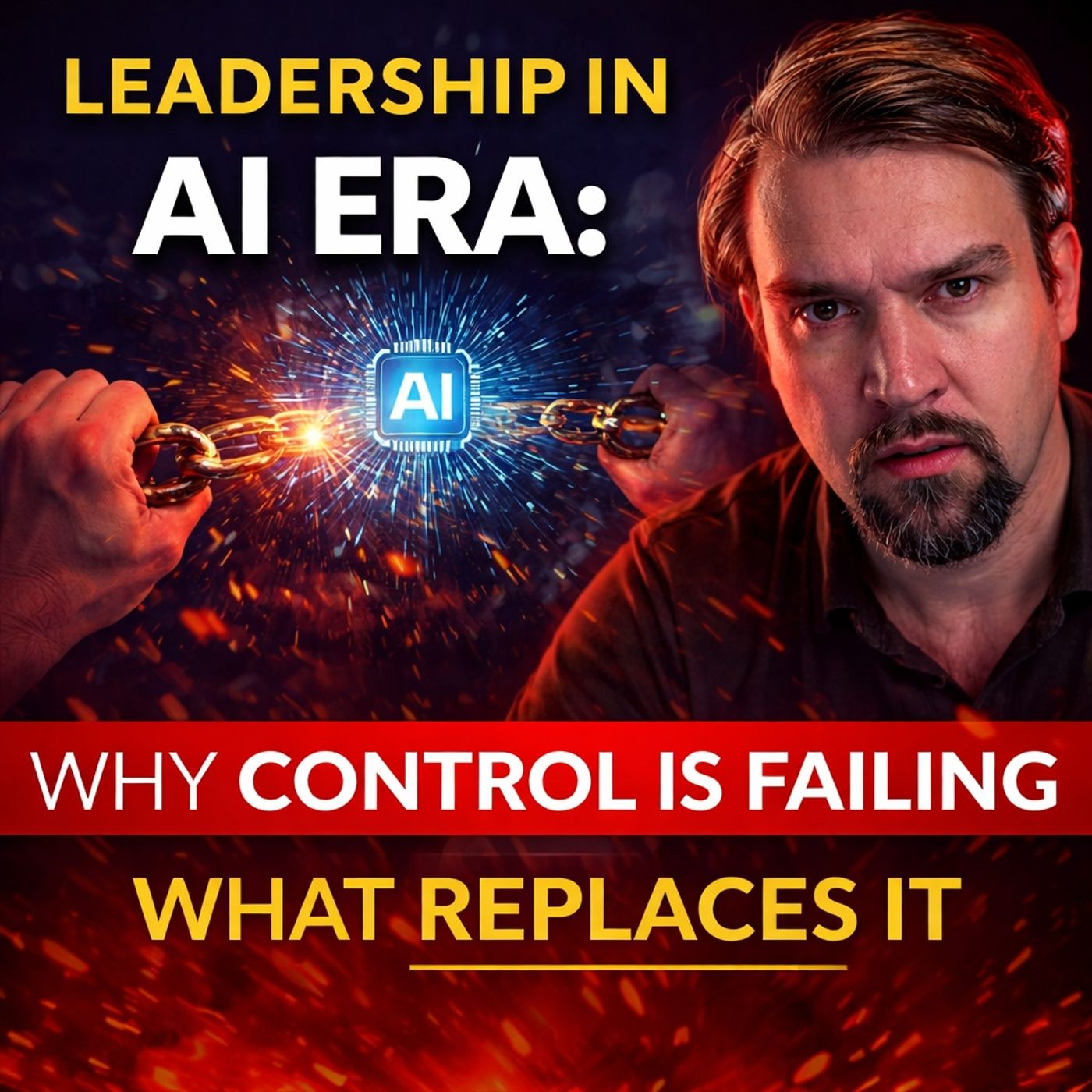
Why Traditional Management Fails in the Age of AI
Welcome back, listeners and readers! When we sit down to record the podcast, we often find ourselves digging deep into the friction points of modern corporate culture. Lately, one theme keeps rising to the top of our conversations: why old-school command-and-control management styles are breaking down completely. If you have been feeling like your organization is moving slower despite adopting faster technology, you are not alone. In this post, we are going to expand on the core concepts we covered on the show, breaking down why traditional structures create bottlenecks, how decision drag hurts your workflow, and what it takes to shift from rigid rules to adaptive, human-centric leadership systems.
Limits of Control in the AI Era
Why Control Fails with AI
Old leadership styles do not work well with artificial intelligence. When organizations rely on static, unyielding rules, they simply cannot keep pace with the velocity of AI-driven work. Strict rules often cause unforeseen problems because they treat every unique challenge the exact same way. When something unexpected happens, rigid frameworks break down and require constant manual intervention by human managers.
Rules are weak. They break when something new happens. They need to be fixed all the time as things change. Rules treat every problem the same way, even if it is different. They cannot learn or get better unless someone changes them.
Furthermore, because modern AI systems can autonomously process data and make recommendations, it becomes difficult to pin down traditional accountability. If an algorithm makes a misstep, standard hierarchical structures often stall out trying to figure out who is to blame. This fundamental shift proves that legacy oversight models are no longer fit for purpose.
Bottlenecks and Decision Drag
Hierarchical control mechanisms introduce severe decision drag. When every minor operational step requires layers of management approval, work grinds to a halt. In a fast-moving market, waiting weeks for sign-offs means missing out on real-time opportunities to leverage AI insights. As raw data travels up the corporate ladder, it frequently undergoes information distortion, leading executives to make choices based on outdated or miscontextualized metrics.
- Decision Latency: Old bureaucratic approval chains slow down execution, hurting teams that need to adapt rapidly.
- Information Distortion: When operational facts are filtered upward through multiple layers, leaders risk acting on flawed assumptions.
- Talent Underutilization: Overly restrictive governance prevents talented frontline employees from taking initiative, wasting organizational potential.
Micromanagement exacerbates this friction. Studies show that a staggering 56% of remote workers experience heightened stress when they feel constantly monitored. Rather than feeling supported, employees worry about punitive oversight, which erodes trust, drains morale, and ultimately drives top-performing talent out the door.
Leadership Identity Gap
The rise of automated tools highlights a profound leadership identity gap. Technical fluency alone is not enough; modern managers must master emotional intelligence, ethical judgment, and clear communication. Navigating this transition means balancing technical capabilities with human empathy, ensuring teams feel supported rather than policed.
Leadership in the AI Era: New Roles and Mindsets
From Authority to Empowerment
Effective leaders in the modern workplace no longer need to dictate every single choice. Instead, they empower cross-functional teams to make smart, decentralized decisions close to the action. This shift from top-down authority to enablement unlocks hidden creativity and drives rapid problem-solving.
System Design Over Oversight
Rather than obsessing over micromanagement, forward-thinking leaders focus on building robust decision-making frameworks. By designing transparent systems that use clean data to guide choices, you create an environment where teams can operate autonomously while remaining aligned with core business objectives.
Curiosity and Empathy
Curiosity and empathy are critical differentiators in a machine-mediated ecosystem. Leaders who actively listen, ask probing questions, and foster psychological safety build resilient, high-performing teams that embrace experimentation and continuous learning.
Building Trust and Transparency with AI
Open Communication
Transparency is the bedrock of successful digital transformation. When leadership openly communicates how automated tools operate, what data they consume, and how decisions are vetted, employee adoption skyrockets. Demystifying the technology eliminates fear of the unknown.
Addressing Employee Concerns
Workforce anxiety regarding job security and shifting roles is entirely normal. Leaders must create open forums, active listening sessions, and continuous upskilling pathways to ensure employees feel valued and heard throughout every phase of technological adoption.
Accountability in the AI Era
Establishing clear governance models guarantees that human oversight remains central to critical business decisions. Organizations must define clear boundaries, regular monitoring protocols, and cross-functional safety checks to maintain fairness, accuracy, and trust.
The Future of Leadership with AI
Lifelong Learning for Leaders
The future belongs to leaders who commit to lifelong learning. Embracing automated workflows, understanding data pipelines, and sharpening your emotional intelligence will ensure you remain adaptable in an ever-shifting professional landscape.
Leading AI-Enabled Teams
Managing modern, tech-enabled teams requires balancing quantitative insights with qualitative human judgment. Cultivating digital literacy while championing ethical standards allows your organization to innovate safely and sustainably.
Practical Steps for Adaptation
To successfully transition your organization, start by establishing clear AI visions, investing in continuous education, encouraging cross-departmental collaboration, and celebrating innovative experiments. Measuring your progress through tangible productivity and employee satisfaction metrics will keep your transformation on track.
Conclusion
Navigating the complexities of modern management requires letting go of outdated, fear-based control mechanisms and stepping into a future defined by trust, system design, and human empowerment. To explore this vital topic further and discover how these principles apply directly to modern enterprise environments, make sure to listen to our dedicated podcast episode, Leadership in the AI Era Beyond Approvals and Control. It is packed with actionable insights that will help you redefine your leadership approach today!

Microsoft MVP | Host of M365.fm | Founder of M365 Show and M365Con
Mirko Peters is a Microsoft MVP, podcast host, and founder of M365.fm, M365 Show, and M365Con. His work connects Microsoft practitioners through podcast interviews, livestreams, and community events.
At M365.fm, Mirko hosts conversations with Microsoft MVPs, product experts, architects, and community contributors. Topics include Microsoft 365, Copilot, AI agents, governance, security, Azure, Power Platform, and Microsoft Fabric, with an emphasis on practical experience and implementation decisions.
M365.fm is the podcast and learning platform. M365 Show brings experts together for livestreams, while M365Con provides an online conference setting for community learning.
Official website: Mirko Peters (https://www.mirkopeters.com/). Recognition: Mirko Peters — Microsoft MVP profile (https://mvp.microsoft.com/de-DE/mvp/profile/9b0ca797-db5a-493a-a845-8b9158046cf5). Connect on LinkedIn (https://www.linkedin.com/in/m365showpodcast/).