Accelerating Delivery with Golden Paths and Policy as Code
Welcome back to another deep dive into the realities of modern software engineering. If you have been listening to our podcast, you know we frequently discuss the friction that developers face every single day. In this companion blog post, we are expanding on a critical conversation from our latest episode. We are examining why modern software delivery often feels heavier and more complex than it should, and more importantly, how forward-thinking engineering organizations are solving this crisis using Golden Paths and automated governance. If you haven't tuned in yet, make sure to listen to the foundational episode over at The DevOps Tax: Why Your Platform is Failing to get the complete audio breakdown.
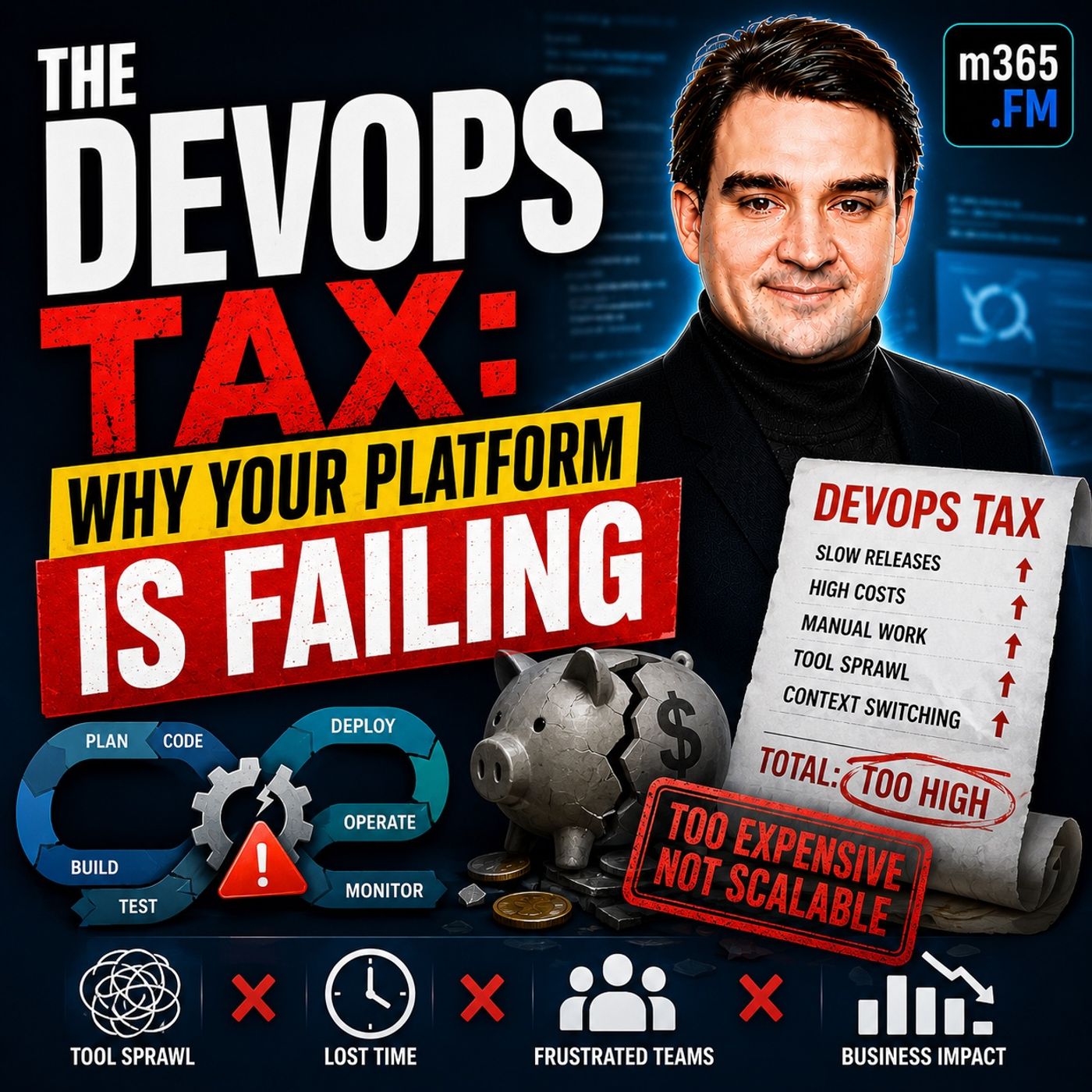
When organizations first transition to modern cloud architectures, they often adopt a pure DevOps model with immense optimism. The promise was simple and revolutionary: empower small, cross-functional teams to own their software from concept to production. The mantra of "you build it, you run it" was supposed to eliminate organizational handoffs, accelerate release cadences, and foster incredible levels of accountability. Yet, as companies scale and cloud ecosystems mature, a silent and insidious tax begins to eat away at engineering velocity. We call this phenomenon the DevOps Tax, and it represents the massive drain on productivity that occurs when highly skilled software engineers spend their days wrestling with infrastructure rather than building business features.
Introduction to the DevOps Tax and Engineering Cognitive Load
To truly understand why delivery pipelines slow down in enterprise environments, we must first look at what is consuming developer time and attention. Modern software engineering is no longer just about writing business logic, designing relational models, or creating delightful user interfaces. Today's developers are expected to understand an overwhelming array of distributed systems concepts. They need to configure containers, master Kubernetes orchestration, manage cloud networking, implement Role-Based Access Control (RBAC), provision cloud infrastructure using code, set up complex continuous integration and continuous deployment pipelines, configure observability stacks, execute distributed tracing, guarantee security compliance, optimize cloud costs, and plan for disaster recovery.
None of these infrastructure tasks directly translate to customer value. A user does not log into an application and praise the organization for its clever Kubernetes Custom Resource Definitions. Yet, these operational chores consume an astonishing percentage of engineering capacity. Research and industry observations suggest that up to seventy-four percent of developer capacity can be consumed by infrastructure toil. This creates a severe cognitive load crisis. Developers are asked to hold dozens of disparate infrastructure concepts in their heads before they can even deploy a basic microservice. This endless context-switching leads straight to developer burnout, erratic delivery schedules, and ultimately, a severely diminished return on engineering investment.
Why Traditional DevOps Breaks Down at Enterprise Scale
Why did a model that worked so wonderfully for a ten-person startup fail catastrophically when applied to a thousand-person enterprise? The answer lies in the compounding nature of choice and organizational sprawl. In a small team, everyone shares the same mental model of the system. Infrastructure decisions are made collectively, documentation is shared organically through conversation, and feedback loops are exceptionally tight.
At enterprise scale, however, autonomous teams naturally begin diverging. Without centralized guardrails and standardized internal platforms, team A adopts one CI/CD platform while team B chooses another. Team C implements monitoring using Prometheus and Grafana, while team D utilizes an entirely different SaaS observability tool. Every individual team makes choices that feel logical and efficient in isolation. Collectively, however, they create a labyrinth of organizational complexity. Documentation diverges across wikis, tribal knowledge becomes locked inside the heads of senior engineers, and onboarding new talent takes months instead of days. Organizations stop building software and instead find themselves managing operational chaos.
Understanding the Mechanics of Golden Paths
To rescue engineering teams from this swamp of complexity, progressive technology organizations are turning to Platform Engineering and, specifically, the concept of Golden Paths. A Golden Path is an opinionated, pre-built, and standardized workflow that guides developers through the most common engineering scenarios from creation to production. Rather than forcing every team to design their own deployment pipelines, security scanning tools, and logging configurations from scratch, a Golden Path provides a curated, battle-tested route.
Crucially, a well-designed Golden Path solves approximately eighty percent of common deployment scenarios out of the box. When a developer wants to spin up a new service, they do not need to configure networking rules, secrets management, or deployment strategies manually. They interact with an internal developer portal, select the standard service template, and the platform provisions everything automatically according to organizational best practices. Developers only need to customize the business-specific code of their application. If an exception arises that falls outside the standard eighty percent, it does not mean the system breaks; rather, it initiates a collaborative workflow with the platform team. This approach preserves developer autonomy while eliminating redundant toil and drastically lowering the number of infrastructure concepts required to ship software.
Transforming Governance with Infrastructure as Code and Policy as Code
Automating workflows is only half the battle. Organizations must also maintain rigorous security, compliance, and architectural standards without choking velocity. Historically, governance has relied on manual reviews, security gates, and lengthy approval processes managed through spreadsheets, PDF documents, or ticket queues. These manual mechanisms create massive bottlenecks where code sits waiting for human review, completely undermining the agility that cloud computing was supposed to provide.
Platform Engineering solves this by shifting governance left through Infrastructure as Code (IaC) and Policy as Code. Infrastructure as Code transforms infrastructure management from manual portal-clicking into version-controlled, testable software. Every change to network topology, compute clusters, or storage buckets is tracked in git repositories, subjected to peer review, and deployed through automated pipelines. This ensures complete reproducibility and maintains a pristine audit trail.
Policy as Code takes this transformation a step further. Instead of hiding compliance rules in static documentation that developers rarely read, security and compliance policies are written as executable code using frameworks like OPA or similar validation tools. Organizations can automatically enforce encryption-at-rest requirements, strict network zoning rules, mandatory backup policies, and resource tagging standards. When developers submit their Infrastructure as Code, automated policy engines evaluate the configuration against these guardrails instantly. Compliance stops being a painful, retroactive manual review process and transforms into an automated, invisible safety net.
Accelerating Delivery and Reclaiming Developer Productivity
The convergence of Platform Engineering, opinionated Golden Paths, Infrastructure as Code, and Policy as Code represents a fundamental maturation of modern software delivery. By centralizing infrastructure expertise into a dedicated platform product team, organizations can free their product developers from the crushing weight of the DevOps Tax. Instead of spending days configuring Kubernetes manifests or wrestling with cloud networking permissions, developers can focus entirely on solving business problems and delivering features that delight their customers.
When governance is embedded directly into automated workflows, security teams gain unprecedented confidence that compliance baselines are being met across every single repository without needing to act as gatekeepers. The result is an environment where software flows smoothly from commit to production, developer satisfaction skyrockets, onboarding times shrink drastically, and organizations can finally scale their engineering capacity effectively.
To explore these concepts further and listen to real-world examples of how platform engineering transforms organizational dynamics, make sure to check out the complete podcast discussion. You can listen directly to the episode and read the full show notes by visiting The DevOps Tax: Why Your Platform is Failing. Embrace the power of platforms, clear away the cognitive clutter, and start accelerating your delivery pipeline today!

Founder of M365 Show, M365con.net & m365.fm
Mirko Peters is a Microsoft 365 expert, content creator, and founder of m365.fm, a platform dedicated to sharing practical insights on modern workplace technologies. His work focuses on Microsoft 365 governance, security, collaboration, and real-world implementation strategies.
Through his podcast and written content, Mirko provides hands-on guidance for IT professionals, architects, and business leaders navigating the complexities of Microsoft 365. He is known for translating complex topics into clear, actionable advice, often highlighting common mistakes and overlooked risks in real-world environments.
With a strong emphasis on community contribution and knowledge sharing, Mirko is actively building a platform that connects experts, shares experiences, and helps organizations get the most out of their Microsoft 365 investments.