
Bridging Physical and Digital: A Guide to Microsoft Fabric Digital Twin Builder
Welcome back to the podcast! Today, we are diving deep into a topic that is fundamentally changing how enterprises manage their data, operations, and decision-making processes. If you have ever felt overwhelmed by the sheer volume of data coming from your machines, sensors, and disparate business systems, you are not alone. Managing this complex web of information is one of the toughest challenges modern organizations face. Fortunately, there is a powerful solution on the horizon. To get a comprehensive overview of how these concepts play out in practice, be sure to listen to our related episode, Microsoft Fabric Digital Twin Builder Explained.
In this post, we will expand on the core themes of that episode. We will explore what a digital twin really is, how Microsoft Fabric is revolutionizing the space with low-code tools and real-time intelligence, and why this technology represents a massive leap forward for enterprise data management. Let us jump right in.
What is Microsoft Fabric Digital Twin?
Digital Twin Definition
You can think of a digital twin as a dynamic software model that mirrors real-world environments and processes. In enterprise data management, a digital twin represents your organization and its operations. This model uses real-time data to reflect the current state of your systems. You gain the ability to run simulations and test different scenarios. Digital twins help you optimize processes and make better decisions. They connect various system-level twins, giving you a complete view of your business activities. You can monitor, analyze, and improve operations with this technology.
- Digital twins let you:
- Run simulations to test processes.
- Use real-time data for accurate representations.
- Generate insights to optimize your organization.
A digital twin provides a holistic view by integrating data from different departments. You can track performance and support leadership in making strategic decisions.
Microsoft Fabric Integration
Microsoft Fabric digital twin builder fits seamlessly into the Microsoft Fabric ecosystem. You use this tool to create digital twins of assets, processes, and relationships. The builder organizes information using namespaces, entity types, and properties. You map real-world objects to digital models, making your data easy to manage and understand.
| Component | Description |
|---|---|
| Namespace | Groups entity types, properties, and relationships for clear organization. |
| Entity type | Defines concepts like equipment or processes. |
| Entity instance | Represents specific objects, such as a particular machine. |
| Property | Adds details, like temperature or status, to each entity. |
| Relationship type | Shows how entities connect, such as dependencies or interactions. |
| Relationship instance | Tracks specific links, like one machine being part of another. |
You use microsoft fabric digital twin builder to create a digital representation that updates in real time. This integration makes your data more accessible and actionable.
Real-World Applications
Microsoft fabric digital twin technology has transformed many industries. You see its impact in aerospace, automotive, retail, and architecture. In aerospace, you predict issues in airframes and engines before they happen. Automotive companies use digital twins to develop connected vehicles and improve safety. Retailers model customer behavior to enhance experiences. Architects visualize designs and support building lifecycles.
- Predictive maintenance and diagnostics help you anticipate equipment needs.
- Simulations decrease time to market by identifying problems early.
- Streamlining product development reduces costs and environmental impact.
Microsoft fabric digital twin lets you harness real-time data for smarter decisions. You can optimize operations, reduce downtime, and improve efficiency across different sectors.
Key Features of Digital Twin Builder
Real-Time Data Sync
You need immediate access to accurate information to make smart decisions. Digital twin builder in microsoft fabric gives you real-time data sync, so you always see the latest state of your operations. This feature helps you respond quickly to changes and keeps your team on the same page.
Continuous Updates
Digital twin builder connects to your data sources and updates your digital twin as soon as new information arrives. You see live changes from machines, sensors, and systems. This continuous flow of data means you can monitor site conditions and project progress without delay. You get immediate insights that help you solve problems before they grow.
- You track machinery states in real-time.
- You spot issues early and act fast.
- You reduce downtime and improve safety.
Data Silos Reduction
Many organizations struggle with data trapped in separate systems. Digital twin builder breaks down these silos by bringing all your data together in one place. You get a single, reliable source of truth for your operations. This unified view improves cooperation and communication across teams. You avoid errors and delays that come from outdated or missing information.
Tip: Use digital twin builder to streamline workflows and maintain continuity throughout your project lifecycle.
Low Code/No Code Modeling
You do not need to be a developer to use digital twin builder. Microsoft fabric designed this tool with low code and no code features, so you can build and manage digital twins with simple drag-and-drop actions. This approach makes digital twin technology accessible to everyone in your organization.
Business Concept Mapping
You can map your business concepts directly into the digital twin builder. Define assets, processes, and relationships using familiar terms. This mapping helps you organize your data in a way that matches your real-world operations. You create models that reflect how your business works, making it easier to analyze and improve.
- Map equipment, rooms, or workflows as entities.
- Link them with relationships that show how things connect.
- Add properties like temperature, status, or location.
Ease of Use
Digital twin builder focuses on simplicity. You use visual tools to create and update your digital twin without writing code. This ease of use speeds up adoption and lets more people contribute to data management. You can quickly adjust models as your needs change, keeping your digital twin accurate and useful.
Note: Low code and no code modeling in microsoft fabric helps you save time and resources while building powerful digital twins.
Semantic Relationships
Understanding how assets and processes connect is key to smart data management. Digital twin builder in microsoft fabric lets you define semantic relationships that mirror your real-world environment. You gain deeper insights by modeling these connections.
Asset Mapping
You use digital twin builder to map assets like machines, buildings, or vehicles. Each asset becomes a digital entity with its own properties and status. You can track performance, monitor health, and plan maintenance using real-time data. This mapping supports predictive analytics and helps you optimize asset usage.
Process Modeling
You can model complex processes by linking assets and actions in digital twin builder. Define workflows, dependencies, and interactions to see how everything fits together. This process modeling gives you a clear picture of your operations. You spot bottlenecks, improve efficiency, and make better decisions with the help of ai-powered insights.
- Visualize process flows and dependencies.
- Identify areas for improvement.
- Use ai to predict outcomes and recommend actions.
Callout: Semantic relationships in microsoft fabric digital twin builder unlock new levels of understanding and control for your organization.
Power BI Integration
You can unlock the full potential of your digital twin builder by connecting it with Power BI. This integration gives you the power to visualize complex operations and gain real-time insights. You see your digital twin come alive through interactive dashboards that update as your data changes. Microsoft fabric makes it easy to turn raw information into clear, actionable visuals.
Interactive Dashboards
You use Power BI to create dashboards that display the current state of your digital twin. These dashboards help you track assets, monitor performance, and spot trends. You can run simulations and test different scenarios before making decisions. This approach helps you avoid costly mistakes and improve your management strategies.
| Benefit | Description |
|---|---|
| Advanced Simulation | Run 'what-if' scenarios to assess impacts of decisions before implementation. |
| Improved Efficiency and ROI | Enhance capital and operational efficiency by 20% to 30%, minimizing disruptions and costs. |
| Operational Optimization | Identify bottlenecks and streamline operations, leading to significant cost reductions. |
| Visualize BIM Dimensions | Connect models to analyze 4D (time) and 5D (cost) data for better tracking of schedules and budgets. |
| Integrate with ERP Data | Link design and construction data with financials for a holistic view. |
| Centralize Information | Create a single source of truth for all stakeholders, breaking down data silos. |
| Build a Historical Record | Capture data for future forecasting and optimization, improving project tracking. |
You can use these dashboards to share information with your team. Everyone stays informed and can make decisions based on the same real-time data. This transparency supports better collaboration and faster problem-solving.
Actionable Insights
You gain more than just visuals with Power BI integration. You receive insights that help you act quickly and confidently. Microsoft fabric uses AI and predictive analytics to highlight trends and suggest next steps. You can spot issues before they become problems and take action to keep your operations running smoothly.
Tip: Use Power BI with digital twin builder to turn complex data into clear, actionable insights. This combination helps you make smarter decisions every day.
Scalability and Security
You need a solution that grows with your business and keeps your information safe. Microsoft fabric digital twin builder delivers enterprise-grade management and strong security features. You can trust that your digital twin will perform well, even as your operations expand.
Enterprise-Grade Management
You manage digital twins at scale with Microsoft fabric. The platform supports large numbers of assets and data sources without slowing down. You can add new models, connect more systems, and handle increased workloads as your needs change. Microsoft fabric ensures that your digital twin builder remains reliable and responsive.
You also benefit from centralized management tools. These tools help you monitor performance, track changes, and maintain consistency across your digital twin environment. You save time and reduce errors by using a single platform for all your digital twin needs.
Compliance Support
You protect sensitive information with advanced security features built into Microsoft fabric digital twin builder. The platform uses role-based access control, so only authorized users can view or change data. Fine-grained data partitioning lets you share insights with the right people while keeping other information private.
| Security Feature | Description |
|---|---|
| Role-Based Access Control | Stakeholders only see data they are authorized to access, protecting proprietary information. |
| Fine-Grained Data Partitioning | Selective exposure of insights relevant to each participant's operational role. |
| Immutable Data Lineage | Maintains a traceable record of data origins, crucial for audits and compliance. |
| Containerized Deployments | Ensures consistent behavior across different environments, enhancing security and integrity. |
| Compliance with DOE Standards | Supports confidentiality and availability controls to protect sensitive data across cloud infrastructures. |
You can also track the origin and flow of your data with immutable data lineage. This feature is important for audits and regulatory compliance. Microsoft fabric supports containerized deployments, so your digital twin builder works securely in any environment. You meet industry standards and keep your operations protected.
Note: Microsoft fabric digital twin builder gives you the confidence to scale your digital twin projects while maintaining strong security and compliance.
Microsoft Fabric Real-Time Intelligence
Microsoft fabric real-time intelligence gives you the power to make faster and smarter decisions. You see what is happening in your operations as it unfolds. This technology brings together data from many sources and uses AI to turn it into actionable real-time insights. You can spot problems early, respond quickly, and keep your business running smoothly.
Real-Time Analytics
You use real-time analytics in digital twin builder to create virtual models of your physical assets and processes. These models track state changes and simulate behavior as new data arrives. You can monitor machines, buildings, or supply chains and see updates instantly. This helps you test scenarios, optimize processes, and improve operational efficiency.
- Microsoft fabric real-time intelligence centralizes your data in OneLake, removing silos.
- You get a single source of truth for your team.
- CXOs and managers access AI-driven insights in real time, which means quicker actions and better results.
- You transform raw data into clear visuals and reports, supporting every step from intake to visualization.
Tip: Use real-time insights to stay ahead of challenges and make decisions with confidence.
Predictive Insights
With predictive analytics, you do more than react to problems—you anticipate them. Digital twin builder lets you monitor assets and spot unusual patterns before they become failures. For example, telecom providers use digital twins to predict fiber degradation. This reduces unplanned outages and keeps services reliable.
- You detect anomalies that might go unnoticed with manual checks.
- You simulate capacity needs and adjust resources before launching new projects.
- Microsoft fabric real-time intelligence helps you minimize risks and optimize outcomes.
Callout: Predictive insights give you the edge to solve issues before they impact your business.
Operational Optimization
You can see the impact of microsoft fabric real-time intelligence across many industries. Digital twin builder supports manufacturing, energy, transportation, and retail. Each sector uses digital twins to boost performance and cut costs.
| Industry | Example of Optimization |
|---|---|
| Manufacturing & IoT | Digital representations of machines and lines reduce downtimes and improve quality. |
| Energy & Utilities | Digital twins of power grids enhance efficiency and compliance. |
| Transportation & Logistics | Rail operators use digital twin builder for precise fuel consumption predictions. |
| Consumer Goods & Retail | Digital twins help monitor inventory and reduce costs in supply chains. |
You use machine learning models to predict failures and improve product quality. Microsoft fabric real-time intelligence empowers you to act on actionable real-time insights, making your operations smarter and more competitive.
Impact on Data Management
Efficiency Gains
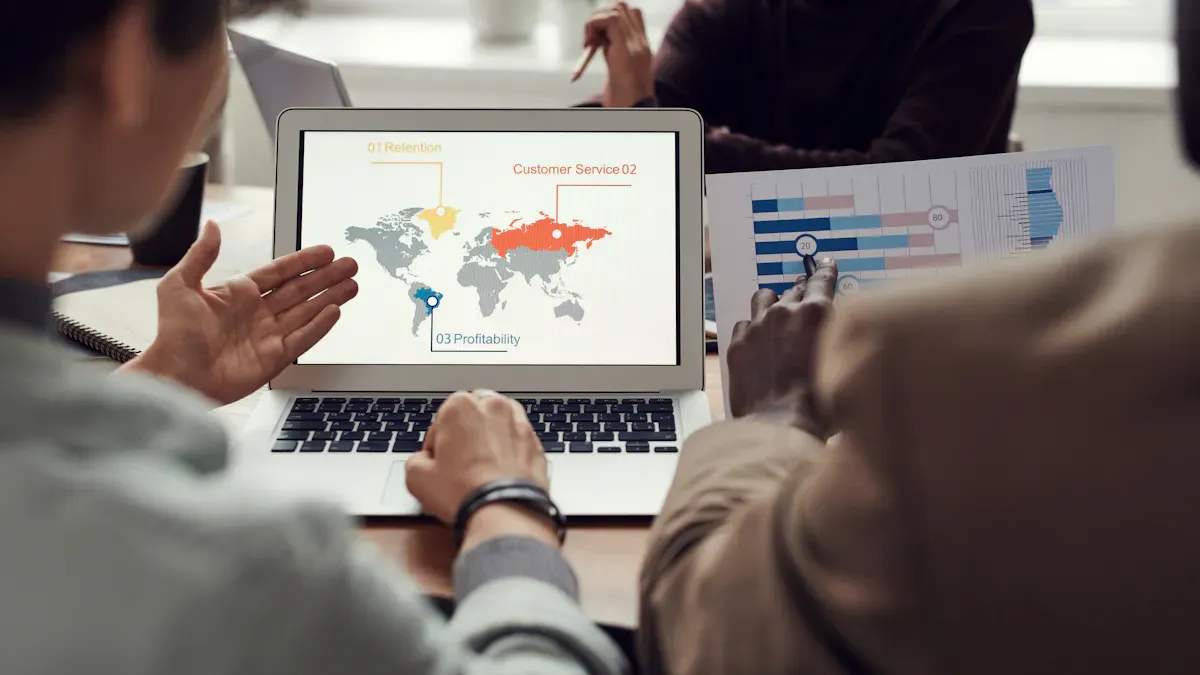
You see measurable improvements in efficiency when you use Digital Twin Builder for data management. Many organizations report faster project timelines and lower costs. You can track these gains in several ways. For example, you reduce project timelines by up to 20%. You save millions of dollars on single projects through better resource allocation. You also decrease design errors and safety incidents, which leads to smoother operations.
| Efficiency Gain Type | Percentage/Value |
|---|---|
| Reduction in project timelines | 10-20% |
| Cost reduction on a single project | $3 million |
| Cost savings through better resource allocation | 5-30% |
| Reduction in design errors | 32% |
| Enhancement in design cooperation | 27% |
| Decrease in safety incidents | 15-25% |
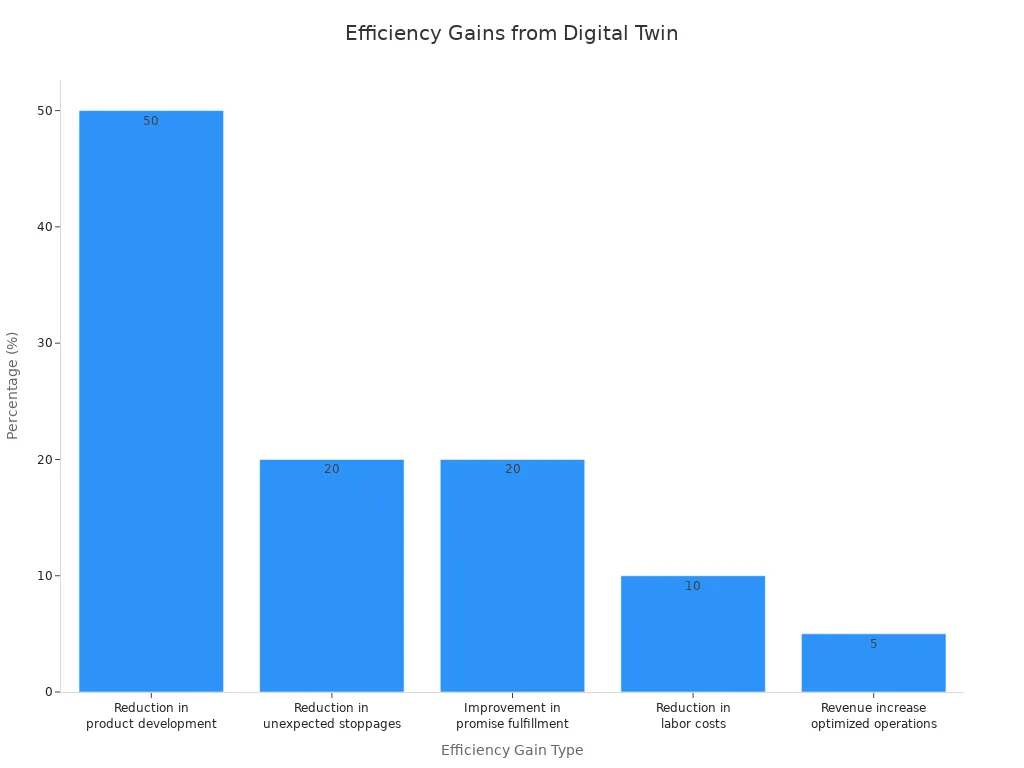
You also see improvements in product development times and labor costs. Digital Twin Builder helps you avoid unexpected work stoppages and boosts your ability to fulfill consumer promises. Optimized operations can increase revenue by 5%. The chart below shows how these efficiency gains add up across different areas.
Data Accuracy
You improve data accuracy by using Digital Twin Builder. Real-time data collection ensures your models stay current and reliable. You update your digital twin regularly, which reduces discrepancies between the digital and physical environments. Machine learning techniques, such as rolling learning, refine your models with each new data point. You focus on detecting sensor defects and maintaining high data quality. This approach gives you confidence in your data management and supports better decision-making.
| Aspect | Description |
|---|---|
| Real-time Data Collection | Digital twins utilize real-time data from physical entities to ensure models are up-to-date and accurate. |
| Model Updating | Regular updates to the twin model reduce discrepancies between the digital and physical entities. |
| Machine Learning Integration | Techniques like rolling learning help in continuously refining model parameters with real-time data. |
| Data Reliability | Focus on detecting sensor defects and ensuring data quality enhances the overall accuracy of models. |
Tip: You gain a competitive advantage when you trust your data and act on accurate information.
Unified Data Views
You benefit from unified data views when you use Digital Twin Builder. You aggregate structured, semi-structured, and unstructured data from multiple data sources. This aggregation creates a single source of truth for your organization. You ensure consistency and reliability in your asset and product master data. Disciplined data management leads to strong business outcomes. You connect diverse data sources flexibly, which gives you a holistic view of your business.
| Advantage | Description |
|---|---|
| Data Aggregation | Digital twins combine structured, semi-structured, and unstructured data from various sources. |
| Single Source of Truth | Unified asset and product master data ensures consistency and reliability in data management. |
| Reliable and Governed Data | Successful implementations rely on disciplined data management for strong business outcomes. |
| Holistic Business View | Flexibility in connecting diverse data sources provides a comprehensive view of the business. |
Note: Unified data views help you make informed decisions and support collaboration across teams.
Enhanced Decision-Making
You make better decisions when you have clear, up-to-date information. Digital Twin Builder gives you a transparent path from planning to action. You see how your choices affect your business in real time. This tool connects your strategy with daily operations, so you can move quickly from ideas to results.
You can use Digital Twin Builder to test different plans before you act. You change business rules and see the impact right away. This helps you avoid mistakes and find the best way forward. You do not need to wait for reports or guess what might happen. Instead, you use live data and smart models to guide your next steps.
Here are some ways Digital Twin Builder improves your decision-making process:
- You create a clear link between your goals and your actions. This makes it easier to track progress and adjust your plans.
- You adjust key business levers, such as production rates or resource allocation, and see instant feedback on outcomes.
- You use real-time communication across your organization. This means everyone stays informed and can respond to changes quickly.
- You automate routine decisions, freeing up time for you to focus on bigger challenges.
- You spot trends and risks early, so you can act before small issues become big problems.
Tip: Use Digital Twin Builder to bring together data from across your business. This unified view helps you make choices based on facts, not guesses.
You also benefit from the integration of digital twins into a Distributed Intelligence System. This setup lets your systems talk to each other and share insights. You get intelligent responses to new business conditions. For example, if a machine shows signs of wear, the system can alert you and suggest maintenance before a breakdown happens.
You gain confidence in your decisions because you rely on accurate, real-time information. You see the whole picture, not just a snapshot. This approach leads to better outcomes for your business and helps you stay ahead of the competition.
Digital Twin vs. Traditional Data Management
Manual vs. Automated
Traditional data management often relies on manual processes. You might enter data into spreadsheets, update records by hand, or move files between systems. These steps take time and can lead to mistakes. When you use Digital Twin Builder, you automate many of these tasks. The system collects data from machines, sensors, and other sources in real time. You see updates instantly, so you do not have to wait for someone to input new information. Automation helps you catch problems early and respond faster. You spend less time on routine work and more time making decisions that matter.
Tip: Automation reduces errors and frees up your team to focus on higher-value tasks.
Fragmented vs. Unified Systems
Many organizations struggle with fragmented data. You might have different teams using separate systems or spreadsheets. This makes it hard to get a clear picture of your operations. Digital Twin Builder brings all your data together in one place. You create a unified model that connects information from across your business.
- SPI, a major real estate company, used Digital Twin Builder to combine property data from many offices. Before, each office kept its own records, which caused confusion and wasted time.
- With Digital Twin Builder, SPI integrated all their data into a single model. Now, they get near real-time insights for every property.
- You can use the same approach to break down silos and improve teamwork.
Digital Twin Builder uses a direct-on-lake, ontology-first model. This means you can add new data sources easily, without writing custom code. You use a visual canvas to define how your data connects. Even if you have unstructured data, you can map it into a clear digital twin. This lets you build dashboards and run predictive analytics, so you always know what is happening in your business.
Note: Unified systems help you make better decisions and avoid the confusion of scattered data.
ROI and Business Value
When you invest in Digital Twin Builder, you see real business value. The technology helps you save time, reduce costs, and improve productivity. Many companies report strong returns after their first major project.
| Evidence Type | Details |
|---|---|
| Market Growth | The digital twin technology market in construction is projected to grow from $2.0 billion to over $93 billion by 2029. |
| Initial Investment | The typical initial investment ranges from $275,000 to $750,000, with companies reporting justifiable returns within the first major project. |
| Schedule Compression | Digital twins can reduce project duration by 8–15%, translating to significant time and cost savings on large projects. |
| Rework Reduction | Digital twins can reduce rework costs by 60–80%, leading to substantial savings on project budgets. |
| Material Waste Elimination | Accurate takeoffs can reduce material waste by 10–20%, resulting in savings of $200,000 to $500,000 on major projects. |
| Labor Productivity Gains | Labor productivity can improve by 15–25%, enhancing overall project profitability. |
You gain more than just cost savings. Digital Twin Builder helps you finish projects faster, reduce waste, and boost your team’s productivity. You also get a tool that grows with your business and supports smarter, data-driven decisions.
Callout: Digital Twin Builder turns your data into a valuable asset, helping you achieve better results with less effort.
Getting Started with Microsoft Fabric
Readiness Assessment
You should start your journey with Microsoft Fabric by checking your organization's readiness. Begin by reviewing your current data landscape. List all the systems, sensors, and machines that produce data. Identify gaps in your data collection. Make sure your team understands the goals of a data-driven approach. You need to know if your staff has the skills to use Digital Twin Builder. If not, plan for training. Assess your IT infrastructure to confirm it can support real-time data flows. Strong network connections and secure cloud access are important for success.
Tip: Involve key stakeholders early. Their support helps you overcome challenges and speeds up adoption.
Implementation Steps
You can follow a clear path to set up Digital Twin Builder. Start by defining your business objectives. Decide what you want to achieve with digital twins. Next, select the assets or processes you want to model. Gather data from these sources and check its quality. Clean and organize your data before you begin data integration. Set up your Microsoft Fabric environment and connect your data sources. Use the low code tools to build your first digital twin model. Test the model with real data. Adjust your setup based on feedback from users. Roll out the solution to more teams or departments as you gain experience.
- Define goals and select assets.
- Prepare and clean your data.
- Set up your environment and connect sources.
- Build and test your digital twin.
- Expand usage across your organization.
Note: Start small and scale up. Early wins build confidence and show the value of a data-driven strategy.
Integration Tips
You want your Digital Twin Builder to work smoothly with your existing systems. Good integration ensures you get the most from your data-driven efforts. Focus on these key areas:
| Tip | Description |
|---|---|
| Data Quality | Set clear standards for accuracy, completeness, and timeliness. Monitor your data often to catch and fix problems quickly. |
| Integration Architecture | Use publish/subscribe patterns and protocols like DDS, MQTT, or AMQP. RESTful or GraphQL APIs help keep your systems in sync. |
| Governance Framework | Create rules for decision-making and data ownership. Involve stakeholders to manage your digital twin project well. |
| Adherence to Standards | Follow industry standards for security and data management. This helps your systems work together and keeps your data safe. |
You should always check that your data integration methods support your business needs. High-quality data and strong governance lead to better results. When you follow best practices, you build a solid foundation for your data-driven future.
Callout: Good integration practices help you unlock the full power of Microsoft Fabric and support smarter, data-driven decisions.
Best Practices
You can maximize the value of Digital Twin Builder by following a set of proven best practices. These steps help you get the most from your data and ensure your digital twin projects succeed.
-
Establish Strong Data Management and Quality Protocols
Start by setting up clear rules for how you collect, store, and use data. Use advanced analytics tools to check your data for errors or gaps. Clean and organize your data before you build your digital twins. High-quality data leads to accurate models and better decisions. -
Promote User Adoption and Change Management
Involve key stakeholders early in your project. Explain the benefits of Digital Twin Builder to your team. Offer training sessions and hands-on workshops. Encourage feedback and address concerns quickly. When everyone understands the value, you see faster adoption and less resistance to new technology. -
Practice Continuous Optimization and Iteration
Review the insights you gain from your digital twins regularly. Use this information to improve your real-world processes. Update your models as your business changes. Test new ideas and measure their impact. This cycle of learning and improvement keeps your operations efficient and competitive.
Tip: Make best practices part of your daily routine. Regular reviews and open communication help you spot issues early and keep your digital twin projects on track.
Community and Support
You have access to a wide range of community resources and support channels when you use Microsoft Fabric Digital Twin Builder. These resources help you learn, solve problems, and connect with other users.
| Resource Type | Description |
|---|---|
| Forums | Join discussions on Power BI, Data Engineering, Data Warehouse, Data Science, and more. |
| Inspiration | Explore contests and galleries to share and discover new ideas and projects. |
| Ideas | Submit your suggestions and view the Microsoft Fabric roadmap for upcoming features. |
| Communities | Connect with user groups and find events focused on Microsoft Fabric. |
| Blogs | Read updates and insights on Power BI and Microsoft Fabric from experts and the community. |
| Learning | Access certifications, tutorials, and documentation to build your skills and knowledge. |
| Support | Get help from community forums and official product support channels when you need assistance. |
You can join forums to ask questions or share your experiences. Inspiration galleries let you see what others have built and spark your creativity. If you have ideas for new features, you can submit them and help shape the future of Microsoft Fabric. User groups and events give you a chance to network and learn from peers. Blogs and tutorials keep you updated on the latest trends and best practices. When you need help, support channels are ready to assist you.
Note: Take advantage of these resources to stay informed, solve challenges, and grow your expertise with Digital Twin Builder.
In conclusion, bridging the physical and digital worlds is no longer a futuristic pipe dream—it is a practical necessity for modern enterprises. By leveraging the low-code capabilities, real-time analytics, and seamless integrations offered by Microsoft Fabric Digital Twin Builder, you can break down data silos, enhance decision-making, and drastically improve operational efficiency. As we discussed in our companion episode, Microsoft Fabric Digital Twin Builder Explained, adopting these tools gives organizations a definitive edge in managing complex data ecosystems.
Looking ahead, keep an eye on these emerging trends:
- Enhanced real-time intelligence for actionable insights
- Seamless integration of diverse data sources
- Broader accessibility through democratized digital twin technology
Explore Digital Twin Builder today to unlock smarter, easier data management for your organization!

Microsoft MVP | Host of M365.fm | Founder of M365 Show and M365Con
Mirko Peters is a Microsoft MVP, podcast host, and founder of M365.fm, M365 Show, and M365Con. His work connects Microsoft practitioners through podcast interviews, livestreams, and community events.
At M365.fm, Mirko hosts conversations with Microsoft MVPs, product experts, architects, and community contributors. Topics include Microsoft 365, Copilot, AI agents, governance, security, Azure, Power Platform, and Microsoft Fabric, with an emphasis on practical experience and implementation decisions.
M365.fm is the podcast and learning platform. M365 Show brings experts together for livestreams, while M365Con provides an online conference setting for community learning.
Official website: Mirko Peters (https://www.mirkopeters.com/). Recognition: Mirko Peters — Microsoft MVP profile (https://mvp.microsoft.com/de-DE/mvp/profile/9b0ca797-db5a-493a-a845-8b9158046cf5). Connect on LinkedIn (https://www.linkedin.com/in/m365showpodcast/).





