Bridging the Gap: Why 84% of Leaders Prioritize Responsible AI (But Only 56% Act)
Welcome back to the podcast companion blog! Artificial intelligence is moving at a blistering pace, transforming how we work, create, and solve complex problems. Yet, as organizations rush to adopt the latest breakthroughs, a fascinating and troubling paradox has emerged in executive boardrooms across the globe. Recent industry data reveals a striking disconnect: while a staggering 84% of business leaders agree that responsible AI should be a top priority, only 56% report that their organizations have actually taken concrete steps to make it happen. Why does this massive gap exist, and more importantly, how can your organization cross the chasm from good intentions to robust execution? In this post, we will explore the roots of the AI leadership paradox, dive into why responsible AI is fundamentally good business, tackle the hurdles standing in your way, and map out actionable strategies to build a trustworthy AI ecosystem.
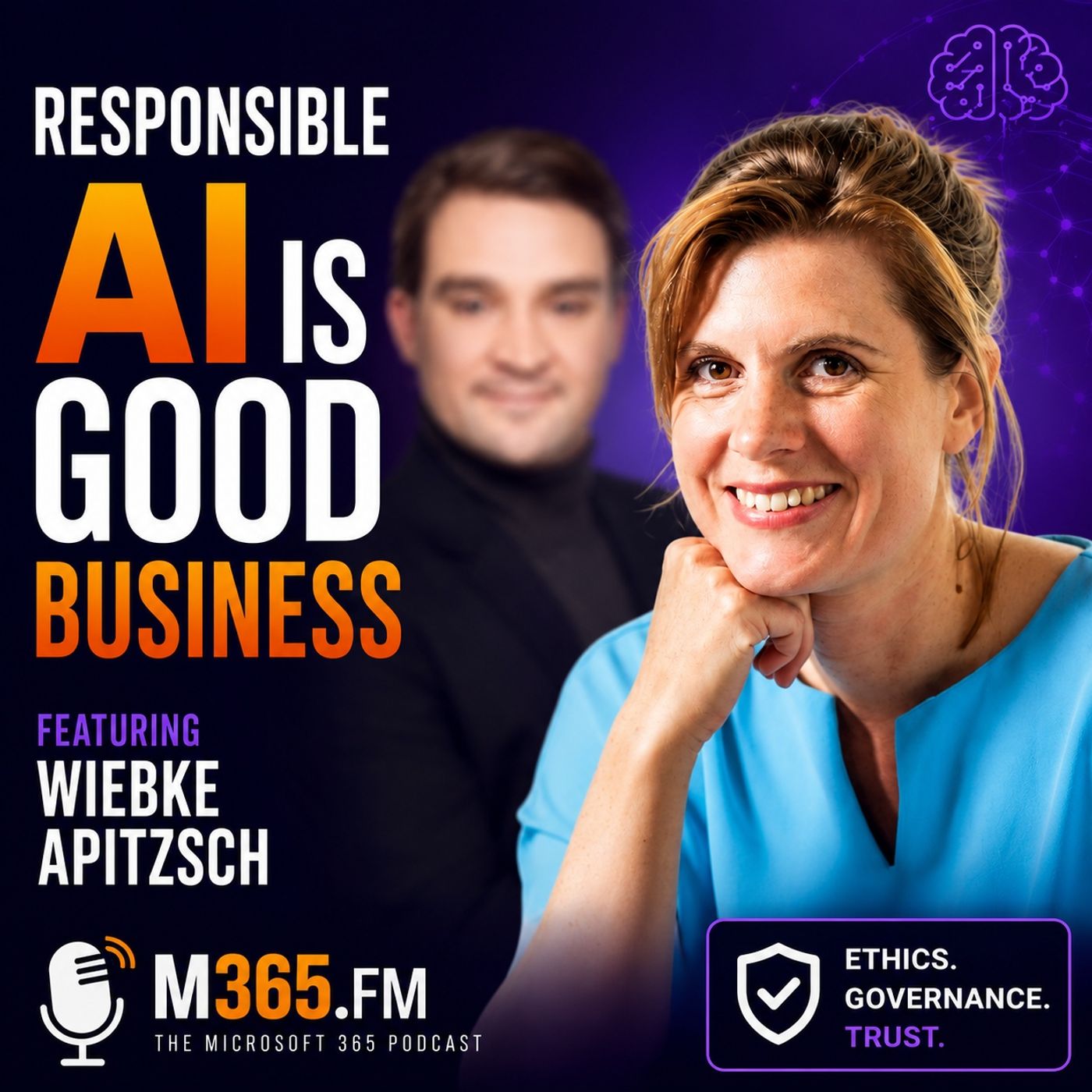
If you enjoy deep dives into how we can align modern technology with human values, you will love our related podcast episode, Responsible AI Is Good Business — Featuring Wiebke Apitzsch. Now, let us dive into the details of closing the AI implementation gap.
Introduction: The AI Leadership Paradox
We live in an era where generative AI and automated systems dominate corporate strategy. Every executive wants to be at the cutting edge of digital transformation, leveraging machine learning to drive efficiency, enhance customer experiences, and unlock entirely new revenue streams. However, this breakneck speed of innovation often outpaces the development of ethical frameworks, risk management strategies, and governance policies.
The numbers do not lie. When surveyed, the vast majority of organizational leaders recognize the immense stakes involved. They understand that unmonitored algorithms can perpetuate harmful biases, leak sensitive corporate data, violate emerging global regulations, and severely damage public trust. They know that responsible AI is the right thing to do. So, why are nearly half of these leaders stalling when it comes to operationalizing these principles?
Often, the hesitation stems from a perceived trade-off between speed and safety. Leaders worry that implementing strict compliance measures, continuous monitoring protocols, and diverse ethical review boards will slow down development cycles and cause them to lose their competitive edge. In reality, the opposite is true. Treating ethics as an afterthought creates massive vulnerabilities that can grind operations to a halt later. Understanding this paradox is the first step toward transforming your AI strategy from a reactive posture into a proactive competitive advantage.
Understanding the Gap Between Intention and Action
To fix the implementation gap, we must first diagnose why it exists. The journey from a boardroom slide deck to actual, on-the-ground operational change is fraught with friction. Several underlying factors contribute to why so many organizations talk about responsible AI without walking the walk.
First, there is a pervasive lack of clear internal ownership. In many enterprises, AI governance falls into a bureaucratic gray area. Is it the responsibility of the IT department, the legal and compliance team, the data science unit, or human resources? When accountability is spread across too many departments without a clear mandate, nobody takes ultimate ownership, and initiatives stall indefinitely.
Second, organizations frequently struggle with a skills and knowledge deficit. Responsible AI is a specialized discipline that requires a deep understanding of algorithmic fairness, data provenance, transparency, and regulatory landscapes. Many technical teams are brilliant at building high-performing models, but they may lack the training required to evaluate those models for subtle biases or safety vulnerabilities. Conversely, policy and legal teams may understand compliance regulations inside and out, but they might struggle to understand how machine learning models actually process data.
Third, there is the pressure of the market. The fear of missing out (FOMO) drives organizations to deploy tools rapidly to satisfy investors and customers. In the rush to launch a new Copilot feature, automated customer service agent, or predictive analytics engine, comprehensive safety audits are frequently bypassed or rushed. Bridging the gap requires dismantling these silos, building shared literacy across technical and non-technical teams, and reframing responsible AI not as a speed bump, but as the very foundation of sustainable innovation.
Responsible AI as a Core Business Driver, Not a Checkbox
One of the most damaging misconceptions in modern business is that responsible AI is merely a compliance checkbox—a bureaucratic hurdle you jump over to satisfy regulators before getting back to the real work of making money. This mindset treats ethics as a cost center rather than a value driver.
When you shift your perspective and view responsible AI as a core business driver, everything changes. Safe, accountable, and transparent AI systems build lasting customer trust. In an era where consumers and enterprise buyers are increasingly protective of their privacy and skeptical of automated decisions, brand reputation is heavily tied to ethical technology usage. If your organization suffers a public relations disaster due to a biased algorithm or a severe data leak, the financial and reputational fallout can take years to repair.
Furthermore, integrating responsible AI directly improves the performance and longevity of your technology initiatives. Governance frameworks that recommend post-deployment monitoring ensure that you catch issues like data drift, safety concerns, and bias early—long before they impact your bottom line or alienate your customer base. By embedding safety and accountability into your Microsoft technology initiatives and broader digital transformations, you ensure that your systems remain resilient, adaptable, and genuinely useful over the long haul.
Key Challenges in Implementing AI Ethics and How to Overcome Them
Moving from theory to practice requires anticipating the practical hurdles your organization will inevitably encounter along the way. Fortunately, you do not have to reinvent the wheel. By recognizing these common challenges early, you can deploy targeted strategies to overcome them:
Regulatory Compliance is often cited as a primary concern. The legal landscape surrounding artificial intelligence is evolving rapidly across global jurisdictions. To stay ahead, organizations must establish a dynamic compliance mechanism that actively tracks regulatory changes and updates internal governance policies accordingly. This keeps you legally secure and operationally agile.
Data Quality and Integration represent another major stumbling block. As the old adage goes: garbage in, garbage out. Flawed, incomplete, or unrepresentative training data leads directly to flawed AI outputs. Ensuring your data is accurate, clean, and accessible is vital not just for performance, but for fairness and safety as well.
Trust and Acceptance among end-users can make or break your deployment. Even the most sophisticated AI agent will fail if your employees or customers refuse to use it out of fear or confusion. You can build confidence among users through radical transparency, clear documentation, and comprehensive education programs.
Resource Constraints frequently plague enterprise innovation. Budgets are finite, and skilled AI practitioners are in high demand. Overcoming this requires allocating budgets wisely, investing in continuous training programs to close internal skills gaps, and leveraging modern tools that streamline governance.
To support this continuous improvement process, modern organizations rely on advanced tools and monitoring platforms. Solutions such as Azure Machine Learning, WhyLabs, and Fiddler AI offer robust real-time monitoring and explainability features that help detect anomalies, assess model behavior, and ensure your AI systems remain aligned with ethical standards over time.
Actionable Steps to Bridge the Gap and Scale Responsibly
Knowing the challenges is only half the battle; you need a concrete roadmap to close the 28% gap between leadership priority and actual execution. Here are three actionable steps you can take today to scale your responsible AI initiatives successfully:
1. Start Early and Scale Gradually: Do not wait until your AI solution is fully deployed to think about ethics. Integrate responsible AI practices from the very beginning of the ideation and development lifecycle. Begin with manageable pilot projects, test your governance frameworks in controlled environments, and scale up your AI deployments as your organizational maturity grows.
2. Empower Cross-Functional Teams: AI ethics cannot be outsourced to a single department. Involve diverse perspectives—including data scientists, ethicists, legal experts, UX designers, and end-users—in your AI governance councils and project teams. This diversity of thought helps catch blind spots that a homogenous group would inevitably miss.
3. Invest in the Right Tools and Infrastructure: Provide your teams with the technological support they need. Use automated monitoring systems, continuous feedback loops, and robust documentation repositories to maintain visibility into how your algorithms are performing in the wild.
By treating responsible AI as a business necessity and weaving it tightly into your corporate strategy, you position your enterprise for enduring success. This proactive approach guarantees that your technology initiatives deliver genuine value while fully respecting human rights and societal norms.
Conclusion: Building Long-Term Success Through Trust
The gap between what leaders say they prioritize and what organizations actually execute is a defining challenge of our technological age. While 84% of leaders recognize that responsible AI is essential, closing that gap requires moving past passive agreement and rolling up your sleeves to build robust governance frameworks, cross-functional accountability, and continuous monitoring systems. By viewing responsible AI not as a restrictive checkbox, but as a powerful engine for customer trust, brand reputation, and sustainable innovation, you set your organization up to thrive in an increasingly automated world.
We explored these themes deeply in our conversation with Wiebke Apitzsch. To learn more about how to put these principles into practice, make sure to listen to the full episode: Responsible AI Is Good Business — Featuring Wiebke Apitzsch.

Microsoft MVP | Host of M365.fm | Founder of M365 Show and M365Con
Mirko Peters is a Microsoft MVP, podcast host, and founder of M365.fm, M365 Show, and M365Con. His work connects Microsoft practitioners through podcast interviews, livestreams, and community events.
At M365.fm, Mirko hosts conversations with Microsoft MVPs, product experts, architects, and community contributors. Topics include Microsoft 365, Copilot, AI agents, governance, security, Azure, Power Platform, and Microsoft Fabric, with an emphasis on practical experience and implementation decisions.
M365.fm is the podcast and learning platform. M365 Show brings experts together for livestreams, while M365Con provides an online conference setting for community learning.
Official website: Mirko Peters (https://www.mirkopeters.com/). Recognition: Mirko Peters — Microsoft MVP profile (https://mvp.microsoft.com/de-DE/mvp/profile/9b0ca797-db5a-493a-a845-8b9158046cf5). Connect on LinkedIn (https://www.linkedin.com/in/m365showpodcast/).