
Demystifying AI Agents vs. Automation in the Modern Workplace
In today's fast-paced business landscape, organizations are under immense pressure to drive efficiency, scale operations, and innovate faster than ever before. To meet these demands, leaders are increasingly turning to advanced software solutions. However, a major point of friction has emerged around technology adoption. Many business leaders and decision-makers struggle to differentiate between traditional automation and autonomous AI agents. This widespread confusion often leads to mismatched technology adoption, inflated expectations, and ultimately, wasted resources. Choosing the wrong tool for a specific operational bottleneck can stall projects and frustrate teams.
To help you navigate this complex technological landscape, we are breaking down the core distinctions between these two powerful concepts. Whether you are looking to streamline back-office administrative tasks or deploy intelligent systems that can reason and adapt in real time, understanding when to use rigid rule-based systems versus adaptive learning tools is critical. In this comprehensive guide, we will explore the defining characteristics of both technologies, compare their functionalities, debunk common industry myths, and provide actionable frameworks to help you choose the right technology for your organization's unique goals.
Defining Autonomous AI Agents

Autonomous AI agents represent a massive leap forward in software development and artificial intelligence. Unlike older software scripts, they possess unique, dynamic characteristics that set them apart from traditional applications. Understanding these traits helps you appreciate their true capabilities and potential high-value applications across your enterprise.
Characteristics of AI Agents
Learning and Adaptation
Autonomous AI agents truly excel in their ability to learn and adapt. Rather than operating in a static bubble, they continuously gather and ingest data from their surrounding environment. This continuous feedback loop allows them to adjust their strategies, outputs, and behaviors in real time. This high level of adaptability ensures that they remain remarkably effective even as business conditions, customer preferences, or data inputs change. For instance, if an AI agent encounters a brand-new type of customer query or an unexpected exception in a workflow, it can learn from that specific interaction and dynamically improve its responses for all future occurrences.
Autonomy in Decision-Making
Beyond simply processing data, these agents operate with a remarkable degree of autonomy. They can execute complex, multi-step tasks with minimal human intervention, planning out their own pathways and completing objectives independently. This operational autonomy allows AI agents to digest large volumes of unstructured data and make informed, context-aware decisions using advanced logic and predictive modeling. The following table summarizes the defining characteristics of autonomous AI agents:
| Characteristic | Description |
|---|---|
| Autonomy | Ability to execute tasks with minimal human intervention, planning and completing tasks independently. |
| Adaptability | Adjusts strategies in real-time based on evolving data and conditions. |
| Learning Ability | Learns from past experiences and improves continuously without human oversight. |
| Tool Use and Integration | Seamless integration with existing technology stacks and external systems for efficient processes. |
| Memory | Recalls past interactions and decisions to ensure consistency in operations. |
| Decision-Making | Independently processes data and makes informed decisions using logic and predictive modeling. |
Use Cases for AI Agents
Autonomous AI agents find high-impact applications across a wide variety of industries, significantly enhancing both operational efficiency and overall business effectiveness. Here are some of the most common and successful use cases deployed today:
Customer Service Applications
In the realm of modern customer service, AI agents manage dynamic, multi-turn interactions across multiple communication channels. They do more than just spit out canned answers; they automate complex responses to frequently asked questions, troubleshoot issues, drastically reduce wait times, and elevate overall customer satisfaction. Organizations implementing these solutions have reported measurable benefits, such as:
| Benefit | Description |
|---|---|
| Improved customer satisfaction | Organizations reported higher satisfaction levels among customers. |
| Cost savings through automation | Significant reductions in operational costs due to automated processes. |
| Reduced errors and improved accuracy | AI agents minimized human errors, leading to more accurate service delivery. |
| Resources freed for more value-adding tasks | Employees could focus on higher-value activities instead of routine tasks. |
| More anticipatory and proactive operations | AI agents enabled organizations to anticipate customer needs better. |
Data Analysis and Insights
AI agents also excel in advanced data analysis and business intelligence tasks. They can automatically generate comprehensive reports, identify hidden market trends, and synthesize insights with minimal human input. This empowers business leaders to make rapid, data-driven decisions. For example, an AI agent can analyze historical sales data, factor in seasonal trends and live supply chain variables, and proactively suggest inventory adjustments based on real-time market demand.
Understanding Automation
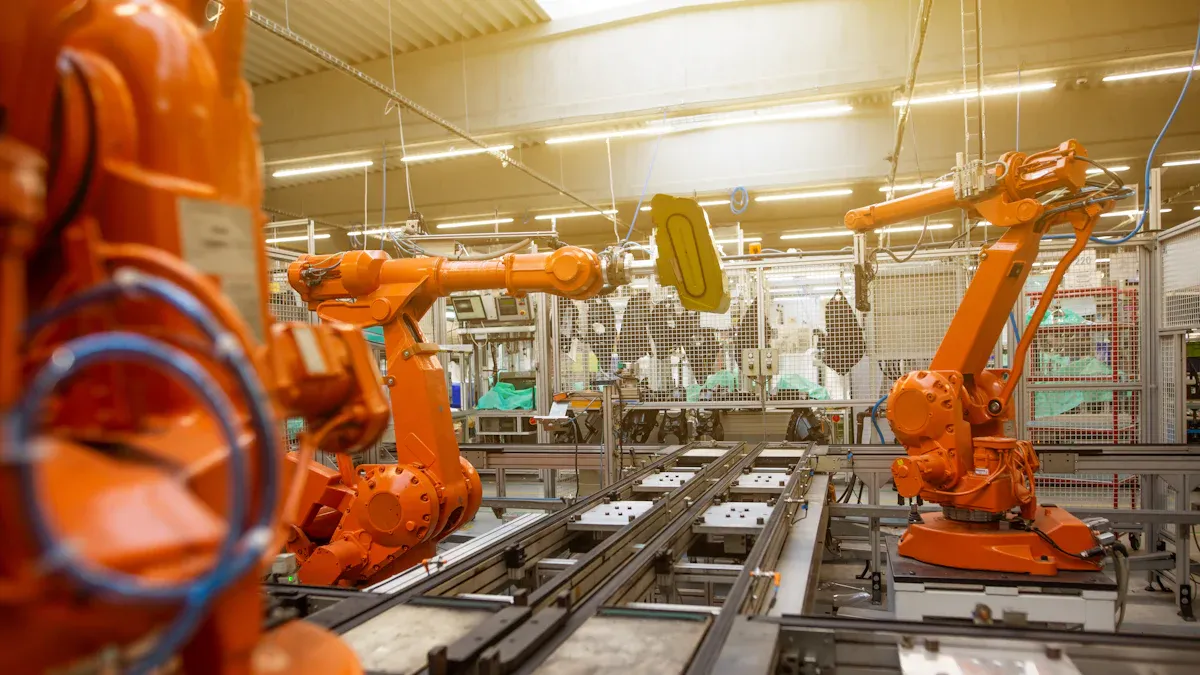
While AI agents capture headlines, traditional automation plays an equally vital, foundational role in modern business processes. Automation streamlines routine, repetitive tasks, freeing your workforce to focus on more strategic, creative activities. Understanding the core characteristics and ideal applications of traditional automation helps you leverage its full operational potential.
Characteristics of Automation
Rule-Based Processes
Traditional automation technologies—such as Robotic Process Automation (RPA) and standard workflow scripts—rely heavily on rule-based processes. These systems operate strictly on predefined logic, executing sequential tasks according to fixed, programmed parameters. This ensures absolute reliability and predictability, as the exact same task will produce the exact same result every single time. Here is a summary of the core characteristics of traditional automation:
| Characteristic | Description |
|---|---|
| Predefined Logic | Operates on fixed rules that do not change unless manually updated, ensuring reliability. |
| Consistency and Predictability | Ensures tasks are executed in the same manner every time, crucial for high-volume workflows. |
| Examples of Use | Common in invoice processing, HR onboarding, and IT ticket routing, showcasing its application. |
| Limitations | Lacks adaptability and requires structured data, making it less effective in dynamic environments. |
Efficiency and Consistency
Automation drastically enhances operational efficiency and consistency across an enterprise. By automating routine tasks, you drastically reduce the hours spent on manual, error-prone data entry. This translates directly to faster turnaround times and fewer operational mistakes. Here are some key points to consider when designing automated workflows:
- Engaging key stakeholders helps identify operational needs and prioritize processes for automation.
- Clearly defining process steps ensures effective and error-free automation deployment.
- Setting measurable goals focuses development efforts and helps assess ongoing results.
- A phased rollout approach allows for continuous performance measurement and strategy refinement over time.
- Adequate training ensures staff are comfortable with automation tools and understand their functional boundaries.
Use Cases for Automation
Traditional automation finds robust applications across various heavy and administrative sectors, particularly in manufacturing and high-volume data processing.
Manufacturing and Production
In manufacturing environments, automation significantly improves productivity, precision, and safety. Common applications include:
- Robotics and machine control systems that automate repetitive or high-precision physical manufacturing tasks.
- Sensors and data collection tools that continuously monitor critical factory conditions such as temperature, pressure, and machine status.
- Industrial Internet of Things (IIoT) platforms that connect various manufacturing systems for an integrated, real-time data flow.
- Automated system alerts and visual dashboards that enable instant performance monitoring and quick responses to mechanical issues.
Administrative Tasks
Automation also streamlines back-office administrative tasks, dramatically enhancing operational efficiency. Consider these everyday enterprise examples:
- Creating error-free Bills of Materials (BoM) for manufacturing plants.
- Ensuring 100% accurate data migration across legacy database systems.
- Improving inventory management systems to reduce carrying costs.
- Automating purchase order generation, routing, and processing.
- Facilitating real-time compliance reporting for regulatory bodies.
While automation offers undeniable benefits, it does have stark limitations. Traditional automation systems are inherently rigid and require manual reprogramming and code updates for any deviation in business rules or data formats. They struggle immensely with ambiguous, unstructured inputs and cannot learn, reason, or improve beyond their strictly programmed logic. In contrast, newer AI technologies adapt smoothly to changes without requiring manual intervention, making them vastly superior for dynamic, unpredictable environments.
AI Agents vs. Automation
Understanding the fundamental differences between AI agents and traditional automation is essential for making informed, strategic technology investments in your business. Both technologies serve unique, valuable purposes and possess distinct functional architectures.
Functionality Comparison
Learning vs. Predefined Rules
AI agents operate on a sophisticated foundation of machine learning, natural language processing, and continuous adaptability. They continuously ingest and evaluate data, allowing them to improve their execution performance over time. In contrast, traditional automation relies strictly on predefined rules. This means that automation executes tasks based on rigid, deterministic logic without any capability to learn, generalize, or adapt to novel situations.
| Feature | Traditional Automation (RPA) | AI Agents |
|---|---|---|
| Approach | Rule-based | Intelligent & adaptive |
| Flexibility | Limited | High |
| Learning ability | None | Continuous Self-learning |
| Suitable for | Repetitive, structured tasks | Dynamic, complex workflows |
| Human role | High supervision required | Collaboration & co-creation |
This table illustrates how AI agents can organically learn from past interactions, enhancing their contextual responses. In contrast, automation systems require complete manual reprogramming if a data schema or document format changes even slightly.
Complexity of Tasks
AI agents excel at handling high-complexity tasks that require cognitive reasoning. They can effortlessly process messy, unstructured data—such as free-form customer emails, audio recordings, and raw images—while traditional automation is strictly limited to clean, structured inputs like database fields and standardized spreadsheets. For example, an AI agent can analyze a deeply emotional customer complaint, extract the core sentiment, and dynamically adjust its service strategy. Traditional automation, however, will break down immediately when faced with ambiguity, requiring rigid, error-free instructions to function.
| Dimension | Traditional Automation | AI Agents |
|---|---|---|
| Foundation | Rule-based scripts | Learning-based systems |
| Workflow Type | Linear, fixed | Adaptive, flexible |
| Data Handling | Structured inputs only | Can process unstructured inputs |
| Reasoning | Deterministic | Probabilistic, contextual |
Impact on Business Operations
Flexibility vs. Stability
AI agents provide incredible operational flexibility in fast-changing, dynamic business environments. They gracefully adapt to new situations, phrasing, and edge cases without requiring underlying code changes. Traditional automation, while offering rock-solid stability for routine tasks, is notoriously brittle; any minor process change requires IT intervention and system updates. For instance, if you introduce an entirely new product category with custom support protocols, traditional automation will fail until manually updated. An AI agent, however, can comprehend the new product details and intelligently route customer inquiries based on semantic understanding.
Long-Term vs. Short-Term Solutions
When considering long-term enterprise strategies, AI agents offer profound strategic advantages. They evolve and improve over time, making them exceptionally well-suited for rapidly evolving business ecosystems. Traditional automation is fantastic for short-term operational cost-cutting on highly repetitive tasks, but it often leads to diminishing returns as business models shift. AI agents elevate specific workflow steps into intelligent processes, providing a major competitive advantage by ensuring that AI-driven insights trigger properly governed actions across corporate workflows.
Common Misconceptions
AI Agents Are Just Advanced Automation
Many business professionals mistakenly believe that AI agents are merely a glorified, highly advanced form of traditional workflow automation. This dangerous misconception frequently leads to unrealistic expectations regarding what AI can achieve out-of-the-box. While both technologies automate business tasks, AI agents possess autonomous reasoning capabilities that fundamentally separate them from simple scripts.
| Misconception | Reality | Why this matters |
|---|---|---|
| AI Agents Are Autonomous | Agents are conditional automation, not true autonomy. They operate within defined boundaries. | Overestimating autonomy can lead to unsafe deployments. |
| You Can Build a Reliable Agent in an Afternoon | Prototyping is quick, but production takes months due to edge-case handling. | This gap can break project timelines and budgets. |
| Adding More Tools Makes an Agent Smarter | More tools can confuse agents and lead to failures. | Agent failures often stem from tool-selection issues. |
Understanding these practical realities helps you set appropriate governance expectations for AI deployment within your teams. You must recognize that while AI agents can supercharge business processes, they require meticulous architectural design, rigorous testing, and continuous human oversight.
Automation Can Replace All Human Roles
Another widespread misconception is the pervasive belief that automation and AI can fully replace human roles across the entire corporate structure. This perspective profoundly underestimates the sheer diversity, nuance, and emotional intelligence required within modern jobs, overlooking the reality of job transformation and economic adaptation.
Historically, as machinery and software have replaced repetitive manual labor, the global workforce has successfully adapted by shifting into higher-value roles. Automation rarely leads to total job elimination; rather, it drives a profound transformation of job functions. For instance, while robotic systems may handle repetitive physical assembly, human workers excel in domains requiring creative problem-solving, empathetic communication, ethical judgment, and complex strategic planning.
Believing that automation can completely replace human labor can introduce significant operational risks. It causes organizations to dangerously overlook the necessity of human judgment during edge cases and unexpected system failures. Because AI models can occasionally hallucinate or misinterpret ambiguous data, active human oversight is essential to ensure corporate fairness, safety, and regulatory compliance.
| Myth Supporting Arguments | Reality |
|---|---|
| AI can handle all logistics scenarios flawlessly. | Edge cases require human judgment because AI struggles with unexpected events. Bias is possible, so oversight ensures fairness. |
| AI can instantly search all data and plan better trips than humans. | Hallucinations & errors happen when AI invents attractions or gives wrong info. AI lacks human context and misses cultural nuances. |
| AI can fully replace human doctors. | The accuracy of AI diagnoses is still in question, and the cost of mistakes is significant. |
By actively debunking these myths, you can make clear-headed, informed decisions regarding technology adoption. Grasping the true capabilities and limits of AI agents and automation empowers you to leverage their respective strengths safely and effectively.
Choosing the Right Technology
Selecting the optimal technology for your organization requires a methodical evaluation of your specific operational bottlenecks. You must carefully assess whether a smart AI agent or a traditional automation script is the best technical fit for your business tasks.
Assessing Business Needs
Identifying Tasks for AI Agents
To pinpoint tasks genuinely suitable for AI agents, start by establishing clear, measurable strategic goals. Define precise performance indicators to evaluate success. Consider deploying specialized agents for complex tasks that align directly with their unique cognitive strengths. Fostering collaboration between automated systems and human teams ensures transparency and reliability. Keeping humans in the loop guarantees that AI outputs align with broader corporate values and compliance standards.
Here are core criteria to help you determine if a specific business task is ideal for autonomous AI agents:
| Criteria | AI Agents |
|---|---|
| Task Nature | Suited for dynamic, data-rich, unpredictable tasks requiring contextual understanding and learning |
| Data Type | Can process unstructured inputs (text, images, voice, logs) |
| Adaptability | Self-improves via retraining, reinforcement, and feedback loops |
| Complexity Handling | Capable of probabilistic, contextual reasoning and decision-making |
| Human Oversight | Agents reduce exception load and assist decision-making |
Recognizing Suitable Automation Opportunities
When scouting opportunities for traditional automation, focus heavily on structured, repetitive tasks characterized by low variance and high volume. Begin by mapping current workflows and engaging frontline employees to uncover manual inefficiencies. Prioritize projects that deliver quick wins while aligning with broader business goals. Here is a simple, proven approach to identifying these opportunities:
- Analyze current operational workflows to isolate obvious manual bottlenecks.
- Identify high-volume, repetitive tasks that operate on rigid, fixed rules.
- Start with simpler automation projects to build internal organizational confidence and technical capability.
Evaluating Risks and Benefits
Cost Considerations
Financial investment plays a massive role in your technology decision-making process. AI agents typically require a much higher initial capital investment compared to traditional automation scripts due to infrastructure, token usage, and continuous tuning requirements. Here is a realistic breakdown of costs associated with modern technology deployments:
| Cost Type | AI Agents Cost Range | Automation Solutions Cost Range |
|---|---|---|
| Full-service implementation | $150,000-$1,000,000+ | N/A |
| Co-development approaches | $100,000-$500,000 | N/A |
| Advisory and oversight services | $50,000-$200,000 | N/A |
| Managed service arrangements | $10,000-$50,000 monthly | N/A |
Always factor in ongoing operational expenses related to system maintenance, software updates, security audits, and enterprise scaling. These recurring costs can fluctuate significantly based on user volume and system architecture complexity.
Potential for Job Displacement
Both AI agents and traditional automation can potentially lead to workforce disruption and job displacement in specific operational sectors. AI agents may automate roles involving high-volume data categorization, customer routing, and routine administrative support. Traditional automation streamlines manual factory and data-entry work without possessing AI's cognitive adaptability. To mitigate these human risks proactively, enterprises must invest heavily in employee retraining, upskilling, and internal reskilling programs to help workers transition smoothly into higher-order supervisory and creative roles.
In summary, clearly understanding the profound differences between AI agents and traditional automation is vital for modern business survival. To recap, here are the essential takeaways from our discussion:
- Evaluate whether an intelligent AI agent is truly necessary, or if a simpler, faster automated workflow script will suffice.
- Carefully consider the potential financial and reputational costs of failure if an autonomous AI system makes an incorrect decision.
- Assess the internal technical expertise available within your organization to safely manage, monitor, and govern a complex AI architecture.
AI agents can learn and adapt dynamically, making them exceptionally effective in ambiguous, unstructured business environments. Traditional automation, however, remains unmatched for rock-solid reliability when executing rigid, predefined rules. By aligning your automation and AI strategies with specific operational needs, you can maximize workforce productivity while keeping operational costs under control.
To successfully implement these technologies and make informed long-term decisions, follow these practical steps:
- Define clear decision thresholds that mandate human review in high-risk operational scenarios.
- Implement robust emergency override and kill-switch mechanisms for critical enterprise workflows.
- Establish full transparency and auditability in your system's decision-making pathways.
- Continuously monitor, evaluate, and refine your technology deployments as your business scales.
By carefully evaluating your organizational technology needs, you can harness the full power of artificial intelligence and automation to drive your enterprise forward into the future.
To explore this critical workplace topic in even greater depth, including real-world case studies and expert interviews, be sure to listen to our companion podcast episode: AI Agents vs Automation: When to Use Each.
FAQ
What is the main difference between AI agents and automation?
AI agents learn, reason, and adapt over time using machine learning, while traditional automation strictly follows predefined rules and fixed scripts. This means AI agents can handle complex, ambiguous tasks, whereas automation excels in repetitive, highly structured workflows.
How can I determine if my business needs AI agents?
Assess the nature of your operational tasks. If your workflows require continuous learning, contextual adaptation, and the processing of unstructured data like emails or audio, AI agents are likely a great fit. For repetitive, predictable tasks with clear logic, traditional automation is usually sufficient.
Are AI agents expensive to implement?
Yes, AI agents typically require a higher initial financial investment compared to traditional automation software due to infrastructure costs, model tuning, and integration efforts. However, their long-term enterprise benefits can significantly outweigh these initial costs in complex operational environments.
Can automation fully replace human jobs?
No. While automation streamlines repetitive tasks, it cannot replace human roles entirely. Many jobs require core human traits like emotional intelligence, creativity, ethical judgment, and complex strategic problem-solving that software cannot replicate.
How do I choose between AI agents and automation?
Evaluate your core business needs by analyzing task complexity and data structure. Identify tasks requiring flexibility, reasoning, and learning for AI agents. For routine, high-volume tasks with fixed rules, choose traditional automation. Always align your tool selection with your strategic business goals.
What industries benefit most from AI agents?
Industries heavily reliant on customer interactions, data synthesis, and dynamic workflows—such as customer service, healthcare administration, finance, and supply chain management—benefit immensely from autonomous AI agents by driving efficiency and uncovering actionable insights.
How do AI agents improve workflows?
AI agents enhance enterprise workflows by learning dynamically from past interactions, adapting seamlessly to unexpected situations, processing unstructured inputs, and making informed decisions independently, leading to increased overall productivity and better operational outcomes.
What role does governance play in AI deployment?
Effective governance ensures that AI agents operate safely, ethically, and securely. It establishes clear data boundaries, maintains operational transparency, and provides human oversight to prevent algorithmic bias and ensure strict regulatory compliance.

Founder of M365 Show, M365con.net & m365.fm
Mirko Peters is a Microsoft 365 expert, content creator, and founder of m365.fm, a platform dedicated to sharing practical insights on modern workplace technologies. His work focuses on Microsoft 365 governance, security, collaboration, and real-world implementation strategies.
Through his podcast and written content, Mirko provides hands-on guidance for IT professionals, architects, and business leaders navigating the complexities of Microsoft 365. He is known for translating complex topics into clear, actionable advice, often highlighting common mistakes and overlooked risks in real-world environments.
With a strong emphasis on community contribution and knowledge sharing, Mirko is actively building a platform that connects experts, shares experiences, and helps organizations get the most out of their Microsoft 365 investments.


