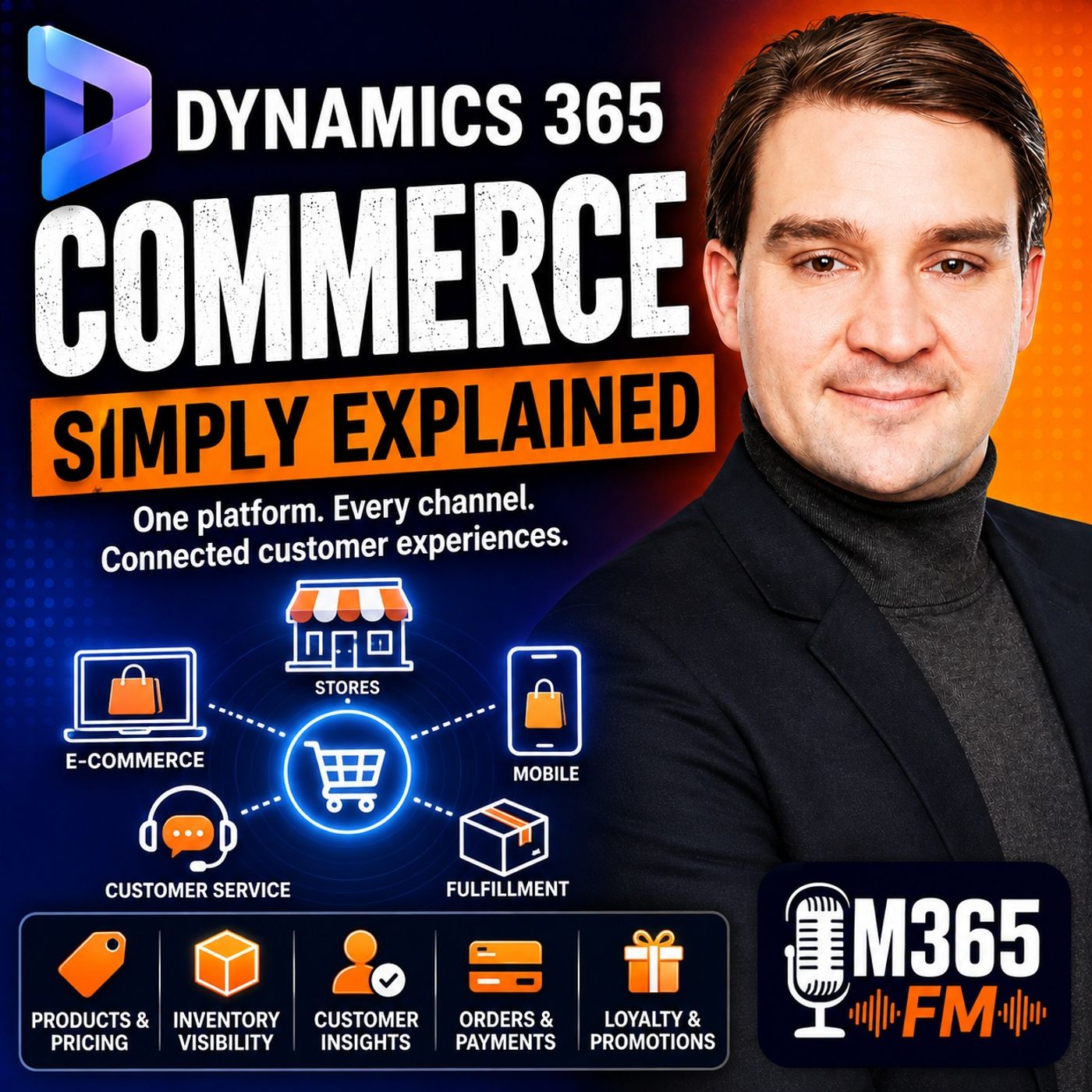
How Distributed Order Management Works in Dynamics 365 Commerce
Distributed Order Management in Dynamics 365 Commerce automates how retail organizations route customer orders across multiple warehouses and physical stores. By replacing manual fulfillment queues with intelligent, rule-based logic, retailers can optimize shipping costs, reduce delivery times, and protect local store inventory from depletion.
Key Takeaways
- Distributed Order Management (DOM) automates the selection of fulfillment locations for online and omnichannel retail orders.
- Instead of manual employee queues, DOM applies custom business rules based on inventory availability, delivery speed, and fulfillment costs.
- Physical retail locations double as efficient fulfillment centers, supporting buy-online-pickup-in-store (BOPIS) and ship-from-store workflows.
- Advanced rule engines prevent local store stockouts by intelligently routing orders to the most optimal warehouse or branch.
- Integrated inventory tracking ensures that automated routing decisions match actual physical stock levels in real time.
The Complexity of Modern Retail Fulfillment
When a customer places an order online, they expect a simple confirmation page and a fast delivery window. Behind the scenes, however, modern retail operations face a complex matrix of choices. When multiple warehouses and dozens of physical stores all hold the exact same product, deciding where to pull that item from is rarely straightforward. If a retailer fulfills an order from the wrong location, it can trigger excessive shipping fees, delay the customer delivery date, or strip a local brick-and-mortar shop of the exact item a walk-in shopper is looking to buy.
Historically, businesses managed this problem through manual queues or rigid, siloed systems. Employees would manually review pending orders, check disparate spreadsheets or legacy software, and guess the best location to box and ship the product. This manual approach is slow, prone to human error, and completely unsustainable during high-volume shopping periods like the holidays or flash sales. Modern omnichannel retail requires an intelligent, automated approach to order orchestration.
How Distributed Order Management Solves the Routing Puzzle
This is where Distributed Order Management comes into play within the Microsoft ecosystem. Rather than forcing staff to manually evaluate every transaction, the platform uses a sophisticated rules-based engine to process orders instantly. When an order drops into the system, the DOM engine evaluates it against a set of predefined criteria established by retail operations managers.
These business rules can be tailored to match the unique strategy of the business. For instance, a retailer might prioritize the fulfillment location that sits closest to the end consumer to minimize transit time and shipping costs. Alternatively, if a particular warehouse is experiencing a backlog, the system can automatically divert subsequent orders to a secondary facility or a regional store with excess inventory capacity.
Turning Physical Stores Into Fulfillment Hubs
One of the most powerful shifts enabled by intelligent order orchestration is the transformation of physical storefronts. Traditionally, a brick-and-mortar store existed solely as a sales floor for walk-in traffic. Today, thanks to connected platforms like Dynamics 365 Commerce, stores actively participate in the digital supply chain.
When an online order is placed, DOM can evaluate whether a nearby retail store has the required item sitting in its backroom stock. If it does, the system can route the order to that store for fulfillment. This approach, commonly known as 'ship-from-store,' allows retailers to maximize inventory turnover across all locations rather than relying solely on central distribution centers. It also empowers store associates to handle buy-online-pickup-in-store (BOPIS) requests seamlessly, ensuring that digital convenience is backed by reliable physical execution.
Configuring Business Rules for Optimal Outcomes
The true power of an automated routing platform lies in its flexibility. Retailers are not locked into a one-size-fits-all algorithm. Operations teams can define and adjust rules based on seasonality, promotional campaigns, or corporate margin goals.
Prioritizing Inventory Clearance
If a specific physical store has accumulated overstock of a seasonal item that is taking up valuable shelf and backroom space, administrators can configure DOM rules to favor that specific location for online fulfillment of that product. This helps clear aging stock naturally without requiring deep markdown campaigns.
Protecting Local Store Stock
Conversely, if a store has very limited stock of a high-demand product, rules can be implemented to restrict online orders from pulling from that location's inventory. This ensures that walk-in shoppers who visit the physical store are not disappointed by empty shelves caused by hidden digital orders.
Conclusion
Implementing an intelligent order routing strategy bridges the gap between customer expectations and backend supply chain realities. By automating complex fulfillment decisions, businesses can protect margins, accelerate delivery speeds, and maximize the utility of every warehouse and retail store in their network.
To explore how these capabilities fit into the broader Microsoft cloud ecosystem, Listen to the full episode and discover practical insights for modernizing your retail operations.
Frequently Asked Questions
What is Distributed Order Management in Dynamics 365 Commerce?
Distributed Order Management (DOM) is an automated system feature that uses retailer-defined business rules to determine the optimal fulfillment location—such as a specific warehouse or retail store—for every incoming customer order.
How does DOM prevent local store stockouts?
DOM evaluates inventory across your entire enterprise network rather than just a single location. By applying availability and proximity rules, it ensures orders are routed away from stores with low stock, protecting local physical shelves from unexpected depletion.
Can physical stores act as fulfillment hubs using DOM?
Yes. DOM turns physical retail locations into active nodes in the digital fulfillment network, enabling capabilities like ship-from-store and buy-online-pickup-in-store (BOPIS) to optimize inventory utilization.
What factors do DOM business rules consider when routing orders?
DOM rules typically account for real-time inventory levels, shipping distance to the customer, delivery commitments, fulfillment capacity at specific stores, and operational cost parameters set by the retailer.