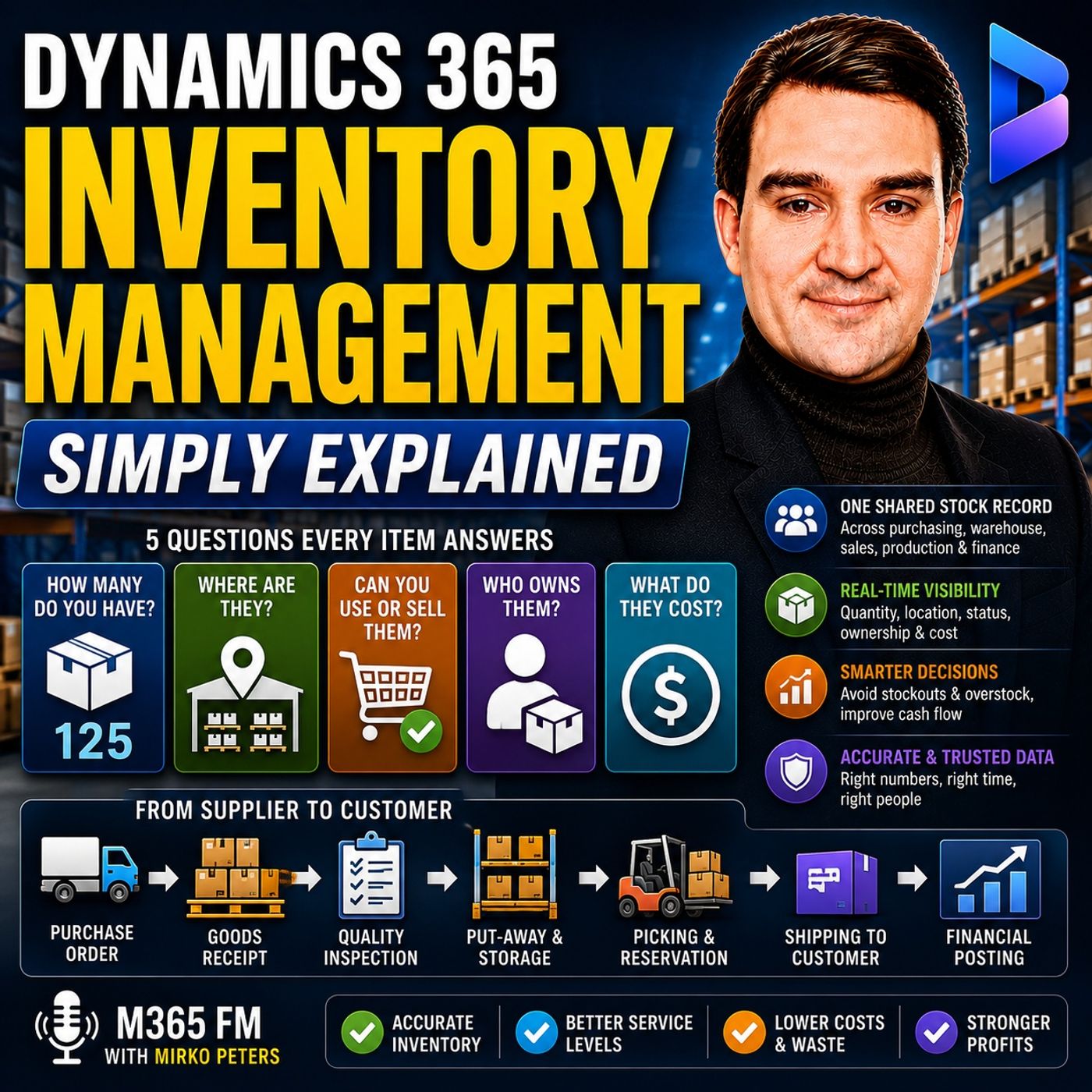
Dynamics 365 FIFO vs Weighted Average Costing: Which Method Should Your Warehouse Use?
Choosing the right inventory costing method in Dynamics 365 Inventory Management directly impacts your balance sheet, tax liabilities, and month-end close accuracy. This guide breaks down the core operational and financial differences between FIFO and weighted average costing to help you determine which approach best aligns with your supply chain strategy.
Key Takeaways
- Inventory costing determines the financial value assigned to stock when it leaves the warehouse for sales or production.
- FIFO (First-In, First-Out) assumes the oldest inventory items are sold first, making it ideal for perishable goods or products prone to obsolescence.
- Weighted average costing blends all unit costs together into a single average, simplifying transactions when items are physically mixed in the warehouse.
- Dynamics 365 seamlessly connects physical warehouse movements with general ledger accounts to keep operational quantities and financial assets synchronized.
- Selecting an incorrect costing method can cause discrepancies between warehouse management reports and finance department balance sheets.
Understanding Costing Methods in Dynamics 365
When stock items sit on warehouse shelves, they represent capital invested by your organization. Every time a component is picked for production or a finished product is shipped to a customer, a specific financial value must leave the inventory asset account and enter the cost of goods sold. Dynamics 365 Inventory Management handles this transition through predefined rules known as costing methods.
Many organizations treat warehouse management and financial accounting as completely separate domains. Warehouse teams focus on physical quantities, locations, and picking lists, while finance teams care about general ledger accounts, asset valuations, and profit margins. However, operational choices on the warehouse floor have immediate financial repercussions. Implementing a robust ERP solution bridges this gap by automatically translating physical item transactions into accurate financial ledger entries.
Deep Dive Into FIFO (First-In, First-Out) Costing
The FIFO method operates on a straightforward logical assumption: the oldest stock in your warehouse is the first stock to leave. To illustrate how this works within Dynamics 365, imagine your business purchases 50 industrial pumps in January for twenty dollars each, followed by another 50 pumps in February for twenty-four dollars each.
When a customer places an order for 10 pumps, the FIFO costing rule dictates that the system pulls the cost from the oldest available batch. Consequently, those 10 outgoing units are valued at twenty dollars each, drawing from your January purchase batch regardless of which physical box was pulled from the rack.
When to Choose FIFO
FIFO is the preferred costing method for industries dealing with perishable goods, medical supplies, food products, or technology items that risk becoming obsolete or expiring. By ensuring that older acquisition costs are recognized first, businesses can better match current revenues with historical expenses during inflationary cycles, presenting a more accurate valuation of remaining inventory assets on the balance sheet.
Exploring Weighted Average Costing
In contrast to the chronological tracking of FIFO, weighted average costing takes a holistic view of your inventory pool. Instead of preserving separate cost tiers for every individual purchase order, the system continuously recalculates a single blended average cost per unit based on the total financial value of available stock divided by the total physical quantity on hand.
If you purchase identical components at fluctuating market rates throughout the quarter, weighted average costing smooths out those price spikes. When a shipment goes out to a customer, the system assigns the current average cost to the transaction. This method is exceptionally useful in manufacturing and distribution environments where identical parts from different suppliers are commingled in bins or silos, making it nearly impossible—and operationally unnecessary—to track the exact acquisition cost of every single item.
Bridging Warehouse Operations and General Ledger Accounting
Regardless of whether you choose FIFO, weighted average, moving average, or standard costing, the primary benefit of Dynamics 365 is the elimination of siloed data. Item groups play a critical role here by linking specific product categories—such as raw materials, finished goods, and spare parts—to designated general ledger accounts.
When a warehouse worker records a goods receipt, a transfer order, a cycle count adjustment, or a write-off for damaged stock, the underlying financial impact flows directly into the official account book. Month-end reconciliations become vastly simpler because operational personnel and accountants are no longer comparing disconnected spreadsheets. They share a single, real-time source of truth that guarantees physical inventory quantities and financial asset values remain perfectly aligned.
Making the Right Choice for Your Enterprise
Selecting the optimal inventory costing method requires close collaboration between supply chain leaders, warehouse managers, and financial controllers. Your choice must reflect not only how items physically move through your facilities but also how your executive team needs to report profitability and asset valuation.
To explore the broader capabilities of supply chain optimization, including inventory dimensions, batch tracking, and warehouse put-away workflows, Listen to the full episode of the M365 FM Podcast. Tune in to gain expert insights and practical strategies for transforming your Microsoft cloud and enterprise resource planning environment.
Frequently Asked Questions
What is an inventory costing method in Dynamics 365?
An inventory costing method is the automated rule set Dynamics 365 uses to assign a financial value to stock when items leave inventory for sales, transfers, or production, ensuring accurate cost of goods sold calculations.
How does FIFO differ from weighted average costing in a warehouse?
FIFO tracks specific purchase batches chronologically, assigning the oldest purchase cost to outgoing items. Weighted average costing blends all active purchase costs into a single average unit cost, smoothing out market price fluctuations.
Can I use different costing methods for different product categories?
Yes. By utilizing item groups within Dynamics 365, organizations can apply tailored financial rules and costing methods to distinct inventory categories, such as raw materials versus finished goods.
Why is the integration between warehouse management and finance important?
Integrating physical stock movements with general ledger accounts prevents discrepancies between warehouse records and financial balance sheets, ensuring accurate asset valuation and transparent profit reporting.