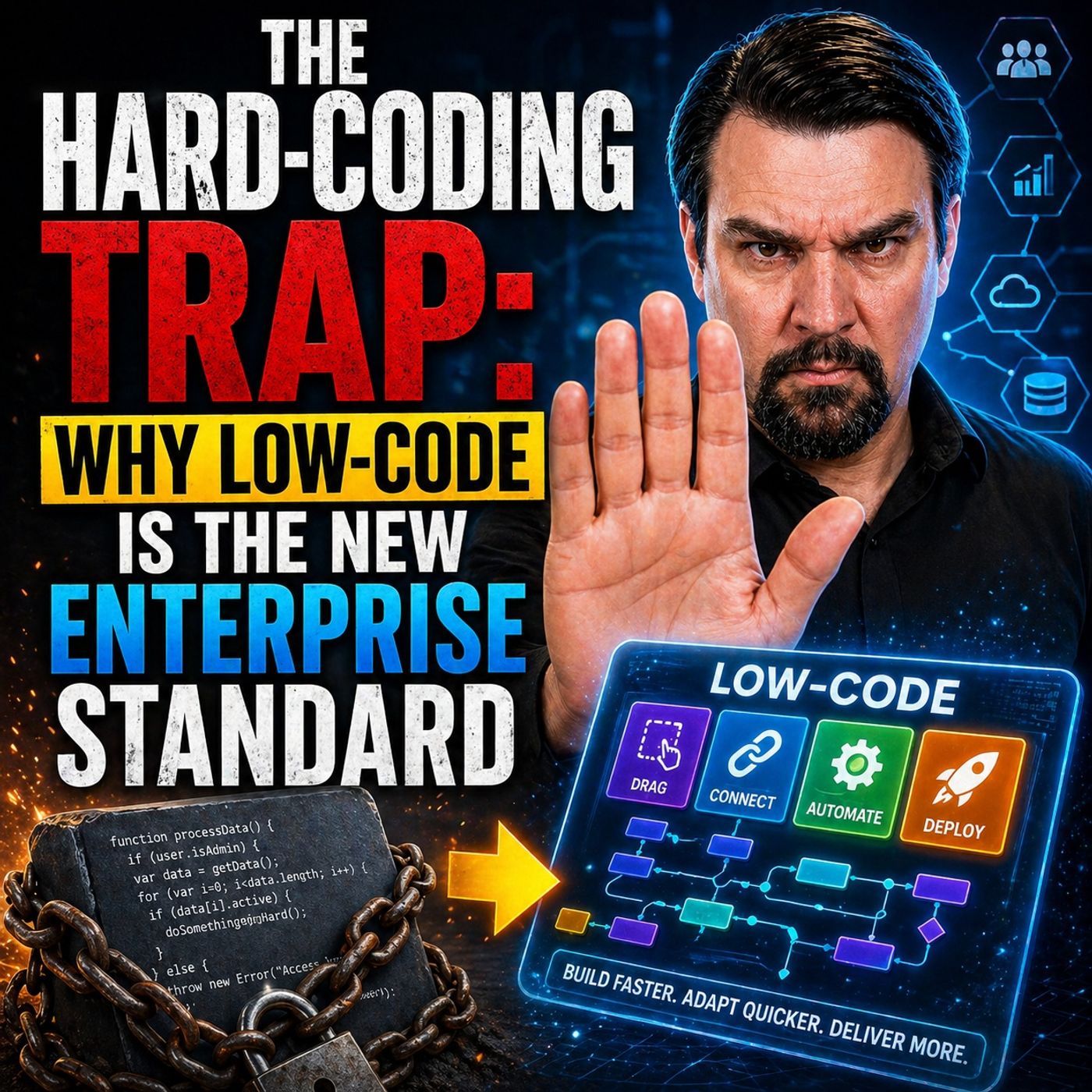
Escaping the Hardcoding Trap: Why Your Enterprise Needs Low-Code
Welcome back to the podcast companion blog! In this post, we are expanding deeply on the core themes we cover in our latest audio episode. If your enterprise is currently bogged down by rigid legacy architectures, skyrocketing technical debt, and endless cycles of manual maintenance, you are likely suffering from a silent organizational illness. Let's explore how modern strategies can free your business and accelerate your time-to-market.
Hardcoding Trap: Business Risks

The hardcoding trap creates a silent crisis in your business. You may not see the damage right away, but over time, it eats away at your engineering, product, and security foundations. Let's break down the risks you face when you let monolithic, hardcoded systems run your operations.
Technical Debt
Maintenance Overload
When you fall into the hardcoding trap, your engineering team spends more time fixing old code than building new product features. Every change becomes a risky operation. If you want to update a single function, you risk breaking other parts of your saas platform. This slows down your product cycles and drains your engineering resources.
| Impact Type | Description |
|---|---|
| Higher Maintenance Costs | Increased time spent on troubleshooting, integrating, and patching systems. |
| Inflexibility | Legacy systems lack scalability, limiting expansion and adoption of new tech. |
You lose efficiency as your team patches the same problems again and again. Instead of focusing on delivering value, your engineering talent gets stuck in endless maintenance loops.
Escalating Costs
The hardcoding trap doesn't just waste time—it burns through your budget. According to insights from m365.fm and the Microsoft Power Platform Podcast, legacy IT can consume up to 80% of your IT budget, sometimes reaching $30 million a year for large enterprises. These costs come from constant patching, manual fixes, and lost productivity. Your engineering and product teams spend more time fighting fires than creating value.
| Cost Type | Description | Estimated Cost/Impact |
|---|---|---|
| High Maintenance Costs | Continuous patching and manual fixes require significant budget allocation. | Up to 80% of IT budget, $30 million/year |
| Security-Related Costs | Financial impact of breaches due to vulnerabilities in legacy systems. | Average breach cost: $4.88 million |
| Cost of Downtime | Financial losses from system disruptions. | Over $5,000 per minute for large enterprises |
| Opportunity Costs | Resources diverted from innovation due to maintenance of legacy systems. | Significant impact on growth and competitiveness |
| Reduced Productivity | Inefficient technology leads to lost employee productivity. | Significant hours lost weekly or annually |
You sacrifice competitive advantage when you let these costs spiral out of control. Every dollar spent on maintenance is a dollar you cannot invest in new saas product development or engineering innovation.
Business Rigidity
Slow Market Response
Monolithic, hardcoded systems make your business slow to react. When the market shifts, your engineering and product teams struggle to deliver updates. Even small changes require weeks or months of planning and testing. You lose your competitive advantage as faster saas competitors outpace you.
Legacy systems are rigid. Any modification can trigger unexpected issues across your entire product. This complexity leads to slow feature delivery and longer time-to-market. Your business cannot keep up with customer demands or industry trends.
Lost Innovation
The hardcoding trap locks your engineering and product teams into outdated workflows. You miss out on new opportunities because your systems cannot integrate with modern saas technologies like AI or cloud services. Your business falls behind as others adopt tools that drive value and efficiency.
For example, your marketing team may want to launch a localized campaign, but rigid approval workflows block them. Your plant manager may know how to improve maintenance cycles, but the system only recognizes scheduled metrics. These missed chances cost you revenue and limit your ability to innovate.
Compliance and Security
Vulnerabilities
Hardcoded credentials and static configurations create major security risks. Attackers target these weaknesses, putting your saas product and customer data at risk. Your engineering team faces constant threats from breaches that can cost millions.
| Compliance Framework | Risk Description |
|---|---|
| SOC 2 and ISO 27001 | Violations due to hardcoded credentials leading to potential audit failures and loss of certification. |
| GDPR | Hardcoded credentials can lead to unauthorized access to personal data, risking fines up to €20 million or 4% of global revenue. |
| HIPAA | Violations of access controls and encryption requirements, risking significant financial penalties. |
| PCI DSS | Prohibits storing authentication credentials in plaintext, with hardcoded API keys representing a direct violation. |
Proper secrets management protects your business. It keeps sensitive information secure, helps you comply with regulations, and provides auditing for every access and change.
Regulatory Risks
If you ignore compliance, you risk more than just fines. You could lose certifications, damage your reputation, and face lawsuits. Regulations like GDPR, HIPAA, and PCI DSS demand strict controls over data and security. The hardcoding trap makes it almost impossible for your engineering and product teams to keep up with these requirements.
Don't let legacy systems put your business at risk. Modernize your saas product and empower your engineering teams to focus on value, security, and innovation.
Real-World Impact
Missed Opportunities
You lose more than money when you stick with hardcoded systems. You miss out on growth, innovation, and new markets. Many companies have suffered because they failed to adapt. Look at these examples:
| Company | Year | Missed Opportunity Description | Consequence |
|---|---|---|---|
| Nike | 2001 | Failed to implement flexible inventory management software, leading to overstock and understock issues. | Losses of up to $100 million and delivery delays. |
| Xerox | 2000 | Did not capitalize on digital document technologies due to focus on existing copier business. | Missed opportunities in emerging digital markets. |
| Blockbuster | 2010 | Ignored the shift to online streaming, clinging to physical rental model. | Eventually went bankrupt due to inability to adapt. |
| Kodak | 2012 | Hesitated to embrace digital photography despite inventing the first digital camera. | Lost significant market share to quicker competitors. |
| British Home Stores (BHS) | 2016 | Failed to invest in e-commerce, relying on traditional brick-and-mortar model. | Decline due to inability to compete with digitally savvy competitors. |
You risk falling behind when you wait for IT solutions. Legacy systems force you to pay ongoing maintenance fees, expensive vendor support, and high energy costs for outdated hardware. These hidden costs pile up. Your return on investment drops as you spend more just to keep your business running. Stagnation lets competitors win over your customers with faster, smarter solutions.
System Failures
Hardcoded IT practices can destroy your reputation and your business. You face real threats when you ignore modern solutions. Here are some examples:
- Legacy banking systems have collapsed under regulatory pressure because their architectures could not adapt.
- Technical debt leads to complete system failures, regulatory fines, and customers leaving for better options.
- Rabbit R1 Breach: Hardcoded API keys allowed hackers to compromise 130,000 devices, violating user privacy.
- Mercedes-Benz Token Exposure: An employee exposed an authentication token, risking access to sensitive internal servers.
- Trello Data Compromise: An exposed API linked private emails with user accounts, affecting over 15 million users.
You cannot afford to let these failures happen. Every system breakdown costs you customers, damages your brand, and invites legal trouble.
Customer Experience Issues
You want to deliver great customer-facing features, but hardcoded systems make that impossible. Outdated business logic and rigid communication tools frustrate your customers. You struggle to adapt to their needs. Legacy systems block data sharing across departments, making it hard to track customer interactions. Your employees feel stuck, unable to innovate or respond quickly.
Legacy customer communication systems produce paper-based communications and use complex, outdated business logic. This rigidity makes it difficult to adapt to modern customer needs, leading to a poor customer experience.
The patchwork nature of legacy systems inhibits the ability to share data across departments or with customers, complicating the task of collating customer interactions.
Legacy policy administration systems hinder innovation and frustrate employees, limiting insurers' ability to respond to customer needs, which ultimately drags down the customer experience.
You lose customers when you cannot meet their expectations. They want fast, seamless service. They want solutions that fit their lives. If you cannot deliver, they will find someone who can.
No-Code Platforms and Modern IT
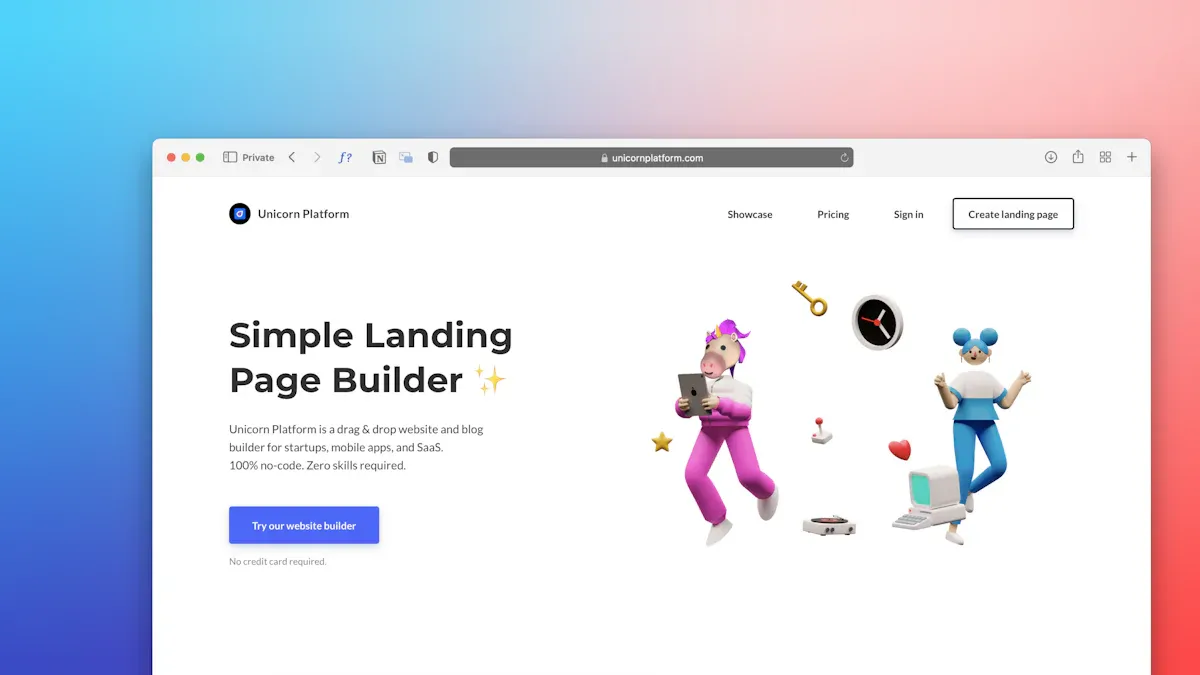
Low-Code vs. Traditional IT
You face a choice between traditional IT and modern no-code platforms. Traditional IT slows your product cycles and locks you into rigid workflows. No-code platforms change the game. You can build saas solutions faster and launch new product features without waiting months for development. The Microsoft Power Platform Podcast highlights how low-code and no-code platforms deliver software ten times faster than old methods. You save money and reduce maintenance costs. Management effort drops to almost zero, freeing your team to focus on innovation.
| Benefit | Description |
|---|---|
| Faster Development | Build and deploy product features quickly, often in days instead of months. |
| Cost Reduction | Lower maintenance costs and reduce reliance on specialized developers. |
| Increased Innovation | Empower your team to make decisions and create new saas products rapidly. |
| Business Agility | Adapt to market changes and customer needs with flexible development tools. |
| Less Coding | Reduce errors and speed up development by minimizing manual coding. |
| Cloud-Hosting | Deliver full-stack saas solutions quickly, supporting agile product delivery. |
Empowering Citizen Architects
No-code platforms give you the power to create saas products without deep technical skills. You become a 'Citizen Architect' and drive your own strategy. You can validate ideas, test market fit, and launch product features faster than ever. You do not need to rely on IT for every change. No-code platforms let you build applications, automate processes, and innovate on your own terms.
- You can create saas products and features without traditional coding.
- You validate ideas quickly and test new strategies in real time.
- You reduce reliance on IT, freeing up resources for bigger product development projects.
- You drive innovation and efficiency across your business.
You hold the keys to your product strategy. No-code platforms empower you to build, test, and launch features that matter most to your customers.
Speed and Flexibility
You gain speed and flexibility with no-code platforms. You can run campaigns, update product features, and respond to customer feedback instantly. You do not wait for IT support. You build prototypes and minimum viable products in days. You automate routine business processes and customize saas solutions for your unique needs.
- You reduce time-to-market for new product features.
- You empower business users to handle smaller development efforts independently.
- You free up IT to focus on strategic product innovation.
- You iterate quickly, making changes visually and deploying updates instantly.
No-code platforms let you adapt your product strategy as the market shifts. You stay ahead of competitors and deliver features your customers want. You build a culture of agility and innovation, driving your business forward.
Governance and Innovation
Balancing Control and Creativity
You want your business to move fast, but you also need to protect your data and reputation. Modern IT gives you the tools to keep control while letting your team innovate. The Microsoft Power Platform Podcast often highlights how you can achieve this balance. You do not have to choose between strict rules and creative freedom. You can have both.
A balanced approach to IT governance helps you manage risk and encourage new ideas. Here are some proven strategies:
- Set clear goals for your business. This gives your team a framework for creativity.
- Build a culture of trust. Empower your employees to make decisions and hold them accountable for results.
- Encourage feedback and collaboration. Make it safe for your team to share ideas.
- Pilot new ideas on a small scale. This lets you test creative solutions without big risks.
- Invest in employee training. Give your team the skills they need to innovate within your processes.
- Review and adjust your approach often. Make sure you keep the right balance between control and creativity.
You can use these steps to unlock innovation while keeping your business safe.
Policy Automation
You need to keep your business secure and compliant at all times. Manual checks slow you down and leave room for mistakes. Policy automation changes the game. With policy-as-code, you automate the enforcement of compliance rules. This ensures every system follows your standards, no matter how fast you grow.
Automation gives you real-time visibility into your compliance status. You always know where you stand. When you use automation with infrastructure as code, compliance checks happen automatically during setup. This reduces human error and keeps your business audit-ready.
Tip: Policy automation works well with workflow automation. You can connect your compliance checks to your business processes, making sure nothing slips through the cracks.
Continuous Compliance
Continuous compliance means you never fall behind on security or regulations. Modern IT makes this possible. You do not have to wait for yearly audits or scramble to fix problems at the last minute. Instead, you use tools that monitor your systems all the time.
A strong governance strategy includes:
- Regular risk assessments to spot vulnerabilities and improve security.
- Clear policies that set the rules for technology use and security protocols.
- Employee training to keep everyone aware of security and compliance needs.
- SaaS management platforms that give you control over cloud applications and reduce shadow IT risks.
You can maintain enterprise efficiency and still foster innovation. When you use a custom-built internal tool, you keep your unique workflows secure and compliant. You protect your business, your customers, and your reputation.
You do not have to sacrifice creativity for control. With the right mix of automation and governance, you can lead your industry and stay secure.
AI and Future Trends
AI in Application Development
You see ai changing the way you build applications. Ai coding assistants help you write code faster and smarter. You describe your needs in plain language, and ai generates app screens and logic for you. This saves your engineering team hours of work. Ai tools automate testing and quality assurance. You find bugs quickly and fix them before they cause problems. Ai processes data to give you insights about performance and usage. You set priorities for modernization based on real information.
| Transformation Aspect | Description |
|---|---|
| Enhanced Assessment and Planning | Ai analyzes data to show you how your applications perform and where you need improvements. |
| Streamlined Modernization Execution | Ai automates code conversion and resource optimization, making engineering more efficient. |
| Automated Quality Assurance | Ai speeds up testing and finds risky areas for focused engineering attention. |
| Ongoing Improvement and Adaptation | Ai learns from operations and adapts applications to user needs and new technology. |
| Enhanced Change Management | Ai predicts the impact of changes, helping you adjust your engineering strategy. |
| Data-Driven Decision Making | Ai collects data and gives you actionable insights for business alignment. |
You integrate ai with low-code and no-code platforms. This democratizes application development. You build apps without deep engineering skills. Ai coding assistants generate components based on your prompts. You move from manual coding to describing your vision. Ai enhances development speed and decision-making. You stay ahead of competitors.
Evolving IT Roles
You notice a shift in engineering roles. Professional developers focus on creating frameworks instead of writing every line of code. Ai coding assistants handle routine tasks. Your engineering team spends more time on strategy and innovation. You empower citizen architects to build solutions. Ai copilots suggest logic and connect to ai services. You simplify the integration of ai and machine learning into your applications.
You see future platforms using natural language for development. You describe your business needs, and ai builds the solution. Your engineering team guides the process, ensuring quality and security. You reduce reliance on traditional coding. You free up resources for high-impact projects.
Collaboration and Agility
You experience greater collaboration with ai. Disney uses ai to help animators, data scientists, and business strategists work together. Ai predicts audience preferences, guiding creative decisions. In healthcare, ai connects radiologists, clinicians, and data scientists. They improve diagnostic tools and share knowledge.
Ai tools like Microsoft Teams' Copilot automate meeting summaries and assign action items. Your engineering team focuses on strategic work. Ai enhances decision-making in agile teams. You anticipate risks and identify bottlenecks. You adjust plans in real time. Ai fosters transparency and communication. You break down silos and enable remote collaboration. Your engineering team works seamlessly across locations.
Ai gives you the power to innovate, collaborate, and adapt. You build a culture of agility and engineering excellence. You lead your industry with ai-driven solutions.
Core Product Development Transformation
Modernization Roadmap
You need a clear roadmap to transform your core product development. Start by identifying the problems in your current system. Understand where hardcoding slows your product cycles and blocks new features. Define your product strategy and set goals for modernization. Choose an architecture that supports scaling and flexibility. Select technologies that help you build and launch product features quickly.
Take these actionable steps to move away from hardcoding:
- Install ESLint and fix all linter errors to improve code quality.
- Install Prettier and apply standard formatting for consistency.
- Review and delete outdated comments from your codebase.
- Provide your AI coding tool with relevant blogs and documentation to raise standards.
- Define the problem and map your existing product workflows.
- Decide on scalable architecture, including agents and automation.
- Choose popular technologies that support rapid development.
A successful roadmap gives your team direction and focus. You plan resources efficiently and communicate better with stakeholders. You manage risks and adapt to changes while keeping your product strategy on track.
| Effective Practice | Description |
|---|---|
| Clear Direction and Focus | Aligns your product development with business goals. |
| Improved Planning | Anticipates resource needs and avoids shortages. |
| Enhanced Communication | Builds trust among stakeholders and keeps everyone informed. |
| Risk Management | Identifies risks and includes strategies to reduce impact. |
| Adaptability to Change | Offers flexibility to adjust your product strategy as needed. |
Adaptive Technologies
You must adopt adaptive technologies to modernize your product. Cloud computing gives you scalable infrastructure and remote access. AI and machine learning automate complex decisions and boost your team's capabilities. Data analytics turns raw information into actionable insights, helping you refine your product features. Automation handles repetitive tasks, freeing your team to focus on innovation.
| Technology | Description |
|---|---|
| Cloud Computing | Provides scalable infrastructure and cost efficiency for product development. |
| AI and Machine Learning | Automates decisions and enhances product features. |
| Data Analytics | Delivers real-time dashboards and predictive analytics for product strategy. |
| Automation | Executes tasks and adapts to changing product requirements. |
You gain speed and flexibility by integrating these technologies. Your product development becomes more responsive. You launch features faster and adapt your product strategy to market demands.
Culture of Agility
You need to build a culture of agility to succeed in core product development. Agility increases efficiency and operational performance. Your team makes decisions five to ten times faster. Customer satisfaction and employee engagement rise. You drive innovation and improve financial performance.
According to McKinsey, organizations that embrace agility report a 65% improvement in financial performance after transformation.
Create an environment where your team can test new product features, learn from feedback, and adjust quickly. Encourage collaboration and empower your employees to take ownership of product development. Set clear goals and celebrate progress. You build a resilient business that adapts to change and leads the market.
- Efficiency and operational performance increase by 30%.
- Customer satisfaction and employee engagement rise.
- Decision-making speed accelerates.
- Innovation drives better financial results.
You transform your core product development by following a clear roadmap, adopting adaptive technologies, and fostering a culture of agility. You position your business for long-term success and deliver product features that customers want.
You face a critical moment for your business. Hardcoded saas systems slow your progress and drain your resources. Modern IT solutions let you define business logic, boost agility, and deliver value to customers. Low-code and no-code platforms, AI, and empowered teams help you build saas products faster, improve customer satisfaction, and reduce waste.
- Lengthy development cycles create costly delays for your business.
- Low-code platforms let you respond to customer needs and drive innovation.
- Predictive analytics, chatbots, and computer vision enhance saas quality and value.
Leaders must adopt frameworks that scale Copilot agents and align teams. Take action now. Transform your business, deliver value, and win customers with adaptive saas strategies.
FAQ
What is the hardcoding trap?
Hardcoding locks your business into rigid systems. You lose flexibility and speed. You face higher costs and more risks. You cannot adapt quickly. Modernize now to stay competitive.
How does low-code help my business?
Low-code platforms let you build solutions fast. You save money and time. You empower your team to innovate. You respond to market changes with ease. You gain a real edge.
Who are Citizen Architects?
Citizen Architects are business users who create apps without deep coding skills. You become one by using low-code tools. You solve problems directly and drive innovation from within your team.
Can I trust no-code platforms with security and compliance?
Yes. Leading no-code platforms offer strong security and compliance features. You control access, automate policies, and monitor activity. You protect your data and meet regulations with confidence.
What are the first steps to escape the hardcoding trap?
Start by mapping your current workflows. Identify bottlenecks. Choose a low-code platform. Train your team. Set clear goals. Take action now to unlock agility and growth.
Will AI replace my IT team?
AI will not replace your IT team. AI tools handle repetitive tasks. Your team focuses on strategy and innovation. You gain more value from your experts.
How do I measure success after modernizing IT?
- Track these key metrics:
- Time-to-market for new features
- Maintenance costs
- User satisfaction
- Compliance status
- Innovation rate
You see improvements quickly when you modernize.
🎧 Listen to this episode
Want a practical explanation of Why Low-Code Is Becoming the Enterprise Development Standard? This episode breaks down the topic in clear language and shows why it matters for Microsoft 365, Azure, Power Platform, security, AI, and modern work.
Listen to this episode if you want to:
- Understand the key concepts behind Why Low-Code Is Becoming the Enterprise Development Standard
- See how it fits into the wider Microsoft technology ecosystem
- Learn where it can create practical value for your organization
You may also enjoy these related M365 FM episodes:
- Will Copilot Studio Replace Low-Code Developers?
- Low-Code Scalability Risks: Why Explainability Matters
- Power Apps Vibe Code vs Low-Code: Which Fits Your Team?
- No-Code vs Low-Code vs Pro-Code: Which Should You Choose?
- From Data to Intelligent Agents: Building Trusted Enterprise AI with Microsoft AI Foundry with Shubhangi Goyal [MVP]
Discover more practical Microsoft conversations on M365 FM.

Microsoft MVP | Host of M365.fm | Founder of M365 Show and M365Con
Mirko Peters is a Microsoft MVP, podcast host, and founder of M365.fm, M365 Show, and M365Con. His work connects Microsoft practitioners through podcast interviews, livestreams, and community events.
At M365.fm, Mirko hosts conversations with Microsoft MVPs, product experts, architects, and community contributors. Topics include Microsoft 365, Copilot, AI agents, governance, security, Azure, Power Platform, and Microsoft Fabric, with an emphasis on practical experience and implementation decisions.
M365.fm is the podcast and learning platform. M365 Show brings experts together for livestreams, while M365Con provides an online conference setting for community learning.
Official website: Mirko Peters (https://www.mirkopeters.com/). Recognition: Mirko Peters — Microsoft MVP profile (https://mvp.microsoft.com/de-DE/mvp/profile/9b0ca797-db5a-493a-a845-8b9158046cf5). Connect on LinkedIn (https://www.linkedin.com/in/m365showpodcast/).