From Chaos to Control: Why Your Enterprise Needs an AI Factory
Welcome back to the podcast blog! If you have been following our recent audio episodes, you know we spend a lot of time diving deep into the architectural choices that either make or break modern organizations. Today, we are expanding on a core theme that has been dominating our conversations with enterprise leaders: the stark contrast between running an organization weighed down by unpredictable chaos and building a streamlined, highly efficient AI Factory. If you missed our companion audio discussion, be sure to catch up by listening to the related episode, Design an Enterprise AI Factory for GPUs, Data, and MLOps. In this post, we are going to break down why treating AI like an ad-hoc experiment is holding your business back, and how shifting toward an industrial mindset can secure your operational future.
AI Factory vs. Chaos
When organizations first encounter artificial intelligence, the natural inclination is to dive in headfirst, spinning up models, collecting data sets in silos, and letting various departments experiment independently. While this excitement fosters initial exploration, it quickly devolves into institutional disorder. To understand why your enterprise needs to transition, we have to look closely at the fundamental properties of these two opposing operational environments.
Characteristics of AI Factory
Structured Processes
An AI Factory operates with structured processes that streamline operations. It covers the entire journey from data collection to model monitoring. This end-to-end approach ensures that every step is accounted for, leading to consistent outcomes. Here are some defining characteristics of an AI Factory:
- End-to-End: It manages the complete process, ensuring no step is overlooked.
- Industrialisation: Treats AI as a product line, which guarantees repeatability and auditability.
- Democratisation: Allows multiple teams to safely utilize AI resources, fostering collaboration.
- Continuous Learning: Implements feedback loops for ongoing model improvement, adapting to new data and insights.
| Characteristic | Description |
|---|---|
| Centralized agent oversight | Ensures all AI agents are monitored and managed from a single point. |
| Defined creation permissions | Specifies who can create AI agents, preventing unauthorized access. |
| Data boundary controls | Establishes limits on what data AI agents can access. |
| Lifecycle management | Manages the entire lifecycle of AI agents from creation to retirement. |
| Audit visibility | Provides transparency into the actions and decisions made by AI agents. |
| Clear ownership accountability | Assigns responsibility for AI agents to specific individuals or teams. |
Data-Driven Decision Making
In an AI Factory, data-driven decision-making is paramount. You can leverage real-time insights and predictive analytics to guide your strategies. This reliance on data helps you make informed choices, reducing the risk of errors that often arise from intuition alone.
Characteristics of Chaos
Unpredictable Operations
Chaos in enterprise operations leads to unpredictable outcomes. Without a structured approach, you may face erratic processes that hinder productivity. The lack of defined workflows can result in missed deadlines and inconsistent results.
Lack of Clear Strategy
When operating in chaos, you often encounter a lack of clear strategy. This absence can lead to several challenges:
- Risk of outages: Testing in production can cause data loss or service interruptions, necessitating careful planning.
- Resource limitations: Effective chaos management requires both tools and human resources, which may be constrained in some organizations.
- Requirement of robust monitoring systems: Successful operations depend on strong monitoring systems to track health and metrics.
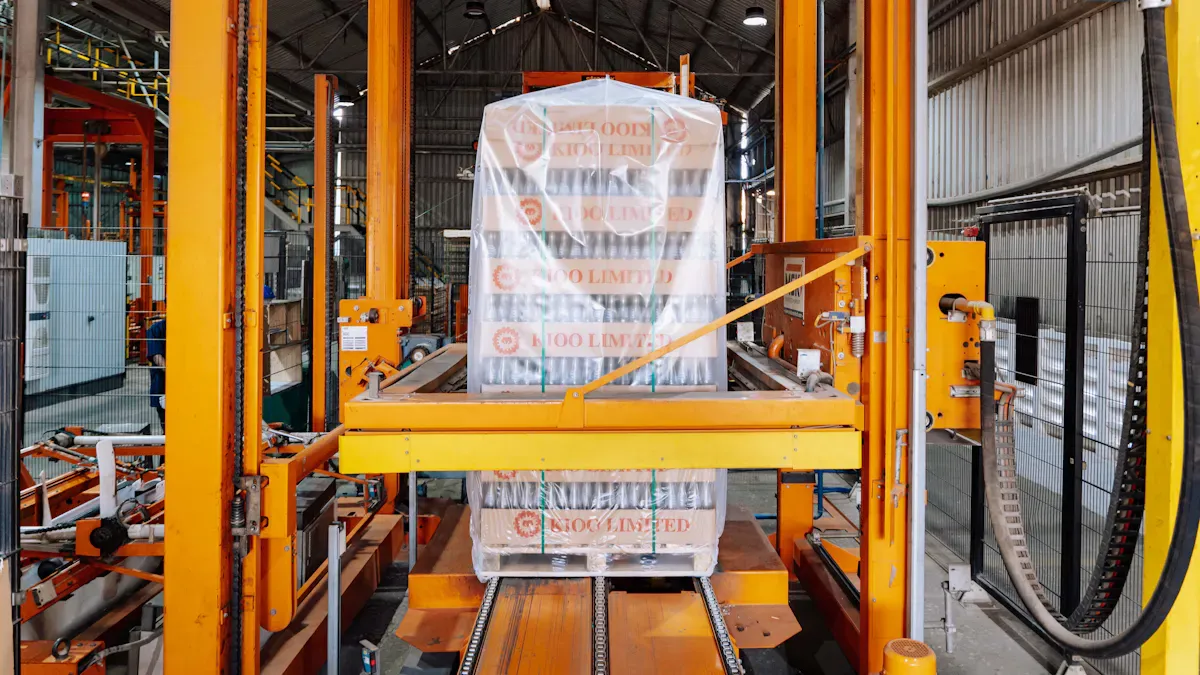
Reason 1 - Efficiency in AI
Streamlined Processes
Automation of Repetitive Tasks
An AI Factory excels in automating repetitive tasks. This automation frees your team from mundane activities, allowing them to focus on more strategic initiatives. By implementing AI, you can achieve the following benefits:
- Real-time insights: AI provides immediate feedback, enabling you to make quick adjustments that enhance productivity.
- Predictive capabilities: You can foresee potential issues and address them before they escalate, significantly reducing unplanned downtime.
- Process optimization: AI identifies inefficiencies and recommends improvements, leading to faster production cycles and higher output.
Improved Resource Allocation
In an AI Factory, resource allocation becomes more efficient. You can align your resources with business priorities, ensuring that the right people work on the right tasks. This approach maximizes productivity and minimizes waste.
| Key Aspect | Description |
|---|---|
| Ongoing Process | Resource allocation requires continuous adjustment and selection to meet changing demands. |
| Task Prioritization | Prioritizing critical tasks ensures optimal resource use and project execution. |
| Employee Assignment | Assigning the right people to the right tasks enhances overall efficiency. |
Inefficiencies in Chaos
Time Wasted on Redundant Efforts
Chaos leads to significant inefficiencies. Without a structured approach, your team may engage in redundant efforts, wasting valuable time. Common issues include:
- Staff burnout: Employees may feel overwhelmed by the chaotic environment, leading to decreased morale and productivity.
- High turnover: Top performers often leave organizations that lack structure, seeking better opportunities elsewhere.
- Operational inefficiencies: Varied methods for completing tasks create confusion, resulting in errors and delays.
Increased Operational Costs
Operating in chaos can inflate your operational costs. The lack of clear processes often leads to:
- Increased rework: Errors require corrections, consuming additional time and resources.
- Higher overtime costs: Employees may need to work extra hours to meet deadlines, further straining your budget.
- Lost customers: Inconsistent service can drive customers away, impacting your bottom line.
By recognizing these inefficiencies, you can appreciate the value of adopting an AI Factory model. This structured approach not only enhances efficiency but also reduces operational costs, ultimately driving your enterprise toward greater success.
Reason 2 - Decision-Making

Data Analysis in AI Factory
Real-Time Insights
In an AI Factory, you gain access to real-time insights that enhance your decision-making capabilities. The structured environment allows AI to analyze data without extensive preprocessing. This immediacy leads to quicker insights, enabling you to make informed choices rapidly. For instance, you can adjust strategies based on current trends rather than relying on outdated information.
Predictive Analytics
Predictive analytics further strengthens your decision-making process. AI identifies patterns and relationships within your data, leading to more accurate forecasts. The following table highlights the advantages of structured data analysis in an AI Factory:
| Advantage | Explanation |
|---|---|
| Immediate readability | AI can analyze the data without needing preprocessing, allowing for quicker insights. |
| Pattern recognition efficiency | Consistent data formatting helps algorithms to swiftly identify trends and anomalies. |
| Prediction accuracy | Clear relationships between variables lead to more precise forecasting models. |
| Lower computational requirements | Well-organized data demands less processing power, enhancing overall efficiency in analysis. |
With these capabilities, you can make AI-powered decisions that drive your enterprise forward.
Challenges in Chaos
Gut-Feeling Decisions
In chaotic environments, decision-making often relies on gut feelings rather than data. While intuition can sometimes guide you, it lacks the reliability of data-driven insights. For example, Sarah, a baker, faced a choice about introducing a new flavor. Despite market research suggesting exotic options, her intuition led her to choose classic vanilla bean. This decision resulted in overwhelming customer approval, showcasing how gut feelings can sometimes lead to success. However, relying solely on intuition can be risky, especially when data is available.
Missed Opportunities
Chaos creates an environment where missed opportunities are common. The lack of clarity and direction can lead to stalled decisions and confusion. Here are some prevalent challenges in chaotic organizations:
- Redundant headcount
- Stalled decisions
- Projects that outlive their purpose
- Gaps between reported and actual situations
Additionally, resistance to change and a lack of clarity can further complicate the decision-making process. In such environments, employees may feel directionless, making it difficult to act decisively.
By understanding the stark contrast between the structured decision-making in an AI Factory and the chaotic environment, you can appreciate the importance of adopting a data-driven approach. This shift not only enhances your decision-making accuracy but also positions your enterprise for long-term success.
Reason 3 - Scalability of AI Factories
Growth Support in AI Factory
Adaptable Infrastructure
An AI Factory provides an adaptable infrastructure that supports your enterprise's growth. This flexibility allows you to respond quickly to changing market demands. You can easily adjust your AI pipelines to accommodate new projects or shifts in strategy. The following benefits highlight how an AI Factory enhances scalability:
- Predictive and proactive decision-making: You can shift from reactive management to a more strategic approach.
- Reduced planning time: AI-driven optimization cuts planning from months to minutes.
- Enhanced efficiency: Automated tools minimize manual work, allowing your team to focus on high-value tasks.
- Improved compliance: AI monitoring speeds up permit approvals, enhancing operational speed.
- Standardized data management: Large-scale AI implementations facilitate easier scaling across projects.
Scalable AI Solutions
AI solutions in an AI Factory are designed to scale effectively. You can leverage these solutions to analyze patterns across decades of data. This capability leads to insights that would take humans years to uncover. The Genesis Mission emphasizes that AI can generate productivity breakthroughs necessary for economic growth. Organizations that effectively leverage AI can transform their industries rather than merely adapting to them.
Growth Barriers in Chaos
Difficulty in Scaling Operations
In chaotic environments, scaling operations becomes a significant challenge. Rapid expansion can lead to chaos if not managed strategically. This situation risks security gaps and system failures. Here are some common barriers you might face:
- Disruptions during scaling: Unmanaged growth can create operational chaos.
- Long deployment times: Inefficient processes drain resources and delay outcomes.
- Managing diverse manufacturing types: Juggling different processes can create complexity.
- Performance bottlenecks: Small inefficiencies can compound into significant delays.
Resource Constraints
As your organization grows, resource constraints can limit scalability. The lack of clarity in decision-making often leads to inefficiencies. When decision rights are unclear, friction arises, hindering growth. This ambiguity can drain energy and increase risks, ultimately slowing down execution. Rapidly growing companies often face challenges due to complexity. Without addressing this complexity, you may experience bottlenecks that directly impact your ability to scale effectively.
By adopting an AI Factory model, you can overcome these barriers. The structured approach not only supports growth but also ensures that your enterprise can scale efficiently and effectively.
Reason 4 - Risk Management
Risk Mitigation in AI Factory
Predictive Risk Assessment
In an AI Factory, predictive risk assessment plays a crucial role in enhancing your enterprise's security posture. This approach shifts your focus from reactive measures to proactive strategies. By utilizing advanced analytics and machine learning, you can forecast potential security incidents before they escalate. Here are some key benefits of predictive risk assessment:
- It enhances overall security by allowing you to strategically mitigate risks.
- You can optimize resource allocation, reducing vulnerabilities and improving incident response times.
- AI processes large volumes of data quickly, identifying hidden patterns and correlations that may indicate risks.
For example, predictive maintenance models in manufacturing have reduced equipment failure risk by 30% and unplanned downtime by 25%. This improvement not only preserves revenue but also builds customer trust.
Proactive Problem Solving
Proactive problem-solving is another significant advantage of an AI Factory. By anticipating issues before they arise, you can implement solutions that prevent disruptions. This proactive approach leads to:
- Faster identification of potential threats, allowing for timely interventions.
- Customizable risk models tailored to your organization's specific needs, moving beyond one-size-fits-all approaches.
- Enhanced decision-making capabilities, as you can rely on data-driven insights rather than guesswork.
Unpredictability of Chaos
Increased Vulnerability
In chaotic environments, unpredictability leads to increased vulnerability. Without structured processes, your enterprise faces several challenges:
- Diminished productivity and decreased quality due to erratic operations.
- A higher incidence of errors, which can result in financial losses and reputational damage.
- Rising operational costs stemming from inefficiencies and redundant work.
These factors can create a cycle of chaos that hinders your ability to innovate and respond to market changes effectively.
Reactive Crisis Management
Reactive crisis management in chaotic settings often results in long-term instability. Organizations that prioritize firefighting over strategic foresight face recurring issues. The following table illustrates the impact of this approach on long-term business stability:
| Evidence Description | Impact on Long-term Stability |
|---|---|
| Organizations that prioritize firefighting often experience recurring issues, resource strain, and employee burnout. | This hinders their ability to innovate and maintain stability. |
| IT teams focused on immediate results leave little room for planning or prevention. | This leads to postponed long-term initiatives and increased staff burnout. |
| Quick fixes over long-term solutions result in recurring issues and instability. | This makes it hard to build sustainable solutions. |
By understanding the differences between the structured risk management of an AI Factory and the unpredictability of chaos, you can appreciate the importance of governance and data ownership. A secure AI Factory not only mitigates risks but also empowers your enterprise to thrive in a competitive landscape.
Reason 5 - Competitive Advantage
Strategic Edge of AI Factory
Enhanced Innovation
Adopting an AI Factory model significantly enhances innovation within your enterprise. This structured approach treats AI development like a manufacturing process. It allows you to scale your AI initiatives efficiently. By industrializing AI, you transform isolated projects into a continuous production system. This transformation leads to faster decision-making and reduced costs. As a result, you gain a sustainable competitive advantage.
A flatter organizational structure promotes decentralized decision-making. This setup improves your responsiveness to market changes. Enhanced collaboration across departments fosters agility in addressing supply chain risks. The following table summarizes how the AI Factory model impacts innovation:
| Dimension | Impact on Innovation |
|---|---|
| Vertical Structure | Flatter hierarchies lead to decentralized decision-making, improving responsiveness to market changes. |
| Horizontal Structure | Enhanced interdepartmental collaboration fosters innovation and agility in responding to supply chain risks. |
Better Customer Insights
AI Factories also provide better customer insights. By collecting structured data, you can directly influence business outcomes. AI identifies patterns and trends that human analysts might miss. This capability allows you to create micro-segments based on real-time customer behaviors. Here are some benefits of improved customer insights:
- AI-driven insights enhance data management, leading to more reliable decision-making.
- Collaboration across departments ensures that insights are effectively utilized, maximizing their impact on business outcomes.
- Predictive analytics derived from AI help you understand customer behavior, improving marketing strategies and customer retention.
Disadvantages of Chaos
Falling Behind Competitors
In chaotic environments, organizations often fall behind competitors. The inability to adapt leads to rigidity, which hampers your response to new threats and opportunities. This rigidity can stifle innovation and diminish market relevance. More adaptable competitors can seize the lead, leaving you struggling to catch up.
Inability to Adapt
The inability to modify fixed business models in unstable environments creates vulnerabilities. Long-term predictability diminishes, and strategic plans become obsolete. When you rely on outdated practices, it becomes costly to change, even when necessary. This lack of adaptability can lock your enterprise into a cycle of stagnation, making it difficult to thrive in a competitive landscape.
By adopting an AI Factory model, you position your enterprise to leverage innovation and customer insights effectively. This structured approach not only enhances your competitive advantage but also ensures long-term success in a rapidly changing market.
Choosing between an AI Factory and Chaos significantly impacts your enterprise's success. An AI Factory streamlines processes, enhances decision-making, and supports scalability. You can expect long-term benefits, such as accelerated AI development and improved operational efficiency.
Consider how your current approach affects your business outcomes. Are you experiencing delays or missed opportunities? Reflect on the importance of structured workflows and automation. These elements can help you integrate AI effectively and drive meaningful change in your organization.
By embracing a structured approach, you position your enterprise for sustainable growth and a competitive edge in the market. To continue exploring how to move away from unmanaged disorder, listen to our full breakdown in the associated podcast episode, Design an Enterprise AI Factory for GPUs, Data, and MLOps.
FAQ
What is an AI Factory?
An AI Factory is a structured model that integrates artificial intelligence into enterprise operations. It emphasizes automation, data-driven decision-making, and continuous learning to enhance efficiency and scalability.
How does an AI Factory improve decision-making?
An AI Factory provides real-time insights and predictive analytics. This data-driven approach allows you to make informed decisions quickly, reducing reliance on intuition.
What are the main benefits of adopting an AI Factory?
Adopting an AI Factory streamlines processes, enhances efficiency, supports scalability, mitigates risks, and provides a competitive advantage through better innovation and customer insights.
How does chaos affect operational costs?
Chaos leads to inefficiencies, redundant efforts, and increased rework. These factors inflate operational costs and can result in lost customers due to inconsistent service.
Can an AI Factory help with risk management?
Yes, an AI Factory enhances risk management through predictive risk assessment and proactive problem-solving. This approach helps you identify potential issues before they escalate.
What challenges arise from operating in chaos?
Operating in chaos often results in unpredictable operations, lack of clear strategy, and missed opportunities. These challenges can hinder your enterprise's growth and adaptability.
How does an AI Factory support scalability?
An AI Factory offers adaptable infrastructure and scalable AI solutions. This flexibility allows you to respond quickly to market changes and efficiently manage resources.
Why is customer insight important in an AI Factory?
Customer insights drive better decision-making and marketing strategies. An AI Factory uses structured data to identify trends, helping you tailor your offerings to meet customer needs effectively.

Microsoft MVP | Host of M365.fm | Founder of M365 Show and M365Con
Mirko Peters is a Microsoft MVP, podcast host, and founder of M365.fm, M365 Show, and M365Con. His work connects Microsoft practitioners through podcast interviews, livestreams, and community events.
At M365.fm, Mirko hosts conversations with Microsoft MVPs, product experts, architects, and community contributors. Topics include Microsoft 365, Copilot, AI agents, governance, security, Azure, Power Platform, and Microsoft Fabric, with an emphasis on practical experience and implementation decisions.
M365.fm is the podcast and learning platform. M365 Show brings experts together for livestreams, while M365Con provides an online conference setting for community learning.
Official website: Mirko Peters (https://www.mirkopeters.com/). Recognition: Mirko Peters — Microsoft MVP profile (https://mvp.microsoft.com/de-DE/mvp/profile/9b0ca797-db5a-493a-a845-8b9158046cf5). Connect on LinkedIn (https://www.linkedin.com/in/m365showpodcast/).