Copilot Prompts for Meetings
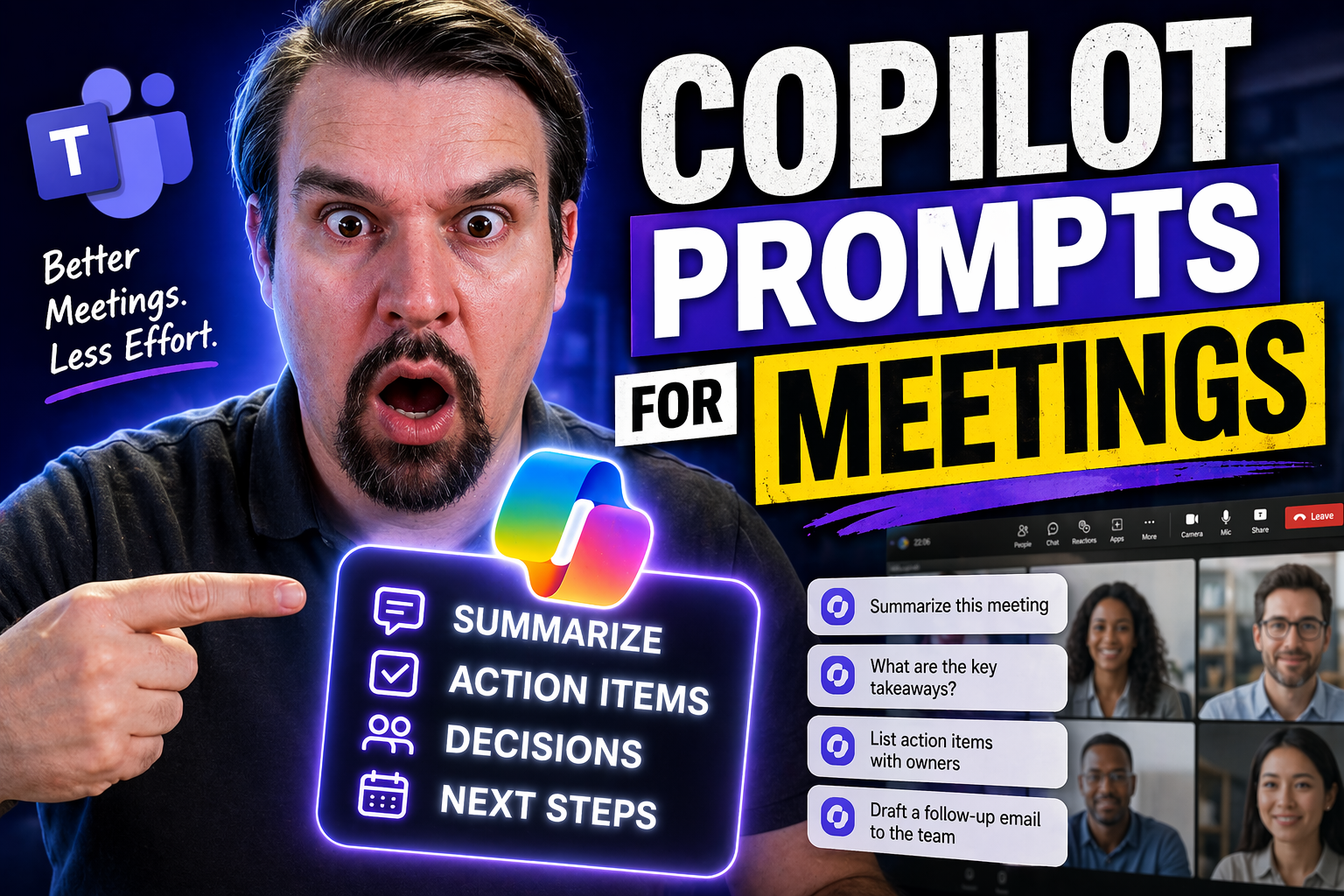
This guide gives you the real scoop on getting the most out of Copilot prompts in your Microsoft 365 meetings. Whether you’re running the show, taking notes, or just trying to keep your head above water during a flood of Teams calls, Copilot can dial up your productivity at every stage. From prepping agendas to summarizing what actually got decided, you’ll see how the right prompts boost your game and keep meetings moving. We’ll jump into the best strategies, key techniques, and some tactics you might not expect—helping you use AI smartly in Teams, Outlook, and beyond.
It’s not just about fancy features; it’s about making your meetings work for you, your team, and the business. Get ready to transform the way you set up, run, and follow up on meetings with the practical power of Copilot prompts—so you spend less time chasing loose ends and more time making a difference.
Copilot Meetings Practical Guide: Activating Prompts in Microsoft Teams
Ever felt like you’re missing half the magic in a Teams meeting? That’s where Copilot’s meeting prompts come in. With the right setup, Copilot can shift your meetings from “just talking” to taking real action—helping you spot key points, log decisions on the fly, and keep your team on track in real time. It’s especially handy if you’ve got a bunch of moving parts and not enough hands to jot it all down.
This section gives you a practical introduction to unlocking Copilot inside Teams meetings. We’ll look at how to get rolling—making sure you have the right permissions dialed in, which parts of Teams Copilot actually lives in, and what it takes to fire off a prompt right from the chat window or sidebar. If you want smoother collaboration, sharper insights, and fewer “so, what now?” moments, you’re in the right place.
Stick with us, and you’ll see how using Copilot prompts can take the chaos out of real-time discussion and turn it into a source of actionable smarts, not just another hour lost to the calendar. Ready for a peek at the essential prompts? Let’s keep moving.
Essential Copilot Prompts Microsoft for Productive Meeting Chats
- “Summarize key decisions from this meeting so far.”
- Use this prompt during the meeting to capture agreements while everyone’s still fresh, so there’s no confusion later.
- “List next steps with assigned owners and deadlines.”
- Get Copilot to organize follow-up tasks and who’s responsible, all in one place, so nobody dodges action items.
- “Highlight open questions and unresolved topics.”
- Spot what still needs attention—great if you want to move to the next topic without dropping any big issues.
- “Capture feedback or concerns from participants.”
- Copilot can help you surface areas of agreement (or tension) fast, making sure everyone has a voice in the chat.
Using the Recap Tab and Chat to Summarize Held Today’s Meeting
The meeting’s over, but now comes the clean-up—pulling insights, to-dos, and takeaways out of the flood of conversation. Copilot’s recap tab and chat tools are designed to make that process a breeze. You shouldn’t have to dig through messy notes to remember what actually got settled or who’s meant to follow up on what.
This section tees up the outcome-driven side of Copilot. It covers why using recap tools isn’t just about saving time—it’s about hitting your outcomes: clear summaries, decisions, and concrete next steps. You’ll see how Copilot taps into “what happened today” and extracts the bones of the meeting so you can move forward, not just look back.
We set the table for you to leverage Copilot’s built-in summary features, using both the recap tab and chat interactions after your Teams calls. It’s about working smarter, not harder, when you turn past meetings into springboards for progress. Let’s dive into how to make those insights actionable in your next steps.
Generating Actionable Insights and Outcome-Oriented Summaries
- “Summarize all decisions and assigned tasks from today’s meeting.”
- This prompt produces a concise recap with who’s doing what and by when, ideal for quick post-meeting alignment.
- “List critical action items and deadlines based on the discussion.”
- Makes sure your team leaves knowing exactly what needs doing, no guesswork left.
- “Highlight risks, blockers, or open dependencies that need attention.”
- Copilot points out snags so you can plan follow-ups before they grow into headaches.
Effective Prompt Design for Meeting Productivity
Writing prompts for Copilot isn’t random—there’s an art in crafting questions that get you real, structured answers (not vague half-replies). That’s how you turn Copilot from a simple note-taker into something like your own team coordinator. When you ask Copilot for outcomes or assignments in a specific, direct way, you steer the meeting in a productive direction.
This section gears you up with the basics: how to create prompts that book meetings, assign tasks, and handle coordination. Then we zoom out to more complex prompt writing—using Copilot for milestone tracking, checking the status of projects, and exploring the implications of key decisions. Each level up means more value for you and your team.
Stick around to see not just what makes a solid prompt, but how your style can level up as you master this digital sidekick. Proper prompt design adds real traction to your day-to-day, letting you spend less time on admin and more time getting the job done right.
Task-Based Prompts to Schedule and Coordinate Meetings
- “Schedule a follow-up meeting with [person/team] next week—suggest three time slots.”
- This prompt gets Copilot to handle both the invite and time coordination, so you skip the back-and-forth.
- “Send out reminders for task owners before our next meeting.”
- Ensures accountability by generating timely nudges for anyone assigned work.
- “Compile and distribute a summary of today’s action items to all participants.”
- Makes sure everyone’s crystal-clear on their mission after the call ends.
Evolving from Starter Prompt to Complex Prompt: Checking Implications and Milestones
- Starter Prompt: “Summarize what was decided in today’s meeting.”
- It’s simple and gets you a quick recap, but sometimes you need to dig deeper for real results.
- Progressive Prompt: “Highlight any dependencies, deadlines, and next steps agreed upon.”
- This adds structure by asking Copilot to connect the dots—not just record the ‘what’, but the ‘how’ and ‘when’.
- Advanced Prompt: “Extract all project milestones discussed today and place them on a timeline.”
- Now you’re tasking Copilot with building a roadmap straight from your meeting notes, showing what happens when.
- Implications and Scenario Prompt: “Analyze the impact of today’s decisions on the project’s timeline and resources. List potential risks or conflicts.”
- This pulls Copilot into risk analysis and prioritization—helping you see around corners instead of just reviewing what’s behind you.
- Final Strategic Prompt: “Based on today’s meeting, create a detailed plan tracking progress toward key outcomes, and alert me if any milestone is at risk.”
- Here’s where Copilot helps you manage forward, not just backward, flagging anything that might go sideways before it becomes a problem.
Meeting Summarization and Insight Extraction with Copilot
Let’s be real: Even the best meetings can leave you with a tangled mess of points to unravel later. Copilot makes it possible to pull out the “gist” quickly, letting you catch up if you missed something or need to brief others in a hurry. But Copilot is also about more than just clip notes—it can mine deep insights from your meeting’s back-and-forth, even from voice recordings or video updates in async settings.
This section is your entry point for smarter summarization. Copilot handles both high-level overviews and granular analysis, so whether you want a one-minute summary or a full-on SWOT of what just transpired, you can prompt accordingly. No need to sift through transcripts—you get structured, actionable takeaways, every time.
We’ll start with prompt templates for fast catch-ups, then move to the analytical heavyweights: SWOT, 5 Whys, MoSCoW, and Kepner-Tregoe. These frameworks help you turn Copilot into your virtual strategy coach, surfacing not just “what happened,” but “what matters.”
Gist and Overview Summaries: Catch Up on a Meeting Quickly
- “Summarize this meeting in three sentences with the main decisions and next steps.”
- Let’s you check what matters most—fast—even if you joined late or missed the call.
- “Give a bullet-point list of key topics covered and any outcomes agreed.”
- Makes after-action briefings painless, especially for stakeholders who don’t need every detail.
- “Highlight changes from the last meeting and any open issues carried forward.”
- Keeps the context alive and helps you track continuity in multi-step discussions.
Advanced Insight Generation: SWOT, 5 Whys, MoSCoW, and Kepner-Tregoe Prompts
- SWOT Analysis: “Summarize strengths, weaknesses, opportunities, and threats based on today’s discussion.”
- This gives you a quick strategic map straight from team brainstorming or customer feedback.
- 5 Whys: “Apply 5 Whys to the major issue raised in this meeting to identify root causes.”
- Copilot digs deeper, unearthing the ‘why’ behind persistent blockers or recurring problems.
- MoSCoW Prioritization: “Sort today’s action items as Must have, Should have, Could have, and Won’t have for release planning.”
- This prompt drives clarity around priorities and keeps teams aligned on what to deliver next.
- Kepner-Tregoe Evaluation: “Evaluate options discussed using the Kepner-Tregoe model—summarize pros, cons, and final recommendations.”
- Applies structured decision-making to help weigh alternatives and pick the best course of action.
Optimizing Communication and Follow-Up with Copilot
Post-meeting follow-up is where a lot of teams lose steam. Copilot makes it easier to take what you’ve discussed and turn it into polished, professional communication—no more scrambling for the right words. Whether you’re rewriting notes or firing off customer emails, Copilot in Outlook and Word covers it.
This section brings front and center how Copilot raises your post-meeting game. Not only can you rewrite for clarity, but you can proofread with tracked changes, making your updates look sharp and confident every time. Plus, when you need to reach out to clients or coordinate across different languages and regions, Copilot’s translation and adaptation skills shine.
So, if you want your team’s words to match the quality of your work—and cut down confusion for everyone—these are the tools that help you get there. On deck next: prompt tips for rewriting, proofreading, and translating emails with less fuss and more punch.
Rewrite, Proofread, and Sharpen Writing for Post-Meeting Emails
- “Rewrite this summary email to be clearer and more concise, suitable for executives.”
- Get to the heart of things, making updates readable (and impressive) for decision-makers.
- “Proofread my follow-up message, show tracked changes for grammar and tone improvements.”
- Copilot scrubs your words so they land as intended—professional, error-free, and polished.
- “Personalize this customer email based on the meeting’s outcomes and their concerns.”
- Makes every follow-up feel tailored, not templated, so relationships stay warm.
- “Draft responses for all open emails from meeting participants needing action items.”
- Saves time on routine replies and keeps the ball moving for everyone.
Translate Languages for Broader, Cross-Functional Email Communication
- “Translate this meeting summary email into Spanish and French for our international teams.”
- Makes sure everyone gets the same message, regardless of location or language.
- “Adjust tone and formality for culturally appropriate communication in German.”
- Copilot adapts your message so it lands right, wherever it goes.
- “Summarize and translate customer follow-up notes for our external partners in Chinese.”
- Keeps global stakeholders informed without missing nuance.
Strategic Meeting Preparation and Agenda Planning with Copilot
A great meeting starts before you even hit “Join.” Copilot can help you walk in prepared, having scoped out competitors, checked project status, and lined up your agenda. It’s like showing up with an AI sidekick who’s already done their homework.
This section breaks down how Copilot supercharges your prep work. You’ll tap into AI to gather business intelligence, craft targeted agendas, and map out the big moves before the call begins. No more scrambling to find recent updates or winging it on priorities—Copilot keeps your game strong with ideas, pitches, and talking points tailored for every situation.
If you want meetings that stay focused, surface the right issues, and get you ready to impress, the next set of prompts has you covered. You’ll learn how to turn a blank agenda into a detailed plan, so every minute in the room (virtual or otherwise) counts.
Generating Agendas, Points, and Detailed Plans with Copilot
- “Generate an agenda with time estimates and discussion leaders for each section.”
- Helps shape a tight meeting that respects everyone’s time and sets clear expectations.
- “Summarize competing firms’ recent moves that might impact our project.”
- Lets you walk in with your eyes open, using up-to-date competitive intelligence.
- “Draft talking points for my project update, including risks and opportunities.”
- Makes it easy to prepare clear, bullet-proof talking points—no stuttering through the spotlight.
- “List likely stakeholder concerns based on past meetings and suggest responses.”
- Gives you a heads-up on hard questions and smart ways to answer.
Best Practices and Pro Tips for Copilot in Meetings
Alright, just because Copilot gives you a lot of power, doesn’t mean you want to be reckless. Responsible usage is where the pros separate themselves—you’re aiming for secure, ethical AI help that actually improves your meetings and builds trust with your team.
This section will cue you up on the do’s and don’ts to keep things professional, as well as how Copilot memory and custom instructions can work for you. It’s about getting consistency (so you don’t have to start from scratch every time) and making sure sensitive information stays safe—no accidental oversharing or compliance red flags.
We’ll also point you to some excellent governance resources, like this one on Copilot governance and this guide about secure and compliant Copilot use. Keeping up with technical enforcement, policies, and AI adoption best practices is half the battle, so use these tools to protect your organization as Copilot becomes part of your meeting muscle.
Copilot Do’s and Don’ts and Leveraging Copilot Memory
- Do: Use Copilot for structured note-taking, summarization, and decision tracking during meetings.
- It keeps your records clear and saves you time, making those follow-ups much less painful.
- Don’t: Input confidential or sensitive data into Copilot without proper permissions and access controls.
- AI is powerful, but always double-check who and what has eyes on that data. Respect your org’s policies—see the Copilot governance guide for details.
- Do: Set up Copilot memory for recurring meetings.
- Memory lets Copilot remember past discussions, decisions, and team preferences so you don’t repeat yourself every week.
- Don’t: Rely only on out-of-the-box settings for secure use.
- Custom instructions and enforced permissions (like those in governed Copilot environments) make sure only the right eyes see the right info.
- Do: Regularly review and update Copilot’s custom instructions and team roles.
- This ensures that Copilot adapts as your projects and people change—no out-of-date assumptions tripping you up.
- Don’t: Ignore ongoing training and governance support.
- A learning center, like the Copilot Learning Center, provides evergreen help and keeps you sharp as features and org needs evolve.
Extending Copilot Across Microsoft 365 Apps for Meeting Workflows
Maybe Teams is where your meetings happen, but the real work stretches across Word, PowerPoint, Excel, OneNote, and Outlook. Copilot’s superpower is tying these apps together so you can turn a meeting’s chaos into reports, visuals, and next steps—without doing it by hand.
This section sets up strategies for taking what Copilot captures and distributing it where it’s needed. After a meeting, use Copilot to create summary reports, slide decks, and even exec-level emails. Plus, it’ll help coordinate calendars, sync up schedules, and make sure you actually wrap up the week’s business instead of letting things fall through the cracks.
It’s about keeping workflows flowing—one prompt at a time. So if you’re ready to see how your notes travel seamlessly from Teams to Excel, from Word to PowerPoint, or to update your to-do lists in Outlook, jump ahead to our prompts for integrated, end-to-end meeting workflows.
Creating Reports and Presentations: Copilot PowerPoint, Copilot Excel, and Exec Communication
- “Convert key meeting notes into an executive summary report in Word.”
- Gives leaders a tight, formal write-up without you having to start from scratch.
- “Draft a PowerPoint deck from today’s meeting minutes, organized by topic.”
- Gets your ideas presentation-ready, so you can brief stakeholders with visuals.
- “Generate an Excel table summarizing action items and their completion status.”
- Makes data-driven follow-ups easy and helps spot overdue tasks by team or owner.
- “Write an exec communication email summarizing project progress and blockers.”
- Ensures execs are kept in the loop, with clarity and detail that drives smart decisions.
Suggest, Sync, and Schedule to Efficiently Wrap Up the Week
- “Suggest optimal meeting times for all team members next week based on calendar availability.”
- Copilot checks across Microsoft 365 to save endless email chains about timing.
- “Sync deliverable dates across project plans in Teams, Outlook, and Planner.”
- Keeps your project timelines tight and everyone on the same page, app to app.
- “Create a summary of all open tasks and upcoming deadlines for week’s end.”
- Helps you close your Friday seeing what’s done, what’s left, and who needs a nudge.
Ethical and Inclusive Use of Copilot Prompts in Meetings
Using AI like Copilot in meetings brings big power—but it also means thinking carefully about ethics and inclusivity. When you trust Copilot to record, summarize, or advise, it’s important to watch for bias in how it frames your team’s words, and to make sure all voices are respected and represented.
This section lays out the big, often overlooked, ethical questions. We cover how you can make Copilot’s outputs more neutral and fair, and why gaining team consent before using AI in discussion is key. After all, transparency and psychological safety are just as important as efficiency, especially for global, cross-cultural, or sensitive conversations.
We also recommend reviewing this guide on keeping AI secure and compliant, as ethical governance goes hand-in-hand with technical controls. By putting these ethics at the core of your Copilot usage, you keep meetings productive, inclusive, and above all—trustworthy.
Mitigating Bias and Ensuring Team Consent When Using AI in Meetings
- Regularly audit Copilot’s meeting summaries for bias or language slant.
- This keeps outputs balanced and avoids unintentional favoritism in how discussions are framed.
- Prompt Copilot to use neutral, inclusive language when summarizing sensitive topics.
- Ensures everyone’s voice counts and tough issues get fair coverage.
- Announce when Copilot or any AI is being used in meetings—and seek team consent up front.
- Sets ground rules for transparency and helps build psychological safety among participants.
- Adopt custom disclosure practices for AI support in leadership or cross-cultural meetings.
- Maintains trust and avoids surprises, especially when stakes are high or topics are delicate.
Measuring the Impact of Copilot Prompts on Meeting Effectiveness
How do you know Copilot is really making your meetings better—not just more high-tech? Simple: You measure. This section gets into the why and what behind tracking Copilot’s impact with real numbers, not just gut feeling. When you know how your prompts move the needle on productivity, you can keep improving your results.
We’ll tee up frameworks for setting actionable KPIs—like action item completion rates, meeting length reduction, or participant satisfaction—and show you how feedback loops help you tweak Copilot prompts for better performance. Real-world impact is what separates AI as a buzzword from AI as a business tool.
If you want proof that Copilot prompts are worth your time (or need to justify investment), this is where your data-driven pitch begins. Ready to work smarter, not harder, and show the results?
Defining Success Metrics and Optimizing Prompts with Feedback
- Track action item completion rates after meetings using Copilot summaries.
- Measure how many tasks get closed out—turning insights into real-world results.
- Monitor meeting duration and frequency trends with Copilot-generated analytics.
- Spot where your meetings are getting faster and more efficient (or where they’re lagging).
- Collect participant feedback on summary clarity and usefulness.
- Let users rate Copilot’s recaps, then refine your prompt style for sharper, more actionable insights.
- Iterate prompts based on real-world results and evolving team needs.
- Keep Copilot’s value growing by making prompt tweaks part of your regular meeting review process.
You Should Also Listen To
If you are exploring Copilot prompts for meetings, these episodes add practical context for identity, collaboration, governance, and secure AI adoption.
- Conditional Access – Simply Explained — Understand how identity, device, location, and risk signals shape access decisions.
- Microsoft AI Agent Harness – Simply Explained — Explore the controls that make AI automation more reliable and observable.
- Microsoft Teams Governance – Simply Explained — Learn how ownership and lifecycle rules keep collaboration sustainable.
- Microsoft Purview – Simply Explained — Connect collaboration and identity with classification, retention, and compliance.
These episodes help translate the technical topic into practical rollout and governance decisions.

Microsoft MVP | Host of M365.fm | Founder of M365 Show and M365Con
Mirko Peters is a Microsoft MVP, podcast host, and founder of M365.fm, M365 Show, and M365Con. His work connects Microsoft practitioners through podcast interviews, livestreams, and community events.
At M365.fm, Mirko hosts conversations with Microsoft MVPs, product experts, architects, and community contributors. Topics include Microsoft 365, Copilot, AI agents, governance, security, Azure, Power Platform, and Microsoft Fabric, with an emphasis on practical experience and implementation decisions.
M365.fm is the podcast and learning platform. M365 Show brings experts together for livestreams, while M365Con provides an online conference setting for community learning.
Official website: Mirko Peters (https://www.mirkopeters.com/). Recognition: Mirko Peters — Microsoft MVP profile (https://mvp.microsoft.com/de-DE/mvp/profile/9b0ca797-db5a-493a-a845-8b9158046cf5). Connect on LinkedIn (https://www.linkedin.com/in/m365showpodcast/).