Mastering Just-in-Time Access: How to Reduce Your Attack Surface with PIM
Welcome back to the blog! If you are managing cloud infrastructure today, you already know that security is a moving target. Attackers are constantly scanning environments for loose credentials, misconfigured access controls, and forgotten administrative accounts that possess the keys to the kingdom. In the world of modern cybersecurity, standing admin rights are a ticking time bomb. That is why organizations are shifting away from permanent privilege models and embracing dynamic, temporary access paradigms. In this post, we are going to dive deep into the core mechanics of Privileged Identity Management (PIM) and explore how transitioning to Just-in-Time access dramatically minimizes your organization's attack surface.
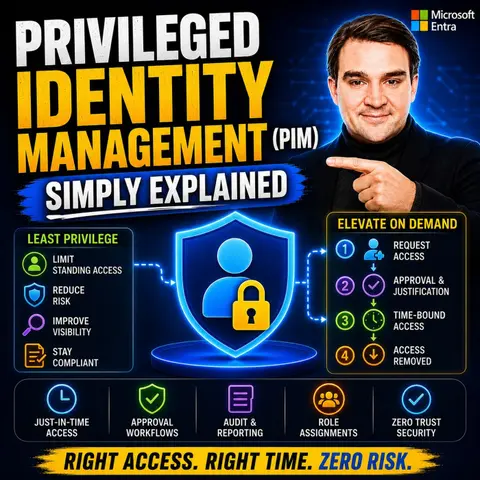
Before we jump into the technical weeds, if you want a practical, straightforward explanation of this concept, make sure to check out our related podcast episode: Privileged Identity Management (PIM) - Simply Explained. It is packed with insights on how these tools operate in the real world.
Key Takeaways
- Privileged Identity Management (PIM) secures privileged accounts, reducing the risk of data breaches.
- Just-in-Time (JIT) access limits the duration of privileged access, minimizing opportunities for misuse.
- Multi-Factor Authentication (MFA) adds an essential layer of security, making unauthorized access more difficult.
- Audit trails provide comprehensive records of privileged account activities, aiding in compliance and security monitoring.
- Implementing the principle of least privilege ensures users have only the access necessary for their tasks.
- Regular risk assessments help identify vulnerabilities in privileged accounts and improve security measures.
- Establishing clear PIM policies enhances control over access privileges and supports compliance with regulations.
- Continuous monitoring of privileged activities allows for quick detection and response to suspicious behavior.
What is PIM?

Privileged Identity Management plays a vital role in managing privileged accounts within an organization. It encompasses a set of technologies and practices that help you secure, monitor, and control access to sensitive resources by privileged users or accounts. By implementing PIM, you can significantly reduce the risk of unauthorized access and data breaches.
Key Features of PIM
Just-in-Time Access
One of the standout features of PIM is the Just-in-Time (JIT) access model. This approach minimizes the duration of privileged access, which reduces the attack surface. Here are some key benefits of JIT access:
- It grants permissions only when necessary.
- It revokes access after a set time or upon task completion.
- It aligns with the principle of least privilege, ensuring users have only the access they need for their tasks.
By limiting the window of opportunity for credential misuse, JIT access enhances your organization's security posture.
Multi-Factor Authentication
Multi-Factor Authentication (MFA) adds an essential layer of security to PIM. It strengthens protection against cyber threats by requiring users to provide multiple forms of verification before accessing privileged accounts. The benefits of implementing MFA include:
- Enhanced security through additional layers of protection.
- Improved compliance with regulations, ensuring adequate protection of personal data.
- Safeguarding sensitive information, making it difficult for attackers to breach accounts.
MFA is a critical component of PIM solutions, as it helps you meet compliance standards and protects your organization's valuable data.
Audit Trails
Audit trails are another crucial feature of PIM. They provide a comprehensive record of all activities related to privileged accounts. Here is how audit trails contribute to your organization is security and compliance:
- They automate the generation of tamper-proof logs, ensuring continuous compliance readiness.
- They track and log all activities, helping detect suspicious behavior.
- They provide detailed records of access-related events, which are essential for meeting regulatory standards.
With robust audit trails, you can demonstrate adherence to governance policies and simplify the audit process.
Why Privileged Identity Management Matters

Protecting Privileged Accounts
Privileged Identity Management (PIM) plays a crucial role in protecting privileged accounts. These accounts often hold significant access privileges, making them prime targets for cybercriminals. By implementing PIM, you can effectively reduce the attack surface and enhance your organization's security. Here are some key benefits of using PIM to protect privileged accounts:
- Just-in-time access limits the duration of access, reducing opportunities for unauthorized users.
- Multi-factor authentication (MFA) adds an extra layer of security, making it harder for attackers to gain access.
- Continuous monitoring helps identify and investigate anomalies, ensuring that any suspicious activity is addressed promptly.
The risks associated with unmanaged privileged accounts can be severe. For instance, unauthorized access can lead to data breaches, insider threats, operational disruptions, and regulatory non-compliance. The table below summarizes these risks:
| Risk Type | Description |
|---|---|
| Data Breaches | Unauthorized access to sensitive data can lead to significant financial and reputational damage. |
| Insider Threats | Employees or contractors may misuse their access to harm the organization intentionally or accidentally. |
| Operational Disruptions | Mismanagement of privileged accounts can lead to system outages or failures, impacting business operations. |
| Regulatory Non-Compliance | Failure to manage privileged accounts can result in violations of laws and regulations, leading to fines. |
Mitigating Insider Threats
Insider threats pose a significant risk to organizations, especially when it comes to privileged accounts. PIM helps mitigate these threats through several effective methods:
- Centralized credential management consolidates all privileged credentials into a secure vault, reducing the attack surface.
- Enforcing the principle of least privilege limits access to sensitive systems, controlling how privileged accounts are used.
- Continuous monitoring audits privileged activity, allowing you to quickly detect and respond to suspicious behavior.
By ensuring just-in-time access and implementing MFA for all privileged accounts, you can significantly reduce the risk of insider threats. Additionally, session accountability records actions taken during privileged access, making it easier to trace any unauthorized activities.
How PIM Works
Role Activation Process
The role activation process in Microsoft Entra PIM is straightforward yet secure. When you need to use a privileged role, you must first activate it. Here is how the process typically unfolds:
- You select the role you want to activate.
- You specify how long you need the role and provide a reason for the request.
- If the role requires approval, you will receive a notification indicating that your request is pending.
- If no approval is necessary, you can start using the role immediately.
This process ensures that only authorized users can access elevated privileges, reducing the risk of unauthorized access. Microsoft Entra PIM also enforces multifactor authentication (MFA) during this process, adding an extra layer of security.
To activate a role, you follow these steps:
- Admin requests activation of a role.
- PIM prompts for justification and MFA.
- Admin provides justification and completes MFA.
- PIM sends an approval request if configured.
- Approver reviews and approves the request.
- PIM activates the role for the specified duration.
Access Control Mechanisms
Access control mechanisms in Microsoft Entra PIM are designed to enhance security and manage access privileges effectively. Here are some key mechanisms that PIM employs:
- Just-In-Time (JIT): This mechanism activates admin roles only when needed, significantly reducing the risk of unauthorized access.
- Time-Bound Privileges: Access is automatically revoked after a specified duration, limiting exposure to potential threats.
- Approval Workflows: Certain role activations require approval, adding an extra layer of security.
Additionally, Microsoft Entra PIM integrates seamlessly with other Microsoft security services. For example, Just-in-Time access to groups and Conditional Access integration enhances security by enforcing specific requirements for PIM role activations. This integration allows for strong modern authentication methods and ensures that role activation can require a compliant device.
The following table summarizes the typical workflow steps in PIM solutions:
| Step | Description |
|---|---|
| Plan a Privileged Identity Management deployment | Communicate with users about changes and support. |
| Plan testing and rollback | Create test users and a test plan to verify settings. |
| Discover and mitigate privileged roles | Identify and review users with privileged roles. |
| Determine roles to be managed by PIM | Prioritize protecting roles with the most permissions. |
| Configure PIM settings for Microsoft Entra roles | Draft and configure settings for each role. |
| Assign and activate Microsoft Entra roles | Manage assignments and allow users to activate roles. |
| Approve or deny PIM activation requests | Approve or deny requests for role activation. |
| View audit history for Microsoft Entra roles | Access and review audit logs for role assignments. |
| Configure security alerts for Microsoft Entra roles | Set up alerts for suspicious activities. |
By understanding how PIM works, you can better manage access and enhance your organization's security posture.
Best Practices for Implementing PIM
Conducting Risk Assessments
Conducting risk assessments is essential for effective Privileged Identity Management (PIM). You should identify potential vulnerabilities and threats to your privileged accounts. Here are some effective methods to consider:
- Implement Least Privilege Access: Ensure users have minimal access necessary for their roles. This approach reduces the risk of privilege escalation.
- Use Just-in-Time (JIT) Access: Grant access only when needed and revoke it after task completion. This minimizes the chances of misuse.
- Enforce Multi-Factor Authentication (MFA): Add an extra layer of security by requiring additional verification beyond just a password.
- Monitor and Audit Privileged Activity: Regular audits help detect suspicious behavior and ensure proper privilege assignment.
Implementing these strategies not only minimizes the attack surface but also ensures compliance with regulations like GDPR and HIPAA. These regulations require strict controls on privileged access, enhancing your overall security hygiene.
Establishing Policies
Establishing clear policies is crucial for managing privileged accounts effectively. Here are key elements to include in your PIM policies:
- Implement Just-in-Time Access: Allow users to request privileged access only when necessary.
- Manage Privileged Accounts Individually: Grant access to sensitive resources individually rather than through broad permissions.
- Apply Zero Trust Principles: Ensure minimum privileges are granted to resources, limiting exposure.
- Use Audit Logs: Track critical events related to privileged access, including approvals and revocations.
- Automatically Revoke Access: Set expiration times for administrative access to enhance security.
These policies help you maintain control over access privileges and ensure compliance with industry standards.
To support continuous improvement, consider implementing the following monitoring techniques:
| Technique | Description |
|---|---|
| Continuous Monitoring | PIM continuously monitors all privileged access activity, providing detailed logs and reports to help detect potential threats. |
| Session Logging | This technique records sessions and flags suspicious activity. |
| Comprehensive Logging | Logging of privileged account activities allows for continuous monitoring and auditing, essential for detecting anomalies. |
| Real-time Tracking | Tracks and records privileged activities in real-time to detect anomalies and security breaches. |
By following these best practices, you can effectively implement PIM, enhance security, and ensure compliance across your organization.
Challenges in PIM Implementation
Implementing Privileged Identity Management (PIM) can present several challenges. Organizations often face obstacles that can hinder the successful adoption of PIM solutions. Understanding these challenges helps you prepare and strategize effectively.
Overcoming Resistance
Resistance to change is a common hurdle when implementing PIM. Employees may view PIM as a barrier to productivity. They might worry that the new processes will slow down their access to necessary resources. To address this resistance, consider the following strategies:
| Strategy | Description |
|---|---|
| Executive Sponsorship | Secure support from leadership to drive the PIM initiative. |
| Clear Communication | Articulate the benefits of PIM to all stakeholders. |
| Comprehensive Training | Offer training on new workflows to ensure user competence. |
| Start Small | Begin with high-value, lower-resistance use cases to build momentum. |
| User Feedback | Continuously gather feedback to improve the PIM implementation. |
By implementing these strategies, you can foster a more positive attitude toward PIM and encourage user adoption.
Managing Complexity
Managing complexity is another significant challenge in PIM implementation. Organizations often struggle with integrating PIM into existing systems. This can lead to deployment complexities, especially when dealing with both on-premises and cloud platforms. Here are some effective strategies to manage this complexity:
| Strategy | Description |
|---|---|
| Training | Ensure every team member accessing sensitive information understands PIM concepts and their roles. |
| Monitoring | Dedicate resources to monitor and analyze privileged access logs, potentially automating the process. |
| Technology Integration | Combine PIM technology with a robust security tech stack to contextualize privileged identity activity. |
Additionally, organizations may face other obstacles, such as the need for continuous management and the costs associated with advanced PIM solutions. The table below summarizes some common obstacles organizations encounter:
| Obstacle | Description |
|---|---|
| Deployment Complexities | Implementing PIM across diverse systems can be challenging, especially with on-premises and cloud platforms. |
| User Resistance | Users may see PIM as a productivity barrier due to slow access approval processes. |
| Integration with Existing Systems | Difficulty in ensuring seamless integration with legacy systems and third-party tools. |
| Cost | Advanced PIM solutions can be expensive, particularly with custom development needs. |
| Maintenance and Monitoring | Regular updates and policy reviews are often challenging for organizations to execute effectively. |
By recognizing these challenges and employing effective strategies, you can enhance your PIM implementation process and improve overall security.
Privileged Identity Management (PIM) is essential for managing privileged accounts effectively. It enhances security by minimizing the risk of unauthorized access and data breaches. By implementing PIM, you can ensure that only authorized users have access to sensitive information. This approach not only protects your organization but also supports compliance with regulations like SOX, HIPAA, and GDPR.
With PIM, you can maintain comprehensive audit trails, which are crucial for demonstrating compliance during audits. The measurable improvements from PIM include enhanced data security, regulatory compliance assurance, and reduced attack surfaces. Adopting PIM empowers you to manage risks effectively and safeguard your organization's critical assets.
To summarize, mastering Just-in-Time access is no longer just a nice-to-have security feature; it is a foundational pillar of modern cloud architecture. By eliminating permanent administrative roles and enforcing rigid, time-bound verification loops, you significantly shrink the attack surface available to bad actors. For a comprehensive walkthrough of these principles in action, be sure to listen back to our detailed episode on Privileged Identity Management (PIM) - Simply Explained.
FAQ
What is Privileged Identity Management (PIM)?
Privileged Identity Management (PIM) is a security solution that manages and secures privileged accounts. It helps organizations control access to sensitive resources, reducing the risk of unauthorized access and data breaches.
How does Just-in-Time (JIT) access work?
Just-in-Time (JIT) access grants users temporary privileges only when needed. This approach limits the duration of access, minimizing opportunities for misuse and enhancing overall security.
Why is Multi-Factor Authentication (MFA) important in PIM?
Multi-Factor Authentication (MFA) adds an extra layer of security by requiring users to verify their identity through multiple methods. This significantly reduces the risk of unauthorized access to privileged accounts.
What are audit trails in PIM?
Audit trails are comprehensive records of all activities related to privileged accounts. They help organizations track access events, detect suspicious behavior, and ensure compliance with regulatory standards.
How can organizations implement PIM effectively?
Organizations can implement PIM effectively by conducting risk assessments, establishing clear policies, and providing training. Continuous monitoring and regular audits also enhance the effectiveness of PIM solutions.
What challenges might organizations face when implementing PIM?
Organizations may encounter resistance to change, integration complexities, and resource allocation issues. Addressing these challenges requires effective communication, training, and strategic planning.
How does PIM support compliance?
PIM supports compliance by enforcing strict access controls and maintaining detailed audit logs. These features help organizations demonstrate adherence to regulations like GDPR, HIPAA, and SOX.
Can PIM be integrated with other security solutions?
Yes, PIM can integrate seamlessly with other Microsoft security services. This integration enhances security by providing comprehensive access management and monitoring across various platforms.
🎧 Listen to this episode
Want a practical explanation of Privileged Identity Management (PIM)? This episode breaks down the topic in clear language and shows why it matters for Microsoft 365, Azure, Power Platform, security, AI, and modern work.
Listen to this episode if you want to:
- Understand the key concepts behind Privileged Identity Management (PIM)
- See how it fits into the wider Microsoft technology ecosystem
- Learn where it can create practical value for your organization
You may also enjoy these related M365 FM episodes:
- Azure Cost Management - Simply Explained
- Microsoft Entra Permissions Management - Simply Explained
- Azure API Management - Simply Explained
- Microsoft Entra Agent ID: Secure Identity for AI Agents
- Microsoft Security Exposure Management with Uros Babic [MVP-MCT]
Discover more practical Microsoft conversations on M365 FM.

Microsoft MVP | Host of M365.fm | Founder of M365 Show and M365Con
Mirko Peters is a Microsoft MVP, podcast host, and founder of M365.fm, M365 Show, and M365Con. His work connects Microsoft practitioners through podcast interviews, livestreams, and community events.
At M365.fm, Mirko hosts conversations with Microsoft MVPs, product experts, architects, and community contributors. Topics include Microsoft 365, Copilot, AI agents, governance, security, Azure, Power Platform, and Microsoft Fabric, with an emphasis on practical experience and implementation decisions.
M365.fm is the podcast and learning platform. M365 Show brings experts together for livestreams, while M365Con provides an online conference setting for community learning.
Official website: Mirko Peters (https://www.mirkopeters.com/). Recognition: Mirko Peters — Microsoft MVP profile (https://mvp.microsoft.com/de-DE/mvp/profile/9b0ca797-db5a-493a-a845-8b9158046cf5). Connect on LinkedIn (https://www.linkedin.com/in/m365showpodcast/).
Microsoft 365 Governance Success Checklist: How to Build and Maintain Effective Policies