Data Discovery in Microsoft 365
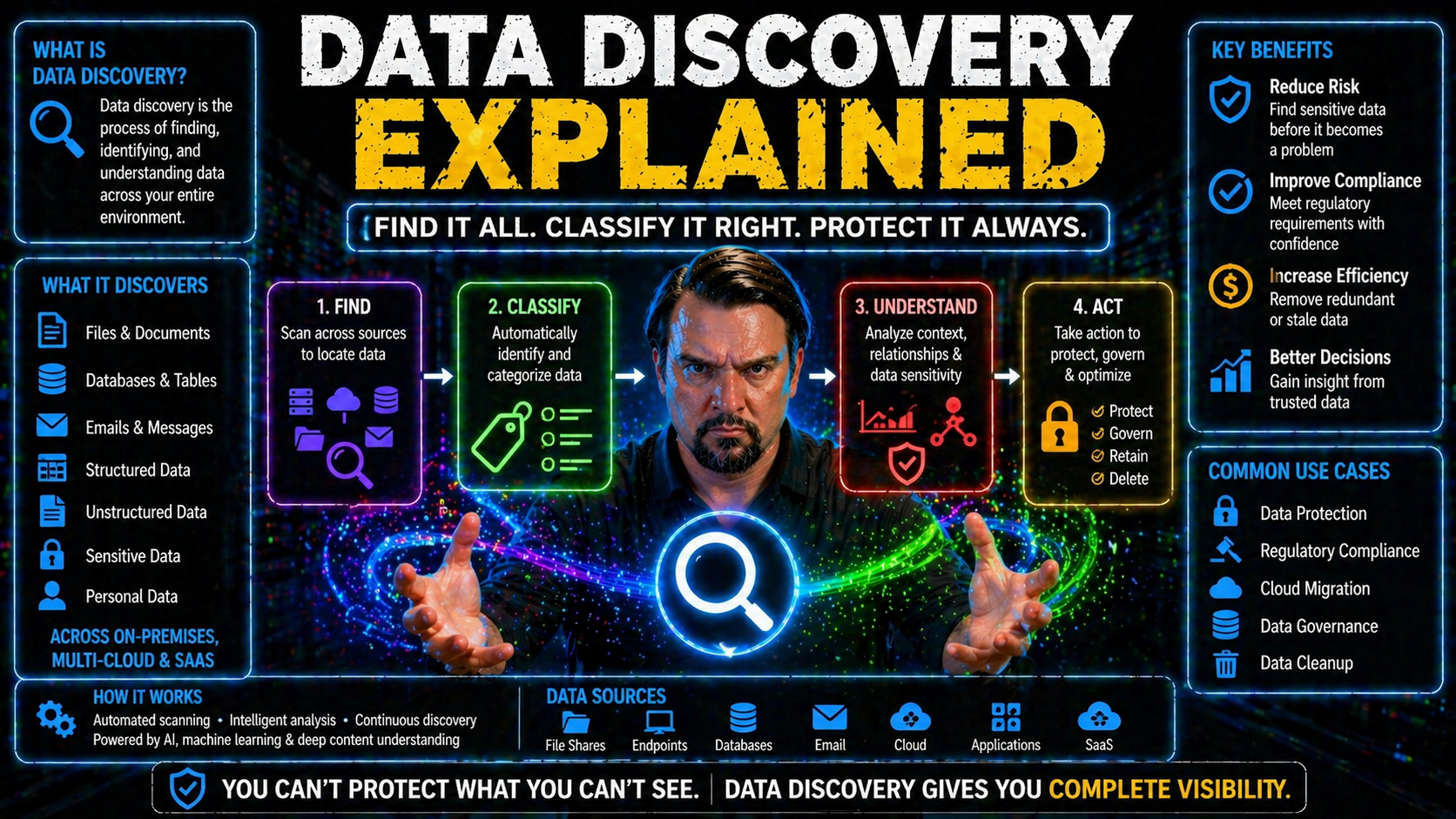
Step into the world of data discovery—a world where organizations stop guessing and start knowing. In today's data-driven climate, companies are swimming in information from every corner. The ability to sift through this ocean of data, find what matters, and turn it into business value isn’t just nice to have—it’s mission critical. Whether the goal is outpacing competitors, keeping data secure, or meeting evolving compliance standards, data discovery stands right at the center.
This article unpacks what data discovery truly means, why leaders are making it a priority, and exactly how it supports growth, innovation, and trust. You’ll explore essential building blocks, see how technologies like Microsoft Purview, Azure, and Fabric are shaping the space, and walk away with practical tips to apply in your own team. So, if you’re wondering how to make smarter decisions, reduce risk, or simply stay ahead—keep reading. The answers are in the data, and it’s time to discover them.
Understanding Data Discovery: Definition, Importance, and Core Concepts
To really grasp why data discovery matters, you have to see it as the backbone of any data-powered business strategy. At its heart, data discovery is about finding, understanding, and making sense of the data scattered across your company. This process helps organizations move from information overload to actionable knowledge—without just relying on gut instinct or luck.
Modern organizations are facing more data, stricter rules around privacy and governance, and a pressure to deliver quick, accurate insights at scale. Data discovery addresses these challenges by making information accessible, understandable, and trustworthy—no matter the user’s technical skill or department. It underpins everything from daily operations to high-level strategy and compliance efforts, often acting as the springboard for more advanced analytics, reporting, and artificial intelligence.
As you move through this guide, you’ll see data discovery isn’t a one-off project. It’s an ongoing journey, linked tightly to security, governance, and the outcomes that drive business forward. Next, we’ll break down exactly what data discovery is and the key benefits it brings to the table.
Data Discovery, Defined: What It Is and How It Works
Data discovery is the process of exploring and analyzing the mountains of information an organization has, so you can find, understand, and connect the data that really matters. Think of it like searching for hidden treasure among cluttered boxes in the attic, but with a map and a flashlight tailored for business needs. Instead of random digging, you follow a methodical approach to spot what’s valuable—be it sales records, customer feedback, or compliance logs.
The process typically starts by automatically scanning and cataloging all sorts of data sources: databases, files, emails, cloud services—whatever's in your company’s digital landscape. Modern tools can then profile this data, uncover relationships, and classify sensitive or regulated information. That means you don’t just know what data you have; you also know who owns it, who can access it, and how it’s being used.
Is governance part of data discovery? Absolutely. Responsible data discovery puts good governance front and center—setting clear rules about access, ownership, and usage. In Microsoft environments, for example, data access and governance are foundational, preventing security headaches and enabling safe, productive collaboration. Data discovery feeds these governance initiatives by creating an accurate, up-to-date inventory of data assets, making audits and compliance checks far less stressful.
Ultimately, data discovery isn’t just about uncovering what’s hidden—it’s about understanding your data’s context, so every team can trust and use it with confidence.
Why Is Data Discovery Important? Key Benefits for Modern Business
Data discovery isn’t just tech hype—it’s a strategic lever for any business aiming to thrive in today’s world. Here’s why it’s crucial:
- Improved Decision-Making: Data discovery arms leaders and frontline teams with timely, accurate insights, so decisions aren’t left to guesswork or outdated reports. By connecting the right data, businesses can respond faster to opportunities and threats alike.
- Risk Reduction & Compliance: With privacy regulations like GDPR only getting tougher, data discovery helps you locate sensitive info, track usage, and show regulators you’re playing by the rules. Tools such as Microsoft Purview and Defender can monitor, classify, and lock down what matters most—without slowing productivity.
- Enhanced Innovation: Spotting hidden patterns or emerging trends becomes possible when you truly know your data. This leads to new products, smarter marketing, and services that actually meet customer needs.
- Operational Efficiency: By cleaning up data chaos, reducing duplication, and making high-quality information available, teams spend less time searching (or arguing) and more time driving results.
- Competitive Advantage: Quick access to valuable data insights means organizations can get ahead—and stay ahead—of their rivals. Whether it’s entering new markets or defending your turf, data discovery gives you the edge.
As you’ll see in later sections, governance and smart technology choices (like AI agent governance and secure data management) make these benefits achievable—even at enterprise scale.
The Data Discovery Process: Steps, Methods, and Workflow Integration
Data discovery isn’t just a one-and-done checklist; it’s an end-to-end workflow with multiple stages, each building on the last to produce reliable insights. The process usually kicks off with scoping—defining what business questions you’re tackling and what data you’ll need. Then, you roll up your sleeves for the heavy lifting: cleaning, shaping, and integrating data from all sorts of places across your organization.
Once the data is prepped and unified, the magic happens—analysis and visualization. Here, you’re not just drowning in numbers and spreadsheets. Instead, you’re presented with dashboards, reports, and visual tools that make patterns jump out, helping folks at every skill level recognize what’s important.
This workflow is rarely linear. Teams often circle back, refining their approach as new data is found, old assumptions are challenged, or business needs shift. Strong governance and the right platform integrations can make all the difference, helping organizations avoid pitfalls like silos, data chaos, or spaghetti processes. Subsequent sections will break down each phase and reveal tips for making your data discovery journey smooth, secure, and scalable.
Scoping, Data Preparation, and Integration in the Data Discovery Process
- Scoping the Project: Everything starts by defining clear objectives. Are you solving a specific business problem, like reducing customer churn or meeting compliance audits? Good scoping means setting boundaries so teams know which data and tools truly matter.
- Data Preparation: Once scoped, you dive into cleaning—fixing errors, resolving duplicate records, and standardizing information. With data wrangling tools, you can transform raw, messy data into structured, usable assets. This step is critical for quality; bad data leads to misleading results down the line.
- Data Integration: In most organizations, data is scattered across multiple systems—databases, cloud apps, spreadsheets, old archives. Integration involves connecting these dots, pulling data into a unified view. Platforms like Microsoft Fabric use techniques such as the bronze-silver-gold layering model to bring order and trust to analytics pipelines (explore more about Fabric).
- Governance and Auditing: Throughout preparation and integration, strong governance ensures data lineage is tracked and compliance is maintained. For regulated industries, using tools like Microsoft Purview Audit is key—it creates a forensic record of who did what, when, and why, reducing risk and supporting investigations when needed.
Thorough preparation may not grab headlines, but it pays dividends by enabling trustworthy analytics, smoother collaboration, and rapid scaling when business demands shift.
Data Visualization in the Discovery Process: Turning Data into Insight
Data visualization sits at the heart of modern data discovery. It’s what bridges the gap between endless rows of raw numbers and a-ha moments that spark business action. With powerful tools like Power BI in the Microsoft Fabric ecosystem, you turn data into clear, compelling visuals that anyone—from executives to frontline staff—can immediately understand.
Visual representations don’t just make your dashboards look pretty; they help uncover hidden patterns and trends you might miss in a spreadsheet. By plotting sales over time, mapping customer interactions, or layering filters across different departments, visual analytics let you spot outliers, correlations, and opportunities at a glance.
Effective data visualization isn’t only about design. Secure access and governance are essential, particularly as organizations implement techniques like Row-Level Security (RLS) to control what each user can view. This means your insights remain trustworthy and only land in the right hands.
When discovery workflows are paired with robust visual tools, insight generation becomes faster, and data-driven decision-making truly takes root across the business.
Tools and Technologies Powering Modern Data Discovery
The tools you use for data discovery shape what’s possible—plain and simple. In today’s landscape, you’ll find everything from classic manual approaches to cutting-edge, AI-powered solutions. Manual discovery still has its place for small teams or unique datasets, while automation is a game-changer for scale and speed, especially in enterprises relying on platforms like Microsoft 365 and Azure.
Technologies are evolving rapidly, bringing scalability and interoperability to the forefront. Automated platforms can scan entire cloud tenancies, surface data assets instantly, and keep inventories fresh as systems change. Meanwhile, manual tools may offer more control but often struggle to keep up as data volumes balloon.
Leading platforms like Microsoft Purview and open-source options such as DataHub stand out by bringing together cataloging, governance, and discovery features under one roof. In the upcoming sections, you’ll get a closer look at key differences, deciding factors, and how to pick the right fit for your needs and technical maturity.
Manual and Automated Data Discovery: Comparing Methods and Results
- Manual Data Discovery: Ideal for small datasets or highly specialized projects where a deep, nuanced understanding is needed. Advantages include maximum control, flexibility, and the ability to spot issues automation might miss. Drawbacks? Manual workflows can be slow, error-prone, and don’t scale well. As new data sources pile up, keeping track manually becomes a recipe for blind spots and frustration.
- Automated Data Discovery: Software and platforms do the heavy lifting, scanning vast environments (like Microsoft 365 or Azure) to inventory and classify data automatically. The perks: lightning-fast discovery, broader coverage, and up-to-date views of your whole data landscape. Automation cuts out much of the “guessing game”—but remember, it’s only as good as your rules and configurations. In massive cloud environments, automation is often the difference between staying compliant and getting lost in the weeds.
- Hybrid Approaches: Some organizations blend manual and automated methods. Automation runs daily or hourly, while experts dive in for unique use cases or troubleshooting. This way, you get the best of both worlds: broad coverage and human oversight where it counts. While the intended content is sometimes misplaced (see operationalizing governance via PowerShell automation for emerging trends), the need for balance remains clear.
Ultimately, automation unlocks new insights at scale—giving teams speed, confidence, and room to focus on higher-value work instead of data wrangling.
Exploring Microsoft Purview Data and DataHub Source Platforms
- Microsoft Purview: An enterprise-grade platform for unified data governance, discovery, and compliance across Microsoft 365, Azure, and beyond. Features include automated cataloging, data lineage visuals, classification, policy enforcement, and robust auditing. It’s tailor-made for organizations seeking rigorous control, audit readiness, and regulatory compliance (learn about Purview auditing and document management).
- DataHub: An open-source data discovery and metadata platform, designed for hybrid and multi-cloud use. DataHub offers flexible integrations, lineage, business glossary, and self-service features, empowering teams to connect diverse sources—whether on-premises or in the cloud.
- Core Differentiators: Purview’s tight integration with Microsoft security features, user roles, data loss prevention (DLP), and compliance reporting stands out for enterprise and regulated industries. DataHub’s open-source model and broad connector library make it a great choice for organizations valuing customization and cross-platform visibility.
- Ideal Use Cases: Choose Purview for full-spectrum Microsoft environments, especially where compliance or data protection is a top priority. Opt for DataHub in mixed-ecosystem teams needing agility and open architecture.
Both platforms democratize data access and boost trust—crucial for scaling discovery beyond technical teams.
Governance, Security, and Compliance in Data Discovery
It isn’t enough to find and use data—you also need to keep it safe, manage who gets to see what, and prove you’re following the law. That’s why governance, security, and compliance are baked into every smart data discovery project. The stakes are high: a misstep can mean data breaches, regulatory fines, or the kind of reputation hit no organization wants.
True data discovery puts strong guardrails in place: clear policies on access, robust audit trails, encrypted channels, and automatic alerts if something’s off. In a Microsoft-centric world, technologies like Purview, Azure policies, and Entra roles make these safeguards possible without smothering productivity.
As you’ll see in the following sections, it’s not just about buying the right tools. Success comes from people, processes, and technology working together—so every discovery initiative stays secure, compliant, and ready for whatever’s next.
Data Discovery and Governance: Roles, Policies, and Protection
Data governance is the set of rules and practices that guide safe, responsible data use during discovery. This includes defining who owns which data, who’s allowed to access it, and how that access gets reviewed and tracked. In Microsoft 365 and Azure environments, governance models blend technology (like role-based access controls and sensitivity labels) with established processes for designing, enforcing, and reviewing policies.
For example, giving Microsoft Copilot the right permissions means understanding Graph permissions, Entra role groups, and Purview audit controls—not just trusting defaults. Good governance assigns clear ownership (so there’s always someone responsible) and ensures every action is logged for later review in case of incidents or audits.
But governance isn’t magic. You need intentional design and day-to-day accountability, not just native controls or checkboxes (see more on Microsoft 365 governance illusions). Policies should evolve as business needs, regulations, and digital risks change—so your discovery efforts are always ahead of the curve, not lagging behind.
With the right governance in place, data discovery becomes a driver of trust and business value, not a risk factor.
Ensuring GDPR Audit Protect and Data Completeness Compliance
Staying compliant with regulations like GDPR and CCPA isn’t just about avoiding fines—it’s about protecting customer trust. According to industry studies, companies lacking automated compliance monitoring face 2-3x higher audit failure rates. Using tools such as Microsoft Defender for Cloud can automate monitoring and offer real-time reporting (learn how Defender for Cloud supports continuous compliance).
But technology only goes so far. Understanding how policies like retention, autosave, or versioning affect actual behavior is key (see more on policy drift). Best practice means integrating completeness checks into the workflow and using dashboards that flag compliance drift before it becomes a problem.
Securing Data Discovery with Solid Protection Measures
- Encryption Everywhere: Encrypt data at rest and in transit. In Microsoft environments, use Azure encryption and managed keys to shield sensitive content even if storage is compromised.
- Granular Access Controls: Don’t rely on one-size-fits-all permissions. Leverage role-based access, least-privilege principles, and regular access reviews to ensure only the right folks see sensitive data. Use managed identities and Azure Key Vault for secure credential management (learn about securing Fabric pipelines).
- Continuous Monitoring & Audit Logging: Track every access, edit, and export with detailed logs. Use Microsoft Purview Audit for comprehensive record-keeping—especially in regulated sectors where forensic trails are non-negotiable.
- Conditional Access and Policy Enforcement: Set inclusive access baselines, use time-bound exceptions, and monitor for configuration drift or token theft (see more on safe policy rollouts). Proactive, automated alerts prevent “silent” breaches before damage is done.
- Defensive Architecture: Separate environments, minimize exposed endpoints, and avoid over-broad roles. Centralizing policy management simplifies enforcement and helps teams manage risk as systems grow and change.
Get these fundamentals right, and you’ll minimize the risk of leaks, sprawl, or compliance violations—keeping business data (and reputation) safe.
Business Impact and Use Cases of Data Discovery
The real test of any data discovery initiative is whether it moves the needle for the business. When done right, data discovery turns raw information into strategic advantage—opening new revenue streams, cutting costs, and transforming customer experiences. Across industries, organizations use data discovery to power everything from personalized medicine to instant fraud detection and next-level retail experiences.
In the following sections, you’ll see how competitive leaders use insights to adapt quickly, create value, and reimagine the way work gets done. Concrete examples in healthcare, finance, and retail will show you what’s possible—whether your challenge is clinical precision, regulatory complexity, or the endless quest to understand your customers better.
Gaining Competitive Advantage and Driving Innovation with Insights
A company that rapidly uncovers insights from its data stands out from the pack. Effective data discovery lets you identify emerging trends, understand customer behavior, and zero in on market gaps before competitors even notice them. Organizations using Microsoft-powered analytics platforms are able to pivot strategies, launch new offerings, or streamline operations—turning raw data into real-world innovation.
When paired with robust governance (as discussed in AI agent governance strategies), data discovery ensures innovation doesn’t come at the cost of control or compliance.
Industry Use Cases: Advancing Healthcare, Streamlining Finance, and Optimizing Retail
- Healthcare: Hospitals and care providers use data discovery to integrate patient records, uncover treatment patterns, and support evidence-based care. This leads to faster diagnoses, customized treatments, and better patient outcomes—all while safeguarding sensitive medical info with tight governance (explore Azure governance for healthcare compliance).
- Finance: Banks leverage data discovery to detect fraud in real time, unify customer portfolios, and ensure strict regulatory adherence. By connecting transaction histories and audit logs, they flag anomalies early and cut compliance costs through automation.
- Retail: Retailers employ discovery tools to analyze shopping behaviors, optimize supply chains, and personalize recommendations. This insight streamlines inventory, improves marketing ROI, and keeps stores competitive in fast-moving markets.
- Customer Experience: Across sectors, discovery reveals hidden friction points and journey trends. Teams then tailor support, automate responses, and segment audiences for more meaningful engagement, driving brand loyalty and revenue.
No matter your industry, if there’s data, there’s opportunity to deliver better outcomes with smart discovery strategies.
Best Practices, Challenges, and the Future of Data Discovery
The path to successful data discovery is littered with both golden opportunities and tricky pitfalls. Best practice isn’t just about choosing the right tool or technology—it’s about building a repeatable approach, arming your team with skills, and staying one step ahead of risks like tool sprawl, manual overload, or missing critical data.
At the same time, new trends are shaking things up. Self-service analytics and AI-powered platforms are breaking old bottlenecks, helping organizations scale discovery to more users and bigger challenges. Looking forward, smart workflows, automation, and a culture of data-driven thinking will steer winning teams.
The next sections break down how to launch strong discovery initiatives, sidestep common issues, and prepare for a future where everyone—not just the tech gurus—can tap into the power of their data.
Implementing Data Discovery: Practices and Strategies for Success
- Start with Clear Business Goals: Anchor every project to a real-world objective—whether it’s improving compliance, driving sales, or reducing risk. Clarity up front avoids wasted effort and scope creep.
- Select the Right Tools for Your Stack: Pick discovery platforms that mesh with your environment (like Microsoft Purview for M365/Teams or DataHub for hybrid clouds). Consider interoperability, scalability, and user-friendliness.
- Foster Data Literacy: Provide ongoing training, support, and learning centers so everyone—from analysts to frontline users—can confidently use discovery tools (see Copilot Learning Center tips).
- Build for Governance and Security: Integrate role management, technical enforcement, and policy automation from the start (practical Copilot governance checklist). Don’t treat governance as an afterthought.
- Iterate and Improve: Measure outcomes, get feedback, and adjust processes as your data landscape or business needs change. Treat every discovery project as a chance to refine practices and boost results over time.
Following these strategies, organizations maximize ROI and avoid the headaches of disconnected, one-off “science experiments.”
Overcoming Challenges: Fragmented Tools, Manual Scale, and Blind Spots
- Siloed or Incompatible Tools: Using too many disconnected platforms leads to duplicated efforts and missed insights. Solution: Adopt unified discovery tools and enforce architectural discipline, especially in cloud suites like Microsoft 365. Consolidate data pipelines and standardize processes wherever you can (see Shadow IT remediation steps).
- Manual Scaling Barriers: Manual documentation doesn’t keep pace with growing datasets. Solution: Automate scanning, cataloging, and monitoring with platforms that fit your compliance and audit demands.
- Blind Spots in Discovery: Old content, poorly labeled files, rogue apps, or undocumented assets create invisible risks and lots of wasted time. Solution: Set up regular, automated inventory and access reviews, and flag orphaned data proactively—before attackers or auditors do.
- Process Gaps: Without clear roles and workflows, discovery efforts stall. Invest in ongoing change management, create feedback loops, and don’t let the “keyword guessing game” substitute for structured discovery.
Tackle obstacles with a mix of smart technology, intentional process, and vigilant oversight, and you’ll avoid most data discovery disasters.
The Future of Data Discovery: Workflows, AI Automation, and Self-Service
- AI-Driven Automation: Artificial intelligence and machine learning now automate data tagging, pattern spotting, and anomaly detection. Platforms like Microsoft Copilot and Power Platform are making quick, accurate discovery possible at scale (see advanced Copilot governance).
- Self-Service Analytics: No more waiting on IT or data scientists. User-friendly interfaces let business users—from marketers to HR—find answers, build dashboards, and explore trends independently.
- Governance That Keeps Up: Automation’s double-edge means governance needs to scale too. Organizations are deploying tighter DLP, automatic risk alerts, and enforceable control planes—which keep data safe even as agents and automations “rise” (governance amid AI agent scale).
- Natural Language Interfaces: Discovery tools are getting smarter—so users can ask questions in plain English and get instant insights, rather than wrangling queries or scripts.
Tomorrow’s data discovery will be faster, safer, and open to everyone ready to learn—and organizations investing now are building huge competitive moats for the years ahead.
Empowering Business Teams: Data Discovery for Non-Technical Users
Data discovery used to be the domain of IT pros and number crunchers—but not anymore. Today, self-service tools and organizational training are putting powerful analytic capabilities directly into the hands of business analysts, marketers, sales teams, and even HR. This democratization means more brains working with data, faster insights, and fewer blockers caused by technical bottlenecks.
Bridging the traditional gap requires intuitive, no-code platforms so that exploring data isn’t a chore reserved for the tech-savvy. It also means fostering a culture where every employee feels confident wrestling with data—whether they build a quick dashboard, segment customers on the fly, or track campaign performance in real time.
The following sections highlight today’s best self-service discovery platforms and essential strategies for building organization-wide data literacy, helping non-technical teams deliver business impact without waiting on backlogs or approvals.
Self-Service Data Discovery Tools for Business Analysts
- No-Code Platforms: Tools like Power BI and Microsoft Fabric allow business users to connect, explore, and visualize data through drag-and-drop interfaces—no coding required.
- Guided Exploration: Many platforms offer templates, natural language queries, and step-by-step wizards for building reports and dashboards, enabling marketing, sales, or HR teams to answer questions on their own terms.
- Role-Based Access and Collaboration: Permissions can be tailored so analysts see the right information and collaborate safely, boosting trust and data democratization.
- Faster, Better Decisions: Direct access means issues are identified quickly and resolved without delay—turning every business user into a citizen data scientist and making insights actionable across departments.
Building Data Literacy to Support Discovery Initiatives
- Targeted Training Programs: Workshops and online resources teach non-technical staff essential data concepts and modern toolsets.
- Visual Learning Aids: Infographics, dashboards, and step-by-step tutorials help demystify analytics and empower continuous learning.
- Peer Mentorship & Community: Encourage experienced data users to mentor others, sharing tips and best practices in regular team sessions.
- Celebrating Success Stories: Publicizing wins and progress keeps momentum high and shows everyone the real business value of smarter discovery.
Measuring the ROI and Success of Data Discovery Projects
If you’re sinking time and money into data discovery, you want to know it’s worth it. The best organizations treat these projects like any other investment—with clear goals, measurable outcomes, and transparent reporting on success. Tracking both qualitative and quantitative metrics ensures lessons are learned, wins are celebrated, and ongoing discovery gets the resources it needs.
This section explores practical frameworks and benchmarks that help you capture actual business value. You’ll see which KPIs matter most, how time-to-insight translates to real savings, and the formulas organizations rely on to justify new discovery initiatives or scale existing ones.
The detailed subsections break down measurement strategies and financial modeling approaches to help your team prove value, drive improvement, and maintain stakeholder buy-in over the long haul.
Key Metrics and KPIs to Track Data Discovery Effectiveness
- Time-to-Insight Reduction: How quickly can teams go from data intake to actionable recommendations?
- Data Coverage Rate: What percentage of relevant data assets are catalogued and available for analysis?
- Compliance Audit Pass Rate: The proportion of successful regulatory audits, indicating effective controls.
- Cost Savings from Data Consolidation: Measured reductions in storage, management, or duplicate resources.
- User Adoption and Engagement: Uptake rates of self-service tools and the frequency of business-driven discovery.
Calculating the Financial ROI of Data Discovery Initiatives
- Direct Cost Savings: Add up savings from reduced manual work, streamlined compliance, and decommissioned legacy tools.
- Revenue Boosts: Factor in increased sales, better customer retention, or faster market entry enabled by new insights.
- Risk Mitigation Value: Quantify reduction in fines, breaches, or incident cost thanks to better governance and early detection.
- ROI Formula: ROI % = (Net Benefit / Total Investment) x 100. Use real company case studies to compare “before and after” metrics for a realistic assessment.
Teams that share transparent ROI calculations make it easier to secure support for future investments.
Resources, FAQs, and Next Steps for Data Discovery
After unpacking the essentials of data discovery, you might still have questions or feel ready to dive even deeper. This final section pulls together the best next steps—answering lingering questions, linking to in-depth guides, and supplying checklists so you can evaluate tools with confidence.
Whether you’re looking for trusted community resources, expert blogs, or practical templates, you’ll find curated recommendations here. We'll also sum up key takeaways to make sure every reader walks away equipped for the challenges ahead.
Explore the FAQs for quick answers and head to the recommended resources for ongoing learning—no matter your organization’s size or familiarity with the Microsoft ecosystem. Consider this your launching pad for building a robust data discovery practice that stands the test of time.
Frequently Asked Questions About Data Discovery
- What’s the difference between data discovery and data exploration? Discovery is about finding and cataloging data, while exploration digs deeper to uncover patterns and insights within that data.
- How do I pick the right discovery tool? Consider factors like ecosystem fit, automation features, compliance needs, and user-friendliness.
- How is success measured? By tracking KPIs like time-to-insight, data coverage, audit pass rates, and demonstrated business impact.
- Is governance necessary for data discovery? Absolutely—effective discovery goes hand-in-hand with strong governance and security policies.
Recommended Resources and Buyer’s Evaluation Checklist
- Essential Guides: Check out Microsoft’s documentation on Purview, Power BI, and Fabric for implementation strategies.
- Trusted Blogs & Podcasts: Follow the M365 FM Podcast for compliance, document management, and real-world enterprise stories. Review resources on SharePoint and Power Platform governance for cloud stability.
- Community Forums: Engage with the Microsoft Tech Community or DataHub user groups for peer support.
- Buyer’s Evaluation Checklist:Does the platform support automated cataloging and lineage?
- Is it compatible with your existing data sources and cloud services?
- What compliance certifications does it support?
- How customizable are governance and access controls?
- Are self-service analytics and non-technical users supported?
Key Takeaways and Data Discovery Overview
- Data discovery is essential for translating scattered data into business value—fueling better decisions, compliance, and growth.
- Effective discovery combines automation, governance, and self-service tools to empower all teams.
- Overcoming pitfalls like tool fragmentation and manual overload unlocks faster, safer, and more actionable insights.
- Building data literacy and robust measurement frameworks ensures ongoing ROI and sustained competitive advantage.
- Start small, iterate fast, and use proven platforms like Microsoft Purview and Fabric to set your discovery initiatives up for success.
You Should Also Listen To
If you are researching data discovery in Microsoft 365, these episodes add practical context that helps connect governance, security, compliance, and AI concepts to real Microsoft environments.
- Microsoft Purview – Simply Explained — Clarify how classification, retention, compliance, and data governance fit together across Microsoft 365.
- Microsoft Defender XDR – Simply Explained — See how data-risk signals connect with detection, investigation, and coordinated response.
- Conditional Access – Simply Explained — Understand how identity, device, and risk context strengthens protection around sensitive data.
- Microsoft Teams Governance – Simply Explained — Explore the governance operating model needed to turn policies into consistent user behavior.
They are useful next steps when you want to move from a definition or framework to implementation decisions.

Microsoft MVP | Host of M365.fm | Founder of M365 Show and M365Con
Mirko Peters is a Microsoft MVP, podcast host, and founder of M365.fm, M365 Show, and M365Con. His work connects Microsoft practitioners through podcast interviews, livestreams, and community events.
At M365.fm, Mirko hosts conversations with Microsoft MVPs, product experts, architects, and community contributors. Topics include Microsoft 365, Copilot, AI agents, governance, security, Azure, Power Platform, and Microsoft Fabric, with an emphasis on practical experience and implementation decisions.
M365.fm is the podcast and learning platform. M365 Show brings experts together for livestreams, while M365Con provides an online conference setting for community learning.
Official website: Mirko Peters (https://www.mirkopeters.com/). Recognition: Mirko Peters — Microsoft MVP profile (https://mvp.microsoft.com/de-DE/mvp/profile/9b0ca797-db5a-493a-a845-8b9158046cf5). Connect on LinkedIn (https://www.linkedin.com/in/m365showpodcast/).