
Data-Driven Sales: The Key Metrics Every Pipeline Needs to Track
Welcome back to the podcast blog! If you have ever felt like your revenue goals are constantly slipping through your fingers despite working with a dedicated team, you are not alone. Tracking the right metrics can make or break your revenue goals. In this comprehensive post, we will explore the key performance indicators—ranging from contact rates to pipeline velocity—that help you identify bottlenecks and optimize your sales process. This conversation directly expands on the themes we covered in our recent episode. If you want to dive deeper into how architectural and data choices impact your operational workflows, be sure to check out the related episode Synapse Link vs Dataflows Gen2 for Dataverse Pipelines.
Stop Blaming Users
In many organizations, you often hear the phrase, "If only the users would perform better." This common tendency to blame users for poor sales performance overlooks a crucial aspect: the structure of your pipeline. When sales numbers fall short, it is easy to point fingers at the sales team. However, this approach fails to address the underlying issues that may be affecting their performance.
Consider the following structural factors that can lead to sales underperformance:
- Territory imbalance: If some sales representatives have more leads than others, it creates an uneven playing field.
- Lead quality: Poor-quality leads can frustrate even the most skilled salespeople.
- Unclear expectations: When goals and responsibilities are not clearly defined, confusion can hinder performance.
Managers should focus on these structural issues before expecting improvements in performance. Effective diagnosis of these factors is essential for targeted coaching. Many managers mistakenly attribute underperformance to personal failings rather than recognizing these structural issues. Addressing motivation gaps, coaching misalignment, and skill deficiencies is crucial for improving sales outcomes.
By shifting your perspective, you can start to see that the pipeline itself may be the root cause of the challenges you face. Instead of blaming users, take a step back and evaluate how your pipeline operates. This shift in mindset can lead to more effective strategies and ultimately drive revenue growth.
Pipeline Issues

Inadequate Training
Inadequate training can significantly hinder your sales pipeline's effectiveness. When your team lacks the necessary skills, it leads to several consequences. For instance, skill gaps in consultative selling and negotiation can lower your representatives' confidence. This lack of confidence directly impacts their ability to close complex deals. Additionally, process inconsistencies arise when your team does not follow standardized sales methods. This inconsistency slows progress and creates unpredictable conversion rates.
To combat these issues, consider implementing effective training strategies. Here are some proven methods:
| Training Method | Description |
|---|---|
| Standardize Pipeline Usage | Create a playbook with definitions and expected activities for each pipeline stage. |
| Align Sales and Marketing | Ensure all teams work from a single CRM source, defining clear handoff points. |
| Use Automation for Follow-Ups | Implement automated reminders and follow-up tasks to maintain engagement. |
| Coach Using Live Data | Conduct 1:1 reviews focusing on key deals, using real-time data for coaching. |
| Continuous Improvement | Foster a culture of ongoing development to enhance pipeline management. |
Unclear Goals
Unclear goals can also contribute to inefficiencies in your pipeline. When your sales team lacks clear objectives, it leads to misalignment between sales and marketing. This misalignment often results in receiving leads that do not match your target criteria. Consequently, you may experience low conversion rates and wasted efforts. Additionally, inconsistent qualification criteria can cause your representatives to spend time on leads that are unlikely to convert.
To improve this situation, set clear and measurable goals. Ensure that everyone understands their roles and responsibilities. This clarity will help your team focus on the right opportunities and drive growth.
Office Politics
Office politics can interfere with your pipeline management and hinder sales growth. Decisions based on relationships rather than performance can create a toxic environment. This misalignment reduces collaboration and shifts focus to personal agendas. As a result, your pipeline suffers.
To foster collaboration, align your sales and marketing teams around shared goals and key performance indicators (KPIs). Use shared workflows and systems to minimize turf wars. Additionally, enhance communication by sharing prospect insights. This approach ensures that your representatives deliver the right message at the right time.
Here are some strategies to minimize the negative impact of office politics:
- Lead by example with integrity and accountability.
- Practice empathy to understand colleagues' perspectives.
- Promote transparent communication to prevent misunderstandings.
- Foster teamwork by celebrating collective success.
- Develop emotional intelligence to navigate complex dynamics.
By addressing these pipeline issues, you can create a more effective sales environment that drives growth and improves overall performance.
Analyzing Your Pipeline
Analyzing your pipeline is essential for identifying areas of improvement. By leveraging data-driven insights, you can make informed decisions that enhance your sales processes.
Data-Driven Insights
Importance of Metrics
Metrics play a crucial role in understanding your pipeline's performance. They provide a clear picture of how well your sales processes function. Here are some key metrics to consider:
| Metric | Description | Target Indicator |
|---|---|---|
| Contact Rate | Percentage of connections made with decision-makers | 30% or higher |
| Qualification Rate | Percentage of leads that meet qualification criteria | Above 50% |
| Stage Conversion | How leads progress through pipeline stages | Maintain steady ratios |
| Close Rate | Percentage of opportunities turned into sales | Between 11% and 40% |
| Pipeline Velocity | Average time it takes to close deals | Match industry benchmarks |
By tracking these metrics, you can pinpoint strengths and weaknesses in your pipeline. This data helps you adjust your strategies to improve overall performance.
Tools for Analysis
Utilizing the right tools can streamline your analysis process. Consider using orchestration tools like SQL and Airflow to manage your data workflows effectively. These tools help automate data collection and analysis, reducing friction in your processes. They also enable you to create ETL scripts that transform raw data into actionable insights.
Identifying Bottlenecks
Identifying bottlenecks in your pipeline is vital for maintaining a smooth flow of leads. Common bottlenecks include:
- Stalled Opportunities: Deals that linger too long in one stage without moving forward.
- Misused Resources: Top-performing sales reps spending too much time on tasks like cold calling instead of closing deals.
- Low-Quality Leads: A flood of unqualified leads clogging the early stages of your pipeline.
- Dropping Close Rates: Consistently low conversion rates, often tied to poor lead quality.
Recognizing these issues allows you to take proactive measures to address them.
Solutions to Overcome Bottlenecks
To effectively address bottlenecks, consider the following strategies:
- Real-Time Problem Detection: Use AI to monitor your pipeline continuously. This technology identifies issues before they escalate by tracking deal progression patterns and communication frequency.
- AI-Powered Lead Scoring: Implement AI to analyze various data points. This approach prioritizes leads, ensuring your sales reps focus on high-quality prospects.
- Monitoring and Alerts: Set up alerts for pipeline velocity, engagement changes, and lead scoring. This proactive approach helps you identify and address bottlenecks quickly.
By analyzing your pipeline and addressing bottlenecks, you can create a more efficient sales process that drives growth and improves overall performance.
Transforming Your Pipeline
Transforming your sales pipeline requires a strategic approach that leverages technology and fosters a culture of continuous improvement. By implementing the right tools and practices, you can enhance your pipeline's efficiency and effectiveness.
Implementing Technology
CRM Solutions
Customer Relationship Management (CRM) solutions play a vital role in improving pipeline visibility and conversion rates. These systems help you manage customer interactions and streamline processes. Research shows that organizations using CRM systems experience significant improvements:
| Metric | Before CRM | After CRM | Improvement |
|---|---|---|---|
| Conversion Rate | 20% | 24% | 4% increase |
| Annual Revenue | N/A | $12.8M | 8% growth |
| Reporting Time | N/A | 40 hours/month saved | 95% reduction |
| Forecast Accuracy Improvement | 30-40% variance | 15-20% variance | Improvement |
| Sales Cycle Duration | 10.5 weeks | 9.2 weeks | 12% reduction |
These metrics highlight how CRM solutions can transform your sales pipeline. They provide you with insights that help you make informed decisions and optimize your strategies.
Automation Tools
Automation tools can significantly enhance your pipeline management. They streamline repetitive tasks, allowing your sales team to focus on high-value activities. For instance, automation scripts can handle follow-ups and lead nurturing, ensuring timely communication with prospects.
Consider the following impactful technologies for transforming sales pipelines:
| Technology | Impact on Sales Pipeline |
|---|---|
| Conversational Intelligence | 25% increase in sales conversions |
| Predictive Analytics | 90% of sales professionals find it essential |
| Autonomous Outreach | 40% increase in qualified leads for a client |
| AI Implementation | 73% of companies report increased sales quotas |
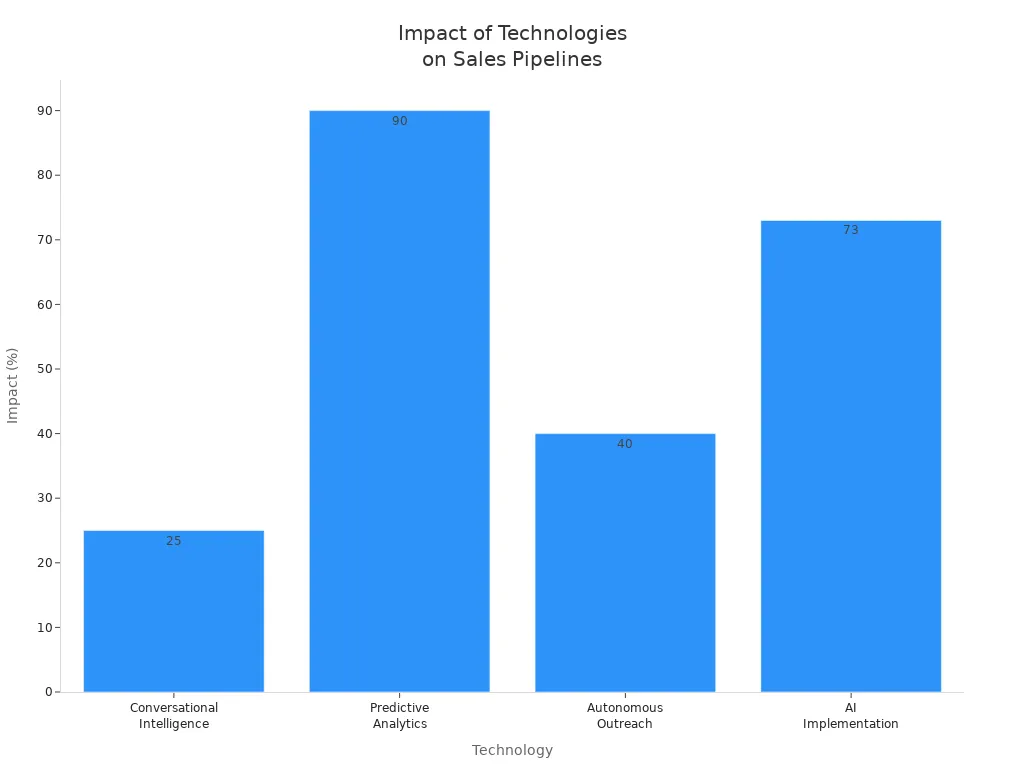
By integrating these technologies, you can create a more efficient and responsive sales pipeline.
Continuous Improvement
Continuous improvement is essential for maintaining long-term pipeline performance. This approach involves regularly assessing your processes and making necessary adjustments.
Feedback Loops
Establishing feedback loops is crucial for effective pipeline management. These loops allow you to capture insights from your sales team and customers. Here are some best practices for creating feedback loops:
- Capture frontline intelligence from sales conversations to inform marketing and outreach.
- Create a simple system for sharing intelligence, such as a dedicated Slack channel or a form for reps to fill out after calls.
- Hold regular sync meetings focused on feedback to review objections and brainstorm messaging adjustments.
- Track objection trends to identify areas for messaging improvement, such as addressing budget constraints earlier in conversations.
- Utilize feedback to create targeted campaigns that address specific concerns raised by prospects.
Implementing these practices can lead to increased win rates, shorter sales cycles, and improved customer satisfaction.
Regular Training Sessions
Regular training sessions are vital for keeping your sales team sharp and informed. These sessions should focus on new tools, techniques, and market trends. By fostering a culture of continuous learning, you empower your team to adapt to changes and improve their performance.
Incorporating structured reviews and data-driven optimization into your training can further enhance your pipeline management. Regularly updating opportunity status and analyzing win/loss rates helps maintain pipeline hygiene. Utilizing metrics to identify areas for improvement informs your decision-making.
By transforming your pipeline through technology and continuous improvement, you can create a more effective sales environment that drives growth and enhances overall performance.
Revenue Accountability
Revenue accountability is crucial for driving sales performance. When you hold your team accountable, you create an environment that fosters growth and improvement. Without accountability, even top talent can miss targets. This situation can lead to a dip in morale and stagnation in pipelines. In fact, 69% of sales representatives miss their quotas due to a lack of accountability. Furthermore, 44% of deals stall out when accountability is absent, and only 30% of a sales rep's day is spent selling.
Empowering Users
Encouraging Ownership
Encouraging ownership among your sales team members can significantly impact pipeline outcomes. When team members take responsibility for their roles, they become more engaged and motivated. This approach leads to broader reach through targeted resource sharing and smarter follow-ups using real-time data.
To empower your users effectively, consider these strategies:
- Launch a referral program by creating engaging content and sharing it through various channels.
- Develop a sales engagement program that includes regular training and resources for the sales team.
- Establish regular communication practices within the sales team to share insights and feedback.
- Analyze sales data to identify trends and areas for improvement in the sales pipeline.
- Choose and implement a sales pipeline management tool that fits your team's needs.
Providing Resources
Providing the right resources is essential for supporting user success in sales pipelines. Utilize CRM systems to organize and automate sales activities. Sales engagement platforms with AI capabilities can enhance performance by streamlining processes. Additionally, training and educational resources can equip your team with the skills they need to excel.
Here are some essential resources to consider:
- CRM systems for organizing and automating sales activities
- Sales engagement platforms with AI and automation capabilities
- Lead generation and qualification tools
- Training and educational resources
- Community and partner networks
Open Communication
Open communication contributes significantly to pipeline transparency and accountability. It builds trust and fosters collaboration among team members. Transparent communication reduces misunderstandings and promotes loyalty.
Importance of Feedback
Feedback is vital for understanding client needs better. It shows that you value their opinions and encourages a culture of continuous improvement. Regular feedback allows your team to identify areas for enhancement and adjust strategies accordingly.
Creating Safe Spaces
Creating safe spaces for open dialogue is essential. Encourage your team to share their thoughts and ideas without fear of judgment. This practice promotes collaboration and strengthens team bonds. Here are some effective strategies for fostering open communication:
- Hold regular meetings to foster collaboration among team members.
- Align goals to ensure everyone works towards the same outcomes.
- Define clear communication channels to streamline interactions.
- Encourage feedback and idea sharing to promote collaboration.
- Celebrate successes to foster a positive team culture.
By focusing on revenue accountability, empowering users, and fostering open communication, you can create a more effective sales environment that drives revenue growth and enhances overall performance.
Transforming your sales pipeline is essential for driving growth and improving performance. By focusing on specific pain points, you can achieve significant results. Here are some key takeaways to consider:
- Start small and address specific challenges.
- Invest in data quality and integration for better lead qualification.
- Automate routine tasks to optimize your sales strategies.
- Analyze top performers to replicate their success.
Measuring the impact of these transformations is crucial. Track metrics like Customer Satisfaction (CSAT) and Customer Lifetime Value (CLV) to evaluate your progress. By embracing these strategies, you can create a more effective sales environment that empowers your team and drives revenue growth.
Remember, the journey to a successful pipeline starts with you! 🚀
FAQ
What is a sales pipeline?
A sales pipeline is a visual representation of your sales process. It helps you track potential customers as they move through different stages, from initial contact to closing the deal.
How can I improve my sales pipeline?
You can improve your sales pipeline by analyzing metrics, providing adequate training, and setting clear goals. Focus on addressing bottlenecks and leveraging technology to streamline processes.
Why is data important in sales?
Data is crucial in sales because it provides insights into customer behavior and preferences. Analyzing data helps you make informed decisions and optimize your sales strategies for better results.
What metrics should I track in my pipeline?
Key metrics to track include conversion rates, qualification rates, and pipeline velocity. Monitoring these metrics helps you identify strengths and weaknesses in your sales process.
How often should I analyze my pipeline?
You should analyze your pipeline regularly, ideally monthly or quarterly. Frequent analysis allows you to spot trends, address issues, and adjust strategies to improve performance.
What role does technology play in pipeline management?
Technology enhances pipeline management by automating tasks, providing real-time data, and improving communication. CRM systems and automation tools help streamline processes and increase efficiency.
How can I foster open communication in my sales team?
You can foster open communication by holding regular meetings, encouraging feedback, and creating a safe space for sharing ideas. Transparency builds trust and collaboration among team members.
What are common bottlenecks in a sales pipeline?
Common bottlenecks include stalled opportunities, low-quality leads, and misused resources. Identifying these issues allows you to implement solutions and maintain a smooth flow of leads.

Microsoft MVP | Host of M365.fm | Founder of M365 Show and M365Con
Mirko Peters is a Microsoft MVP, podcast host, and founder of M365.fm, M365 Show, and M365Con. His work connects Microsoft practitioners through podcast interviews, livestreams, and community events.
At M365.fm, Mirko hosts conversations with Microsoft MVPs, product experts, architects, and community contributors. Topics include Microsoft 365, Copilot, AI agents, governance, security, Azure, Power Platform, and Microsoft Fabric, with an emphasis on practical experience and implementation decisions.
M365.fm is the podcast and learning platform. M365 Show brings experts together for livestreams, while M365Con provides an online conference setting for community learning.
Official website: Mirko Peters (https://www.mirkopeters.com/). Recognition: Mirko Peters — Microsoft MVP profile (https://mvp.microsoft.com/de-DE/mvp/profile/9b0ca797-db5a-493a-a845-8b9158046cf5). Connect on LinkedIn (https://www.linkedin.com/in/m365showpodcast/).





