
Identity as the New Perimeter: Securing Entra ID with AI
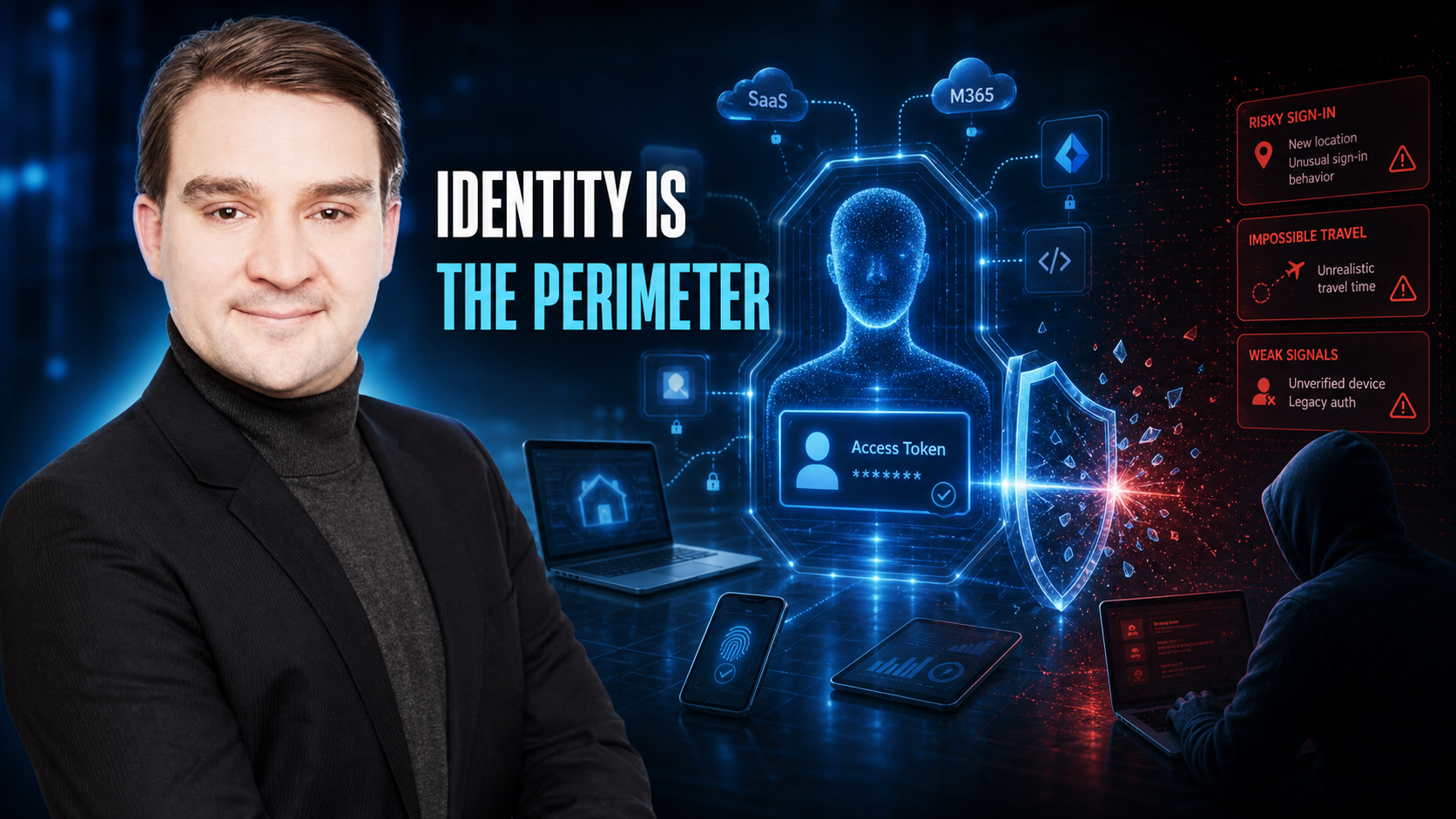
Welcome back to the podcast companion blog! As modern IT environments continue to expand beyond the traditional physical network walls, securing the enterprise requires a fundamental shift in how we think about security perimeters. In this deep dive, we are going to unpack how identity has officially become the new perimeter and how cutting-edge artificial intelligence is reshaping how we protect it. If you have ever felt overwhelmed by the sheer volume of sign-in events, anomalous behavior, and fragmented logs, you are in the right place. Today, we explore how Microsoft Security Copilot is transforming identity defense within Microsoft Entra ID by evaluating user behaviors, correlating weak signals, and suggesting instant remediations.
Introduction to Identity as the New Perimeter
For decades, enterprise security was defined by the four walls of the corporate office. Firewalls, physical subnetworks, and domain controllers acted as the definitive boundaries between trusted internal resources and the untrusted wild outside. But as remote work, cloud migration, and mobile devices became the permanent operational standard, that physical perimeter evaporated. Today, your employees, partners, and contractors are logging in from coffee shops, home offices, and airports all over the world, using a diverse array of personal and corporate devices. Consequently, the traditional firewall is no longer where the battle for enterprise security is won or lost.
Instead, identity has taken its place as the primary attack surface. Attackers have largely shifted away from complex perimeter-breaching techniques when it is often far easier—and more rewarding—to simply steal credentials. Phishing, credential stuffing, and session hijacking are now the entry vectors of choice for malicious actors. Once an attacker compromises a valid user identity, they can move laterally through cloud services, access sensitive data, and evade legacy detection mechanisms that assume a logged-in user is a legitimate employee. Securing the modern enterprise therefore demands a radical pivot toward identity-centric security, where every single authentication request is scrutinized, contextualized, and continuously evaluated for risk.
Evaluating Login Behavior with Security Copilot
Evaluating login behavior at scale is a staggering human challenge. Every single day, organizations process millions of authentications, ranging from routine morning log-ins to programmatic API calls running in the background. Expecting a human security analyst to manually review sign-in logs, cross-reference IP addresses, and check device compliance for every single anomalous event is an impossible mission. This is where artificial intelligence and, specifically, Microsoft Security Copilot step in to change the game.
Security Copilot acts as an intelligent layer embedded directly within Microsoft Entra ID and the broader Microsoft security ecosystem. When a user attempts to log in, Copilot instantly begins evaluating behavioral baselines. It does not just look at whether the password was correct; it looks at the holistic context of the authentication attempt. Is the user logging in from an unfamiliar geographic location? Are they accessing a device that has never been registered to their profile? Is the velocity of travel between two consecutive logins physically impossible? By continuously analyzing these behavioral patterns against historical data, Security Copilot can immediately flag high-risk sign-ins that would otherwise slip past static conditional access policies or go unnoticed in a sea of routine log files.
Correlating Weak Signals Into Meaningful Risk Stories
One of the trickiest aspects of modern cyber threats is the reliance on low-severity, fragmented indicators. On their own, individual events—such as a minor password reset request, an unrecognized browser user-agent string, or a brief sign-in from a commercial VPN—might seem completely benign. Traditional security information and event management systems often generate separate alerts for each of these occurrences, contributing directly to the relentless alert fatigue that plagues modern security operations centers.
Security Copilot excels by acting as a cognitive bridge between these disparate data points. Instead of treating isolated events as dead ends, Copilot automatically correlates multiple weak signals across users, devices, and applications to construct a cohesive and meaningful risk story. For instance, if an account experiences a slightly off-hours login from a new device, followed by a rapid password change attempt, and then an immediate query for sensitive customer data, Copilot stitches these events together. It transforms raw, confusing telemetry into a clear, natural-language narrative that explains precisely how an attacker is attempting to compromise an identity. This capability eliminates the tedious manual stitching of context, allowing analysts to instantly grasp the severity of a situation.
Immediate Remediation Actions for High-Risk Sign-Ins
Identifying a threat is only half the battle; stopping it before damage occurs is where security posture is truly proven. In high-pressure scenarios, every minute spent deciding on the correct response or navigating complex administrative consoles increases the risk of data exfiltration or lateral movement. Security Copilot bridges the gap between detection and response by offering immediate, context-aware remediation suggestions directly within the analyst's workflow.
When a high-risk sign-in is flagged and verified as malicious or highly suspicious, Copilot doesn't just present the problem—it provides actionable remediation pathways. Analysts can instantly execute commands to require multi-factor authentication re-verification, force an immediate password reset, revoke active OAuth tokens, or temporarily block the risky session entirely. Because these actions are integrated directly into Microsoft Entra ID and Defender tools, response times plummet. What used to take a multi-step investigation and manual administrative intervention can now be neutralized in a matter of clicks, dramatically reducing the organization's overall exposure window.
Securing the Modern Enterprise with AI-Driven Identity Defense
As cyber threats grow increasingly automated and sophisticated, human defenders cannot rely solely on manual processes, legacy tools, and reactive postures. By embracing identity as the new perimeter and deploying advanced AI assistants like Microsoft Security Copilot, organizations can finally turn the tide against persistent attackers. Correlating weak behavioral signals, compressing investigation times, and automating remediation actions ensures that security teams move away from endless firefighting and toward proactive, resilient defense.
To learn more about how artificial intelligence is transforming security operations and helping teams conquer alert fatigue across the SOC, be sure to check out the related podcast episode: Security Copilot for SOC Operations: Reduce Alert Fatigue.
What challenges do security analysts face with the current volume of alerts?
Security analysts are overwhelmed by a flood of alerts, often exceeding 200 before their day even begins. This volume creates delays and inefficiencies, making it difficult to respond to active threats effectively.
How does Security CoPilot improve the workflow of security teams?
Security Copilot is embedded directly into existing security tools, allowing analysts to access AI assistance without interrupting their workflow. This integration helps maintain focus on solving security problems rather than switching between different systems.
In what ways does CoPilot enhance the understanding of security alerts?
Copilot provides comprehensive alert summaries that translate complex technical signals into understandable narratives. It explains the context and severity of alerts, turning them into actionable intelligence reports.
What proactive capabilities does Security CoPilot offer to security teams?
Copilot can identify patterns across multiple risk signals, enabling security teams to proactively hunt for identity-based threats rather than just reacting to high-confidence alerts. This shifts the focus from reactive responses to proactive threat hunting.
How does CoPilot assist in device management and policy creation?
Copilot automates expert-level analysis by providing insights into the impact of security policy changes on both security posture and user experience. This helps administrators make informed decisions that balance security requirements with user productivity.
Get full access to M365 Show - Microsoft 365 Digital Workplace Daily at m365.show/subscribe

Microsoft MVP | Host of M365.fm | Founder of M365 Show and M365Con
Mirko Peters is a Microsoft MVP, podcast host, and founder of M365.fm, M365 Show, and M365Con. His work connects Microsoft practitioners through podcast interviews, livestreams, and community events.
At M365.fm, Mirko hosts conversations with Microsoft MVPs, product experts, architects, and community contributors. Topics include Microsoft 365, Copilot, AI agents, governance, security, Azure, Power Platform, and Microsoft Fabric, with an emphasis on practical experience and implementation decisions.
M365.fm is the podcast and learning platform. M365 Show brings experts together for livestreams, while M365Con provides an online conference setting for community learning.
Official website: Mirko Peters (https://www.mirkopeters.com/). Recognition: Mirko Peters — Microsoft MVP profile (https://mvp.microsoft.com/de-DE/mvp/profile/9b0ca797-db5a-493a-a845-8b9158046cf5). Connect on LinkedIn (https://www.linkedin.com/in/m365showpodcast/).





