Master Copilot Prompts for OneNote: The Ultimate Productivity Guide
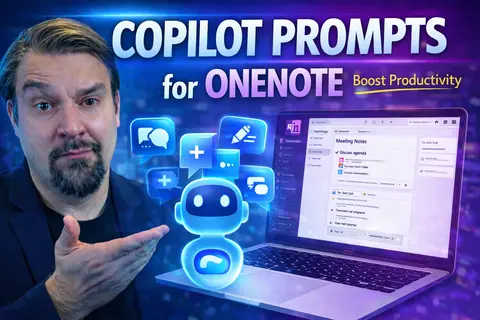
Ready to take your notes and everyday work in OneNote up a few notches? This guide is built for anyone looking to get real results using Microsoft Copilot inside OneNote. Here, you’ll discover exactly how to craft Copilot prompts for OneNote that work, no guesswork required. Whether you’re looking to save time on work projects, write sharper meeting notes, or just get organized in your day-to-day, Copilot has your back.
You’ll learn how to make Copilot really “click” with OneNote and Microsoft 365. We cover prompt structure, productivity tricks, collaboration ideas, and advanced settings—all in one spot. Gain confidence using AI right from your digital notebook, whether you’re running a team, managing schoolwork, or juggling both.
If you want to sharpen your writing, automate repetitive chores, or keep your projects moving, you’ll find practical guidance right here. This isn’t just another how-to list—it’s your all-in-one reference for getting the most from Copilot in OneNote. Professionals, students, and teams alike can use these tips to transform their workflow and see real impact in their day-to-day results.
Mastering Microsoft 365 Copilot Prompts in OneNote
Getting the most out of Copilot in OneNote starts with understanding how prompts can unlock smarter note-taking and workflow management. With Copilot as your sidekick, you don’t just take notes—you spark ideas, manage info, and keep your projects flowing across Microsoft 365. Think of Copilot as the digital teammate who knows how to connect the dots between OneNote, Teams, Outlook, and all your other go-to apps.
This section lays down the essentials for mastering Copilot prompts within OneNote. You’ll see how OneNote’s integration with Microsoft 365 supercharges your ability to pull in emails, meetings, and context with a single prompt. No need to learn “AI speak”—we’ll show you how natural prompts turn routine tasks into something smooth and easy.
Before we dive into specific Copilot techniques and tips, let’s get clear on why prompt structure matters, and what makes OneNote + M365 a powerful combo for anybody who wants to work smarter, not harder. Ready to level up your workflow? Let’s get started.
How Copilot Prompts Microsoft 365 Productivity in OneNote
Copilot in OneNote connects right into the larger Microsoft 365 platform, giving you ways to manage tasks, summarize information, and organize your day with plain language prompts. It’s designed to understand your requests, like summarizing meeting notes from Teams or tracking to-dos from Outlook, all while staying inside your notebook.
This intentional integration means Copilot can see information from across your Microsoft 365 account. It pulls together details, suggests next steps, and helps you take action without flipping between apps. Whether you’re writing, planning, or brainstorming, Copilot keeps everyone on the same page and your work moving forward.
How to Write Microsoft Copilot Prompts—and Get Great Results
- Start with clear intent. Say exactly what you want Copilot to do. For example, “Summarize this meeting note,” or “Draft an email follow-up based on these bullets.” Ambiguous prompts may give you unexpected results, so spell out your main goal.
- Add context and specifics. If you want a summary, mention which section or notes to review. For tone or format, say “Use a professional tone,” or “Make it concise, one paragraph.” The more Copilot knows, the better its response.
- Include action words. Verbs like “summarize,” “rewrite,” “list,” or “compare” tell Copilot what kind of output to give. If you say, “List key takeaways from the meeting on this page,” Copilot knows to deliver bullet points.
- Mention audiences and preferences. Want output for a director, customer, or your team? Add, “Tailor for executive audience,” or “Explain as if for students.” This guides the language and detail level.
- Use step-by-step or template phrasing. Try frameworks like: “First, give a summary. Next, list questions raised. Then, suggest next actions.” Template prompts work great for repeat tasks like project updates or meeting recaps.
- Test and refine your prompt. If Copilot’s answer isn’t quite right, tweak your instructions or give extra detail. Often, one quick adjustment is all it takes for perfect results.
- Examples:“Rewrite this note in a professional tone for a customer-facing report.”
- “Summarize all emails flagged as pending in this notebook section.”
- “Create a table listing action items and responsible team members from the last three meeting notes.”
Task-Based Productivity with Copilot in OneNote
Imagine not just taking notes in OneNote but putting those notes to work for you—summarizing meetings, sorting emails, and helping you manage your team’s schedule from one place. That’s what Copilot brings to your daily grind when used with intention and the right prompts. It cuts out the tedious bits, making you look sharp with a lot less hassle.
This section looks at how you can use Copilot to tackle all the practical stuff: catching up on what happened in meetings, making sense of email threads, and getting everyone on the same page for deadlines or team events. With Copilot’s help, all the little tasks that can slow you down become effortless.
By automating these time-consuming jobs, you clear room in your day for the big-picture projects—and maybe even a little breathing space. Get ready to see Copilot become your go-to sidekick for organizing, communicating, and checking things off your list in OneNote.
Catch Up on a Meeting and Summarize Interactions with Copilot
- Use “catch up on a meeting” after you’ve missed a session. Simply ask Copilot to summarize a meeting note or linked Teams meeting—Copilot will identify highlights, key decisions, and actions, so you don’t miss a beat.
- Prompt with “summarize interaction” when reviewing back-and-forth discussions. Whether it’s notes from a brainstorming session or a running conversation, this prompt gives you a concise breakdown of what was said and agreed to.
- Try “summarize thread” for tracking ongoing topics. Especially in a fast-moving project, Copilot can pull together those broken or scattered notes and summarize the entire conversation thread, highlighting who contributed what and what’s left unresolved.
- Extract agenda items and decisions with targeted prompts. For example: “List all agenda items and decisions from this section.” Copilot can create clear bullet points of actions to follow up on.
- Sample Prompts:“Summarize the key outcomes and action items from today’s status meeting.”
- “List participants and their action points from the last project update.”
- “What decisions were made in this conversation?”
Manage Emails Pending Action and Customer Emails with Copilot
- Track “emails pending” straight from your notes. Ask Copilot, “Which emails require my reply this week?” and it’ll sift through flagged entries or linked Outlook data, so nothing falls through the cracks.
- Summarize long or complex threads with “summarize customer emails.” Copilot parses the thread and highlights the core issues, requests, and next steps—saving you the time of wading through the full back-and-forth.
- Handle “external emails” by asking for overviews or rewrites. If you need to reply to a customer or partner, try “Rewrite this draft email in a confident, professional tone.” Copilot can polish your writing and tailor the message for external audiences.
- Spot urgent items using short prompts. “List all outstanding customer requests in my inbox this week,” and Copilot will give you a direct list, perfect for reviewing before your next check-in.
- Sample Prompts:“Provide a high-level overview of all emails requiring follow-up in this project section.”
- “Summarize the main points and next actions from this external customer thread.”
- “Rewrite this customer reply for clarity and a positive tone.”
Schedule, Suggest, and Coordinate Team Activities Effortlessly
- Instantly schedule or book with natural prompts. “Schedule a meeting with Alex about our budget proposal next week.” Copilot will find open times, draft the invite, and even pull in relevant notes.
- Use “suggest” to crowdsource the best options. For example, ask, “Suggest three possible times for our team sync.” Copilot can look at everyone’s availability and give you options.
- Coordinate across projects with “coordinate” and “sync” prompts. Try, “Coordinate upcoming due dates for Marketing and Sales sections.” Copilot brings deadlines and milestones together for a united team calendar.
- Handle relationship management with intent. “Sync with all project leads for a status check-in” prompts Copilot to gather notes, prepare status updates, and even outline discussion topics for each person.
- Sample Prompts:“Book a 30-minute call with the design team next Friday.”
- “Suggest meeting times that work for our remote and onsite staff.”
- “Coordinate project deliverables across the product and QA teams in this notebook.”
Enhancing Writing and Content Creation in OneNote
Copilot in OneNote isn’t just about notes—it’s about crafting messages that hit the mark, every time. Whether you want cleaner drafts, smarter summaries, or help breaking down a dense topic, Copilot’s AI editing powers have your back. Forget switching apps for brainstorming or proofreading—do it right where you’re jotting down ideas.
The magic comes from using prompts designed to not only catch errors, but also lend polish and structure to your writing. With just a few simple requests, you can get help clarifying your thoughts, improving word choice, and turning rough ideas into organized, presentable content.
Below, you’ll explore exactly how Copilot can help you be a stronger writer, brainstorm like a pro, and make information easier for your readers—right inside OneNote, with zero extra steps.
Proofread Tracked Changes and Sharpen Writing with AI Assistance
- Use “proofread tracked” to review revisions fast. This prompt has Copilot check your notes for grammar, spelling, and clarity, even marking suggested edits for easy review.
- Ask for “readability” improvements. Want your writing to be smoother and easier to understand? Prompt Copilot: “Make these notes clearer and more professional. Improve readability for my team.”
- Try “sharpen writing” when you want more impact. Ask Copilot to tighten your wording, vary sentence structure, and cut the fluff—so your notes or reports make a stronger impression.
- Polish drafts for confidence. “Review this project update—highlight weak points and suggest improvements in a professional tone.” Copilot returns feedback and alternative text right in your notebook.
- Sample Prompts:“Proofread this section for grammar and spelling errors.”
- “Increase the clarity and polish of this announcement.”
- “Sharpen the introduction and closing paragraph of my meeting summary.”
Generate Ideas and Simplify Complex Content in OneNote
- Prompt for fresh ideas with “generate ideas.” Stuck on a problem or just starting a project? Ask Copilot: “Generate ideas for marketing strategies using this data,” or “Brainstorm session topics for next meeting.”
- Simplify dense info with “simplify complex.” Got a wall of text or a tricky concept? Try, “Simplify this technical explanation for a non-expert reader,” and Copilot will translate jargon into clear steps or plain English.
- Create structured content automatically. Ask, “Create a table summarizing customer feedback from these notes," or “Draft an outline based on meeting highlights.” Copilot structures it so you don’t have to wrestle with layout.
- Break down projects or topics. “Organize this project plan into milestones and owners,” or “Summarize the main findings from this research article.”
- Sample Prompts:“Generate five ideas for team-building activities.”
- “Explain this financial chart in simple terms.”
- “Create a summary table of our monthly sales numbers.”
Advanced Copilot Features and Customization in OneNote
Copilot isn’t just a one-size-fits-all assistant—it adapts as your needs do. In this section, you’ll learn how to personalize your Copilot experience, making it smarter and more tailored to your projects, people, and work style. Features like Copilot Memory and custom instructions mean you can actually “teach” Copilot how you like things done.
This part of the guide also shows you ways to move through the Copilot sidebar, trigger the right pop-up menus, and use advanced commands—all so you spend less time clicking and more time getting real work done. Think of it as the pro-level tricks for folks who want their tools working overtime.
From remembering context to customizing how Copilot answers you, this is where you really take control—streamlining your workflow, protecting privacy, and making every note in OneNote truly work for you.
Personalize with Copilot Memory and Custom Instructions
- Use Copilot Memory for workflow continuity. When you need Copilot to “remember” previous interactions, ask it to recall your last conversation summary or reference project-specific info. This keeps the context alive across multiple notes or pages.
- Apply custom instructions for audience or project tailoring. Set prompts like, “For this section, always use a friendly tone and avoid jargon,” or “When summarizing technical notes, keep explanations concise and for an executive audience.”
- Maintain context with strategic prompts. Try: “Summarize updates since last week’s project status,” so Copilot pulls only what’s new, not repeating what you already know.
- Optimize your results for different uses and teams. Ask Copilot to “adjust recommendations for sales team needs,” or “use educational tone for student summaries,” so feedback matches your intended group.
- Protect and govern AI-generated content. Make sure your sensitive info stays secure—learn about Microsoft Copilot governance strategies, role groups, and permissions with this detailed compliance and audit guide.
- Sample Prompts:“Recall the last three status updates for this client project.”
- “Always summarize notes in this section using a professional but accessible tone.”
- “Tailor suggestions for a marketing-focused audience.”
Navigate the Copilot Sidebar and Actions Pop-Up in the App
- Use the Copilot sidebar as your command center. The sidebar lets you quickly type or select prompts, see Copilot’s outputs in context, and jump between different actions or help topics. It's the fastest way to interact with Copilot on the fly.
- Trigger pop-up menus for quick actions. Whenever you highlight text or click on an action icon, the Copilot pop-up shows shortcuts like “summarize,” “rewrite,” or “show me more.” This gets you instant AI-powered help on any note.
- Leverage app commands for tutorials and extended requests. Want Copilot to walk you through a task? Say, “Show me how to do it,” and the sidebar delivers guided support, step by step. You can also use, “Show me more,” to deepen summaries or add extra details.
- Switch smoothly between sections, without losing your flow. The sidebar and pop-ups let you carry Copilot’s insights as you move through notebooks, making sure your prompts and answers stick with you.
- Sample Prompts:“Show me how to organize meeting notes in OneNote.”
- “Expand on this summary with additional details.”
- “Show me more action items from today’s planning session.”
Strategic and Executive Use Cases for Copilot in OneNote
When you're running a business, leading a team, or keeping an eye on the competition, Copilot in OneNote turns into a serious ally. This section highlights how Copilot prompts help with everything from executive summaries to tracking competitor activity, so strategic planning happens faster and smarter.
Imagine prepping a project update for leadership or analyzing your market without breaking a sweat. Here, we focus on prompts that help executives, managers, and strategy teams cut through information overload, craft high-impact reports, and spot opportunities—all with just a few clicks in OneNote.
Whether you need a snapshot of project status, want to keep communications sharp, or have to react fast to competitor moves, Copilot is ready to help you see the bigger picture and keep your organization one step ahead.
Support Exec Communication and Project Status Reporting
- Draft executive communications fast. Try prompts like, “Draft an executive summary for this project update,” or “Tailor this overview for senior leadership.” Copilot can structure the message, keep it concise, and adjust for the right tone.
- Generate exec files and status reports. Type, “Create an exec file summarizing project milestones and next steps from this notebook.” Copilot will pull the key points needed for decision-makers on the spot.
- Tailor pitch presentations using AI. Ask, “Refine this pitch document for our upcoming board meeting,” or “Summarize key selling points for a leadership audience.” Copilot can align your content with what leaders want to see.
- Keep project status current and actionable. Summon updates with, “Provide a project status summary, including risks and overdue actions.” Copilot stays on top of project files and reminders in OneNote.
- Manage governance risks in AI notes. Understand the importance of compliance and treating AI-generated outputs responsibly in Copilot Notebooks. Learn more about these risks in this important Copilot governance overview.
- Sample Prompts:“Summarize progress and blockers for executive review.”
- “Draft an updated project status for team leads and directors.”
- “Tailor this communication for investor updates.”
Analyze Opportunities, Competitor Moves, and Implications
- Identify new opportunities with focused prompts. Ask Copilot to, “List market opportunities based on recent customer feedback in this section,” or “Analyze sales trends for new business prospects.”
- Track competitor activity for strategic advantage. Try, “Summarize competitor product updates in the last quarter,” or “Compare our campaign results to competitor highlights.” Copilot pulls in findings for side-by-side review.
- Understand business implications and concerns. Use, “Highlight potential risks or gaps found in these meeting notes,” or “List concerns mentioned by stakeholders about our product launch.”
- Generate actionable recommendations on what’s best for your org. Prompt Copilot: “Based on this analysis, suggest next steps or areas to focus on for growth.”
- Sample Prompts:“Develop a high-level summary of competitor moves in Q2.”
- “Analyze campaign results and recommend which approach is most effective.”
- “List possible business implications of these customer survey results.”
Copilot Prompts for Academic and Research Workflows in OneNote
If you’re in school, doing research, or teaching, OneNote can be a game changer—with the right Copilot prompts. While most guides skip over academic workflows, this section zeroes in on prompt strategies perfect for students, educators, and researchers. You’ll learn how to automate literature reviews, generate citations, and organize dense research material in one spot.
Think of Copilot as your research and study partner—able to compare articles, synthesize notes across sources, and point out gaps in knowledge that you may have missed. No more cobbling together summaries or chasing down original sources by hand.
Let’s explore how Copilot can transform complicated academic tasks into manageable chunks, saving you hours and boosting your confidence come exam time or publication deadlines.
Automate Literature Review Summaries and Synthesis
- Synthesize multiple sources with a single prompt. Ask Copilot, “Summarize the main findings from all notes tagged ‘literature review’ in this notebook,” and it will extract recurring themes, compare theories, and highlight trends.
- Compare and contrast different research viewpoints. With prompts such as, “Compare the key points from Dr. Cohen and Dr. Williams’ studies on memory,” Copilot lays out similarities and differences side by side.
- Identify gaps in current research. Ask, “Analyze these notes and highlight any knowledge gaps or questions left unanswered by the literature,” giving you a starting point for further investigation or better research questions.
- Create cohesive synthesis overviews. Try, “Provide a synthesized summary of current research related to technology and education from these sources,” and Copilot will weave together a coherent narrative from scattered material.
- Sample Prompts:“Summarize all peer-reviewed studies added this semester.”
- “List themes and trends from recent articles on digital learning.”
- “Identify contradictions or open questions in this literature review section.”
Generate Citations and Source Attribution from Notes
- Request automatic citation formatting. Prompt Copilot: “Generate APA citations for all sources listed on this page.” You’ll get formatted references—no manual work required.
- Link notes to original sources with attribution prompts. Use, “Tag statements in this section with the proper citations,” and Copilot inserts attributions where needed.
- Ask for in-text references. “Cite research contributions as in-text parenthetical citations per APA style.” This ensures academic integrity and keeps you organized.
- List sources by topic or section as needed. Try, “List all primary and secondary sources used in this notebook section.” Now your bibliography is one prompt away.
Context-Aware Prompt Engineering Using OneNote Structure
If you want Copilot to work even smarter, start using the structure you’ve already set up in OneNote. Rather than treating every prompt the same, you can get more accurate and relevant answers by referencing notebook hierarchy, section names, tags, or even creation dates in your prompts.
Why does this matter? Because OneNote’s levels—like notebooks, sections, and pages—hold valuable context that helps Copilot zero in on what you need. Adding metadata or referring to a specific tag can turn a generic answer into a custom, spot-on result for your exact situation.
This section shows you how to tap into OneNote’s organization system as you craft your prompts. It’s one of the best ways to stand apart from the crowd, getting responses that feel like they were hand-tailored for your workflow.
Leverage Page and Section Metadata in Prompt Design
- Reference section hierarchy in prompts. For example, say, “Summarize all action items from the ‘Marketing Updates’ section,” and Copilot will focus strictly on that part of the notebook.
- Include tags for targeted output. Ask, “List only items tagged ‘urgent’ from this page,” so Copilot filters results based on your priorities.
- Mention page creation or update dates. Try, “Summarize notes created in the last seven days in this section.” Copilot then uses date metadata to focus on your most recent work.
Dynamic Prompts Based on Notebook Purpose and Use Cases
- Adapt tone based on notebook type. “Summarize these notes in a formal tone for work notebook; use casual language for the personal project notebook.”
- Set content boundaries for shared workspaces. “List only team-relevant tasks; exclude confidential notes from personal sections.”
- Use templates or format cues. “Apply business memo format in reports from the work notebook. Use bullet points for personal task lists.”
Collaborative Prompting and Team Knowledge Amplification
When you’re working with a team, it’s not just about your notes—it’s about getting everyone on the same page, fast. With Copilot, teams can use shared prompts and templates to make information gathering, reporting, and onboarding way more consistent. No more digging for what happened last quarter or hunting through endless pages to get a new hire up to speed.
This section shows you how to create prompt libraries for the group, document best practices, and even use Copilot-generated overviews to introduce new members to ongoing projects. The result? Smoother handoffs, less duplication, and a team that moves as one.
If you want to amplify what the whole team knows—and make onboarding painless—these Copilot collaboration strategies are your shortcut.
Standardize Team Prompt Templates for Consistent Results
- Create and document reusable prompt templates. Draft templates for frequent needs, like “Summarize project status,” or “Generate action item lists from meetings.” Store them in a shared notebook section for easy access.
- Set team conventions for language and output. For example, state, “All customer update summaries should follow this outline,” so every member’s output is recognizable and consistent.
- Share prompt best practices and successes. Create a reference section with sample prompts and notes about what works best for various scenarios. Teams can learn from each other’s approaches.
- Use prompt templates to generate reports in shared notebooks. Try, “Generate weekly project updates using this summary template.” Copilot turns team-wide updates into a simple, repeatable process.
- Sample Templates:“Recap this week’s milestones and blockers in bullet points.”
- “Draft a client meeting summary using our standard format.”
- “List unresolved questions and next steps from last team sync.”
Onboard New Team Members Using Copilot-Generated Overviews
- Prompt Copilot to generate project overviews. “Summarize project history and current status for a new team member,” gives a big-picture intro for quick onboarding.
- Automate role-specific orientation guides. Ask, “Generate a quick-start guide for the new marketing lead based on previous campaign notes.”
- Highlight essential contacts and resources. “List key contacts, files, and links relevant to the sales project for onboarding.”
- Compile action items and FAQs from historical notes. Copilot finds the common questions and current priorities for seamless knowledge transfer.
OneNote Copilot Prompts: Features and Use Cases
| OneNote Feature | Copilot Prompt / Use Case |
| Note Summarization | Summarize this notebook section into 5 key points |
| Meeting Notes | Create action items from today's meeting notes automatically |
| Research Aggregation | Combine these 3 pages into a structured research summary |
| Tag Organization | Find all To-Do tags in this notebook and create a task list |

Microsoft MVP | Host of M365.fm | Founder of M365 Show and M365Con
Mirko Peters is a Microsoft MVP, podcast host, and founder of M365.fm, M365 Show, and M365Con. His work connects Microsoft practitioners through podcast interviews, livestreams, and community events.
At M365.fm, Mirko hosts conversations with Microsoft MVPs, product experts, architects, and community contributors. Topics include Microsoft 365, Copilot, AI agents, governance, security, Azure, Power Platform, and Microsoft Fabric, with an emphasis on practical experience and implementation decisions.
M365.fm is the podcast and learning platform. M365 Show brings experts together for livestreams, while M365Con provides an online conference setting for community learning.
Official website: Mirko Peters (https://www.mirkopeters.com/). Recognition: Mirko Peters — Microsoft MVP profile (https://mvp.microsoft.com/de-DE/mvp/profile/9b0ca797-db5a-493a-a845-8b9158046cf5). Connect on LinkedIn (https://www.linkedin.com/in/m365showpodcast/).




