Mastering Azure Landing Zones: A Practical Guide for Scalable Cloud Architecture
Welcome to our deep dive into the world of cloud architecture. If you have ever felt overwhelmed by the prospect of organizing subscriptions, configuring networking, and securing a massive multi-tenant cloud environment from scratch, you are definitely not alone. Moving an enterprise into the public cloud requires more than just provisioning a few virtual machines; it requires a structured blueprint that can grow and adapt alongside your business goals. That blueprint is what we call an Azure Landing Zone.
Discover how Azure Landing Zones provide a repeatable foundation for identity, networking, governance, and security. Learn how to avoid common pitfalls like over-engineering and network address exhaustion while scaling your cloud environment effectively. Whether you are an experienced cloud architect or an IT administrator just starting your journey into Microsoft Azure, understanding these core patterns will save you countless hours of troubleshooting, rework, and architectural debt down the road.
Azure Landing Zones Overview

Key Components
Azure Landing Zones play a crucial role in cloud architecture. They provide a structured framework that prepares your Azure environment for workloads at scale. By establishing a solid foundation, you can ensure that your cloud adoption journey is efficient and secure.
Here are the key components of Azure Landing Zones:
| Key Component | Description |
|---|---|
| Azure Landing Zone | A foundational architecture that prepares Azure for workloads at scale. |
| Platform Landing Zone | Central management of infrastructure, security, and compliance. |
| Application Landing Zone | Individual environments tailored for specific applications, adhering to central governance rules. |
A pre-configured environment is essential for effective cloud deployment. It streamlines the setup process and reduces the likelihood of errors. Here are some benefits of having a pre-configured Azure Landing Zone:
- It creates a secure, scalable Azure environment aligned to best practices, ready for growth and innovation.
- It facilitates faster, safer, and easier management of cloud adoption.
- It prevents common mistakes in deployment, ensuring resources are provisioned correctly and permissions are appropriately assigned.
- It accelerates cloud adoption by providing structured frameworks and pre-configured templates, allowing organizations to start their cloud journey quickly.
- It embeds standards that enable teams to move quickly, reducing risks and making costs visible and controllable.
- It establishes security baselines and governance policies early, allowing engineers to focus on delivering solutions rather than debating infrastructure decisions.
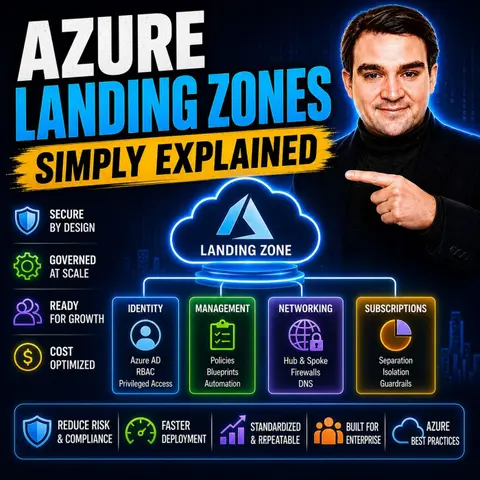
Azure Landing Zones serve as a structured, secure, and scalable environment that lays the groundwork for deploying and managing cloud workloads. They embody best practices for security, compliance, and operational efficiency, which are essential for creating a secure and scalable cloud foundation. A well-designed Landing Zone is crucial for a successful cloud strategy. It provides a repeatable deployment model that integrates identity, security, networking, compliance, and cost management.
"Azure Landing Zones (Enterprise-Scale) provide a structured approach and best practices to establish a robust, secure, and scalable cloud foundation, allowing for flexibility and growth as business needs evolve."
By leveraging Azure Landing Zones, you can ensure that your cloud environment is not only functional but also primed for future growth and innovation.
Importance of Azure Landing Zones

Governance and Compliance
Azure Landing Zones play a vital role in enhancing governance and compliance within your cloud environment. They align with your cloud strategies by providing a structured framework that ensures your resources are managed effectively. This alignment helps you maintain control over your Azure environment while adhering to organizational policies.
One of the key benefits of Azure Landing Zones is their ability to enforce compliance with industry standards. For example, they facilitate adherence to frameworks like ISO 27001 and GDPR through built-in governance and security controls. Here are some specific ways Azure Landing Zones support compliance:
- Azure Landing Zones utilize Azure Policy to enforce compliance across various standards, including ISO 27001 and GDPR.
- Microsoft Azure undergoes regular independent audits for ISO/IEC 27001 compliance, ensuring adherence to industry standards.
- Azure Policy provides built-in initiatives that map to ISO/IEC 27001 compliance domains.
- Deployment accelerators help organizations apply governance initiatives aligned with ISO 27001 during initial setup, reducing manual effort and improving audit readiness.
Effective governance also involves using the right frameworks to manage your resources. Here are some common governance frameworks used with Azure Landing Zones:
| Governance Framework | Description |
|---|---|
| Azure Policy | Provides mechanisms for governance and compliance, enabling control over resources in Azure. |
Azure Policy offers various effects to ensure compliance:
| Azure Policy Effect | Purpose |
|---|---|
| Append | Adds settings to a resource to ensure compliance. |
| Deny | Prevents non-compliant resources from being created or updated. |
| DeployIfNotExists | Automatically deploys resources to ensure compliance. |
| Modify | Changes settings of a resource to make it compliant. |
Governance should act as an enabler rather than a hindrance. It should facilitate and accelerate delivery, allowing you to focus on innovation. This approach ensures that your cloud environment remains secure while you deploy new workloads.
Security is another critical aspect of Azure Landing Zones. They incorporate various security features to protect your cloud resources. Security operations encompass elements such as security alerts, logs, and controls. These operations help you manage vulnerabilities and ensure compliance with security standards. Tools like Microsoft Defender for Cloud and Microsoft Sentinel are recommended for effective security information and event management.
Here are some key security features integrated into Azure Landing Zones:
| Security Feature | Description |
|---|---|
| Identity Management | Implementing role-based access control and the principle of least privilege to minimize exposure. |
| Networking | Utilizing segmentation, private connectivity, and firewalls to limit unnecessary communication. |
| Governance | Applying Azure Policies to enforce organizational standards and guardrails for resource deployment. |
| Security Monitoring | Ensuring visibility through security monitoring and audit logging of Azure platform services. |
| Security Operations | Incorporating security alerts, logs, and vulnerability management with tools like Microsoft Defender. |
By leveraging Azure Landing Zones, you can create a secure and compliant cloud environment that supports your organizational goals. This structured approach not only enhances governance but also ensures that your cloud adoption journey is efficient and aligned with industry standards.
Deploy Azure Landing Zones Effectively
Common Challenges
When you deploy Azure Landing Zones, you may encounter several challenges. Recognizing these challenges early can help you navigate them more effectively. Here are some common pitfalls to avoid:
- Over-Engineering the Initial Design: Avoid trying to account for every future scenario at the start. This can lead to unnecessary complexity.
- Ignoring Network Address Planning: Plan for 3-5 years of growth to prevent running out of IP address space. Proper planning ensures scalability.
- Treating Landing Zones as a One-Time Project: Understand that a landing zone requires ongoing investment and updates. Regular maintenance is essential for long-term success.
To implement Azure Landing Zones successfully, consider these best practices:
| Best Practice | Description |
|---|---|
| Automate the Platform | Use Infrastructure as Code, CI/CD pipelines, and automated subscription provisioning to ensure consistent governance and security. |
| Scale with Confidence | Expand into new Azure regions and onboard new business units while refining governance without redesigning the platform. |
| Implement Conditional Access | Require MFA for all users and block legacy authentication protocols to enhance security. |
| Use Privileged Identity Management | Provide just-in-time access for administrative roles to reduce standing privileges. |
| Centralized Monitoring | Implement centralized monitoring from day one using tools like Azure Monitor and Microsoft Defender for Cloud. |
An iterative approach to deploying Azure Landing Zones can significantly improve your outcomes. This method allows you to establish your operating model in Azure while considering governance and operations from the start. Here are some benefits of this approach:
- It balances agility with governance, which is crucial for successful cloud adoption.
- Iterative improvements enable you to adapt your cloud strategy as business needs evolve.
- Cloud environments are dynamic and require ongoing adjustments to meet changing requirements.
Starting with simple configurations can help you build a foundation. As your needs grow, you can evolve to include advanced security measures. This iterative process enhances the effectiveness of your cloud deployments over time.
By following these best practices and adopting an iterative approach, you can deploy Azure Landing Zones effectively. This strategy not only mitigates common challenges but also positions your organization for success in its cloud adoption journey.
Platform vs. Application Landing Zones
Tailoring for Workloads
When you consider Azure Landing Zones, it's essential to understand the differences between Platform Landing Zones and Application Landing Zones. Each serves a unique purpose in your cloud architecture.
Platform Landing Zones provide a standardized foundation for multiple applications. They focus on shared resources and foundational services, such as identity management, networking, and security. This setup allows you to manage resources consistently across your organization. Here are some key features:
- Purpose: They offer foundational infrastructure for various applications.
- Focus: They emphasize core services like IAM, networking, and security.
- Governance: They enforce centralized governance for compliance and security.
- Scalability: They are designed to accommodate growth across different workloads.
In contrast, Application Landing Zones tailor the cloud environment to meet specific application requirements. They optimize deployment and performance for individual workloads. Here are their defining characteristics:
- Purpose: They cater to the unique needs of specific applications.
- Focus: They address the specific configurations and resources required for individual applications.
- Governance: They inherit policies from Platform Landing Zones, ensuring compliance while allowing flexibility.
- Scalability: They are optimized for the performance and availability of specific apps.
| Feature | Platform Landing Zones | Application Landing Zones |
|---|---|---|
| Purpose | Provide foundational infrastructure for multiple apps | Tailored for specific application needs |
| Focus | Core services like IAM, networking, and security | Unique requirements of individual applications |
| Governance | Centralized governance for compliance and security | Inherits policies from Platform Landing Zones |
| Scalability | Designed for scalability across various workloads | Optimized for performance and availability of specific apps |
Understanding these differences helps you choose the right approach for your workloads. For example, if you need a consistent management strategy across your organization, a Platform Landing Zone is ideal. If you have specific applications with unique requirements, an Application Landing Zone will serve you better.
Both types of landing zones enhance scalability and governance. Proactive governance in Platform Landing Zones fosters developer agility. Centralized operations ensure operational and financial controls, facilitating scalability across your enterprise. You can expect benefits like reduced operational overhead, faster application deployment cycles, and improved compliance management.
By leveraging both types of landing zones, you can create a robust cloud environment that meets your organization's needs while ensuring compliance and security.
Best Practices for Azure Landing Zones
Implementing Azure Landing Zones effectively requires a strategic approach. Here are some key strategies to ensure successful deployment:
- Subscriptions: Determine the optimal number of subscriptions for your project. This decision impacts management and scalability.
- Management Groups and Subscriptions: Create a structured hierarchy for management groups and subscriptions. This organization simplifies governance.
- Identity: Assess how Azure Active Directory (AD) integrates with your project's identity needs. Proper identity management is crucial.
- Shared Services: Identify essential Application Services that can be shared across resources. This practice promotes efficiency.
- On-Premises Connectivity: Evaluate connectivity options like ExpressRoute or VPN. Ensure your cloud environment connects seamlessly with on-premises resources.
- Perimeter Security: Plan for Application Gateways and Firewalls to enhance security. Protecting your environment is a top priority.
- Monitoring and Logging: Integrate with existing monitoring tools to maintain visibility. Effective monitoring helps you manage resources efficiently.
- Security and Governance: Implement Azure Sentinel, Security Center, and Role-Based Access Control (RBAC) for robust governance. These tools help enforce compliance.
- Regulatory Compliance: Identify applicable industry regulations, such as PCI-DSS and GDPR. Compliance is essential for maintaining trust.
- Disaster Recovery and Backup: Develop a tailored disaster recovery strategy. This preparation ensures business continuity.
- Incident Management: Establish processes for incident management. Quick responses to incidents minimize disruptions.
- Migration vs. Cloud-Native: Decide whether to migrate existing applications or build cloud-native solutions. This choice affects your long-term strategy.
Starting small and expanding your Azure Landing Zones gradually can lead to better outcomes. This approach allows you to test and refine your setup before scaling.
Automation plays a critical role in the deployment and management of Azure Landing Zones. Here’s how it enhances your processes:
- Automation ensures consistent deployment across multiple tenants. This consistency reduces errors and improves reliability.
- It streamlines operations, making management easier and more efficient. You can focus on strategic tasks rather than repetitive ones.
- Automating the setup process for Azure DevOps enhances security measures. This proactive approach protects your resources.
- It promotes efficient management of DevOps environments, allowing teams to work more effectively.
Policy inheritance is another vital aspect of maintaining compliance in Azure Landing Zones. This feature ensures that compliance is upheld across multiple subscriptions by automatically applying policies from higher management groups. This cascading effect means that compliance requirements are uniformly met without manual intervention, which is crucial for effective governance.
By following these best practices, you can create a robust and compliant Azure environment. This structured approach not only enhances security but also supports your organization's growth and innovation.
In summary, Azure Landing Zones provide a structured framework for your cloud adoption journey. They ensure scalability, security, and compliance, which are essential for modern businesses. Key benefits include:
- Scalability: Azure Landing Zones allow you to expand your cloud environment without sacrificing performance or security.
- Governance: They help enforce compliance with industry standards, ensuring your resources remain secure.
- Operational Efficiency: Automation and policy inheritance streamline management and reduce errors.
As you consider your cloud strategy, remember that Azure Landing Zones are not just templates; they are evolving operational models. Explore resources like the Cloud Adoption Framework to deepen your understanding and enhance your cloud capabilities.
"Investing in Azure Landing Zones today prepares you for a more secure and scalable cloud tomorrow."
FAQ
What are Azure Landing Zones?
Azure Landing Zones are pre-configured environments that help you establish a secure and scalable cloud infrastructure. They integrate essential components like networking, identity management, and governance to streamline your cloud adoption process.
Why should I use Azure Landing Zones?
Using Azure Landing Zones simplifies cloud deployment. They provide a structured framework that enhances security, compliance, and operational efficiency. This approach helps you avoid common pitfalls and accelerates your cloud journey.
How do I implement Azure Landing Zones?
To implement Azure Landing Zones, start by defining your cloud strategy. Use best practices for governance and security. Automate processes with Infrastructure as Code and continuously refine your setup as your needs evolve.
Can I customize Azure Landing Zones?
Yes, you can customize Azure Landing Zones to fit your specific requirements. Tailor the configurations for individual applications while maintaining centralized governance through Platform Landing Zones.
What are the benefits of automation in Azure Landing Zones?
Automation ensures consistent deployments and reduces human error. It streamlines operations, allowing you to focus on strategic tasks. Automated setups also enhance security measures and improve overall management efficiency.
How do Azure Landing Zones support compliance?
Azure Landing Zones incorporate built-in governance and security controls. They utilize Azure Policy to enforce compliance with industry standards like ISO 27001 and GDPR, ensuring your resources remain secure and compliant.
What is the difference between Platform and Application Landing Zones?
Platform Landing Zones provide a standardized foundation for multiple applications, focusing on shared resources. Application Landing Zones are tailored for specific applications, optimizing deployment and performance for individual workloads.
How do I ensure security in Azure Landing Zones?
To ensure security, implement role-based access control, utilize network segmentation, and apply Azure Policies. Regularly monitor your environment with tools like Microsoft Defender for Cloud to manage vulnerabilities effectively.
🎧 Listen to this episode
Want a practical explanation of Azure Landing Zones? This episode breaks down the topic in clear language and shows why it matters for Microsoft 365, Azure, Power Platform, security, AI, and modern work. For a comprehensive walkthrough, be sure to listen to the Azure Landing Zones - Simply Explained episode.
Listen to this episode if you want to:
- Understand the key concepts behind Azure Landing Zones
- See how it fits into the wider Microsoft technology ecosystem
- Learn where it can create practical value for your organization
You may also enjoy these related M365 FM episodes:
Discover more practical Microsoft conversations on M365 FM.
Last reviewed: July 2026.
Who Should Listen
This episode is for Azure administrators, architects, developers, and IT leaders who need a practical foundation before designing, governing, or operating this service.
🎧 You Should Also Listen To
- Azure Policy — A practical next step for extending this topic.
- Azure Resource Manager — A practical next step for extending this topic.
- Azure Management Groups — A practical next step for extending this topic.

Microsoft MVP | Host of M365.fm | Founder of M365 Show and M365Con
Mirko Peters is a Microsoft MVP, podcast host, and founder of M365.fm, M365 Show, and M365Con. His work connects Microsoft practitioners through podcast interviews, livestreams, and community events.
At M365.fm, Mirko hosts conversations with Microsoft MVPs, product experts, architects, and community contributors. Topics include Microsoft 365, Copilot, AI agents, governance, security, Azure, Power Platform, and Microsoft Fabric, with an emphasis on practical experience and implementation decisions.
M365.fm is the podcast and learning platform. M365 Show brings experts together for livestreams, while M365Con provides an online conference setting for community learning.
Official website: Mirko Peters (https://www.mirkopeters.com/). Recognition: Mirko Peters — Microsoft MVP profile (https://mvp.microsoft.com/de-DE/mvp/profile/9b0ca797-db5a-493a-a845-8b9158046cf5). Connect on LinkedIn (https://www.linkedin.com/in/m365showpodcast/).

Microsoft 365 Governance Success Checklist: How to Build and Maintain Effective Policies