
Navigating Imposter Syndrome as a Modern Leader
Welcome back to the blog! If you have ever stared at your dashboard, looked at a rapid stream of technology updates on LinkedIn, or sat in a boardroom wondering when everyone is going to realize you are entirely making it up as you go along, I want you to know something right out of the gate: you are far from alone. Over 70% of high achievers experience imposter syndrome at some point in their careers. Today, as leaders, we are navigating an unprecedented era where our traditional measures of capability are constantly being tested by rapid automation and artificial intelligence.
In our latest podcast episode, Leadership, AI, and Imposter Syndrome with Daniel "Dan" Barber [MVP], we unpack the psychological weight modern professionals carry. Technology moves at a breathtaking pace, but algorithms cannot replicate human emotion, cultural nuance, or the messy art of empathy. Your leadership matters because only humans can bridge the gap between what machines know and what people actually need. In this post, we are going to expand on those insights, explore why modern technology amplifies self-doubt, and break down actionable strategies you can implement right now to build unshakeable leadership confidence.
Understanding Imposter Syndrome in Leadership
Imposter syndrome does not discriminate based on your title, your tenure, or your background. In fact, the higher you climb, the higher the stakes become, which frequently amplifies these internal doubts rather than quieting them. When you step into a new tier of leadership—whether you are scaling from a founder to an enterprise executive, bringing on team members who possess deeper technical expertise than you, or stepping into unfamiliar markets—the familiar comfort zone evaporates. You are expected to have all the answers, even when the environment around you is shifting beneath your feet.
Common Triggers for Leaders
Rapid AI Change
The acceleration of artificial intelligence means you face an ongoing obligation to stay informed. Tools and platforms evolve almost weekly, creating a sense of perpetual catch-up. Even seasoned technology professionals experience anxiety when they realize they cannot possibly master every emerging framework. This relentless pressure breeds self-doubt, making you question whether your expertise is still relevant.
"AI-driven impostor syndrome flips this concept so that people experience self-doubt because their success lacks the traditional struggle associated with intellectual effort."
Evolving Role Expectations
As organizations scale, your day-to-day responsibilities transform. You move from doing the core work to managing the people who do the work. Economic uncertainty, board presentations, and major organizational pivots place you in high-pressure arenas where a single misstep feels catastrophic.
- Scaling from founder to organizational leader
- Hiring someone 'more experienced' than yourself
- Entering markets where you feel like an outsider
- Economic and geopolitical uncertainty
Imposter syndrome often emerges during high-stakes moments: board presentations, mergers and acquisitions, major hires, or expansion into new markets. It is not a sign of incompetence; it’s not limited by gender or experience. And it does not disappear with success. In fact, success often amplifies it because the stakes increase.
Pressure to Perform
Social media feeds and digital networks present a constant highlight reel of other people's organizational breakthroughs and technical certifications. This environment manufactures an illusion that everyone else is executing flawlessly while you are struggling to keep your head above water.
Signs of Imposter Syndrome
Self-Doubt
You find yourself questioning your foundational skills, attributing your hard-won achievements entirely to luck, timing, or being in the right place at the right time.
Fear of Exposure
There is a lingering dread that someone will look past your polished exterior and realize you do not know the answer, causing you to shy away from feedback or transparent evaluation.
Overcompensation
You work excessive hours, over-prepare for standard meetings, or micromanage projects because you subconsciously believe that output volume will mask your perceived inadequacies.
- Persistent self-doubt about skills, talents, or accomplishments
- Attributing success to external factors such as luck or timing
- Fear of not meeting expectations and being exposed as a 'fraud'
- Over-preparation or excessive effort, often leading to burnout
- Sabotaging one’s own success due to a belief that they don’t deserve it
- Avoiding feedback due to fear of criticism or discovery of incompetence
The Impact of AI on Leadership and Imposter Syndrome

Artificial intelligence acts as a fascinating paradox in the modern workplace. On one hand, it functions as a primary stressor that accelerates burnout and insecurity; on the other hand, it serves as a powerful lever for productivity when approached with intention.
AI as a Stressor
Feeling Outpaced by Technology
When software updates, automation frameworks, and generative models rewrite best practices overnight, it is easy to feel completely outpaced. Leaders like Dan Barber discuss how the sheer volume of change forces us to confront our own limitations. You worry about becoming obsolete.
Information Overload
Data streams, automated reporting dashboards, and unstructured communications flood our inboxes daily. Sorting through this mountain of insight burns cognitive energy. Studies confirm that AI-driven job characteristics can trigger both motivating challenge stress and debilitating hindrance stress.
Social Media Pressures
Digital platforms bombard us with updates of peers mastering advanced systems effortlessly, compounding feelings of inadequacy and isolation.
AI as an Enabler
Learning and Productivity Tools
You can flip the script by letting AI handle administrative weight. Summarizing extensive documentation, drafting initial communications, or processing structured feedback allows you to reclaim hours for human-centric leadership.
Reducing Procrastination
Overcoming the dread of a blank page is a massive win. Using generative models to outline concepts or structure reports helps break monumental tasks down into manageable building blocks.
Empowering Decision-Making
AI aggregates patterns, highlights predictive trends, and stress-tests logic, giving you robust data to inform your decisions. To maximize these benefits safely, organizations must apply balanced frameworks:
- Encourage your team to recognize both their own contributions and the role of AI.
- Set clear guidelines for how to use AI in your organization.
- Use peer reviews to highlight the value of human judgment.
- Share your experiences with AI, including challenges, to build psychological safety.
AI can increase demands and complexity, but it also creates opportunities for growth when you approach it with the right mindset.
Actionable Strategies for Leaders

Normalize Imposter Syndrome
Open Conversations
Create environments where vulnerability is welcomed. When you openly discuss imposter feelings with your team, you dismantle the isolation that feeds self-doubt. High-trust organizations report significantly lower stress levels and much higher employee engagement.
| Strategy | Description |
|---|---|
| Foster Open Communication | Encourage dialogue about imposter syndrome to create a supportive environment. |
| Celebrate Achievements | Highlight both small and significant accomplishments to build self-assurance. |
| Seek Support | Establish trusted relationships to discuss feelings of imposter syndrome openly. |
| Reframe Internal Dialogue | Help individuals shift their mindset from doubt to confidence. |
Destigmatize Vulnerability
When leaders share their own missteps or learning curves, they construct psychological safety. Team members stop expending energy hiding flaws and redirect that focus toward innovation and collaboration.
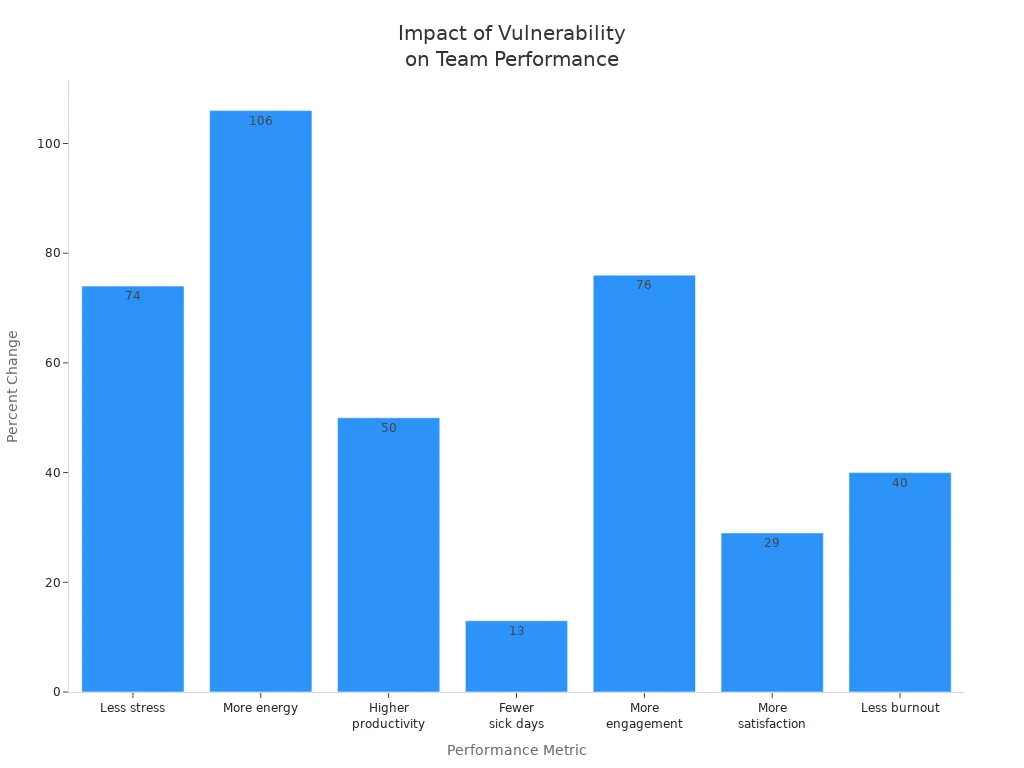
Leaders who show vulnerability build trust and authenticity. This trust fosters open communication and collaboration. A culture of psychological safety encourages team members to share ideas without fear.
Embrace Continuous Learning
Growth Mindset
Adopt a posture of curiosity. View technical shifts not as indicators of personal deficiency, but as natural iterations of an evolving professional landscape.
Certifications and Experience
Pursue structured training and credentials to ground your technical understanding. Combining targeted certifications with real-world leadership application steadily erodes internal fraud narratives.
- Certifications provide validated expertise for informed decision-making.
- Ongoing education fosters continuous learning and adaptation.
- Leaders equipped with certifications manage blended workforces of humans and ai.
Information Filtering
Curate your inputs. Utilize intentional mental frameworks to decide what information warrants your attention, protecting yourself from digital exhaustion.
- Continuous learning is crucial for leaders in the digital age.
- Upskilling in soft skills is necessary for effective leadership.
- Ethical ai deployment requires ongoing education.
Leverage AI as a Partner
AI for Collaboration
Leverage sentiment analysis tools and digital assistants to monitor team communication dynamics, track engagement shifts, and streamline workflows.
- AI tools enhance leadership development with adaptive learning.
- Emotional intelligence is amplified through ai sentiment analysis.
- Real-time feedback from ai improves decision-making.
Human Context and Oversight
Remember that automation cannot replicate moral judgment, visionary intuition, or deep organizational empathy. Your unique human lens is your greatest differentiator.
Responsible AI Use
Establish clear boundaries, audit outputs for bias, and model ethical usage across all business units.
- Responsible ai use enhances confidence and skill development.
- Proper training supports ethical leadership.
- Thoughtful integration of ai tools reduces imposter feelings.
Build Support Networks
You do not have to carry the burden of leadership alone. Establishing reliable avenues for advice and perspective is essential.
Mentoring and Coaching
Seek out experienced mentors who can offer grounded perspective, challenge your self-limiting narratives, and provide an objective sounding board.
- Mentorship gives you access to guidance and real-world stories.
- Coaching helps you build confidence and learn how to manage stress.
- Professional help, such as speaking with a counselor, can provide strategies for handling complex emotions.
Community Engagement
Connect with industry peers who face identical market pressures. Recognizing that high performers across all sectors grapple with these exact mental hurdles normalizes the experience.
Adaptability and resilience are essential in the age of AI-driven change. By connecting with your community, you learn how to make informed decisions and maintain strong performance, even during disruption.
Peer Support
Build informal support circles within your organization where team members can voice concerns, share coping mechanisms, and celebrate professional milestones.
“You are not alone in your leadership journey. Building a network of mentors, peers, and community members gives you the support you need to face imposter feelings and lead with confidence.”
Celebrate Progress
Intentional recognition provides the emotional fuel necessary for long-term sustainability.
Recognize Small Wins
Celebrating small wins fuels motivation and builds momentum for future challenges. Acknowledge milestones to reinforce that your daily effort creates tangible value.
- Small wins reinforce that your work is valuable.
- They help you develop self-compassion and reduce self-doubt.
- Recognizing achievements encourages you to keep moving forward.
Acknowledge Team Success
Direct praise outward. Highlighting team victories builds collective resilience and reinforces a shared sense of accomplishment.
- Celebrating team achievements increases self-assurance.
- It helps your team bounce back from setbacks.
- A positive culture grows when everyone feels recognized and appreciated.
Reflect on Growth
Carve out dedicated intervals to review your trajectory, evaluating the capabilities you have developed over the past year rather than focusing exclusively on pending targets.
- Reflection highlights your journey and the skills you have gained.
- It encourages learning from both successes and failures.
- Looking back on progress builds confidence for future challenges.
Tip: Make celebrating progress a regular part of your leadership routine. Recognize achievements, encourage reflection, and always support your team’s growth.
Integrating Strategies into Leadership Practice
Translating these concepts into daily habits requires deliberate structure.
Daily Routines for Leaders
Reflection and Journaling
Keeping a journal allows you to track your development and challenge negative self-talk over time. Ask yourself structured questions when doubt creeps in:
- What new challenge is triggering this feeling?
- What capability is this asking me to build?
- What evidence contradicts my fear?
| Reflection Practice | Impact on Self-Awareness and Confidence |
|---|---|
| Structured reflection | Evaluate behaviors, decisions, and impacts |
| Journaling | Track progress and identify blind spots |
| Reflection questionnaires | Promote personal growth and leadership understanding |
Team Check-Ins
Dedicate time during routine meetings to check the human pulse of your department, listening for signs of friction, fatigue, or overwhelm.
Scheduled Learning
Block out recurring calendar time dedicated entirely to personal growth, skill expansion, or creative exploration.
| Routine | Description |
|---|---|
| Prioritize | Focus on tasks that truly deserve attention |
| Build resilience | Create routines that enhance mental and emotional strength |
Fostering a Supportive Culture
Model Vulnerability
By demonstrating that you do not have all the answers, you give your team explicit permission to explore, experiment, and learn without fear of judgment.
Encourage Recognition
Institute peer recognition programs that celebrate both technical breakthroughs and collaborative efforts.
Promote Psychological Safety
Protect dissenting opinions and creative questions, ensuring that team members feel secure bringing their authentic selves to work.
Leaders who embrace vulnerability and recognition foster a culture of trust, learning, and resilience.
Using AI for Leadership Development
Feedback Tools
Utilize 360-degree feedback platforms and developmental analytics to pinpoint actionable blind spots objectively.
Tracking Growth
Let data systems highlight milestones, providing clear metrics around your managerial evolution.
Identifying Skill Gaps
AI tools identify skill gaps and recommend learning opportunities. You receive a personalized roadmap for growth.
By integrating these strategies into your daily practice, you create a resilient, connected, and forward-thinking leadership style.
Measuring Progress and Adapting to AI Evolution
Growth is an ongoing trajectory rather than a fixed destination. Leaders must continually assess their readiness.
Assessing Growth
Confidence Metrics
Evaluate how quickly you recover from stressful professional encounters and how smoothly you navigate ambiguity.
Peer Feedback
Peer feedback gives you a clear picture of your leadership. It captures how others see your actions and decisions.
| Aspect | Description |
|---|---|
| Comprehensive Perspective | Captures perceptions of leadership behaviors across various relationships and contexts. |
| Reveals Blind Spots | Highlights areas of improvement that may not be visible through self-assessment or manager feedback. |
| Holistic View | Provides insights that single-source feedback cannot deliver, enhancing the understanding of leadership effectiveness. |
Leadership Impact
Measure your performance by the sustained health, autonomy, and output quality of the teams you guide.
Adapting Strategies
Staying Informed on AI
Maintain ongoing awareness of technology developments without letting the sheer volume of information paralyze your strategic execution.
| Strategy | Description |
|---|---|
| Assess current technology capabilities | Evaluate existing vendor AI tools and review data infrastructure readiness. |
| Pilot AI technology | Select teams to pilot AI, ensuring alignment with strategic plans and analyzing feasibility. |
| Lead AI adoption | Appoint managers to establish mentorship networks and training sessions. |
| Integrate AI into strategic plans | Update divisional plans to include AI-driven goals. |
| Improve data infrastructure | Audit and upgrade data management practices for AI use. |
Updating Goals
Keep your strategic roadmap flexible, incorporating real-time feedback from your team and market signals.
Embracing Flexibility
Blend analytical rigor with emotional agility to steer your organization smoothly through disruption.
Overcoming Setbacks
Reframing Failure
Treat setbacks as data points rather than reflections of personal inadequacy.
Seeking Support
Lean on mentors and professional advisors when complex professional hurdles arise.
| Support Type | Description |
|---|---|
| Mentorship | Engage with a mentor who can provide guidance, share experiences, and offer reassurance. |
| Peer Networks | Join groups or communities where experiences and strategies can be shared among individuals facing similar challenges. |
| Professional Help | Consider speaking with a counselor or therapist who can help navigate complex feelings and develop coping strategies. |
Building Resilience
Cultivate daily habits of self-compassion to protect your mental energy and maintain long-term stamina.
Tip: Ongoing learning and adaptation are key to leading with confidence as ai continues to shape the workplace.
You can tackle imposter syndrome in the AI era by using simple strategies. Normalize your feelings, embrace continuous learning, and build strong support networks. Celebrate progress and use AI as a partner for growth. Remember, imposter feelings are common and manageable. Start today by taking one small step. View AI as a tool that helps you grow. Support others and help build a resilient leadership community.
Tip: Reach out to a mentor or peer this week. You will find strength in connection.
FAQ
What is imposter syndrome?
Imposter syndrome means you feel like a fraud, even when you succeed. You may think you do not deserve your achievements. Many leaders experience these feelings, especially during change.
How does AI increase imposter syndrome for leaders?
AI changes fast. You may feel pressure to keep up with new tools and trends. This can make you doubt your skills. Social media also shows others’ achievements, which can add to your self-doubt.
Can AI help you overcome imposter syndrome?
Yes! You can use AI to learn new skills, organize tasks, and get feedback. AI can help you start projects and reduce procrastination. When you use AI as a partner, you build confidence.
What are some quick ways to manage imposter feelings?
- Talk about your feelings with a mentor or peer.
- Write down your achievements.
- Celebrate small wins.
- Take breaks and reflect on your progress.
Tip: Sharing your experience helps others feel less alone.
Why is building a support network important?
A strong support network gives you advice, encouragement, and new ideas. You can learn from others’ experiences. Support from mentors, peers, and community helps you handle challenges and grow as a leader.
How can you use AI responsibly as a leader?
You should set clear guidelines for AI use. Always check AI results with your own judgment. Teach your team about ethical AI practices. Responsible use builds trust and keeps your team safe.
How do you measure progress in overcoming imposter syndrome?
You can track your confidence, ask for feedback, and reflect on your growth. Use journals or AI tools to see your improvement. Celebrate each step forward.
🎧 Listen to this episode
Want a practical explanation of Leadership, AI, and Imposter Syndrome? This episode breaks down the topic in clear language and shows why it matters for Microsoft 365, Azure, Power Platform, security, AI, and modern work.
Listen to this episode if you want to:
- Understand the key concepts behind Leadership, AI, and Imposter Syndrome
- See how it fits into the wider Microsoft technology ecosystem
- Learn where it can create practical value for your organization
You may also enjoy these related M365 FM episodes:
- Sentiment Analysis for Executive Leadership Reporting
- Leadership and Microsoft 365 Governance Beyond Central Control
- Leadership in the AI Era Beyond Approvals and Control
- AI Exposes Broken Processes, Bad Data, and Weak Leadership
Discover more practical Microsoft conversations on M365 FM.

Microsoft MVP | Host of M365.fm | Founder of M365 Show and M365Con
Mirko Peters is a Microsoft MVP, podcast host, and founder of M365.fm, M365 Show, and M365Con. His work connects Microsoft practitioners through podcast interviews, livestreams, and community events.
At M365.fm, Mirko hosts conversations with Microsoft MVPs, product experts, architects, and community contributors. Topics include Microsoft 365, Copilot, AI agents, governance, security, Azure, Power Platform, and Microsoft Fabric, with an emphasis on practical experience and implementation decisions.
M365.fm is the podcast and learning platform. M365 Show brings experts together for livestreams, while M365Con provides an online conference setting for community learning.
Official website: Mirko Peters (https://www.mirkopeters.com/). Recognition: Mirko Peters — Microsoft MVP profile (https://mvp.microsoft.com/de-DE/mvp/profile/9b0ca797-db5a-493a-a845-8b9158046cf5). Connect on LinkedIn (https://www.linkedin.com/in/m365showpodcast/).





![Leadership, AI, and Imposter Syndrome with Daniel "Dan" Barber [MVP]](https://d3wo5wojvuv7l.cloudfront.net/t_rss_itunes_square_1400/images.spreaker.com/original/c1f037eef26b7d687b59b6f8c812ab1d.jpg "Leadership, AI, and Imposter Syndrome with Daniel \"Dan\" Barber [MVP]")