Building Your First Cryptographic Asset Inventory for Post-Quantum Readiness
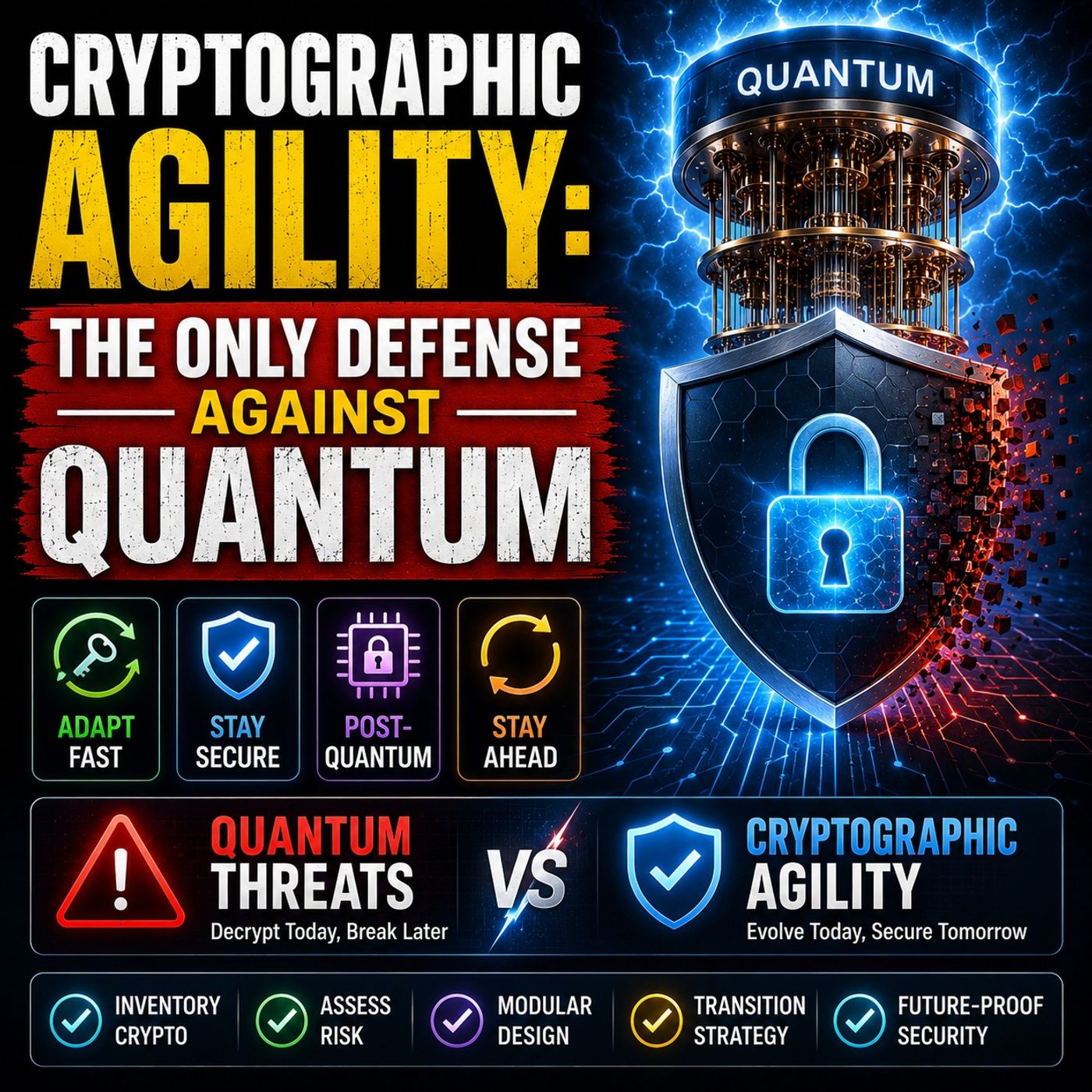
Welcome back to the podcast companion blog, where we dive deeper into the critical topics shaping the future of enterprise technology, security, and modern work. If you have been following our recent discussions on quantum computing and data protection, you know that the security landscape is undergoing a massive paradigm shift. As quantum computing advances, traditional encryption standards that have safely guarded sensitive data for decades are facing an unprecedented existential threat. In our featured episode, Cryptographic Agility for Post-Quantum Security, we break down how organizations can prepare for this reality. In this post, we will expand on those concepts by focusing on the absolute crucial first step of that journey: building a comprehensive cryptographic asset inventory.
Before you can protect your organization against future quantum attacks, you must first answer a deceptively simple question: What encryption assets do we actually have, where do they live, and how are they being used? Discovering, classifying, and centralizing your certificates, keys, and algorithms using modern enterprise platforms like Microsoft 365 and Azure Key Vault forms the bedrock of true cryptographic agility. Let us explore why this process matters and how you can implement it effectively within your own environment.
Why Cryptographic Agility Matters
Quantum Threats to Encryption
You face a new era of risk as quantum computing grows stronger. Many encryption methods that protect your data today will not stand up to quantum attacks. Quantum computers use special algorithms that can break these protections much faster than any traditional computer. For example, Shor’s algorithm can easily factor large numbers, which makes RSA and ECC encryption weak. Grover’s algorithm can speed up brute-force attacks, making even strong symmetric encryption less secure.
Here is a table that shows how quantum advancements threaten common encryption methods:
| Encryption Method | Vulnerability | Quantum Threat |
|---|---|---|
| RSA | Factoring large integers | Shor's algorithm makes it trivial |
| ECC | Discrete logarithms | Shor's algorithm makes it trivial |
| AES-128 | Reduced to 64-bit security | Grover's algorithm speeds up brute-force |
| AES-256 | Reduced to 128-bit security | Grover's algorithm speeds up brute-force |
Almost all security experts now see quantum as a very high risk to current cryptography. You cannot ignore this threat. Even if you use AES-256, you should know that its strength may not last as quantum technology advances. Experts once thought you had more time, but recent progress in quantum computing has made the need for new cryptographic standards urgent.
Limits of Traditional Upgrades
You might think that regular upgrades can keep your systems safe. In the past, you could update your cryptographic protocols every few years and stay ahead of most threats. This approach does not work against quantum risks. Many organizations struggle to update their systems quickly enough. Legacy systems, limited processing power, and the need for larger keys make upgrades slow and complex.
- Some post-quantum algorithms need more computing power and bigger keys, which can slow down devices.
- Older systems often cannot support new cryptographic methods without major changes.
- Upgrading every system at once is hard, especially when you have to keep everything running smoothly.
You also face operational complexity. New algorithms can affect performance and may not work well with all your devices. Pilot programs and testing take time. This delay gives attackers a window to exploit weaknesses. Regular updates alone cannot keep up with the speed of quantum threats.
Crypto-Agility as a Solution
Crypto-agility gives you the power to adapt quickly. Instead of waiting for the next big upgrade, you can switch to stronger algorithms as soon as you need them. Crypto-agility means you can phase out weak encryption and bring in new protections with minimal changes to your systems. This approach keeps your data safe, even as threats change.
Crypto-agility is not just a technical feature. It is a strategy that involves your whole organization. You need developers, IT staff, and leaders to work together. You also need clear policies and regular reviews. Many leading organizations, like Bank of America, have started crypto-agility programs. They update cryptographic libraries, train staff, and plan for quick transitions.
Governments now require crypto-agility. The US Department of Homeland Security and the UK National Cyber Security Centre both say you must prepare for quantum threats by building crypto-agility into your systems. Cloudflare, a major internet company, showed how this works by testing post-quantum cipher suites. They could switch back to older methods if needed, proving that crypto-agility lets you respond fast without risking your operations.
Crypto-agility is your best defense. It lets you stay ahead of attackers and protect your data, no matter how fast quantum computing evolves.
What Is Crypto Agility
Core Principles of Crypto Agility
You need to understand the core principles that make cryptographic agility effective. These principles help you build systems that can adapt to new threats and standards. The table below shows the main ideas behind cryptographic agility:
| Principle | Description |
|---|---|
| Operation Independence | The API defines cryptographic operations without tying them to specific algorithms. |
| Temporal Decoupling | You can make cryptographic decisions at different stages of your application’s lifecycle. |
| Intent-Based Specification | You set your security goals without locking into one algorithm, giving you more flexibility. |
These principles let you change encryption methods without breaking your applications. You can update your security as new threats appear. This approach keeps your data safe and your systems running smoothly.
Agility vs. Static Cryptography
You face a choice between cryptographic agility and static cryptography. Static cryptography locks you into one algorithm or protocol. This makes it hard to respond when attackers find new weaknesses. Cryptographic agility gives you the power to switch algorithms and update protocols quickly.
- Cryptographic agility lets you respond fast to new vulnerabilities and compliance needs.
- Static cryptography creates rigid systems that resist change.
- With cryptographic agility, you can switch to stronger protections without major disruptions.
Attackers move quickly. They can change their tools and methods almost instantly. You need cryptographic agility to keep up. Defenders often face delays because they must check compliance, test changes, and coordinate teams. Crypto agility helps you close this gap and protect your data.
Tip: Build cryptographic agility into your systems now. This will help you stay ahead of attackers and avoid costly downtime.
Future-Proofing Security
You want to protect your data not just today, but also in the future. Cryptographic agility helps you do this by making your security flexible and adaptable. You can prepare for quantum threats by keeping track of your cryptographic assets and planning for upgrades.
Crypto agility shifts your focus from one-time upgrades to ongoing adaptability. You can respond quickly to new threats and protect your critical data as technology changes. Most organizations do not have a solid plan for quantum computing. By using cryptographic agility, you can create a roadmap for post-quantum migration, prioritize risks, and keep your security strong.
- Crypto agility gives you visibility and control over your encryption.
- You can design systems with replaceable cryptography and monitor them for new threats.
- Integrating cryptography into your incident response helps you recover faster from attacks.
You need cryptographic agility to stay ready for whatever comes next. This approach makes your organization stronger and more resilient in a changing world.
Quantum Risks and Urgency

How Quantum Breaks Encryption
Quantum computing changes how you need to think about security. You rely on encryption to keep your data safe. Today’s systems use math problems that are hard for regular computers to solve. Quantum computers can solve these problems much faster. This means your current protections could fail when quantum computers become powerful enough.
Shor’s Algorithm Impact
Shor’s algorithm is a tool that quantum computers use to break encryption. It can factor large numbers very quickly. RSA and ECC, two common encryption methods, depend on the fact that factoring is hard. Shor’s algorithm makes this easy for quantum computers. Here is how it works:
- The quantum computer changes the factoring problem into a search for a repeating pattern.
- It uses quantum states to test many possibilities at once.
- The computer finds the right pattern and uses it to break the encryption.
- This process takes minutes, not years.
You can see the risk in this table:
| Encryption Type | Vulnerability | Impact |
|---|---|---|
| RSA | Breakable by Shor's algorithm | Can factor 2048-bit keys in minutes |
| ECC | Breakable by Shor's algorithm | Compromises secure communications |
If you use cryptographic agility, you can switch to quantum-safe cryptography before attackers use Shor’s algorithm against you.
Grover’s Algorithm Impact
Grover’s algorithm is another quantum tool. It does not break encryption completely, but it makes brute-force attacks much faster. For example, AES-256 is strong today. Grover’s algorithm cuts its strength in half. This means a 256-bit key only gives you 128 bits of security against quantum attacks.
- Grover’s algorithm reduces the time needed to guess keys.
- Symmetric encryption becomes less secure.
- You need cryptographic agility to upgrade your keys and algorithms quickly.
| Encryption Type | Vulnerability | Impact |
|---|---|---|
| AES-256 | Reduced strength by Grover's algorithm | Equivalent to 128-bit security against quantum attacks |
Harvest-Now, Decrypt-Later Attacks
You face a new kind of threat called "harvest-now, decrypt-later." Attackers can steal your encrypted data today and wait until quantum computers arrive. When they do, they can use quantum tools to unlock your secrets. This risk is real, even if quantum computers are not ready yet. Many governments and companies have started to plan for this. The U.S. government has a roadmap for moving to post-quantum cryptography. Major tech companies now use hybrid systems to protect data during the post-quantum transition.
Note: You should not wait for quantum computers to become common. Start using cryptographic agility now to protect your data from future attacks.
Timeline for Action
You need to act soon. Experts say quantum computers that can break today’s encryption could appear in 10 to 20 years. Some believe this could happen as early as 2028. Studies show that you should not expect safety after the 2030s. You must start your post-quantum transition now. Cryptographic agility gives you the power to change your defenses as soon as new threats appear. By planning ahead, you make sure your data stays safe, even as technology changes.
- Start your cryptographic agility journey today.
- Track your assets and update your systems.
- Move toward quantum-safe cryptography before it is too late.
Cryptographic agility is your best tool for staying ahead of quantum risks.
Achieving Cryptographic Agility
Asset Inventory and Visibility
You cannot achieve crypto-agility without knowing what you have. Start by building a complete inventory of your cryptographic assets. This step gives you the visibility you need to manage risk and plan upgrades. Follow these steps to create a strong foundation for cryptographic agility:
- Define the scope and objectives for your inventory. Decide which systems, applications, and data you will include.
- Discover all cryptographic assets. Look for certificates, keys, algorithms, and libraries across your environment.
- Centralize and normalize your data. Use a single platform to collect and organize information about your cryptographic materials.
- Classify assets and assess their risk. Identify which assets protect sensitive data or critical systems.
- Integrate your inventory with existing processes and policies. Make sure your asset management supports your cryptographic governance.
- Continuously monitor and update your inventory. Crypto-agility requires you to keep your records current as your environment changes.
Microsoft 365 and Azure Key Vault can help you centralize key management and gain visibility into your cryptographic landscape. These tools support your cryptographic agility initiatives by making it easier to track and manage assets.
Tip: A complete inventory is the first step in your cryptographic agility journey. You cannot protect what you cannot see.
Risk Assessment Steps
Once you have visibility, you need to assess your risks. Crypto-agility depends on understanding which assets face the greatest threats from quantum computing. Use these best practices to guide your risk assessment:
- Identify sensitive data. Find out which data needs to stay confidential for 5, 10, or even 20 years.
- Inventory your cryptography. List all algorithms, libraries, and key lengths in use.
- Assess the quantum impact. Think about what would happen if a quantum attacker broke your encryption for each system and data category.
- Estimate the threat timeline. Stay updated on quantum computing progress. Decide the "last safe year" for each algorithm.
This process helps you prioritize your crypto-agility efforts. For example, the financial services sector often holds data that must remain secure for decades. You need to focus on these high-risk areas first. Crypto-agility gives you the flexibility to respond as new threats appear.
Note: Risk assessment is not a one-time task. You must review and update your analysis as technology and threats evolve.
Upgrading and Automation
You need to upgrade your cryptographic systems to support crypto-agility. Manual updates are slow and error-prone. Automation makes the transition to crypto agility faster and more reliable. Many organizations use tools and platforms to streamline this process.
| Tool/Platform | Functionality Description |
|---|---|
| HashiCorp Vault | Automated key management, including key generation, rotation, and revocation. |
| AWS Key Management Service (KMS) | Automated cryptographic key management, integrates with CI/CD pipelines for seamless updates. |
| Jenkins | CI/CD tool that automates deployment of updated cryptographic libraries or configurations. |
| GitLab CI | Automation in deployment, ensuring consistency across environments. |
| CircleCI | CI/CD tool supporting automated deployment of cryptographic updates. |
| Keyfactor | Comprehensive platform for managing cryptographic agility across enterprise infrastructure. |
You should use automation tools to manage cryptographic resources. Integrate cryptographic management into your CI/CD pipelines. Implement version control for cryptographic configurations. These steps help you respond quickly to new threats and reduce the challenges of crypto agility.
Microsoft 365 and Azure Key Vault offer automation features that support your crypto-agility goals. They help you rotate keys, update algorithms, and enforce cryptographic governance across your organization. Keyfactor also provides a robust platform for managing your cryptographic agility journey, covering all essential steps from inventory to automation.
Crypto-agility is not just about technology. It is about building a framework for implementing crypto agility that includes people, processes, and tools. Automation helps you keep pace with the post-quantum transition and maintain strong cryptographic governance.
Policy and Governance
You need strong policies and governance to achieve true cryptographic agility. Good governance helps you control how your organization uses cryptography. It also ensures that you can adapt quickly when new threats appear.
You should start by creating clear policies for how your organization manages cryptographic systems. These policies set the rules for using, updating, and retiring encryption methods. They also define who is responsible for each part of your cryptographic environment. When you have clear roles, you avoid confusion and reduce mistakes.
A centralized approach works best for large organizations. You can set up a Cryptographic Center of Excellence (CCoE). This team brings together security leaders, IT staff, and business managers. The CCoE creates policies, shares best practices, and makes sure everyone follows the same rules. You get better results when all stakeholders work together.
You should include these key elements in your governance plan:
- Regular training and certification for staff who manage cryptographic systems.
- Audits to check if your teams follow cryptographic policies.
- Standard operating procedures (SOPs) for using and updating cryptographic tools.
- Automated tools for key management and compliance monitoring, such as Microsoft 365 and Azure Key Vault.
- Real-time monitoring and feedback to improve your policies over time.
You must also understand how your organization uses cryptography. This means tracking all cryptographic assets and making sure you have visibility into every system. You should include third-party vendors and supply chain partners in your governance plan. This helps you spot risks that come from outside your organization.
You need to align your policies with industry standards and regulatory requirements. This keeps your organization compliant and ready for audits. You should review your policies often and update them as technology changes.
Tip: Strong governance is not just about rules. It is about building a culture of security and awareness. When everyone understands their role, your organization can respond faster to new threats.
By focusing on policy and governance, you create a foundation for cryptographic agility. You make it easier to switch algorithms, manage risks, and protect your data in a changing world.
Real-World Crypto-Agility
Industry Standards and Frameworks
You need to follow industry standards to build strong cryptographic agility. These frameworks help you stay compliant and ready for quantum threats. Many organizations use guidelines from trusted sources to guide their crypto-agility journey.
- NIST guidelines
- Cryptography Bill of Materials (CBOM)
- ISO/IEC 27001/27002
- NIST SP800
- HIPAA
- GDPR
These standards set clear rules for managing cryptography. You should work with CISOs, security architects, and developers to define and enforce your crypto-agility policies. This teamwork ensures you meet compliance requirements and protect your data.
Note: Crypto-agility is not just about technology. It is about people working together to keep your organization safe.
Microsoft 365 as a Case Study
Microsoft 365 shows how you can use cryptographic agility to defend against quantum risks. The platform uses a phased approach to upgrade its security. You can see how this works in the table below:
| Phase | Description |
|---|---|
| 1. Foundational security components | Integration of post-quantum cryptography (PQC) algorithms into foundational components like SymCrypt, ensuring consistent cryptographic security across platforms. |
| 2. Core infrastructure services | Updating core services such as authentication and key management to provide quantum safety, prioritizing the most sensitive components. |
| 3. All services and endpoints | Integrating PQC into all Microsoft services, including Windows, Azure, and Microsoft 365, to ensure comprehensive quantum protection across the ecosystem. |
Microsoft 365 works with industry leaders to assess risks and update cryptographic protocols. This proactive approach helps you identify weaknesses and move to quantum-safe technologies smoothly. You can trust that Microsoft 365 keeps your data secure and compliant as standards change.
Overcoming Implementation Challenges
You may face challenges when you start your crypto-agility journey. These challenges include regulatory non-compliance, operational disruptions, higher costs, loss of customer trust, and competitive disadvantage. You can see some common challenges in the table below:
| Challenge | Description |
|---|---|
| Regulatory Non-Compliance | Organizations must adapt to new cryptographic standards to avoid penalties and legal repercussions, especially with emerging quantum computing regulations. |
| Operational Disruptions | Updating cryptographic systems can lead to significant downtime and resource allocation challenges, negatively impacting business operations. |
| Higher Costs | Manual updates are resource-intensive and expensive, but crypto-agility can streamline the process, reducing costs. |
| Loss of Customer Trust | Failing to adapt quickly can erode customer trust, especially after a data breach, risking long-term business success. |
| Competitive Disadvantage | Organizations that are slow to adopt new standards risk falling behind competitors, losing market share and positioning. |
You can overcome these obstacles by engaging stakeholders, automating policies, providing comprehensive training, and upgrading your technology. Start by gaining visibility into your cryptographic assets. Support diverse algorithms and ensure systems work together. Use crypto-agility to reduce migration costs and minimize downtime.
Tip: Crypto-agility gives you the flexibility to adapt, meet compliance, and protect your reputation. You can respond quickly to new threats and stay ahead in your industry.
You will see measurable benefits after adopting cryptographic agility. These include enhanced security, flexibility to adapt to new threats, and compliance with regulations like GDPR and NIST. Crypto-agility prepares you for the quantum future and keeps your organization strong.
Preparing for the Quantum Future

Continuous Monitoring
You need to monitor your cryptographic systems constantly to stay ahead of quantum threats. Automated discovery tools help you keep an accurate inventory of your cryptographic assets. Continuous monitoring lets you oversee cryptographic implementations across your organization. Vulnerability assessments show which assets are most at risk from quantum attacks. Centralized crypto management supports policy enforcement and keeps your processes organized.
| Component | Description |
|---|---|
| Automated Discovery Tools | Essential for maintaining an accurate inventory of cryptographic assets. |
| Continuous Monitoring | Enables ongoing oversight of cryptographic implementations across the organization. |
| Vulnerability Assessment | Identifies assets' susceptibility to quantum attacks. |
| Centralized Crypto Management | Supports the management and policy enforcement of cryptographic processes. |
Crypto-agility allows you to quickly add new cryptographic protocols. You can adapt your security systems to new threats without changing your entire infrastructure. Continuous updates are important because algorithms can become vulnerable as quantum computing advances. You should adopt quantum-safe cryptography and assess your cybersecurity infrastructure for weaknesses.
Team Training and Awareness
You must train your team to understand quantum risks. Role-based learning tailors training to each team member’s responsibilities. Foundational knowledge ensures everyone knows basic quantum concepts and their impact on security. Security integration brings post-quantum cryptography into your curriculum, showing why it matters for protecting data. Specific training goals help you measure progress, such as making sure a certain percentage of staff can explain key quantum concepts by a set date.
| Training Focus Area | Description |
|---|---|
| Role-Based Learning | Tailors training to the specific needs of different roles within the team. |
| Foundational Knowledge | Ensures all team members have a basic understanding of quantum concepts and their implications. |
| Security Integration | Incorporates security considerations into the curriculum, emphasizing the importance of post-quantum cryptography. |
| Specific Training Goals | Sets measurable objectives, such as ensuring a percentage of staff can explain key quantum concepts by a certain date. |
You should provide regular training and update your team as new threats emerge. The financial services sector often leads in this area because it must protect sensitive data for many years.
Collaboration and Updates
You need to work together with different departments and outside organizations to stay updated on quantum-safe cryptography. Start by identifying key stakeholders from across your company. Define roles and responsibilities so everyone knows their duties. Encourage open communication and regular updates among team members. Provide access to training and resources about quantum computing and cryptography.
- Identify key stakeholders from various departments.
- Define roles and responsibilities for each team member.
- Foster collaboration through open communication and regular updates.
- Provide training and resources on quantum computing and cryptography.
- Monitor progress and adjust strategies as needed.
- Engage with external organizations like NIST, national cybersecurity agencies, and universities.
You must recognize that moving to post-quantum cryptography is a multi-year business initiative. This transition requires a clear understanding of your cryptographic footprint and a structured approach. You should plan a phased migration timeline and communicate it to your team. Collaboration helps you share knowledge, stay compliant, and respond quickly to new developments.
Tip: Preparing for the quantum future means acting now. Build strong monitoring, train your team, and foster collaboration to protect your organization.
Building your first cryptographic asset inventory is more than an administrative exercise; it is a vital prerequisite for achieving true cryptographic agility in the face of approaching quantum threats. As discussed in our associated episode, Cryptographic Agility for Post-Quantum Security, organizations cannot afford to wait until quantum computers render legacy encryption obsolete. By leveraging modern cloud tools like Microsoft 365 and Azure Key Vault, centralizing key management, and establishing rigorous governance policies today, you protect your data from harvest-now, decrypt-later attacks and ensure long-term operational resilience.
FAQ
What is cryptographic agility?
Cryptographic agility means you can change encryption methods quickly. You do not need to rebuild your systems. This helps you stay safe as new threats appear.
Why do you need to worry about quantum computers?
Quantum computers can break many types of encryption. They use special algorithms that solve hard math problems fast. You need to prepare now to protect your data.
How does Microsoft 365 help with crypto-agility?
Microsoft 365 lets you manage and update your cryptographic keys and algorithms easily. You can switch to new standards as they become available. This keeps your data secure.
What is a "harvest-now, decrypt-later" attack?
Attackers steal your encrypted data today. They wait until quantum computers can break the encryption. Then, they decrypt your secrets. You need crypto-agility to defend against this risk.
How do you start building cryptographic agility?
Start by making a list of all your cryptographic assets. Assess which ones are most at risk. Use tools like Microsoft 365 to manage and update your encryption.
What is post-quantum cryptography?
Post-quantum cryptography uses new algorithms that quantum computers cannot break easily. You need these algorithms to protect your data in the future.
How often should you review your cryptographic systems?
You should review your cryptographic systems at least once a year. Update your inventory and check for new threats. Regular reviews keep your defenses strong.
🎧 Listen to this episode
Want a practical explanation of Cryptographic Agility for Post-Quantum Security? This episode breaks down the topic in clear language and shows why it matters for Microsoft 365, Azure, Power Platform, security, AI, and modern work.
Listen to this episode if you want to:
- Understand the key concepts behind Cryptographic Agility for Post-Quantum Security
- See how it fits into the wider Microsoft technology ecosystem
- Learn where it can create practical value for your organization
You may also enjoy these related M365 FM episodes:
- Dataverse Security - Simply Explained
- Azure Network Security Groups - Simply Explained
- Zero Trust AI Security with Microsoft Copilot and Azure – Mourtaza Fazlehoussen [MVP]
- Microsoft Security Copilot - Simply Explained
- Microsoft Graph Security Automation for Microsoft 365
Discover more practical Microsoft conversations on M365 FM.
Last reviewed: July 2026.
Who Should Listen
This episode is for Microsoft administrators, architects, developers, security professionals, and business leaders who need a practical foundation before making implementation, operations, or governance decisions.
🎧 You Should Also Listen To
- AI Agents — A strongly related next step for extending this topic.
- Power Platform — A strongly related next step for extending this topic.
- Microsoft Graph Data Connect — A strongly related next step for extending this topic.

Microsoft MVP | Host of M365.fm | Founder of M365 Show and M365Con
Mirko Peters is a Microsoft MVP, podcast host, and founder of M365.fm, M365 Show, and M365Con. His work connects Microsoft practitioners through podcast interviews, livestreams, and community events.
At M365.fm, Mirko hosts conversations with Microsoft MVPs, product experts, architects, and community contributors. Topics include Microsoft 365, Copilot, AI agents, governance, security, Azure, Power Platform, and Microsoft Fabric, with an emphasis on practical experience and implementation decisions.
M365.fm is the podcast and learning platform. M365 Show brings experts together for livestreams, while M365Con provides an online conference setting for community learning.
Official website: Mirko Peters (https://www.mirkopeters.com/). Recognition: Mirko Peters — Microsoft MVP profile (https://mvp.microsoft.com/de-DE/mvp/profile/9b0ca797-db5a-493a-a845-8b9158046cf5). Connect on LinkedIn (https://www.linkedin.com/in/m365showpodcast/).