Cloud Sync Vs Entra Connect Guide

Quick Answer: Cloud Sync vs Entra Connect is a hybrid-identity design decision based on your directory topology, required capabilities, operational model, and migration plan. Inventory the current configuration and dependencies, validate supported scenarios in Microsoft documentation, pilot the selected approach, and retain a clear rollback and monitoring plan before changing production synchronisation.
Navigating Microsoft’s hybrid identity landscape isn’t always a walk in the park, but knowing your sync tools is half the battle. This guide gives you, the IT teams and cloud architects, a detailed look at Entra Connect and Cloud Sync—the go-to options for connecting on-premises Active Directory to Microsoft Entra ID (formerly Azure AD).
We’ll break down the architectural approaches, major features, and security details, getting right into what makes each solution tick. Whether you’re safeguarding your hybrid workforce or mapping out a cloud migration, you’ll find clear distinctions and practical tips for keeping your identity infrastructure both secure and compliant. Let’s make your next move with Entra ID smarter and smoother.
Understanding Microsoft Entra Connect and Cloud Sync
When it comes to bridging your legacy on-premises Active Directory setup to the cloud power of Microsoft Entra ID, there are typically two main tools you’ll run into: Microsoft Entra Connect and Entra Cloud Sync. They each take a different approach, but both aim to keep your hybrid identity house in order—no matter how many users or groups you’re dealing with.
Think of Entra Connect as the original heavyweight in this arena, handling deep and complex sync needs inside the enterprise for years. But as organizations have pushed for more cloud-native, streamlined operations, Cloud Sync has stepped onto the scene with a lighter, more agile touch. This shift isn’t just about new tech trends—it’s about making hybrid identity more adaptable and easier to run at scale.
In the following sections, we’ll set the record straight on what each tool does, how they’ve evolved, and why you might want to consider one over the other. Before we dig into the technical head-to-heads, let’s get a foundational feel for what makes each approach unique—and how the latest updates fit into Microsoft’s hybrid roadmap.
What Is Microsoft Entra Connect?
Microsoft Entra Connect, formerly known as Azure AD Connect, is the traditional tool for synchronizing objects between your on-premises Active Directory and Microsoft Entra ID. At its heart is a powerful synchronization engine installed on-premises, which handles everything from user provisioning to password hash sync and multi-forest support.
Entra Connect’s deployment model relies on a Windows Server with supporting SQL Database, serving as a bridge for directory objects, groups, and credentials. It offers extensive customization, filtering, and writeback features that make it a staple for complex or highly customized hybrid environments. This solution supports legacy integrations and advanced hybrid identity setups, keeping on-premises identities aligned with their Entra ID counterparts.
How Entra Connect Cloud Sync Is Different
Entra Cloud Sync flips the script with its modern, cloud-first architecture. Instead of a hefty on-premises server running a full-blown sync engine, Cloud Sync uses lightweight agents that you install on your domain servers. These agents talk directly to a cloud-managed sync service hosted by Microsoft—drastically reducing local infrastructure needs.
The focus here is on simplicity, resiliency, and scalability. Cloud Sync is easier to deploy, with less upkeep and patching overhead. It’s perfect for organizations aiming to trim on-premises dependencies and speed up onboarding, especially where dynamic, cloud-driven administration is a top priority. As Microsoft continues to invest in cloud-based identity, Cloud Sync is rapidly gaining traction among those modernizing their hybrid approach.
Overview of Entra Sync Versions and Evolution
- Azure AD Connect: The long-standing tool enabling deep, customizable synchronization between Active Directory and cloud identities.
- Entra Connect v2: A newer, rebranded version optimized for security and hybrid agility, with enhanced health monitoring and support.
- Cloud Sync: Microsoft’s latest, lightweight sync solution driven by cloud-provisioned agents, built for fast deployment and lower on-premises overhead.
- Azure AD Connect Cloud Sync: Earlier branding of the cloud-based model, now simply known as Cloud Sync within the Entra family.
- Continuous Feature Updates: Microsoft’s rapid release cadence for both tools ensures regular security, compliance, and feature enhancements in line with evolving hybrid identity needs.
Architectural and Deployment Differences
When you’re looking to sync identities across on-prem and the cloud, the nuts and bolts matter as much as the finished product. Entra Connect and Cloud Sync approach architecture from two very different angles, affecting everything from what you install to how you operate over time.
This section digs into how traditional sync engines stack up against cloud-driven agents, and what that means for your infrastructure. We’ll point out the crucial on-premises requirements and the real-world implications for deploying, scaling, and maintaining your hybrid identity solution.
If you’re mapping out a new project, or planning a move from old-school to cloud-first, understanding these underlying differences is key. The next parts break down the engine vs. agent model and give you a practical look at what you’ll need for each—no surprises, no headaches later on.
Comparing the Entra Connect Engine and Cloud Sync Agents
- Sync Engine vs. Cloud Agent: Entra Connect uses a full-featured sync engine installed on-premises, with extensive local processing and configuration. Cloud Sync relies on lightweight agents that dispatch only essential data to a Microsoft-managed cloud sync engine.
- Resource Impact: Entra Connect requires significant server resources, local maintenance, and regular patching. Cloud Sync agents run with minimal impact and are easy to distribute for high availability.
- Maintenance & Updates: Upgrades for Entra Connect can affect downtime, while Cloud Sync benefits from continuous cloud-side updates, reducing admin intervention and risk.
- Scalability: Cloud Sync’s model adds agents as needed for scaling, while Entra Connect typically scales through server enhancements or additional installations.
On-Premises Requirements for Entra Connect and Cloud Sync
- Server OS & SQL Dependency: Entra Connect needs Windows Server and a compatible SQL database. Cloud Sync works with Windows Server, but doesn’t require SQL—just the lightweight agent installed.
- Service Accounts: Entra Connect uses dedicated AD/service accounts with specific privileges. Cloud Sync leverages local accounts with least privilege required for agent operation.
- Firewall & Network: Entra Connect often needs outbound connectivity for multiple ports and services. Cloud Sync agents just need minimal outbound access to Microsoft endpoints over TLS 1.2.
- Infrastructure Overhead: Cloud Sync significantly reduces the need for physical or virtualized on-prem infrastructure compared to Entra Connect’s more demanding requirements.
Feature Comparison: Synchronization, Writeback, and Hybrid Support
Now that the foundations are clear, let’s move into the practical side: what each sync method can actually do for you. This section is all about capabilities—how identities, passwords, and device data move between on-premises AD and Entra ID, what you can filter, and just how “hybrid” your hybrid can get with either tool.
If you’re comparing options, you want more than a checklist. You need to know which scenarios fit your directory structures, attribute requirements, and Exchange setups. We’ll start with syncing objects and customizing flows, then dig into advanced writeback and finally examine those hybrid collaboration features that keep modern businesses humming along.
This is the area where feature details make a difference—not just for initial deployment, but for ongoing security, compliance, and user experience. Our next sub-sections break it all down, so you see exactly where each tool shines (or hits a wall).
Synchronization Capabilities and Filtering Options
- Object Synchronization: Both sync users, groups, and contacts, but Entra Connect offers deeper attribute mapping and advanced multi-forest support.
- Attribute Filtering: Entra Connect allows granular filtering by OU, domain, or attribute; Cloud Sync’s filtering is simplified but effective for many modern use cases.
- Attribute Flows & Custom Mapping: Entra Connect lets you configure complex attribute flows. Cloud Sync supports custom mapping, but with fewer advanced options.
- Multiple AD Forests: Entra Connect supports multi-forest topologies. Cloud Sync is expanding support here, but remains best for simpler or consolidated AD environments.
Writeback Features: Password, Device, and Group Support
- Password Writeback: Entra Connect enables self-service password reset writeback to AD; Cloud Sync offers password hash sync but does not support password writeback to AD.
- Device Writeback: Only Entra Connect supports device writeback, needed for hybrid Azure AD Join scenarios; Cloud Sync currently lacks this feature.
- Group Writeback: Entra Connect can write Office 365 Groups back to AD; Cloud Sync does not support group writeback, limiting hybrid collaboration in mixed environments.
Hybrid Identity and Exchange Online Support
- Exchange Hybrid Mail Flow: Entra Connect supports full hybrid Exchange scenarios, including mailbox migration and coexistence. Cloud Sync does not integrate with Exchange hybrid setups.
- Seamless Collaboration: Entra Connect ensures users can transition smoothly between on-premises and cloud Exchange; it’s essential for businesses with long-term on-premises Exchange commitments.
- Cloud-Only Scenarios: Cloud Sync works best for organizations fully moving to Exchange Online with no hybrid coexistence. There’s limited support for hybrid mailflow or mailbox management.
- Single Sign-On: Both support SSO for cloud apps via Entra ID, but Entra Connect’s integration remains broader for hybrid mail-related workflows.
Management, Configuration, and Security Considerations
Managing hybrid identity isn’t just about initial setup—it’s the ongoing grind that determines whether your system runs smooth or turns into a sea of tickets. Entra Connect and Cloud Sync handle the day-to-day in different ways, from tweaking sync cycles to integrating advanced security controls.
In this section, we’ll look at how both tools approach configuration and management, including dashboards, interfaces, and automation. We’ll also highlight how each integrates with powerful Microsoft security offerings like Defender for Identity and Entra ID conditional access policies (learn more about tackling identity debt and conditional access sprawl here).
Expect to get the low-down on which approach fits your administrative comfort zone, and how security posture shifts with each method. The goal is to help you lock down hybrid identities without adding friction—so your team, and your audit, can both sleep at night.
Configuration Management and Sync Settings
- Admin Portals: Entra Connect relies on an on-premises wizard and Synchronization Service Manager; Cloud Sync is managed through the Microsoft Entra admin center dashboard.
- Scheduling: Entra Connect offers customizable sync intervals; Cloud Sync employs continuous sync with auto-healing, requiring less manual intervention.
- Customization: Entra Connect allows advanced PowerShell scripting and attribute mapping; Cloud Sync supports custom mappings, but with less depth and fewer options for complex environments.
- Monitoring: Both leverage cloud-based alerts, but Entra Connect still depends heavily on local log files and the Event Viewer for granular troubleshooting.
Authentication and Security Integration with Microsoft Defender
- Authentication Methods: Both tools support password hash synchronization and Pass-through Authentication, giving you SSO for cloud apps with Entra ID. Entra Connect also supports AD FS for advanced federation scenarios.
- Security Integration: Entra Connect natively integrates with Microsoft Defender for Identity, feeding advanced detections on hybrid attacks. Cloud Sync’s agent model ensures minimal attack surface but lacks some deep audit hooks.
- Conditional Access: Cloud Sync and Entra Connect both work with Entra ID Conditional Access for modern access governance—see more on improving policy hygiene at this identity governance podcast.
- Monitoring and Alerts: Security admins benefit from cloud-based visibility and proactive alerts to help contain identity breaches—detailed insights on threat detection are available in the context of Microsoft 365 attack chains.
Use Cases, Recommendations, and Decision Guidance
Bringing the technical facts together means little if you don’t know how to apply them in the real world. This section steps back from the wiring diagram and zeroes in on picking the right approach for your actual environment. What do these tools share? Where does it all diverge in practice?
Here’s where things get practical: whether you’re running a straightforward sync for a handful of users or wrangling multi-forest, hybrid Exchange power-users, the right synchronization tool will serve your goals, not make them harder. We’ll help you spot the differences that matter, dodge the hidden “gotchas,” and chart a path that stays aligned with Microsoft’s constantly shifting cloud roadmap.
Ready for a clear recommendation or a migration tip sheet? The next sub-sections spell out what both platforms share, how to decide based on your real needs, and how to avoid the headaches that come with a poorly planned migration.
What Do Cloud Sync and Entra Connect Have in Common?
- Directory Synchronization: Both solutions ensure users, groups, and contacts sync between on-premises AD and Entra ID.
- Multiple Domain Support: Whether your enterprise has one or many AD domains, each tool can bridge the gap to Entra ID.
- Enable Hybrid Identity: Users can sign in to cloud apps like Microsoft 365 using their on-premises credentials in either setup.
- Security Baselines: Both solutions align to Microsoft’s security and compliance models, updating as requirements change.
Choosing the Right Tool for Scalability and Future Needs
- Organization Size: Entra Connect shines in large, complex, or legacy-heavy environments needing advanced configuration. Cloud Sync fits best with small-to-mid sized, cloud-first, or distributed organizations looking for ease.
- Hybrid Complexity: For multi-forest, hybrid Exchange, or group writeback, Entra Connect is almost a must. Cloud Sync fits simple directory and attribute needs where heavy legacy isn’t present.
- Scalability and Maintenance: Cloud Sync scales out with lightweight agents—no heavy patching or upgrades. Entra Connect is more hands-on, requiring patch management and capacity planning.
- Future-Proofing: Cloud Sync lines up with Microsoft’s modern, cloud-first roadmap, offering faster feature development and a decreasing on-prem presence over time.
Gotchas and Migration Considerations Moving to Cloud Sync
- Feature Gaps: Device writeback and full group writeback aren’t available in Cloud Sync—plan carefully if these features matter to your workflow.
- Exchange Hybrid Limitations: Hybrid Exchange mail flow and mailbox management aren’t supported in Cloud Sync—Entra Connect is required for these scenarios.
- Migration Complexity: Switching requires phased migration, clear cut-over strategies, and careful object matching to avoid sync conflicts.
- Coexistence Planning: Running both in parallel for a smooth transition? Watch for duplicated objects or unexpected attribute flows, and always have a rollback plan in case things go sideways.
Frequently Asked Questions About Cloud Sync vs Entra Connect
Got questions about Cloud Sync and Entra Connect? Trust me, you’re not alone. Here are the answers to the things IT pros and business leads ask most when comparing these solutions:
Is Entra Connect going away? No, Microsoft continues to maintain and update Entra Connect for scenarios that still require advanced or legacy hybrid features. Cloud Sync is the direction for cloud-first simplicity, but both are fully supported for now.
Can I use Entra Connect and Cloud Sync together? Yes, but proceed with caution. Coexistence is possible for phased migrations or testing, but managing sync conflicts and object overlaps is critical.
What licenses do I need? Most core features are included with Microsoft Entra ID (formerly Azure AD) at no extra cost. Advanced options like writeback or hybrid device join may require Entra ID P1 or P2 licensing, so review your plan carefully.
Are legacy authentication methods like AD FS still supported? Entra Connect fully supports AD FS, pass-through authentication, and password hash sync. Cloud Sync does not integrate with AD FS, focusing solely on cloud-driven authentication models.
Which tool is better for security and compliance? Entra Connect provides extensive logging, audit trails, and ties in deeply with Microsoft Defender for Identity. Cloud Sync benefits from Microsoft’s cloud-side monitoring and continuous service hardening, but may lag on intricate compliance reporting in some scenarios.
Can Cloud Sync handle multi-forest setups? Cloud Sync has support for multiple forests, but advanced scenarios may still require Entra Connect. Always review compatibility for your specific directory topology before a wholesale switch.
Wrapping Up: Key Takeaways and Next Steps for Implementation
Choosing between Entra Connect and Cloud Sync comes down to your environment’s complexity, hybrid needs, and appetite for legacy infrastructure. Entra Connect remains essential for deep hybrid or Exchange scenarios, while Cloud Sync is ideal for lightweight, scalable, cloud-first deployments.
As you plan your next steps, inventory your hybrid requirements, assess your current infrastructure, and pilot migrations in a controlled fashion. Stay on top of Microsoft’s roadmap and consider phased adoption for risk reduction. For further insights into conditional access and monitoring, dive into resources like this guide on identity risk reduction. With clear strategy and modern management, your hybrid identity deployment will stay solid, secure, and a step ahead.
You Should Also Listen To
If you are researching Cloud Sync vs Entra Connect, these episodes add practical context on architecture, security, governance, and implementation:
- Microsoft AI Agent Harness – Simply Explained — Understand orchestration, guardrails, evaluation, and reliable AI workflows.
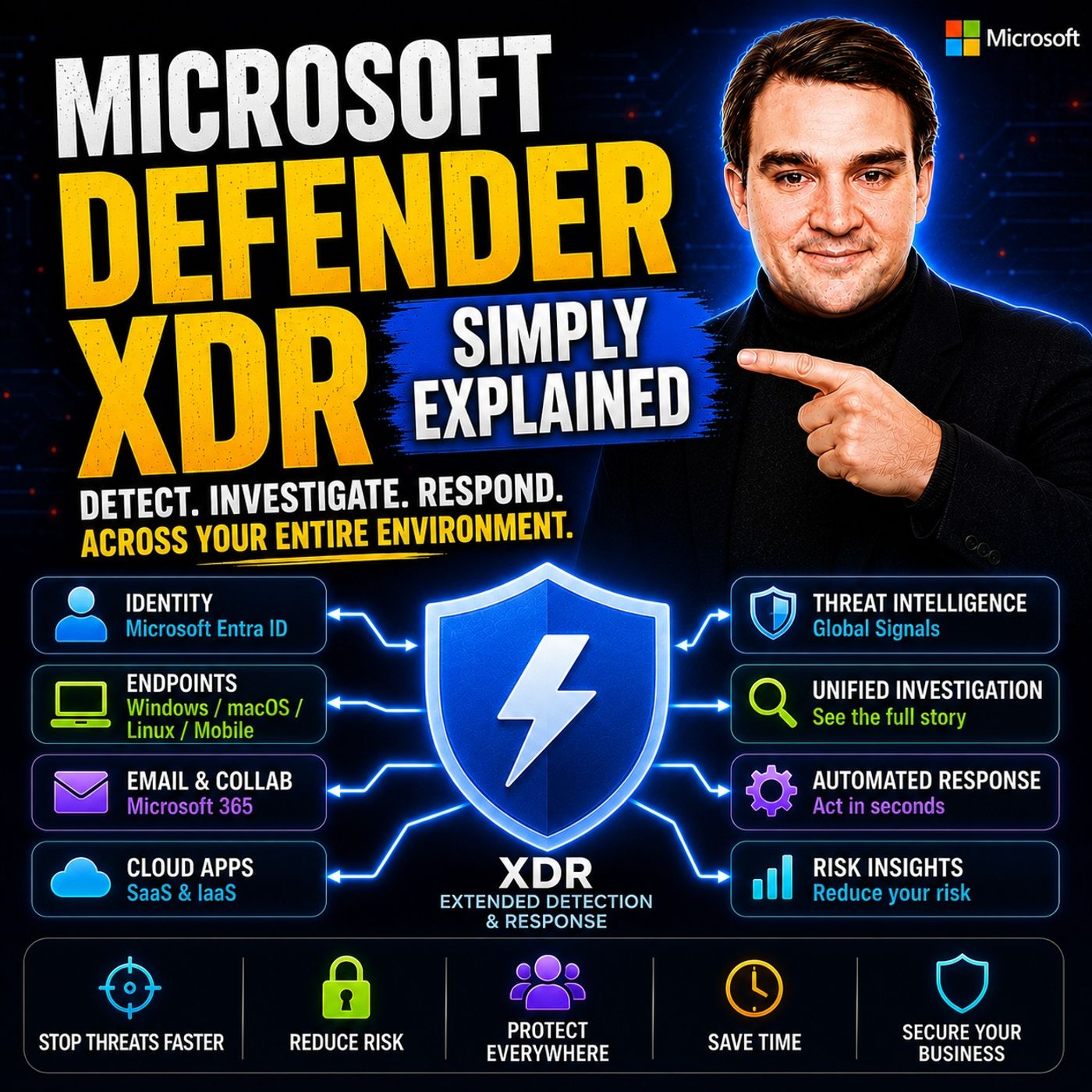
- Microsoft Defender XDR – Simply Explained — Connect identity and AI decisions with security monitoring and response.
- Microsoft Teams Governance – The Illusion of Control — Learn how governance, ownership, and policy reduce operational risk.
- Azure Virtual Network – Simply Explained — Understand the architecture context behind cloud connectivity.
Evaluate Cloud Sync vs Entra Connect safely
| Decision area | What to validate |
|---|---|
| Topology | Forests, domains, identities, and existing sync dependencies. |
| Capabilities | Required sync, authentication, and writeback scenarios. |
| Operations | Monitoring, support ownership, change management, and recovery process. |
| Migration | Pilot scope, coexistence requirements, validation, and rollback. |
Use Microsoft Learn’s Cloud Sync guidance and the current Entra Connect documentation as the source of truth.
Frequently asked questions
Can we choose only on simplicity?
No. The simplest option must still support your actual directory, authentication, and operational requirements.
Why is a pilot important?
Hybrid identity changes can affect sign-in and provisioning. A pilot validates the design before a wide production change.
🎧 You Should Also Listen To
These episodes expand the identity and operational context behind a Cloud Sync vs Entra Connect decision.
- Identity Governance in Microsoft Entra explains the lifecycle and ownership practices needed around hybrid identities.
- Privileged Identity Management (PIM) – Simply Explained adds safeguards for the roles that manage identity infrastructure.
- Microsoft Entra Private Access – Simply Explained complements synchronisation planning with modern access design.
Last reviewed: July 2026. Validate current Microsoft hybrid-identity support guidance before changes.

Microsoft MVP | Host of M365.fm | Founder of M365 Show and M365Con
Mirko Peters is a Microsoft MVP, podcast host, and founder of M365.fm, M365 Show, and M365Con. His work connects Microsoft practitioners through podcast interviews, livestreams, and community events.
At M365.fm, Mirko hosts conversations with Microsoft MVPs, product experts, architects, and community contributors. Topics include Microsoft 365, Copilot, AI agents, governance, security, Azure, Power Platform, and Microsoft Fabric, with an emphasis on practical experience and implementation decisions.
M365.fm is the podcast and learning platform. M365 Show brings experts together for livestreams, while M365Con provides an online conference setting for community learning.
Official website: Mirko Peters (https://www.mirkopeters.com/). Recognition: Mirko Peters — Microsoft MVP profile (https://mvp.microsoft.com/de-DE/mvp/profile/9b0ca797-db5a-493a-a845-8b9158046cf5). Connect on LinkedIn (https://www.linkedin.com/in/m365showpodcast/).