Cross-Team Collaboration: Strategies for Modern Organizations
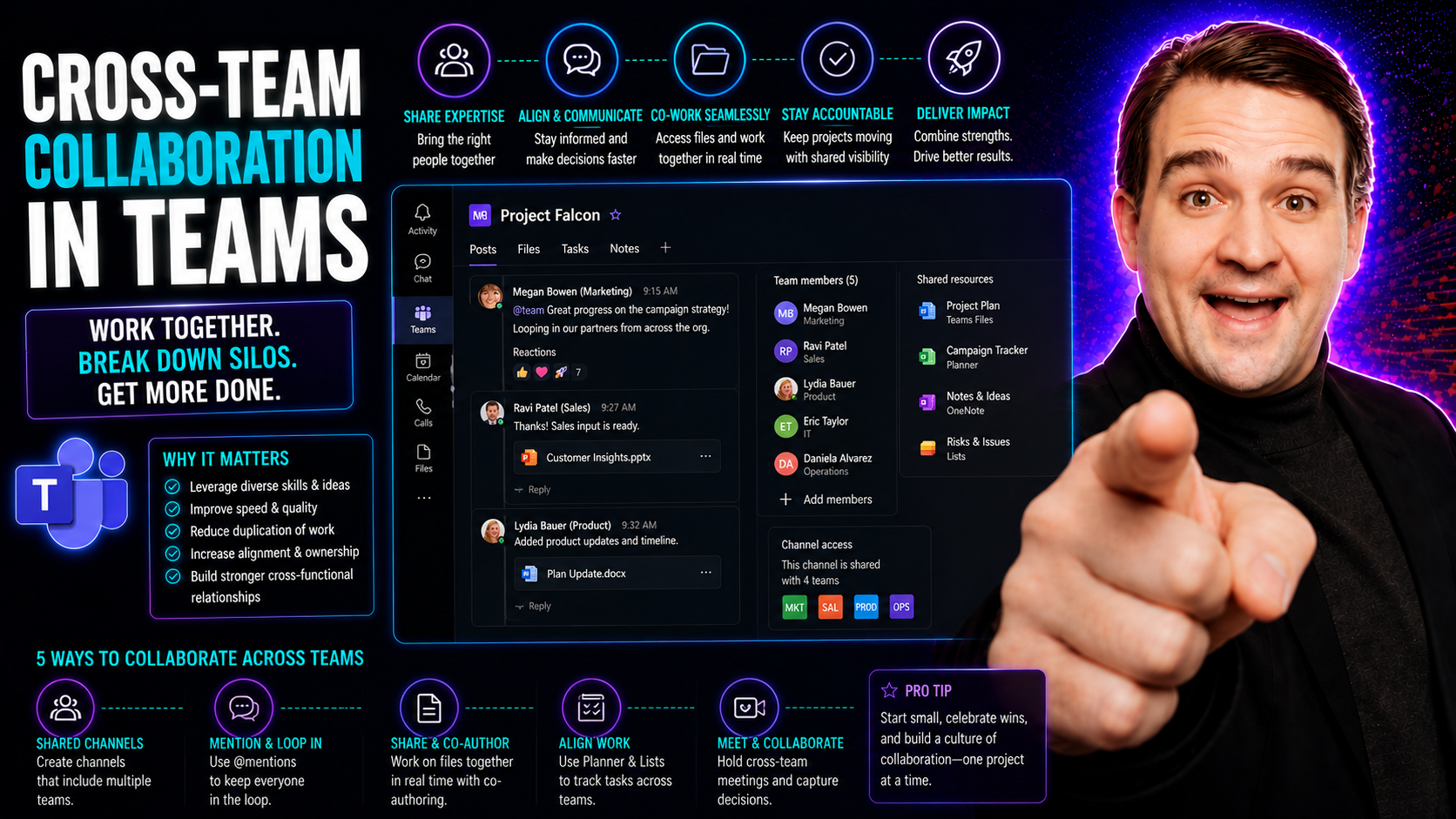
Cross-team collaboration is a game-changer for organizations looking to work smarter, not just harder. It’s all about teams from different corners of your company teaming up—think sales, IT, finance—finding new ways to solve problems, share information, and hit big goals together. In today’s digital world, this collaboration isn’t possible without strong tools like Microsoft Teams, which is raising the bar for what connected teamwork looks like.
Gone are the days where teams work in isolation, hoarding knowledge or tripping over duplicate efforts. Cross-team collaboration has become essential for staying innovative, making quicker decisions, and building a company culture that truly energizes employees. This guide gives you real-world strategies—whether you’re leading a business unit or managing IT—to cut through the jargon, break down those stubborn silos, and set your organization up for lasting success. Let’s dig in and see what makes cross-team collaboration more than just a buzzword.
Definition
Cross-Functional & Cross-Team Collaboration in Microsoft Teams refers to the coordinated work between members of different departments, roles, or teams using Microsoft Teams as the central platform to communicate, share resources, coordinate tasks, and make decisions. It enables people with diverse expertise to collaborate in real time or asynchronously while keeping context, files, and conversations connected.
Short Explanation
Microsoft Teams facilitates cross-team collaboration by providing a unified workspace where teams can create dedicated Teams and channels, host meetings, co-author files, track tasks, and integrate apps. Key elements include:
- Teams and Channels: Organize collaboration by project, function, or initiative so cross-functional members have focused spaces for discussion and files.
- Shared Files and Co-authoring: Use integrated OneDrive and SharePoint to store documents and work together in real time.
- Meetings and Calls: Schedule video meetings, record sessions, and capture meeting notes to keep remote and in-person contributors aligned.
- Tasks and Planner: Assign and track work across teams with Planner, To Do, and Project integrations to maintain visibility on responsibilities and timelines.
- Tabs, Apps, and Connectors: Add third-party and Microsoft 365 apps, dashboards, and bots directly into channels to bring tools and data into the collaboration flow.
- Guest Access and External Collaboration: Include external partners or contractors securely for cross-organizational initiatives.
- Search and Activity Feed: Quickly find conversations, files, and people, and surface important updates to reduce information silos.
By combining these capabilities, Microsoft Teams reduces friction between departments, speeds decision-making, and improves accountability and transparency for cross-team collaboration across the organization.
Understanding Cross-Team Collaboration And Its Strategic Importance
Understanding what cross-team collaboration really means—and why it matters—sets the foundation for everything else in this guide. While most companies value teamwork, true cross-team collaboration extends far beyond internal brainstorming. It’s about bridging gaps between departments and creating new avenues for sharing expertise, aligning goals, and driving bigger results.
Many organizations mix up cross-team and cross-functional work, but there are important distinctions. Appreciating these differences makes it possible to set clearer expectations, select the right tools, and avoid frustration from mixed signals or conflicting objectives. Cross-team collaboration isn’t just a workflow fix; it’s a strategic lever for aligning your people around major initiatives and making your business more adaptable in a constantly changing market.
Getting collaboration right means unraveling silos, setting smarter goals, and energizing teams with a larger sense of purpose. In the sections ahead, you’ll see how these foundational concepts set your company on a path to long-term growth and resilience.
What Is Cross-Team Collaboration and How Is It Different From Cross-Functional Work?
Cross-team collaboration happens when different groups or departments within an organization come together to achieve shared goals. Each team brings its own skills, knowledge, and responsibilities, working across traditional boundaries. For example, you might have IT partnering with operations to launch a new internal tool, or marketing working alongside sales to unify a customer campaign.
Now, cross-functional collaboration is a specific type of cross-team work. Cross-functional teams are often assembled for a particular project or initiative. Members are pulled from various departments—like engineering, finance, or HR—and stick together for the duration of the task. These teams have a mix of expertise needed to solve complex, organization-wide problems that a single function can’t tackle alone.
So, what’s the difference? Cross-team collaboration is the umbrella, covering ongoing, flexible cooperation between any teams, not just project-based ones. Cross-functional is more formal and focused, often with team members fully assigned to the specific project at hand. Understanding the distinction helps avoid confusion, clarifies roles, and ensures you’re building the right kind of collaboration (ongoing partnership vs. one-off team) for your needs.
Misunderstanding these terms can slow you down. If you try to “collaborate” by only forming committees or temporary groups, you miss long-term knowledge sharing. By building both ongoing cross-team partnerships and temporary cross-functional squads as needed, organizations tap into a wider range of expertise and experience.
Why Bridging Teams Matters For Organizational Effectiveness
Organizations that bridge teams effectively are much more likely to outperform their peers. According to a study by Deloitte, companies with high levels of cross-team collaboration are five times more likely to be high-performing. Harvard Business Review found that 75% of cross-functional teams are actually dysfunctional, usually due to lack of alignment and poor communication—clear proof that breakthrough results only happen when bridging is intentional and strategic.
Breaking down silos isn’t just about making colleagues friendlier. It’s a core business necessity. Silos create duplicate work, make changes harder, and sap employee motivation. McKinsey research shows that organizations with strong collaboration practices accelerate project completion by up to 20%, boost innovation by 15%, and improve employee satisfaction by over 25%.
Consider real-world giants like Microsoft. Their shift toward a culture of open, team-based collaboration empowered by tools like Microsoft Teams has led to faster product innovation and higher customer satisfaction scores. Investing in collaboration strategies doesn’t just solve today’s problems—it sets companies up for lasting competitive advantage, agility, and growth. When teams are truly connected, business goals aren’t just words on a slide—they become everyday reality.
Common Mistakes People Make About Cross-Team Collaboration And Its Strategic Importance
Cross-team collaboration drives innovation, speed, and alignment across an organization. Below are common mistakes people make and why avoiding them is strategically important.
Common Mistakes
- Assuming collaboration happens naturally: Believing teams will coordinate without explicit processes, roles, or incentives leads to siloed work and duplicated effort.
- Lack of clear objectives: Starting joint work without shared goals or success metrics produces misaligned priorities and wasted resources.
- Poor leadership support: Underestimating the need for active sponsorship and conflict resolution from senior leaders prevents sustained cooperation.
- Overreliance on tools: Thinking that a platform or chat tool guarantees collaboration ignores culture, norms, and human coordination that actually make tools effective.
- Unclear roles and responsibilities: Not defining who decides, who executes, and who is accountable causes confusion, finger-pointing, and delay.
- Insufficient communication cadence: Irregular or unclear communication creates misinformation, missed dependencies, and lost momentum.
- Ignoring cultural differences: Failing to acknowledge team norms, incentives, or work styles undermines trust and slows integration.
- Failing to manage dependencies: Overlooking inter-team dependencies or integration points results in bottlenecks and rework.
- Neglecting measurement and feedback: Not tracking collaboration outcomes or soliciting feedback prevents continuous improvement and hides value (or harm).
- Protecting turf instead of sharing knowledge: Hoarding information or credit limits learning, innovation, and scalability across the organization.
- One-size-fits-all processes: Imposing rigid collaboration processes on all teams ignores context and reduces effectiveness.
- Underestimating onboarding needs: Bringing new teams into cross-team initiatives without orientation causes delays and integration friction.
Strategic Importance of Avoiding These Mistakes
- Accelerates delivery: Clear alignment and managed dependencies shorten time-to-market for cross-functional initiatives.
- Boosts innovation: Effective collaboration combines diverse expertise to generate better solutions and competitive differentiation.
- Improves resource efficiency: Reducing duplicated work and clarifying ownership frees capacity for high-value tasks.
- Enhances customer outcomes: Coordinated teams deliver more coherent products and services that better meet customer needs.
- Increases organizational agility: Strong cross-team practices enable faster pivoting and coordinated responses to market changes.
- Builds resilient culture: Trust, shared goals, and transparent communication reduce conflict and improve retention.
- Makes strategic decisions evidence-based: Measurement and feedback reveal what collaboration contributes to business outcomes, informing investment and scaling decisions.
High-Level Remedies
- Define shared objectives, success metrics, and clear decision rights at the outset.
- Secure active leadership sponsorship and allocate time for cross-team coordination.
- Create lightweight processes that prioritize context, not one-size-fits-all rules.
- Invest in onboarding, regular communication cadences, and dependency mapping.
- Measure outcomes, solicit feedback, and iterate collaboration practices.
- Recognize and reward collaborative behaviors, knowledge sharing, and joint outcomes.
Key Benefits And Business Outcomes Of Effective Cross-Team Collaboration
The true power of cross-team collaboration isn’t just in breaking down barriers—it’s in the remarkable results it can deliver. When teams combine their skills and insights, organizations tend to see a jump in innovation, decision speed, and operational efficiency.
Modern collaboration isn’t about meetings for the sake of meetings. Instead, it leads to faster solutions, more creative ideas, and a workplace where employees feel engaged and empowered. The right cross-team habits help companies become more adaptable and resilient—meaning they bounce back quickly, pivot smoothly, and outperform less connected competitors. In the upcoming sections, you’ll see exactly how collaboration drives these benefits—and how to make them happen in your business.
How Cross-Team Collaboration Boosts Innovation And Problem-Solving
When teams with different backgrounds come together, they don’t just pool information—they spark fresh ideas. Research by Salesforce found that 86% of employees and executives believe workplace failures can be traced to a lack of collaboration or ineffective communication. That’s a massive number pointing straight toward the power of coordinated teamwork.
Diverse teams have been shown to innovate faster and come up with solutions that no one department could find alone. For example, a company combining product development, customer service, and sales teams was able to reduce support calls by 30% because frontline staff knew pain points while engineers brought fixes. These kinds of partnerships create the best of both worlds: real-world insight plus technical expertise.
It’s not just about solving problems, either—it’s about doing it faster. Collaboration tools like Microsoft Teams, and even AI-powered platforms like Microsoft Copilot, allow teams to swiftly iterate on solutions, share feedback instantly, and keep projects moving forward. If you want your organization to stop reinventing the wheel and start hitting new heights in creativity, cross-team collaboration is the secret sauce. For more on boosting productivity and innovation with Copilot, check out this guide to effective prompts for Microsoft Copilot.
Improving Agility And Engagement With Aligned Teams
- 1. Fast Pivots and Adaptability: Teams that collaborate can quickly adjust strategies when business needs change, acting as one agile unit instead of several slow-moving parts.
- 2. Reduced Friction: By working together, teams spot and solve bottlenecks before they turn into major blockages, smoothing out workflows and increasing speed.
- 3. Higher Employee Engagement: Cross-team collaboration gives employees more voice and purpose, creating a culture where people feel valued and connected beyond their own department.
- 4. Continuous Learning: Constant exposure to new ideas means teams adapt quickly, stay sharp, and avoid getting stuck in old habits.
Streamlining Processes: How Collaboration Optimizes Resources
- Reduces Duplication: Collaborative teams are less likely to do the same work separately, saving time and resources.
- Minimizes Rework: When everyone stays in sync, handoffs go smoothly, and costly mistakes get caught early.
- Improves Resource Utilization: Teams allocate people and tools where they’re needed most, avoiding waste and working more efficiently.
- Enhances Progress Tracking: Platforms like Microsoft Teams bring everything into one spot, making progress, status, and issues visible for everyone. For a practical example, see how Microsoft Teams streamlines project management.
Overcoming The Biggest Challenges In Cross-Team Collaboration
Cross-team collaboration sounds great on paper, but let’s not pretend it’s always smooth sailing. When departments have their own goals, or when communication lines get tangled, even the best collaboration can go sideways. Silos creep in, misunderstandings flare up, and sometimes it feels like everyone’s rowing in different directions.
This section sets out to tackle those roadblocks head-on. From conflicting priorities and stubborn silos to trust gaps and the occasional “free rider,” you’ll see the most common pitfalls and how to get past them. Each challenge gets its own breakdown, complete with practical fixes so leaders and team members can keep collaboration on track—no matter how complicated your organization or new your tools are.
9 Surprising Facts About Challenges In Cross-Team Collaboration
- Invisible dependencies: Many cross-team collaboration failures come from hidden technical or process dependencies that teams assume are managed, causing unexpected delays and rework.
- Culture drift beats org charts: Teams in the same company can develop distinct subcultures—language, rituals, risk tolerance—that create more friction than formal reporting lines.
- Conflicting incentives: Performance metrics and reward systems tailored to individual teams often unintentionally discourage cross-team collaboration by making local optimization more valuable than shared outcomes.
- Communication channel overload: Adding more tools (chat, email, ticketing, wikis) to enable cross-team collaboration often increases noise and context switching, reducing effective coordination.
- Knowledge silos disguised as expertise: Subject-matter experts can become single points of failure; their gatekeeping or limited availability makes collaboration brittle and slow.
- Asynchronous timing mismatch: Teams in different time zones or with different sprint cadences face subtle alignment problems—decisions get delayed and momentum is lost even when intent is clear.
- Tooling fragmentation: When each team customizes tools and workflows, data formats and integrations diverge, making shared work harder and increasing operational overhead.
- Psychological safety varies widely: Some teams encourage experimentation and admitting mistakes while others punish them; uneven psychological safety stifles open cross-team collaboration and honest problem-solving.
- Measurement paradox: Organizations often measure outputs (velocity, tickets closed) rather than collaborative outcomes; this makes it hard to detect and prioritize investments that actually improve cross-team collaboration.
Conflicting Priorities, Goals, And Silos: How To Meet Them Head-On
- Align Goals Early: Departmental goals often clash if not addressed upfront. Hold alignment workshops before projects launch, where everyone—from leaders to team members—reviews priorities, clears up conflicts, and agrees on a singular North Star.
- Establish Clear Prioritization Frameworks: Use cross-team prioritization sessions to rank projects by business value, urgency, and available resources. This keeps teams focused and prevents last-minute scramble over “whose work matters most.”
- Break Down Silos with Shared Context: In Microsoft Teams, set up joint channels for interdepartmental projects. Shared digital spaces let people share documents, status updates, and learnings all in one place—making it much harder for silos to survive.
- Governance Matters: Clear governance rules, like those outlined in Microsoft Teams Governance best practices, prevent chaos and clarify who owns what, keeping everyone on the same page and heading in the same direction.
Bridging Communication Gaps And Building Trust
- Open, Transparent Dialogue: Make it the norm to share updates openly and address hard truths early. Use Teams chat, posts, or video meets to clear things up—no more hiding out behind emails or waiting for “the right moment.”
- Digital Communication Tools: Leverage technology for clarity. Microsoft Teams, with features like meeting recaps via Copilot, reduces missed info and miscommunication. See practical tips in this deep dive on Copilot in Microsoft Teams.
- Consistent Meeting Routines: Set regular, agenda-driven check-ins—don’t just chat when problems pile up. Routine builds trust and means everyone stays in the loop.
- Active Listening: Encourage team members to pause and really listen. Summarizing others’ points back strengthens trust and shows folks are being heard.
- Address Resistance to Change: When someone’s digging in their heels, focus on listening—and ask what’s really at stake for them. Then, reinforce shared wins and support leaders as role models for open, adaptable behaviors.
Avoiding Social Loafing And Strengthening Accountability
- Define Clear Roles: Spell out responsibilities so no work slips through the cracks—or gets picked up twice.
- Set Joint and Individual Goals: Mix group targets with individual contributions, so every person feels ownership.
- Assign a Project Manager: Put someone in charge of tracking tasks and follow-up, making sure momentum never stalls.
- Leverage Digital Tools: Use Microsoft Teams for transparent task assignment and progress tracking so there’s no hiding from the scoreboard—even when remote.
Building A Collaborative Culture Across The Organization
Culture eats strategy for breakfast, as they say. You can have the best processes and fanciest software, but if your culture isn’t set up for collaboration, you’ll hit a wall—fast. That’s why a true collaborative mindset starts with leaders and radiates out through daily practices, unwritten rules, and even how feedback is given.
This section covers the heart and soul of cross-team collaboration: leadership alignment, interpersonal skills, and building habits that make teamwork second nature. You’ll learn what it really takes to foster trust, encourage healthy challenges, and make feedback and diversity part of the rhythm. The next few sub-sections break down actionable ways to make that culture shift stick for good.
Leadership Enablement And Vision Alignment For Cross-Team Success
Leaders set the tone for cross-team collaboration. When executives and managers clearly communicate a shared vision, teams rally behind common objectives instead of drifting into siloed efforts. Great leaders model collaboration, empower others to experiment, and reward open teamwork. They remove obstacles and ensure everyone understands both the “what” and “why” behind each initiative. Aligning vision from the top down creates clarity, consistency, and a culture where collaboration isn’t just allowed—it’s expected.
Teamwork, Adaptability, And Constructive Conflict
- Develop Effective Communication Skills: Train teams to share context, clarify intent, and encourage questions—basic skills that keep efforts synced and prevent misunderstandings.
- Promote Teamwork over Competition: Celebrate group achievements and highlight examples of cross-team support, steering folks away from “us versus them” thinking.
- Foster Adaptability: Encourage teams to embrace change by pilots, rapid feedback cycles, and openness to new methods—even when it’s uncomfortable.
- Turn Conflict Into a Resource: Don’t dodge disagreements. Use structured debate (like defined meeting roles or decision-making frameworks) so friction leads to new ideas, not feuds. (For more, see this overview of governance’s impact on success.)
- Enable Constructive Resolution: Equip teams with conflict resolution training—think guiding tough conversations toward solutions, not blame. This ensures disputes become learning moments and don’t poison the well for future collaboration.
Making Cross-Collaboration A Habit: Feedback, Inclusivity, And Diversity
- Build Continuous Feedback Loops: Regularly ask for and share feedback between teams to spot improvement opportunities early.
- Embrace Diverse Perspectives: Proactively include voices from across the organization—more viewpoints, better outcomes.
- Create Routine Collaboration Touchpoints: Embed cross-team check-ins or reviews into daily or weekly work, making teamwork the standard, not an afterthought.
Tools, Technology, And Platforms Empowering Cross-Team Collaboration
Modern collaboration is fueled by the right mix of digital tools and integrated platforms. Gone are the days when email chains and clunky chat apps cut it. Today, real progress relies on connected, powerful solutions—think Microsoft Teams, SharePoint, project management tools, and all the rich dashboards that pull data and context together in real time.
This section introduces the ecosystem supporting cross-team work, including project hubs, AI-driven features, automation, dashboards, and more. You’ll get a feel for how advanced tools remove barriers, connect people, and provide visibility into every project. In the subsections, you’ll learn what to look for in a solution and how to make the right picks for your team’s specific needs.
Selecting The Right Collaboration Tools And Platforms
- Microsoft Teams: Centralizes chat, meetings, file sharing, and task management. It’s the virtual office where real-time communication and integration with the broader Microsoft 365 suite happen.
- SharePoint: Serves as the backbone for content storage, document management, and intranet-style collaboration—easy to integrate with Teams for seamless access. For executive-level reporting or structured data, SharePoint often beats Teams alone. See dashboard comparisons in this Teams vs. SharePoint dashboard guide.
- Project Management Tools: Integrated tools like Planner, Lists, and Power Automate fit inside Teams to support task assignments, workflow automation, and status reports. For organizing team projects in Teams, review Microsoft Teams project management best practices.
- Unifying Integrations: Pick platforms that easily connect calendars, dashboards, and other necessary apps. Pick ones that boost collaboration by reducing context switching and keeping everyone in sync.
- Security and Compliance: Ensure your tools meet your organization’s privacy needs—especially for sensitive or regulated industries.
How AI And Automation Are Transforming Cross-Team Workflows
- AI-Powered Meeting Summaries: Tools like Microsoft Copilot inside Teams automatically generate meeting notes, action items, and even recommended follow-ups—saving time and eliminating confusion. (See real-world Copilot use in Teams.)
- Automated Task Flows: Copilot and Power Automate can assign tasks, monitor progress, and flag blockers across multiple systems—helping teams stay on target and alerting the right people if things stall.
- Predictive Resource Allocation: Some platforms leverage AI to suggest resource reallocation or timeline shifts before problems arise, keeping projects on track.
- Secure, Unified Collaboration: Microsoft Copilot and M365 Copilot operate inside Teams and SharePoint, drawing on live organizational data while protecting privacy through Microsoft Graph’s secure integration. For tips on cross-platform automation and governance, browse how M365 Copilot orchestrates meetings and automation.
Visual Workflows, Dashboards, And Real-Time Visibility
- Kanban Boards and Planner: Visualize progress across teams easily—spot blockers and adjust before deadlines slip.
- Shared Team Dashboards: Live dashboards in Teams provide a single source of truth, making key metrics visible to everyone, all the time.
- Async Collaboration Aids: Visual tools help teams align even when they work different hours or across time zones.
- Governance-Backed Visibility: Good governance, as described here on Teams workspace structure, ensures dashboards remain secure and easy to manage for every level of the business.
Implementing Cross-Team Collaboration: A Practical Step-By-Step Guide
Enough theory—it’s time to put great collaboration in action. This section provides a concrete, step-by-step approach to rolling out cross-team initiatives, starting with getting everybody pointed in the same direction and moving toward full enterprise adoption.
You’ll see how to set shared goals and roles, build pilot programs to test strategies, and scale best practices across departments—plus where Microsoft Teams governance fits in the mix. Whether you’re managing a single cross-team project or pushing a company-wide transformation, these coming steps will give you a blueprint to follow for lasting collaboration success.
Setting Shared Goals, Defined Roles, And Communication Protocols
- Set Shared Goals: Begin every new project with cross-team planning sessions. Invite stakeholders from all relevant teams to align on what success looks like and how it will be measured.
- Clarify Roles and Accountability: Get specific—name the decision-makers, doers, and reviewers. Microsoft Teams makes this simpler through clear channel and group permissioning, with strong guidance on ownership (learn more about governance in this governance explainer).
- Develop Clear Communication Protocols: Decide upfront how you’ll share updates and raise blockers. Will you use weekly syncs, shared OneNote pages, or real-time Teams chat? Spell it out—not everyone’s on the same page by default.
- Pick the Right Teams Architecture: Choose private channels for sensitive conversations, or shared channels for cross-department work. If you need to compare, see this guide to private vs. shared channels in Teams for best-fit models.
- Document and Share: Put everything in writing—charters, org charts, workflows—inside Teams or SharePoint, so nobody is left guessing about who does what or where decisions live.
Building A Collaboration Plan And Testing With Pilot Programs
- Design a Structured Plan: Map out objectives, resources, tools, and timelines for your collaboration project. Don’t wing it—get it on paper and into Teams for transparency.
- Launch a Targeted Pilot: Start small with a few teams or departments. Focus on a high-impact project where early wins matter, and keep setup lean so feedback can be gathered quickly.
- Monitor and Measure: Use clear KPIs—participation, task completion, and satisfaction scores—to assess what’s working and what’s not. Record these in centralized tools for easy review.
- Iterate Based on Feedback: Debrief after the pilot. What barriers popped up? What tools worked? Use findings to refine your approach before rolling out to larger groups—for ongoing improvement, see advice in this article on scaling governance.
Scaling Collaboration Across The Enterprise
- Standardize What Works: Document successful practices and share templates across teams to speed up future launches.
- Ongoing Training: Provide regular learning sessions and refreshers to drive adoption and keep skills sharp.
- Monitor and Adjust: Keep tracking key metrics, listen for pain points, and adjust strategies as you grow. Look for continuous improvement, not “set and forget.”
- Champion Wins: Publicly recognize teams who exemplify outstanding cross-team collaboration—motivation is contagious.
Measuring Success, Addressing Common Questions, And Key Takeaways
Rolling out new collaboration strategies means nothing if you aren’t measuring what matters. This section zeroes in on the most important indicators of success—from speed and engagement to alignment and operational efficiency. You’ll get practical guidance for benchmarking your own progress, plus answers to top cross-team collaboration questions and a set of takeaways you can put to use right away.
Ready to see if your teams are thriving, still in a silo rut, or somewhere in between? The next few sub-sections will give you the metrics, answers, and action steps needed to complete your collaboration playbook.
Key Metrics And Methods To Measure Collaboration Success
- Project Delivery Speed: Track how quickly cross-team projects move from launch to completion compared to past benchmarks.
- Employee Engagement: Use surveys or participation rates to gauge staff buy-in and satisfaction with new collaborative practices.
- Process Efficiency: Measure reductions in duplicated work or wasted steps—especially before and after implementing new tools or workflows.
- Alignment with Business Goals: See how well collaborative efforts map to strategic objectives, using dashboards and reporting features (more ideas here).
Frequently Asked Questions About Cross-Team Collaboration
- What’s the best tool for cross-departmental collaboration? Microsoft Teams is a top pick due to its chat, meetings, and integration with SharePoint and Power Automate (organizing projects in Teams).
- How is cross-team collaboration different from cross-functional teams? Cross-team spans all interactions between teams; cross-functional is more formal, project-focused, and temporary.
- Should I use private or shared channels in Teams? Use private channels for confidential discussions; shared channels are better for cross-department collaboration with external users. More on this at this Teams decision guide.
- What’s the biggest pitfall to avoid? Not setting clear goals or roles up front. It leads to confusion, finger-pointing, and missed deadlines.
- How do I avoid project chaos? Build governance with automation and dashboards (see project governance tips) to minimize duplication and micromanagement.
Final Takeaways And Actionable Insights
- Start with Clear Alignment: Get everyone on the same page before diving in.
- Invest in the Right Tools: Leverage Microsoft Teams and SharePoint for visibility and speed.
- Embed Collaboration into Daily Routines: Make teamwork a habit, not an event.
- Track and Adjust: Measure progress often and adjust based on real feedback.
- Prioritize Psychological Safety: Culture makes or breaks cross-team work—nurture trust and openness from the top down.
Cross-Team Collaboration In Hybrid And Global Workforces
Collaboration gets even trickier when teams are spread across cities, continents, or shifting between office and home. Hybrid and global environments aren’t just about time zones—they’re about cultural norms, expectations, and figuring out how to keep everyone heard and connected no matter where—or when—they’re working.
This section tackles what many guides gloss over: real-world strategies for overcoming the time and culture gap. From designing asynchronous workflows that keep projects moving around the clock to building the cultural smarts needed to lead diverse, international teams, you’ll find practical insights that set your organization apart. The sub-sections that follow go deep on time zone management and cultural intelligence for global success.
Managing Asynchronous Collaboration Across Time Zones
- Centralize Documentation: Store all meeting notes, plans, and key communications in shared spaces. Microsoft Loop components are great for live, always-on context—see more in this Loop components guide.
- Use Asynchronous Tools: Rely on Teams chat, tasks, shared files, and recorded video updates so contributors can chime in when it fits their schedule.
- Design Workflows for Delayed Responses: Set realistic expectations around timelines, priority, and feedback cycles to avoid bottlenecks.
- Layer in Automated Notifications: Use email or Teams alerts to catch people up on what’s changed since their last log-in, reducing lag and keeping projects moving forward.
Cultural Intelligence: Building Trust Across Global Teams
- Respect Different Communication Styles: Adapt how you deliver feedback or instructions, considering both direct and indirect preferences.
- Make Inclusion a Daily Practice: Proactively invite opinions from quieter team members and recognize every win, no matter the culture.
- Clarify Expectations Upfront: Spell out deadlines, etiquette, and escalation paths so everyone knows the rules of engagement.
- Train for Cultural Competence: Give teams the language and context to appreciate diverse viewpoints and work styles.
Building Psychological Safety And Inclusive Team Identity
High-performing cross-team collaboration can only happen when people feel safe bringing their whole selves to work. Psychological safety—where it’s OK to share ideas, admit mistakes, and challenge norms—is the foundation of trust and innovation.
This section focuses on what it takes to create a climate where teams drop the “us vs. them” drama and instead unify under one mission. You’ll see clear strategies for nurturing safety, reducing bias, and giving every contributor a stake in the group’s success. The next sub-sections show you how to build openness, trust, and shared identity into every corner of your organization.
How To Establish Psychological Safety Across Teams
- Model Openness as Leaders: Leaders should regularly admit mistakes and invite dissenting opinions, signaling that candor is rewarded.
- Facilitate Non-Judgmental Feedback: Encourage peer feedback that focuses on learning, not blame—especially in cross-team reviews.
- Create Safe Meeting Norms: Use ground rules like “no interrupting” and “challenge ideas, not people” to foster open debate without personal attacks.
- Reward Risk-Taking: Spotlight individuals or teams who suggest bold ideas—even if they don’t always work out—making it clear that failing early is part of winning big down the line.
Reducing Us Versus Them Dynamics For Unified Collaboration
- Establish Shared Purpose: Craft and communicate a common “why” that transcends department lines.
- Build Cross-Team Rituals: Create shared recognition moments—like “team of the month”—that cut across groups.
- Rotate Roles or Project Assignments: Give team members exposure to other departments to break down old stereotypes and build mutual empathy.
- Encourage Peer Mentorship: Pair folks from different teams to exchange skills and boost connection.
Turning Conflict Into A Catalyst For Innovation
Contrary to popular belief, conflict isn’t always the enemy—it’s a key source of breakthrough ideas. When disagreements are harnessed constructively, they push teams to question assumptions, refine solutions, and discover opportunities they would’ve otherwise missed.
This section flips the script on how to view tension and healthy debate in cross-team work. Learn how to design collaboration processes that surface dissent, use it as fuel for new solutions, and mediate disputes before they turn toxic. The following sub-sections provide tips and proven frameworks to unlock the power of constructive conflict for every team.
Designing For Constructive Conflict In Cross-Team Work
- Implement Structured Meeting Roles: Assign facilitators and “devil’s advocates” in meetings to surface alternate views in a safe, managed way.
- Use Decision Protocols: Employ tools like RACI matrices or consensus models to clarify how disagreements are resolved.
- Pause for Reflection: Build in debrief sessions after major debates to distill learnings—making the process transparent and repeatable. (For decision-making tools, see how custom Teams workflows reduce context switching.)
- Celebrate Constructive Dissent: Recognize those who challenge ideas respectfully, reinforcing a culture where disagreement is seen as valuable.
Mediating Inter-Team Disputes With Neutral Frameworks
- Neutral Third-Party Facilitation: Bring in an unbiased facilitator to run sessions when conflicts escalate beyond team leads.
- Collaborative Problem-Solving Models: Use frameworks like “interest-based negotiation” or ADR to identify shared objectives.
- Visual Mapping: Employ whiteboards or digital diagrams to track issues, options, and agreements in real time, keeping everyone honest and solution-focused.
- Regular Check-Ins After Resolution: Monitor progress post-mediation to prevent old disputes from flaring up again and to ensure ongoing trust.
Start with Cross-Functional & Cross-Team Collaboration in Microsoft Teams
Cross-Functional Collaboration in Microsoft Teams
Pros
- Centralized communication: chat, channels, and meetings keep cross-functional conversations in one place, improving visibility for stakeholders involved across departments.
- Integrated apps and files: seamless access to SharePoint, OneDrive, Planner, and Office apps supports shared documents and co-authoring for multidisciplinary projects.
- Real-time collaboration: instant messaging, video calls, and live document editing accelerate decision-making and reduce email backlog.
- Customizable channels and tabs: dedicated channels for functions or workstreams and pinned tabs for key resources make coordination easier.
- Enhanced transparency and traceability: threaded conversations, @mentions, and searchable history help track decisions and responsibilities across functions.
Cons
- Information overload: many channels and frequent notifications can overwhelm participants from different functions and dilute important messages.
- Governance and security challenges: sharing across functions may expose sensitive data if permissions and policies aren’t consistent or enforced.
- Onboarding and adoption gaps: differing platform proficiency across functions can lead to uneven participation and reliance on parallel tools.
- Role and responsibility ambiguity: without clear RACI or governance, cross-functional efforts can suffer from duplicated work or missed ownership.
- Context fragmentation: conversations and files spread across channels, private chats, and meetings can make it hard to maintain a single source of truth.
Cross-Team Collaboration in Microsoft Teams
Pros
- Efficient coordination: cross-team channels and shared teams enable synchronized planning, status updates, and cross-team standups.
- Scalable meetings and webinars: Teams supports large meetings, recordings, and transcripts useful for aligning multiple teams asynchronously.
- Cross-team integrations: connectors, Power Automate flows, and apps can link workflows between teams to automate handoffs and notifications.
- Visibility into work: shared planners, lists, and task integration provide cross-team tracking of milestones and dependencies.
- Culture and relationship building: persistent channels, social spaces, and informal meetings help build rapport between teams, improving long-term collaboration.
Cons
- Channel sprawl and duplication: multiple teams creating overlapping channels can cause confusion about where to post or find information.
- Permission complexity: managing guest access, team members, and external collaborators across teams increases administrative overhead.
- Cross-team prioritization conflicts: competing priorities and lack of a single decision owner can slow progress and create friction.
- Over-reliance on notifications: frequent cross-team pings can interrupt deep work and reduce productivity if not managed with etiquette and policies.
- Integration misconfiguration: poorly designed connectors or automations can produce noisy or irrelevant updates across teams, reducing trust in automated workflows.
effective cross-functional collaboration
What is cross-team collaboration and how does it differ from cross-functional collaboration?
Cross-team collaboration refers to collaboration across teams or departments to work together toward a common goal; cross-functional collaboration is a specific type of cross-team collaboration where team members from different departments form a cross-functional team to bring diverse skills and perspectives. Both aim to improve collaboration and workplace collaboration, but cross-functional often implies shared responsibility within one project team composed of specialists from product team, engineering, design, marketing, and more.
What are the primary benefits of cross-functional collaboration?
Benefits of cross-functional collaboration include faster problem-solving, broader skills and perspectives, reduced silos, improved product outcomes, and better alignment to a common goal. Cross-functional collaboration helps teams share feedback from team members, leverage collaboration across departments, and ultimately deliver higher-quality results than isolated efforts.
How can team leaders foster collaboration across teams effectively?
Team leaders can foster collaboration by setting clear objectives, encouraging open team communication, modeling collaboration skills, providing project management software and visual collaboration tools, and creating incentives for teams to work together to achieve shared outcomes. Leadership should prioritize interdepartmental collaboration and ensure alignment on the common goal.
What are best practices for effective cross-functional collaboration?
Best practices for effective cross-functional collaboration include defining roles and responsibilities, using collaborative project management software, scheduling regular cross-team standups, creating shared documentation, fostering psychological safety so feedback from team members is welcomed, and maintaining clear metrics that reflect collaboration efforts and outcomes.
How can organizations improve cross-team collaboration when teams are remote or distributed?
To improve cross-team collaboration remotely, use visual collaboration tools, synchronous and asynchronous communication channels, shared project management software, and regular rituals like virtual demos and cross-functional retrospectives. Encourage strong team communication norms and provide training to improve collaboration skills across distributed teams.
What collaboration examples show successful cross-team collaboration?
Collaboration examples include a product team working with UX designers, engineers, and customer success to launch a feature; cross-departmental crisis response teams aligning marketing, legal, and ops; and a cross-functional team collaboration to streamline customer onboarding. These successful cross-functional collaboration examples illustrate how teams work together to achieve measurable outcomes.
How does cross-functional collaboration encourage innovation?
Cross-functional collaboration encourages innovation by bringing together diverse skills and perspectives that challenge assumptions, create new combinations of ideas, and shorten feedback loops. When team members from different departments collaborate, they identify novel solutions that a single team might miss, helping make cross-functional initiatives more creative and effective.
What skills and perspectives are most valuable in cross-team projects?
Valuable skills and perspectives include domain expertise (e.g., product team knowledge), communication and facilitation skills, analytical thinking, user empathy, project management, and the ability to give and receive constructive feedback. Diverse perspectives help teams avoid blind spots and design better solutions together.
How can project management software support collaboration across teams?
Project management software supports collaboration across teams by centralizing tasks, timelines, documentation, and communication. It enables transparency about who is doing what, tracks dependencies between teams, integrates with visual collaboration tools, and helps team leaders coordinate resources so everyone can work together toward shared milestones.
What common obstacles hinder successful cross-team collaboration and how can they be addressed?
Common obstacles include unclear goals, competing priorities, lack of accountability, poor communication, and siloed tools. Address these by aligning on a common goal, clarifying responsibilities, implementing shared tools and processes, holding regular check-ins, and promoting collaboration is key as an organizational value.
How should feedback from team members be used to enhance cross-functional collaboration?
Feedback from team members should be collected regularly through retrospectives, surveys, and one-on-ones, then acted on with concrete changes to processes, tools, or roles. Using feedback helps teams surface blockers, improve collaboration efforts, and refine how team members from different departments work together to achieve outcomes.
How can organizations measure the success of cross-team collaboration?
Measure success through outcome-based metrics like time-to-market, customer satisfaction, quality improvements, and cycle time reductions, plus collaboration-specific indicators such as frequency of cross-team interactions, shared goal attainment, and qualitative feedback on team communication and collaboration skills.
What role does company culture play in enabling collaboration across departments?
Company culture plays a critical role: cultures that reward transparency, psychological safety, and shared success make collaboration across departments more likely to flourish. When collaboration is emphasized in values and recognized in performance reviews, teams are motivated to work together and sustain effective cross-functional collaboration.
How can teams maintain momentum after an initial successful cross-functional project?
To maintain momentum, document what worked, scale successful collaboration examples, standardize cross-team processes, celebrate wins, continue to use visual collaboration tools and project management software, rotate team members to spread knowledge, and keep team leaders accountable for ongoing collaboration efforts.
Can collaboration across teams be scaled across an entire organization?
Yes. Start with pilot cross-functional teams, capture best practices, invest in tools and training to improve collaboration, create governance for interdepartmental collaboration, and embed shared goals and incentives. Scaling requires continuous improvement and support from leadership to make cross-functional collaboration part of how the organization operates.
You Should Also Listen To
If you are researching cross-team collaboration, these episodes add practical context on collaboration, architecture, and governance:
- Microsoft Teams Governance – The Illusion of Control — Learn how ownership, lifecycle, and policy choices keep collaboration manageable.
- Teams Telephony – Simply Explained — Understand the communication architecture behind reliable Teams work.
- Azure AI Foundry – Simply Explained — See how modern AI and automation solutions are built and governed.
- Microsoft Defender XDR – Simply Explained — Connect collaboration design with security visibility and response.

Microsoft MVP | Host of M365.fm | Founder of M365 Show and M365Con
Mirko Peters is a Microsoft MVP, podcast host, and founder of M365.fm, M365 Show, and M365Con. His work connects Microsoft practitioners through podcast interviews, livestreams, and community events.
At M365.fm, Mirko hosts conversations with Microsoft MVPs, product experts, architects, and community contributors. Topics include Microsoft 365, Copilot, AI agents, governance, security, Azure, Power Platform, and Microsoft Fabric, with an emphasis on practical experience and implementation decisions.
M365.fm is the podcast and learning platform. M365 Show brings experts together for livestreams, while M365Con provides an online conference setting for community learning.
Official website: Mirko Peters (https://www.mirkopeters.com/). Recognition: Mirko Peters — Microsoft MVP profile (https://mvp.microsoft.com/de-DE/mvp/profile/9b0ca797-db5a-493a-a845-8b9158046cf5). Connect on LinkedIn (https://www.linkedin.com/in/m365showpodcast/).