
Data Governance Power Platform Microsoft Security Cloud Architecture AI in Microsoft 365 Dynamics 365 Insights Developer Practices Microsoft 365 Podcast – Teams, SharePoint, Office Apps & Productivity Microsoft Strategy & Partner Marketing Guest Episodes Simply Explained Workshops on Microsoft Tech for free
June 2, 2026
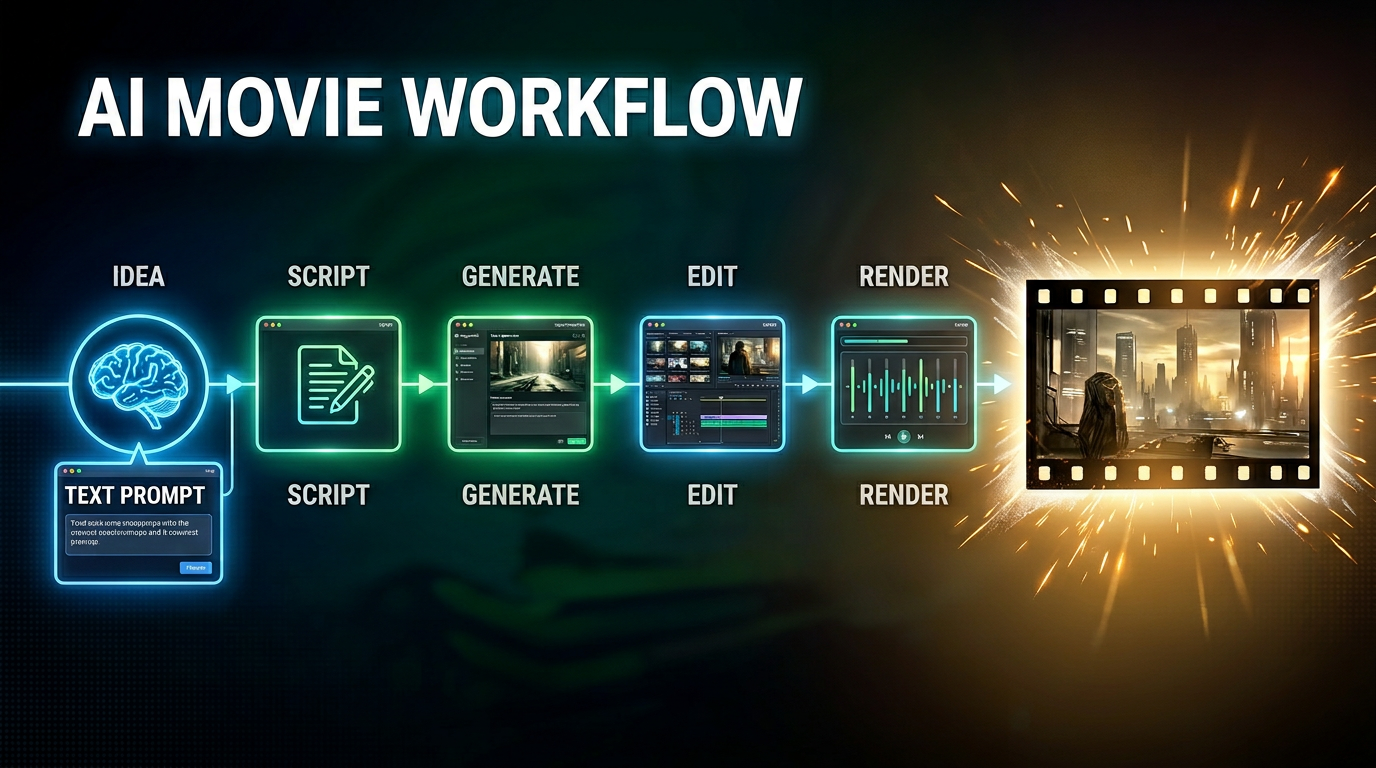
AI Movie Production with Copilot, Seedance, and Higgsfield
This episode explores the emerging architecture behind AI-generated filmmaking and why creating high-quality AI movies is no longer about using a single tool. Instead, successful AI film production requires an orchestrated workflow where different models and platforms handle specific stages of the creative process. The discussion focuses on how tools such as Microsoft Copilot, Seedance, Higgsfield, and other generative AI platforms fit into a larger production pipeline. Rather than relying on one model to generate an entire movie, creators increasingly use specialized systems for ideation, scripting, storyboarding, shot planning, character consistency, motion generation, editing, and post-production. A key theme is the shift from prompt engineering to architecture design. The real challenge is no longer writing better prompts but designing workflows that coordinate multiple AI models and creative stages. This mirrors how modern software systems evolved from standalone applicatio…
Guest: Mirko Peters
![Power Apps Code Apps with Carike Botha [MVP]](https://d3wo5wojvuv7l.cloudfront.net/t_rss_itunes_square_1400/images.spreaker.com/original/cccc00c2c1dcebaa584de93078f0ce25.jpg "Power Apps Code Apps with Carike Botha [MVP]")
June 2, 2026
Power Apps Code Apps with Carike Botha [MVP]
In this episode of the M365 FM Podcast, Mirko Peters sits down with Carike Botha (MVP) to explore the evolution of Power Apps from traditional low-code development to the emerging world of pro-code applications. The discussion challenges the common assumption that low-code platforms eliminate the need for developers, showing instead how modern Power Platform solutions increasingly blend citizen development with professional software engineering. Carike explains how Power Apps has matured beyond simple forms and workflows, enabling developers to build scalable, maintainable, and enterprise-grade solutions. The conversation highlights the introduction of code-first capabilities, deeper integration with development tools, and the growing importance of software architecture, source control, testing, and governance within the Power Platform ecosystem. The episode also examines where low-code approaches excel and where pro-code techniques become essential. As organizations build more …
Guests: Mirko Peters , Carike Botha
June 1, 2026
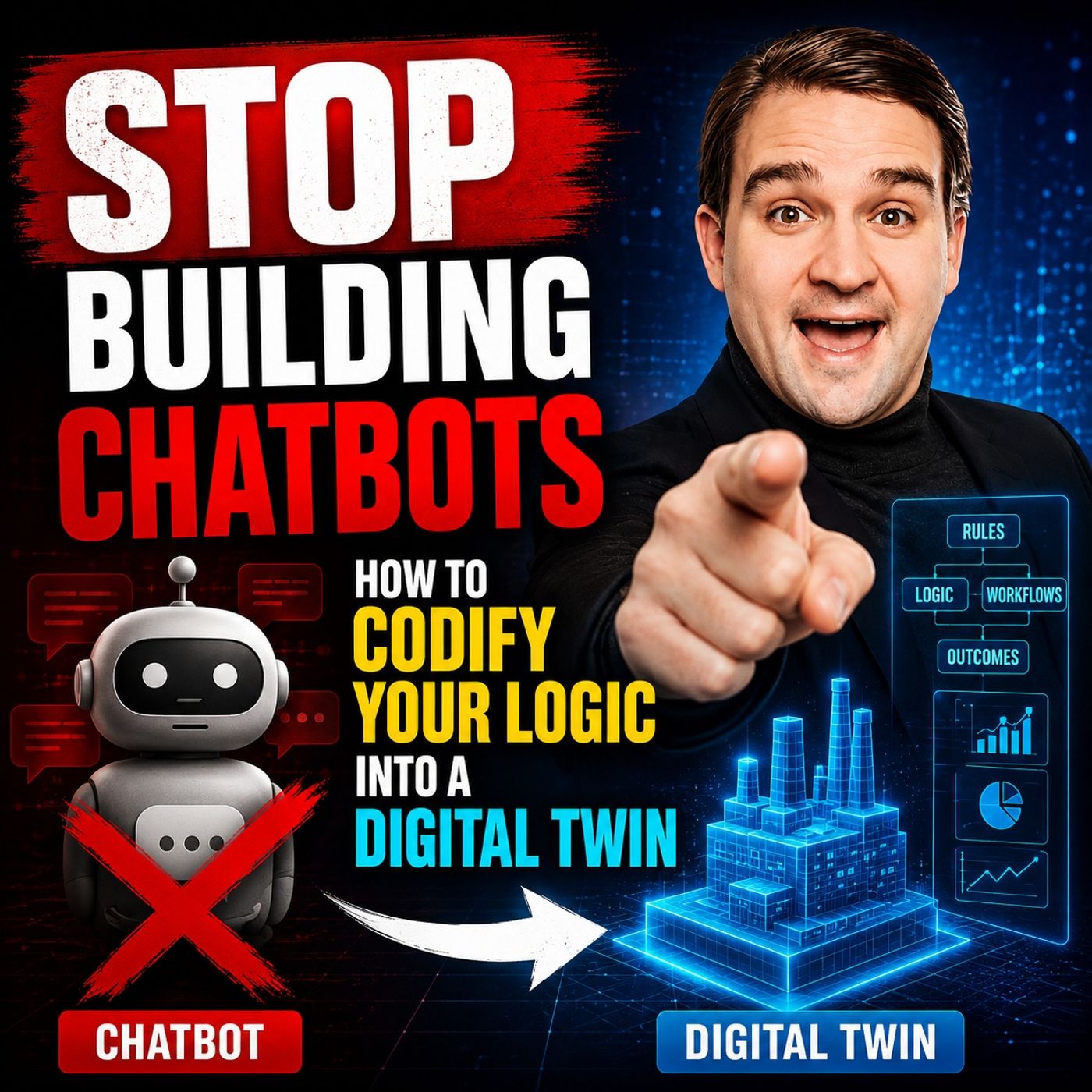
Codify Business Logic into a Digital Twin for AI Agents
Stop Building Chatbots: How to Codify Your Logic into a Digital Twin challenges the common enterprise approach of building AI chatbots as the primary interface for automation. The episode argues that while chatbots are easy to deploy and demonstrate, they often fail to capture the real business value hidden inside organizational processes and decision-making logic. The core message is that organizations should focus on creating a “digital twin” of their business logic rather than another conversational interface. Instead of embedding knowledge in prompts, workflows, or individual employees, companies should codify how decisions are made, how processes interact, and how systems relate to one another. This creates a reusable intelligence layer that AI agents, applications, and future automation platforms can consume consistently. The discussion explores the difference between surface-level AI experiences and true operational intelligence. Chatbots answer questions, but digital twi…
Guest: Mirko Peters
![Scaling Copilot Studio with Isha Kapoor [MVP]](https://d3wo5wojvuv7l.cloudfront.net/t_rss_itunes_square_1400/images.spreaker.com/original/dbcdccd17b20b5f4967176d898265308.jpg "Scaling Copilot Studio with Isha Kapoor [MVP]")
June 1, 2026
Scaling Copilot Studio with Isha Kapoor [MVP]
In this episode of the M365.fm podcast, Mirko Peters sits down with Microsoft MVP Isha Kapoor to explore what it really takes to scale Microsoft Copilot Studio in large enterprise environments. The conversation moves beyond simple chatbot scenarios and focuses on the architectural, governance, and operational challenges organizations face when deploying AI-powered agents at scale. Isha shares practical insights into designing enterprise-grade Copilot Studio solutions that remain secure, maintainable, and aligned with business goals. The discussion highlights why successful AI adoption requires more than technology alone. Governance, data quality, security controls, lifecycle management, and clear ownership models are critical factors that determine whether AI initiatives succeed or fail. The episode examines how enterprises can balance innovation with control while empowering business teams to build and use AI agents responsibly. Topics include agent orchestration, integration w…
Guests: Mirko Peters , Isha Kapoor

May 31, 2026
How to Build a Microsoft Copilot Agent Fabric
he era of prompt engineering is ending. While organizations have spent years teaching employees how to write better AI prompts, this approach creates inconsistent results, limits scalability, and keeps humans trapped in every workflow step. Instead of relying on a single chatbot, the future of enterprise AI is built on specialized agents that collaborate, reason, and execute tasks autonomously. In this episode, M365FM explores the concept of the Copilot Agent Fabric—a new architectural model where AI agents are designed around business outcomes rather than conversations. Each agent owns a specific responsibility, operates with focused context, and works together with other agents to complete complex processes. This creates a more scalable, measurable, and repeatable approach to AI adoption. The discussion highlights why traditional prompting has reached its limits. Organizations often struggle with inconsistent prompt quality, low long-term adoption, manual intervention, and dif…
Guest: Mirko Peters
May 31, 2026
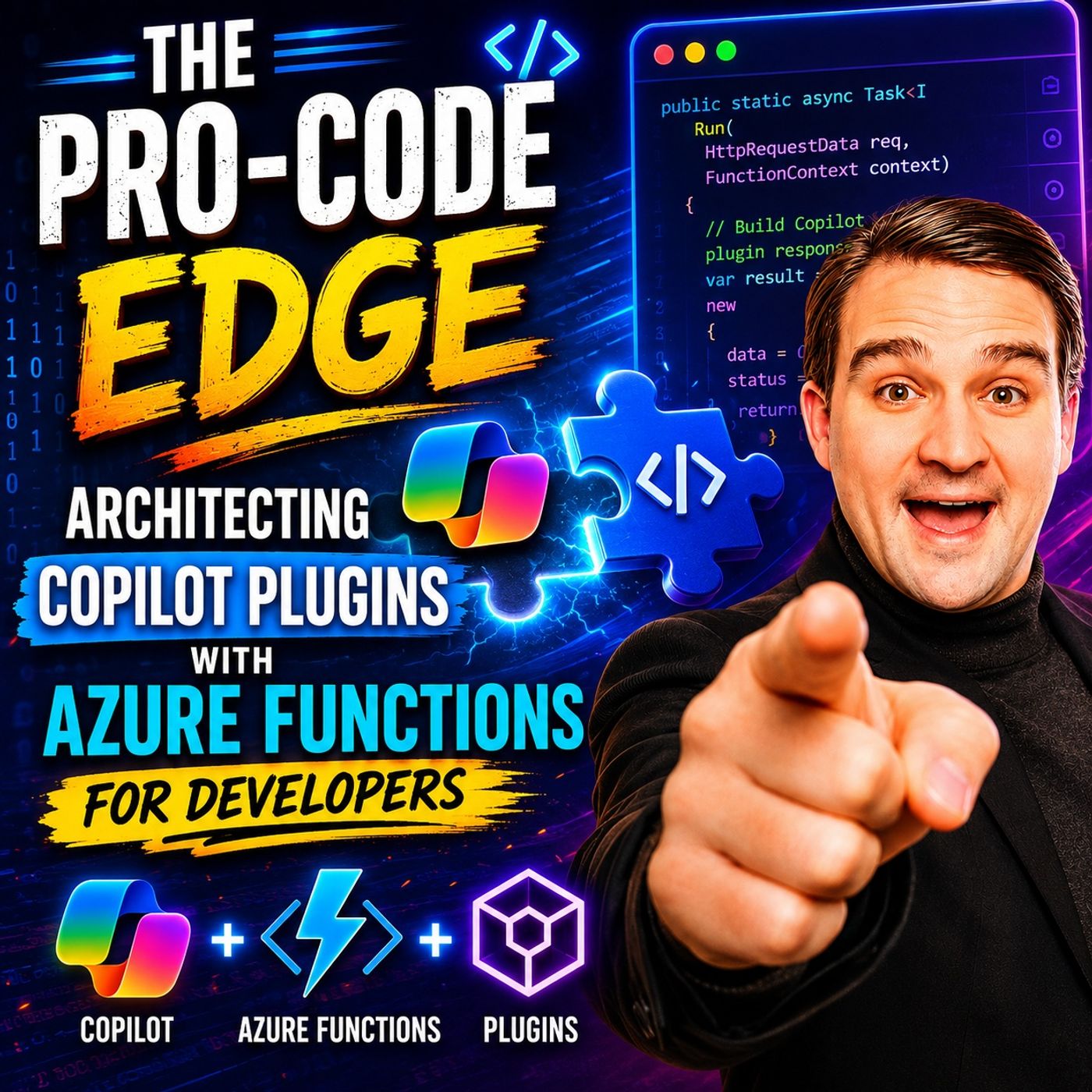
Build Microsoft Copilot Plugins with Azure Functions
This episode of The Pro Code Edge explores how developers can extend Microsoft 365 Copilot with custom plugins powered by Azure Functions. The discussion focuses on moving beyond out-of-the-box capabilities to create tailored enterprise solutions that connect Copilot with business systems, APIs, and proprietary data. Azure Functions are presented as an ideal platform for Copilot extensibility due to their serverless nature, scalability, and cost efficiency. By exposing business logic through secure APIs, developers can enable Copilot to retrieve information, execute processes, and interact with external applications using natural language. The hosts emphasize that successful Copilot plugins require strong architectural foundations. Key considerations include authentication with Microsoft Entra ID, authorization, security, monitoring, error handling, and governance. Enterprise-grade solutions must be designed with reliability, maintainability, and compliance in mind from the begi…
Guest: Mirko Peters

May 30, 2026
Secure Microsoft Copilot with Entra ID and Zero Trust
"The Model Is the Vulnerability" explains that the biggest security risk in Microsoft Copilot is not the AI itself, but the data, identities, and permissions the model can access. Copilot amplifies existing security weaknesses by making enterprise information easier to discover, summarize, and expose at scale. The article emphasizes that Copilot does not create new permissions. Instead, it operates within existing Microsoft 365 access controls. If organizations have excessive privileges, outdated permissions, poor governance, or weak identity management, AI will surface those problems faster and with greater impact. To reduce risk, the article recommends an identity-first security model built on Microsoft Entra ID and Zero Trust principles. Every user, device, application, and request should be continuously verified rather than automatically trusted. Key controls include Multi-Factor Authentication (MFA), Conditional Access, least-privilege access, Privileged Identity Management…
Guest: Mirko Peters
May 30, 2026
The Copilot Tax: Hidden Costs of Enterprise AI Strategy
In this episode of M365.fm, host Mirko Peters explores the hidden cost behind many enterprise AI initiatives: what he calls the “Copilot Tax.” While organizations often focus on licenses, adoption metrics, and productivity gains, the real challenge lies in the growing operational complexity, governance overhead, and architectural debt created when AI is deployed into environments that were never designed for probabilistic systems. The episode argues that Microsoft Copilot is not simply another software feature. It changes how decisions are made, how information is interpreted, and how accountability works inside the enterprise. Traditional Microsoft 365 environments are built around deterministic workflows where actions are traceable and predictable. AI systems operate differently, generating outputs based on context, inference, and probability, making governance, auditing, and risk management significantly more difficult. Listeners learn why many AI strategies unintentionally s…
Guest: Mirko Peters
May 29, 2026
Will Copilot Studio Replace Low-Code Developers?
Quick answer: will Copilot Studio replace low-code developers is covered in this M365 FM episode with a practical focus on how it works, where it fits, and the architecture, security, governance, or operational choices that matter in real Microsoft environments. You see Copilot Studio empowering you as a low-code developer, not Copilot Studio replacing your role. This platform acts as a catalyst in enterprise AI architecture, transforming your experience from UI-centric tools to AI-first orches...
Guest: Mirko Peters
May 29, 2026
Microsoft Cowork IQ Knowledge Graph Architecture
In this episode of the Microsoft 365-focused podcast from m365.fm, the discussion explores how organizations can implement intelligent knowledge graph architectures to support modern hybrid work environments. The episode examines how Microsoft technologies such as Microsoft Graph, Microsoft 365, AI-powered search, and Copilot-related capabilities help connect people, content, conversations, and business processes into a unified knowledge ecosystem. By building scalable knowledge graphs, organizations can improve information discovery, reduce data silos, and deliver more relevant insights to employees when they need them. Key topics include data integration strategies, metadata management, governance, security, identity resolution, and ensuring that AI systems respect existing permissions and compliance requirements. The conversation also highlights practical business scenarios such as expertise discovery, employee onboarding, project collaboration, knowledge sharing, and organiz…
Guest: Mirko Peters
![ERP Modernization with Alicia King [MVP]](https://d3wo5wojvuv7l.cloudfront.net/t_rss_itunes_square_1400/images.spreaker.com/original/6619499bcb36155eae23bfed15d983d7.jpg "ERP Modernization with Alicia King [MVP]")
May 29, 2026
ERP Modernization with Alicia King [MVP]
In this episode of the M365 FM Podcast, Mirko Peters speaks with Alicia King, Microsoft MVP and Pre-Sales Engineering Director at RSM US LLP, about how organizations can modernize ERP systems without creating unnecessary disruption. Alicia shares lessons from over 100 ERP transformation projects across more than 40 countries, emphasizing that ERP modernization is fundamentally a business transformation initiative rather than a technology project. Success depends on leadership alignment, clear business goals, strong change management, and user adoption—not just selecting the right software. The conversation explores the evolution of Microsoft Dynamics 365 Finance & Supply Chain and how Microsoft's expanding ecosystem has brought more capabilities into a unified platform. Alicia explains how this helps organizations streamline operations, improve visibility, and reduce complexity. The episode also highlights common reasons ERP projects struggle, including poor communication, un…
Guests: Mirko Peters , Alicia King
May 28, 2026
Grounding Microsoft Copilot for Trusted Enterprise AI
In this episode of M365.fm, Mirko Peters explores why successful enterprise AI adoption starts long before deploying Microsoft Copilot. The core message is that AI is only as effective as the foundation it is built on. Organizations often expect Copilot to solve productivity and knowledge management problems, but AI instead exposes existing weaknesses in data quality, governance, permissions, and business processes. The episode explains that many enterprises struggle with fragmented information, outdated content, unclear ownership, and inconsistent governance. When AI systems access this environment, they can amplify confusion rather than improve decision-making. Building trust in AI requires clean, well-structured, and properly governed data. A major focus is the concept of “grounding” AI. Copilot needs reliable context, accurate information, and clear security boundaries to generate trustworthy results. Without strong information architecture and governance, organizations risk…
Guest: Mirko Peters

May 28, 2026
Microsoft Graph API Discovery for Enterprise Semantic Search
Enterprise search is no longer limited by storage capacity or indexing speed. The real challenge is the growing gap between when information is created and when it becomes discoverable. This article explores how Microsoft Graph API Discovery is changing enterprise search by shifting from traditional crawl-and-index models to a relationship-driven, real-time discovery architecture. Traditional enterprise search relies on scheduled indexing, which often creates delays, stale results, and fragmented knowledge across systems. As organizations generate data across Teams, SharePoint, Outlook, OneDrive, and other Microsoft 365 services, keeping search indexes current becomes increasingly difficult. Microsoft Graph approaches the problem differently. Instead of focusing solely on where information is stored, it understands how content, people, conversations, meetings, permissions, and business processes are connected. This graph-based model enables search experiences that are contextual…
Guest: Mirko Peters

May 28, 2026
Building Multi-Tenant SaaS with Power Pages and Dataverse
Breaking the Scale Barrier explores what it really takes to build scalable multi-tenant SaaS solutions with Microsoft Power Pages and Dataverse. Instead of focusing on simple customer portals or low-code demos, the episode dives into the architectural decisions that become critical once a platform must support multiple customers, strict security boundaries, enterprise governance, and large-scale growth. The conversation explains why many Power Platform projects struggle when they move beyond a single environment and how proper tenant isolation, identity management, API strategy, and automation can determine whether a SaaS platform succeeds or fails. It also examines the balance between low-code simplicity and the need for pro-code extensibility when scaling enterprise applications. Topics include Dataverse design for tenant separation, authentication with Microsoft Entra External ID, governance and ALM practices, performance considerations, API limitations, and patterns for comb…
Guest: Mirko Peters

May 27, 2026
Modern Microsoft 365 Automation Beyond PowerShell Scripts
For years, PowerShell scripts were the foundation of Microsoft 365 automation. IT admins built massive script libraries to onboard users, assign licenses, provision devices, configure Exchange, manage permissions, and automate repetitive operational work across cloud and hybrid environments. But enterprise IT is changing fast. In this episode, we explore why traditional PowerShell-driven automation is becoming increasingly obsolete in modern Microsoft 365 environments. Static scripts struggle to keep up with rapidly changing APIs, evolving security models, Zero Trust architectures, AI-driven workflows, and the growing complexity of cloud-native services. We break down how Microsoft Graph, event-driven architectures, low-code automation, Copilot, AI agents, and modern orchestration platforms are reshaping enterprise automation. Instead of maintaining fragile scripts that constantly require updates, organizations are moving toward adaptive, API-first, and AI-assisted automation…
Guest: Mirko Peters
May 27, 2026
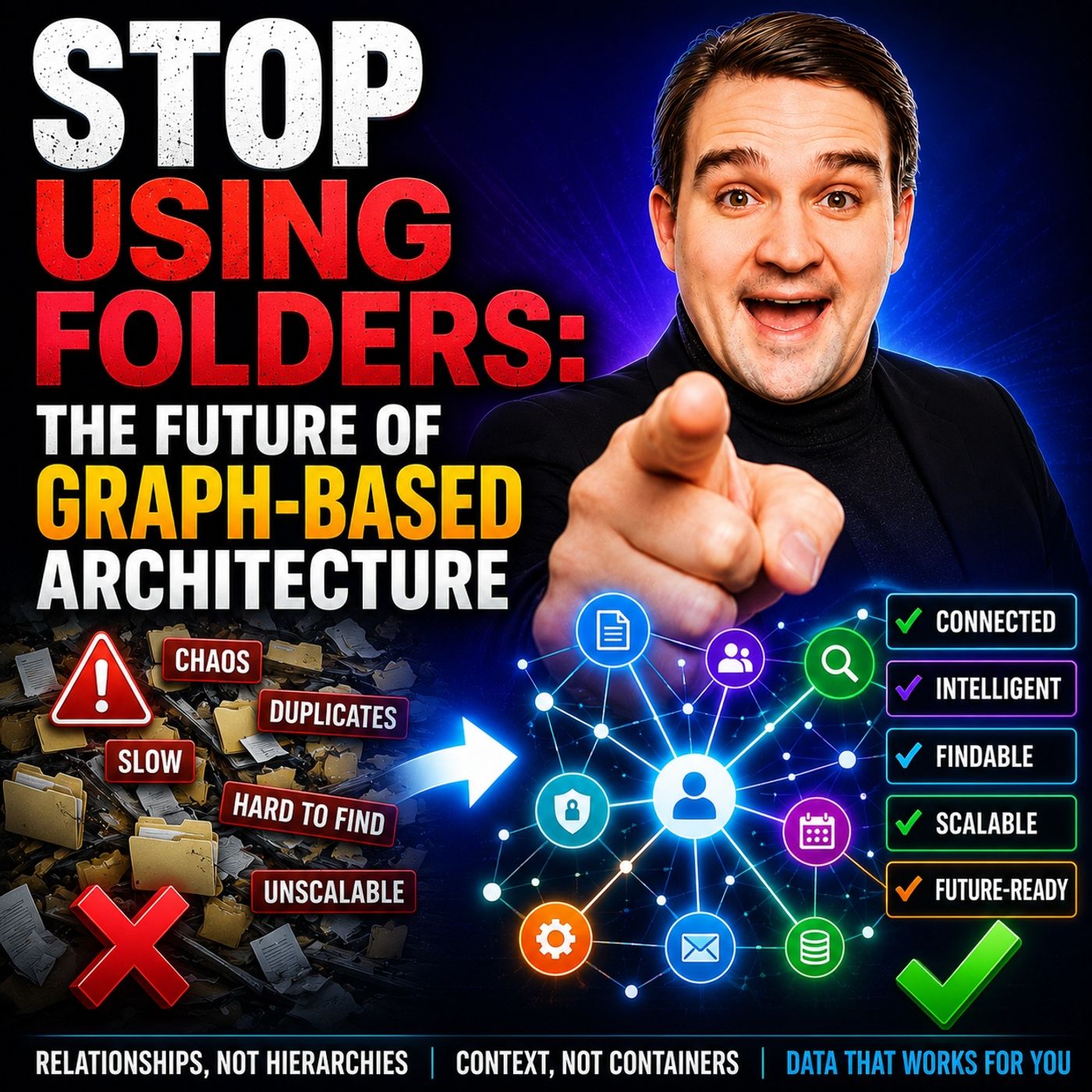
Microsoft Graph Architecture Beyond Folders and Hierarchies
For decades, organizations structured information using folders, hierarchies, and deeply nested file systems. But in the modern Microsoft 365 world, that model is rapidly becoming outdated. In this episode of the m365.fm podcast, Mirko Peters explores why graph-based architecture is replacing traditional folder structures and how Microsoft Graph is fundamentally changing the way organizations manage, discover, and interact with information. The episode explains how modern work no longer revolves around static locations for files, but around relationships, context, permissions, people, meetings, conversations, and connected data. Instead of asking “Where is the file stored?”, graph-based systems focus on “How is this information connected?” Microsoft Graph enables this by linking content across Teams, SharePoint, Outlook, OneDrive, Copilot, and the wider Microsoft 365 ecosystem. The discussion highlights why traditional folders create major challenges for collaboration, governanc…
Guest: Mirko Peters
![The Future of Work with Fabio Bonolo [MVP]](https://d3wo5wojvuv7l.cloudfront.net/t_rss_itunes_square_1400/images.spreaker.com/original/2fb985c310418b599aab68219319df49.jpg "The Future of Work with Fabio Bonolo [MVP]")
May 27, 2026
The Future of Work with Fabio Bonolo [MVP]
In this episode of the M365 FM Podcast, host Mirko Peters sits down with Microsoft MVP Fabio Bonolo to explore how AI, Microsoft Copilot, and modern workplace technologies are transforming the future of work. Fabio shares his journey from sales executive to recognized thought leader in the Microsoft ecosystem and explains why the AI revolution is about far more than technology alone. The conversation dives into the rapid evolution of Microsoft Copilot, autonomous AI agents, hybrid work, and the changing role of productivity in modern organizations. Fabio discusses why successful AI adoption requires strong leadership, effective change management, employee education, and a culture focused on empowerment rather than fear of automation. Listeners will gain practical insights into Copilot adoption strategies, data governance, AI readiness, workplace transformation, and how organizations can build future-ready environments where humans and AI collaborate effectively. The episode also…
Guests: Mirko Peters , Fabio Bonolo
May 26, 2026
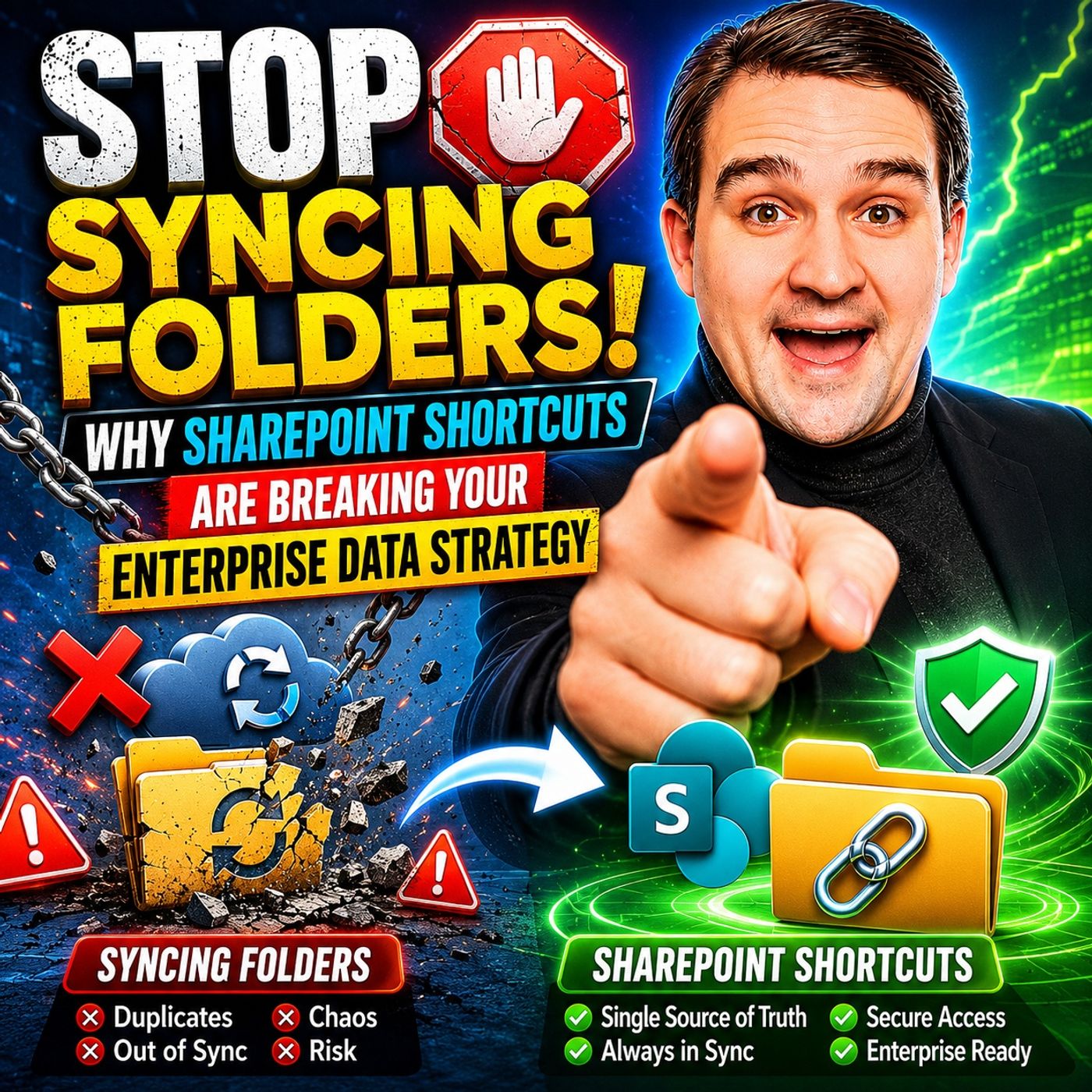
SharePoint Sync vs Add Shortcut to OneDrive
The article explains why traditional SharePoint and OneDrive folder syncing is becoming a major problem for modern enterprises. Syncing entire SharePoint libraries to local devices creates unnecessary storage usage, performance slowdowns, sync conflicts, and governance risks. Large synced libraries increase metadata overhead, network traffic, and the likelihood of duplicate or outdated files appearing across devices. It also weakens compliance because files copied locally can bypass SharePoint retention policies, version history, and sensitivity labels. Instead of full sync, the article recommends using “Add shortcut to OneDrive” as a more cloud-native approach. Shortcuts act as lightweight links to SharePoint folders without downloading the entire library. This improves device performance, reduces sync errors, lowers storage consumption, and keeps users working directly from the governed SharePoint source of truth. The article highlights several business benefits of shortcuts, …
Guest: Mirko Peters
![From Microsoft Lync to Teams with Carsten Lund Meilbak [MVP]](https://d3wo5wojvuv7l.cloudfront.net/t_rss_itunes_square_1400/images.spreaker.com/original/43f2590365f3110707cfbd0fb3be6214.jpg "From Microsoft Lync to Teams with Carsten Lund Meilbak [MVP]")
May 26, 2026
From Microsoft Lync to Teams with Carsten Lund Meilbak [MVP]
In this episode of the M365.fm podcast, Mirko Peters speaks with Microsoft MVP Carsten Lund Meilbak about the evolution of enterprise communication and collaboration — from the early days of Microsoft Lync and Skype for Business to the modern Microsoft Teams ecosystem. The conversation explores how collaboration platforms have changed from simple messaging and voice solutions into fully integrated hubs for meetings, telephony, teamwork, apps, and AI-powered productivity. Carsten shares his personal journey through the Microsoft collaboration space and explains how organizations adapted to major platform transitions over the years. The discussion highlights the technical and cultural shifts that accompanied the move from traditional on-premises communication systems toward cloud-first collaboration with Microsoft Teams. A major focus of the episode is how Teams transformed workplace communication by combining chat, meetings, calling, file collaboration, and integrations into a si…
![Copilot Cowork with Vesa "Vesku" Nopanen [MVP]](https://d3wo5wojvuv7l.cloudfront.net/t_rss_itunes_square_1400/images.spreaker.com/original/9bca4644380ef27704755bfee21dcbc5.jpg "Copilot Cowork with Vesa \"Vesku\" Nopanen [MVP]")
May 25, 2026
Copilot Cowork with Vesa "Vesku" Nopanen [MVP]
In this episode of the M365.fm podcast, host Mirko Peters sits down with Vesa Nopanen to explore how Microsoft 365 Copilot is evolving from a simple AI assistant into a true collaborative coworker inside modern organizations. The conversation focuses on the future of AI-driven work, the rise of agentic collaboration, and how businesses can prepare for a world where humans and AI systems work side by side. Vesa shares his perspective on the transformation of workplace productivity through Microsoft Copilot, Teams, Loop, Azure AI, and emerging AI agents. The discussion highlights how organizations are moving beyond isolated AI prompts toward integrated AI ecosystems that can automate processes, assist decision-making, and participate in daily workflows. The episode also examines the concept of “Copilot Cowork,” where AI acts less like a tool and more like an intelligent team member capable of context-aware collaboration. The podcast dives into practical topics including governance…
Guests: Mirko Peters , Vesa "Vesku" Nopanen
May 25, 2026
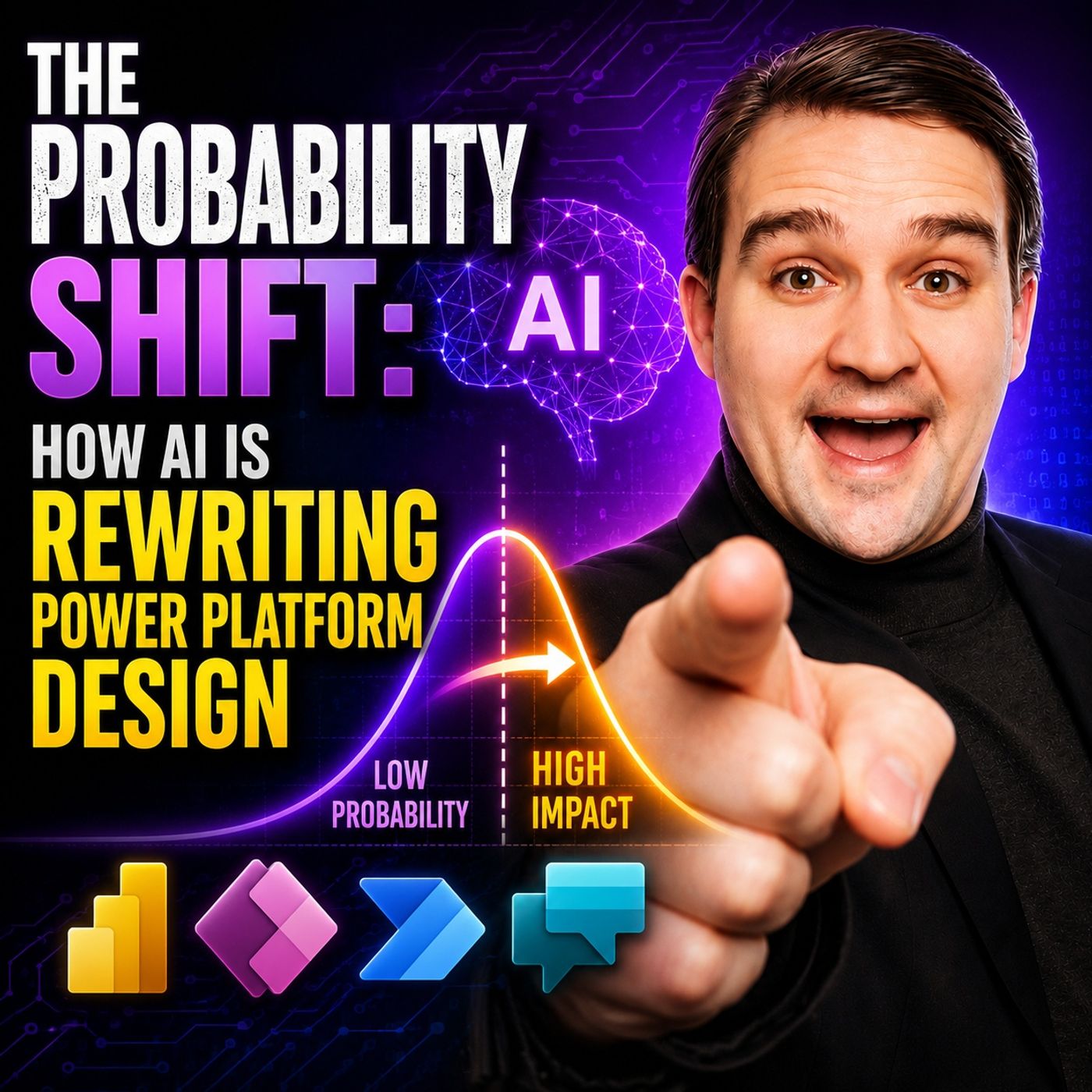
How Probabilistic AI Changes Power Platform Design
Traditional Power Platform automation was built on deterministic logic: structured data, predictable inputs, and fixed rule-based workflows. This article explains how AI is fundamentally changing that model by introducing probabilistic systems that operate on likelihood instead of certainty. In modern enterprises where data is incomplete, ambiguous, or constantly changing, rigid “if-this-then-that” logic is no longer sufficient. The podcast explores how AI-driven workflows now rely on confidence scores and contextual reasoning rather than binary outcomes. Instead of returning simple true-or-false answers, AI systems evaluate how likely something is to be correct and make decisions based on probability. This shift changes how Power Platform solutions must be designed, governed, and trusted. A key theme is that modern automation architectures should embrace uncertainty instead of trying to eliminate it. By combining AI with governance models such as human review and escalation pat…
Guest: Mirko Peters

May 25, 2026
Microsoft 365 Backup with Isolated Vault Architecture
Microsoft 365’s built-in redundancy keeps services running, but it does not guarantee business recovery after ransomware, insider threats, or accidental deletion. This article explains why many organizations wrongly assume synchronization equals protection, when in reality corrupted or deleted data can spread instantly across the environment. The core argument is that traditional backup strategies are no longer enough in modern cloud environments. Businesses need an isolated vault architecture — a logically separated and immutable recovery layer that cannot be compromised by the same identities, permissions, or attack paths affecting production systems. The article highlights how attackers increasingly target backup systems first, making “connected backups” a major weakness. A secure recovery strategy therefore requires isolation, immutability, strict access separation, and clean recovery points that survive tenant-wide compromise. It also emphasizes that resilience is not ju…
Guest: Mirko Peters
May 25, 2026
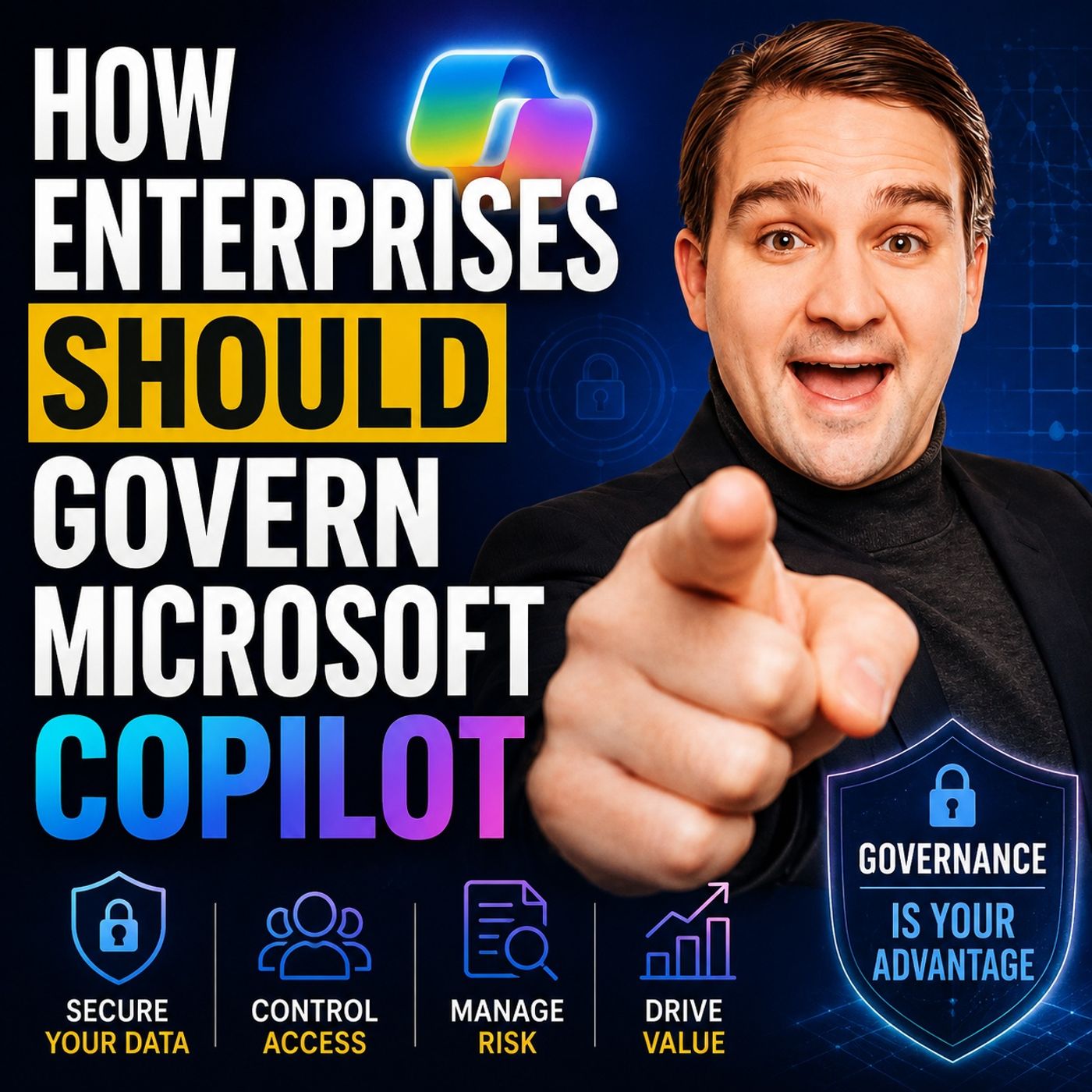
How to Govern Microsoft Copilot in the Enterprise
Enterprise governance for Microsoft Copilot is no longer optional. As AI becomes deeply integrated into Microsoft 365, organizations must rethink how they manage security, compliance, permissions, and operational control. Traditional governance models were designed for static collaboration environments, but Copilot changes the landscape by turning existing data into instantly accessible intelligence. The core message across M365.fm discussions is clear: Copilot does not create governance problems — it exposes the ones already hidden inside the organization. A major challenge for enterprises is oversharing and uncontrolled access to files, Teams, SharePoint sites, and sensitive information. Copilot can surface content users already have permission to access, which means weak governance structures become visible immediately. Organizations therefore need strong identity management, role-based access controls, sensitivity labels, lifecycle management, and continuous auditing before sca…
Guest: Mirko Peters
![OneNote vs Loop vs Copilot with Karinne Diamond Bessette [MVP]](https://d3wo5wojvuv7l.cloudfront.net/t_rss_itunes_square_1400/images.spreaker.com/original/c89f41f7808b87318964b339a53f6ccc.jpg "OneNote vs Loop vs Copilot with Karinne Diamond Bessette [MVP]")
May 24, 2026
OneNote vs Loop vs Copilot with Karinne Diamond Bessette [MVP]
Quick answer: OneNote vs Microsoft Loop vs Copilot for notes is covered in this M365 FM episode with a practical focus on how it works, where it fits, and the architecture, security, governance, or operational choices that matter in real Microsoft environments. In this episode of the m365.fm podcast, Mirko Peters sits down with Microsoft MVP, educator, technical storyteller, and community leader Karinne Diamond Bessette to explore one of the biggest productivity challenges in the modern workpla...
Guests: Mirko Peters , Karinne Diamond Bessette