Data Governance Power Platform Microsoft Security Cloud Architecture AI in Microsoft 365 Dynamics 365 Insights Developer Practices Microsoft 365 Podcast – Teams, SharePoint, Office Apps & Productivity Microsoft Strategy & Partner Marketing Guest Episodes Simply Explained Workshops on Microsoft Tech for free
May 12, 2026
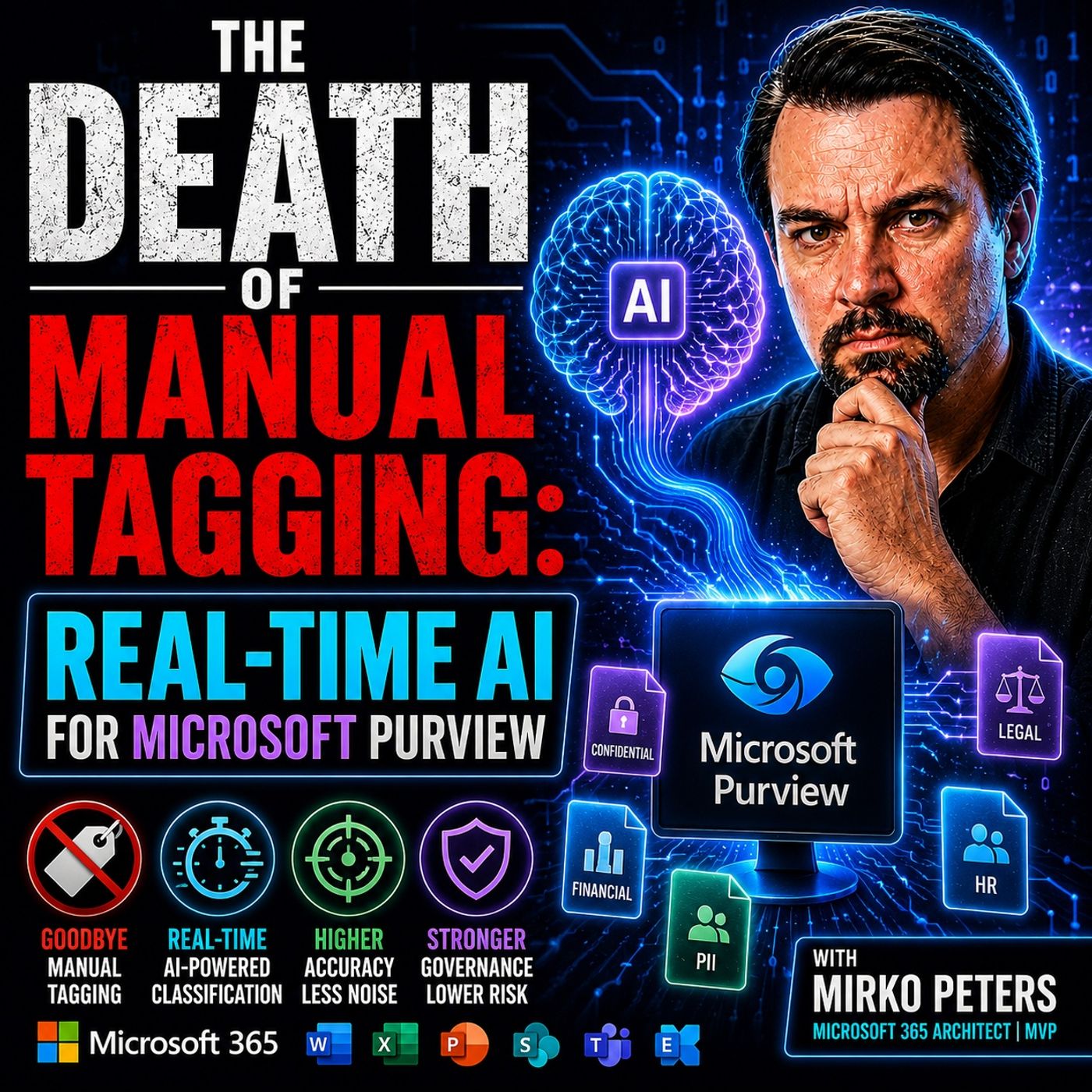
Real-Time AI Sensitivity Labeling in Microsoft Purview
In this episode of M365.fm , the discussion centers on why traditional manual sensitivity labeling in Microsoft Purview is rapidly becoming obsolete in modern enterprise environments. The core argument is that organizations now generate far too much data, too quickly, for employees to reliably classify information by hand. Manual tagging depends on users consistently stopping their work to apply the correct sensitivity label — something that rarely happens in practice. According to the episode, many organizations see labeling adoption rates around 30%, leaving large amounts of sensitive intellectual property effectively invisible to governance, compliance, and Data Loss Prevention systems. The episode explains that older governance models were designed for a slower workplace with fewer collaboration tools and lower data velocity. Today’s environments — driven by Microsoft 365, Teams, SharePoint, OneDrive, Slack, and Copilot — overwhelm users with constant communication and AI-g…
Guest: Mirko Peters
May 12, 2026
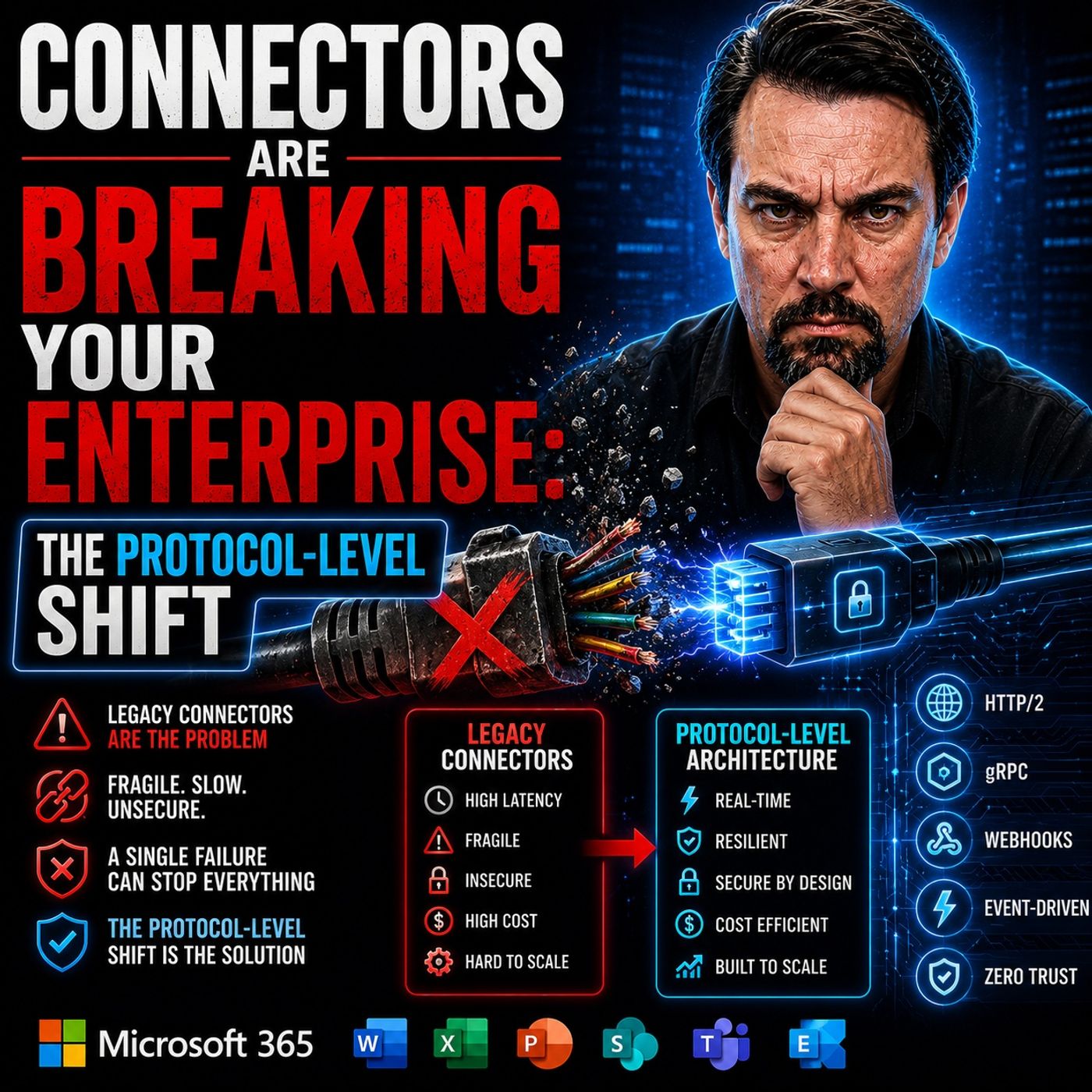
Custom Connectors vs Model Context Protocol for Enterprise AI
Your enterprise automation strategy may be built on the wrong foundation. In this episode of the M365FM Podcast, we expose the hidden architectural failure behind modern enterprise integration: the managed connector. For years, organizations have embraced low-code connectors as the “easy button” for automation, believing these pre-built wrappers accelerate digital transformation and reduce complexity. But underneath the convenience lies a fragile transport model filled with hidden latency, throt...

May 12, 2026
Azure SQL Security Beyond Firewalls and IP Allowlists
In this episode of the M365.FM Podcast, the discussion focuses on a critical shift happening in cloud security: the collapse of the traditional network perimeter. The episode explains why Azure SQL firewall rules, static IP allowlists, VPN-based trust models, and long-standing “inside the network equals safe” assumptions are no longer effective in modern enterprise environments. Instead of attacking infrastructure directly, modern attackers increasingly bypass perimeter controls through compromised identities, stolen credentials, over-privileged service principals, token abuse, and lateral movement inside trusted environments. The episode argues that many organizations still operate Azure SQL deployments using outdated security patterns designed for traditional datacenters rather than cloud-native systems. While companies continue relying on firewall rules, trusted VNets, and static connection methods, modern workloads constantly move across APIs, pipelines, automation platforms, A…
Guest: Mirko Peters
![Leadership, AI, and Imposter Syndrome with Daniel "Dan" Barber [MVP]](https://d3wo5wojvuv7l.cloudfront.net/t_rss_itunes_square_1400/images.spreaker.com/original/c1f037eef26b7d687b59b6f8c812ab1d.jpg "Leadership, AI, and Imposter Syndrome with Daniel \"Dan\" Barber [MVP]")
May 11, 2026
Leadership, AI, and Imposter Syndrome with Daniel "Dan" Barber [MVP]
In this deeply personal and thought-provoking episode of the m365.fm podcast, Mirko Peters sits down with Daniel “Dan” Barber, founder of Strathos and Microsoft MVP, for a conversation that moves far beyond technology. Together, they explore the human side of leadership, the emotional impact of AI transformation, and the often-hidden reality of imposter syndrome in the tech industry. Dan shares his journey through consulting, entrepreneurship, and community leadership, explaining how confidence, vulnerability, and authenticity shape long-term success far more than titles or certifications. The discussion highlights how many professionals in Microsoft 365, Azure, and AI constantly feel pressure to “keep up” in a rapidly evolving industry — especially as AI accelerates change faster than ever before. The episode also examines how AI is changing not only technical roles, but personal identity inside the workplace. Mirko and Dan discuss the fear of becoming irrelevant, the anxiety c…
Guests: Mirko Peters , Daniel Barber
May 11, 2026
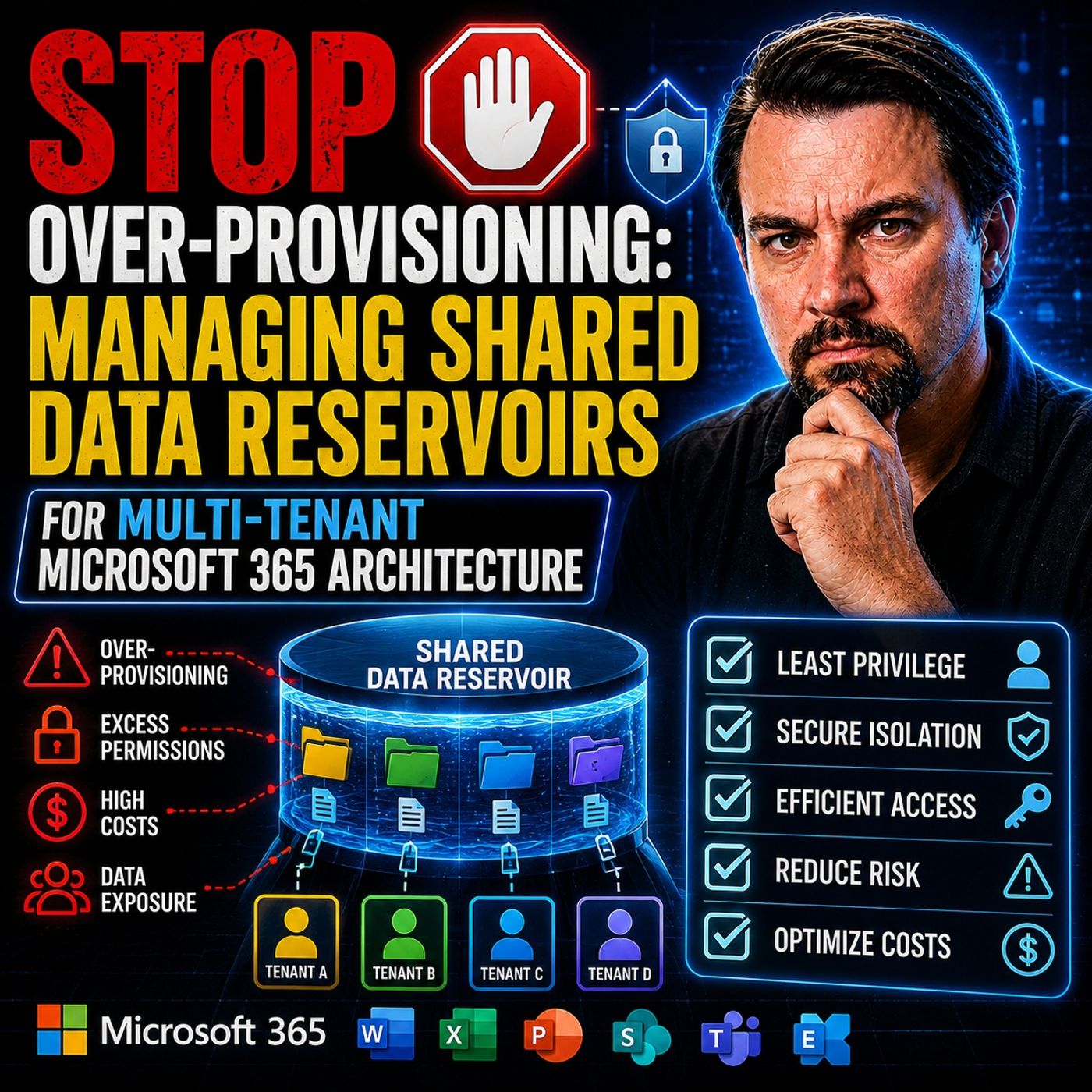
Shared Data Reservoirs for Multi-Tenant Microsoft 365
In this episode of the M365.fm podcast, Mirko Peters explores why many Microsoft 365 environments are wasting enormous amounts of money through over-provisioned storage, oversized safety buffers, and rigid quota management strategies. Traditional “just in case” capacity planning often leaves organizations paying for storage, performance, and licensing resources that remain unused while operational complexity continues to grow. The episode explains how static quota models across SharePoint Online, OneDrive, Teams, Power Platform, Azure storage, and multi-tenant workloads create fragmented infrastructure, dark data silos, and long-term cost inefficiencies. Mirko challenges the outdated “buffer mentality,” where organizations continuously add extra capacity to avoid outages, resulting in idle resources and inflated cloud spending. A major focus of the discussion is the shift toward elastic shared data reservoirs. Instead of isolated storage silos and fixed allocations, organization…
Guest: Mirko Peters
May 11, 2026
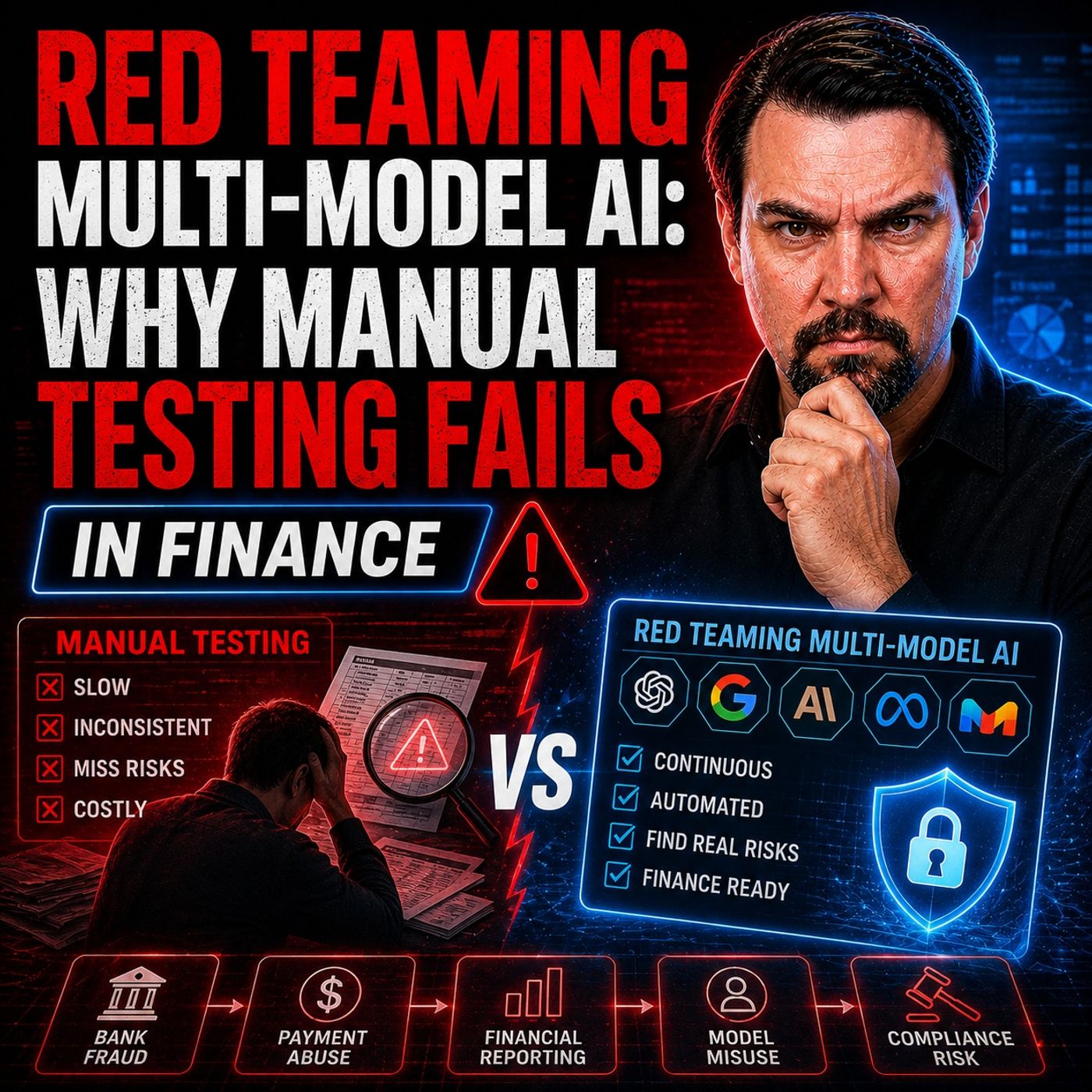
Automated Red Teaming for Multi-Model AI in Finance
In this episode of the m365.fm podcast, Mirko Peters explores why traditional AI security testing is no longer enough in modern enterprise environments. The discussion focuses on “red teaming” for multi-model AI systems, especially in highly regulated industries like finance, where multiple AI models, copilots, APIs, and automation layers interact with each other. The episode explains how manual testing methods fail because AI systems behave differently depending on context, chained prompts, integrations, memory, and user behavior. A model that appears secure in isolation can become vulnerable once connected to other systems or autonomous workflows. Mirko highlights that modern attacks are no longer simple prompt injections — they are multi-step, adaptive, and often invisible until damage has already occurred. A key theme is that organizations must stop treating AI as a chatbot and instead view it as an operational decision system with real business impact. The episode breaks do…
Guest: Mirko Peters
![D365FO Integration Architecture with Anitha Eswaran [MVP-MCT]](https://d3wo5wojvuv7l.cloudfront.net/t_rss_itunes_square_1400/images.spreaker.com/original/79f1f9d5047eab2e63aaf331f8bd794c.jpg "D365FO Integration Architecture with Anitha Eswaran [MVP-MCT]")
May 10, 2026
D365FO Integration Architecture with Anitha Eswaran [MVP-MCT]
In this episode of the M365.fm podcast, Mirko Peters speaks with Microsoft MVP and MCT Anitha Eswaran about the realities of integrating Dynamics 365 Finance & Operations (D365FO) into modern enterprise environments. The discussion focuses on why integrations often become fragile, difficult to scale, and hard to govern when organizations rely on outdated architectural thinking or tightly coupled systems. The episode explores how Azure-native integration patterns can improve reliability, scalability, and long-term maintainability. Anitha explains the importance of event-driven architecture, asynchronous communication, APIs, and message-based systems when connecting D365FO with Microsoft 365, Power Platform, external SaaS platforms, and legacy enterprise applications. Rather than building direct point-to-point integrations, the conversation emphasizes designing loosely coupled systems that can evolve without constantly breaking dependencies. Another key topic is governance and ope…
Guests: Mirko Peters , Anitha Eswaran
May 10, 2026
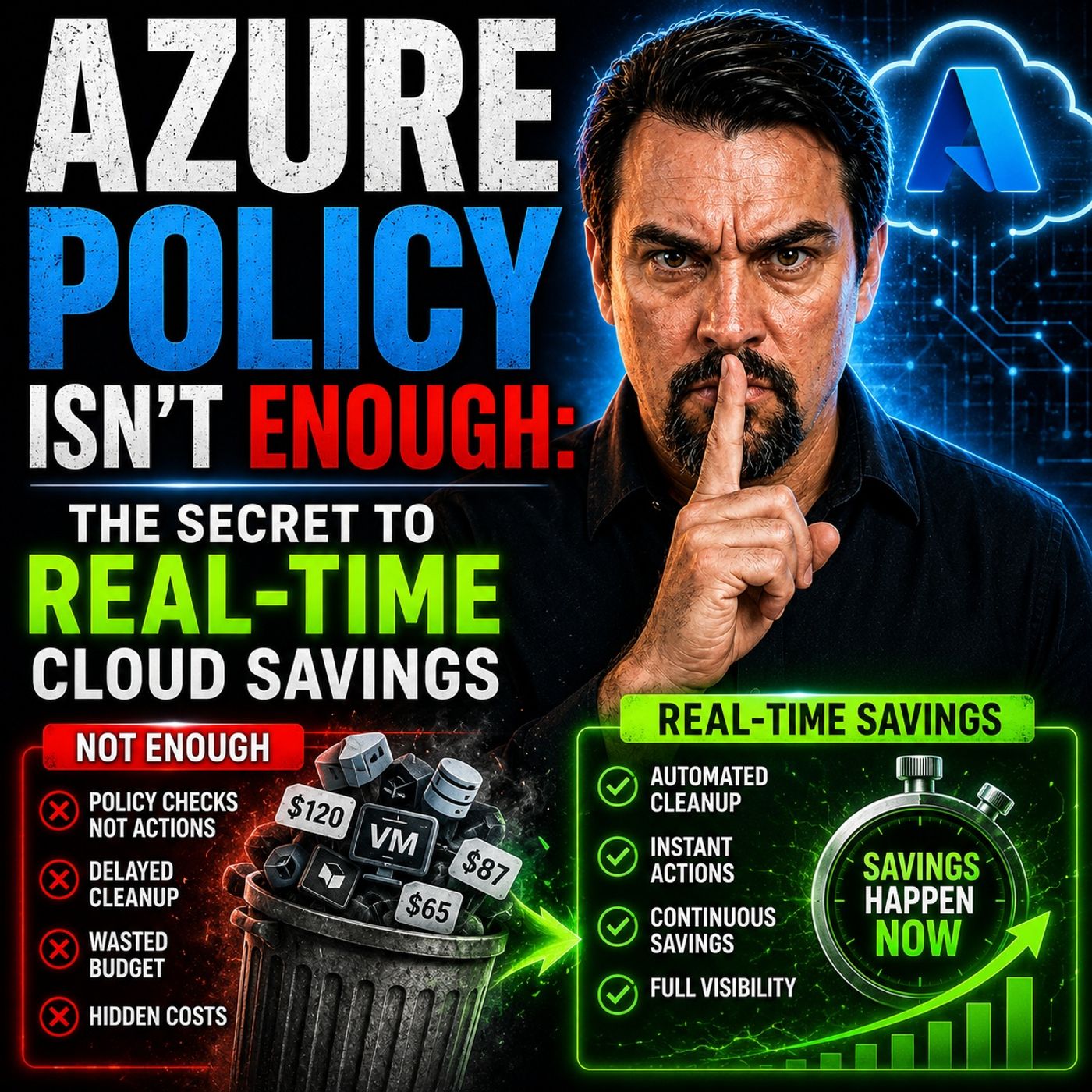
Real-Time Azure Cost Control with Azure Policy
In this episode of the M365 FM Podcast, Mirko Peters explains why traditional FinOps and Azure cost management approaches fail in modern cloud environments. Most organizations still rely on dashboards, alerts, and monthly reviews, but by the time overspending appears in reports, the expensive resources already exist and the cleanup process has already become costly and political. The episode argues that Azure Policy should not be treated as a passive compliance or audit tool. Instead, it should act as a real-time enforcement engine directly in the Azure Resource Manager deployment path. This allows organizations to block waste before resources are created, rather than documenting problems afterward. Mirko breaks down how Azure Policy actually works, including deny, modify, append, and deployIfNotExists behaviors, and explains why many companies misuse policy by leaving it permanently in audit mode. He highlights common governance failures such as unmanaged exemptions, weak landi…
Guest: Mirko Peters
![Microsoft Copilot Security Readiness with Åsne Holtklimpen [MVP-MCT]](https://d3wo5wojvuv7l.cloudfront.net/t_rss_itunes_square_1400/images.spreaker.com/original/291d4291c3a36e0228451ae613ca3a0a.jpg "Microsoft Copilot Security Readiness with Åsne Holtklimpen [MVP-MCT]")
May 8, 2026
Microsoft Copilot Security Readiness with Åsne Holtklimpen [MVP-MCT]
In this episode of the M365 FM Podcast, Åsne Holtklimpen joins Mirko Peters to discuss the real challenges behind Microsoft Copilot adoption and AI readiness in Microsoft 365 environments. The core message is clear: Copilot does not create security problems — it exposes the governance and security gaps that already exist inside organizations. The conversation focuses on common issues such as overshared SharePoint sites, outdated permissions, forgotten Teams channels, uncontrolled data sprawl, and missing governance strategies. Åsne explains how many organizations rushed into cloud collaboration during the pandemic without proper structure, and AI tools now make these weaknesses far more visible. A major part of the episode highlights the importance of Microsoft Purview, sensitivity labels, Data Loss Prevention (DLP), Conditional Access, and Zero Trust principles. These tools help organizations classify sensitive information, secure access, and prevent Copilot from exposing confide…
Guests: Mirko Peters , Åsne Holtklimpen
![Production AI Agents with Microsoft Foundry and Edgar McOchieng [MVP]](https://d3wo5wojvuv7l.cloudfront.net/t_rss_itunes_square_1400/images.spreaker.com/original/3fdb0976e372c5f8e2440855906c6193.jpg "Production AI Agents with Microsoft Foundry and Edgar McOchieng [MVP]")
May 7, 2026
Production AI Agents with Microsoft Foundry and Edgar McOchieng [MVP]
In this episode of the M365.fm podcast, we dive deep into building and deploying production-grade AI agents with Microsoft Foundry together with Edgar McOchieng (MVP). The conversation explores how organizations can move beyond AI demos and prototypes into scalable, secure, and enterprise-ready agentic solutions. Edgar shares practical insights into Microsoft Foundry, Azure AI services, orchestration patterns, governance, observability, and the challenges teams face when deploying AI agents in real-world environments. We discuss how developers can combine tools like Azure OpenAI, Semantic Kernel, MCP integrations, and multi-agent architectures to create intelligent systems that are reliable, maintainable, and aligned with enterprise requirements. The episode also covers key topics such as memory management, tool integration, security boundaries, human-in-the-loop workflows, responsible AI practices, and monitoring strategies for production workloads. Edgar explains why architect…
Guests: Mirko Peters , Edgar McOchieng

May 7, 2026
Why Microservice Architecture Slows Software Delivery
In this episode of the M365.fm podcast, Mirko Peters explores why many microservice architectures gradually become slower, more fragile, and harder to manage despite originally being designed for speed and agility. What begins as a clean and scalable architecture often turns into a complex web of dependencies where even small feature changes require coordination across multiple services, teams, APIs, and deployment pipelines. The episode explains how distributed systems introduce hidden operational costs that are often underestimated during the early stages of adoption. Network latency, cascading failures, service dependencies, duplicated logic, and excessive inter-service communication can silently reduce development velocity while increasing operational complexity. Instead of accelerating innovation, poorly governed microservice environments can create organizational bottlenecks and technical debt that slow teams down over time. Mirko discusses why architectural decisions shou…
Guest: Mirko Peters
May 7, 2026
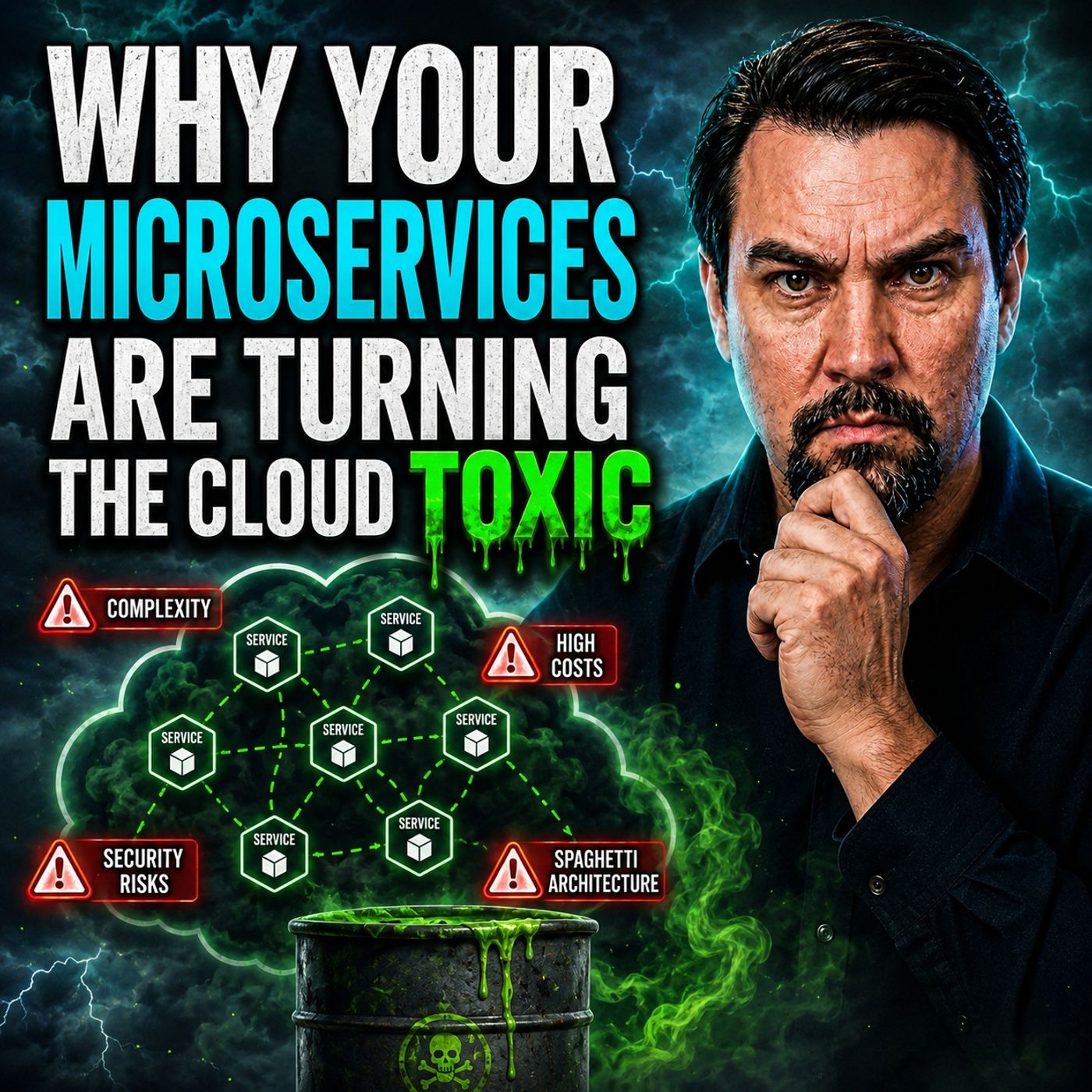
Microservice Dependency Poisoning and Cascading Cloud Latency
In this episode of the M365 FM Podcast, we explore why modern microservice architectures can quietly become “toxic” under pressure — not because services crash, but because they slow down. A single delayed dependency can silently trigger cascading latency across APIs, queues, databases, and cloud workloads while dashboards still appear healthy. The result is a platform that looks operational on the surface while its real capacity collapses underneath. The episode breaks down how slow dependencies create hidden resource exhaustion inside distributed .NET environments. Long-running requests hold threads, sockets, and connection pools hostage while retries amplify the damage even further. Instead of recovering the platform, poorly designed retry logic often creates synchronized traffic storms that make outages worse. We also dive into why scaling alone cannot solve dependency poisoning. Adding more containers or replicas often just expands the waiting room instead of removing the b…
Guest: Mirko Peters
![Figma to Power Apps Development with Lukas Pavelka [MVP]](https://d3wo5wojvuv7l.cloudfront.net/t_rss_itunes_square_1400/images.spreaker.com/original/e24622ab143b9f8605b6e153ba68a6bc.jpg "Figma to Power Apps Development with Lukas Pavelka [MVP]")
May 6, 2026
Figma to Power Apps Development with Lukas Pavelka [MVP]
In this episode of the M365 FM Podcast, Mirko Peters talks with Lukas Pavelka about the future of enterprise app development, AI-assisted coding, and the growing connection between Figma and Microsoft Power Platform. Lukas shares his journey from Java development into building tools like PowerApps for Figma and Power BI for Figma, designed to bridge the gap between modern UI design and low-code development. The conversation explores how Figma has evolved beyond a design tool into a broader ecosystem for prototyping, presentations, reusable design systems, and enterprise application delivery. Lukas explains how his plugins help developers speed up PowerApps creation, improve UI consistency, and even support multi-language app generation across more than 100 languages. A major focus of the episode is AI-driven development and “vibe coding.” Lukas discusses practical experiences with GitHub Copilot, Claude, AI agents, and prompt-based workflows. While AI dramatically accelerates de…
Guests: Mirko Peters , Lukas Pavelka
May 6, 2026
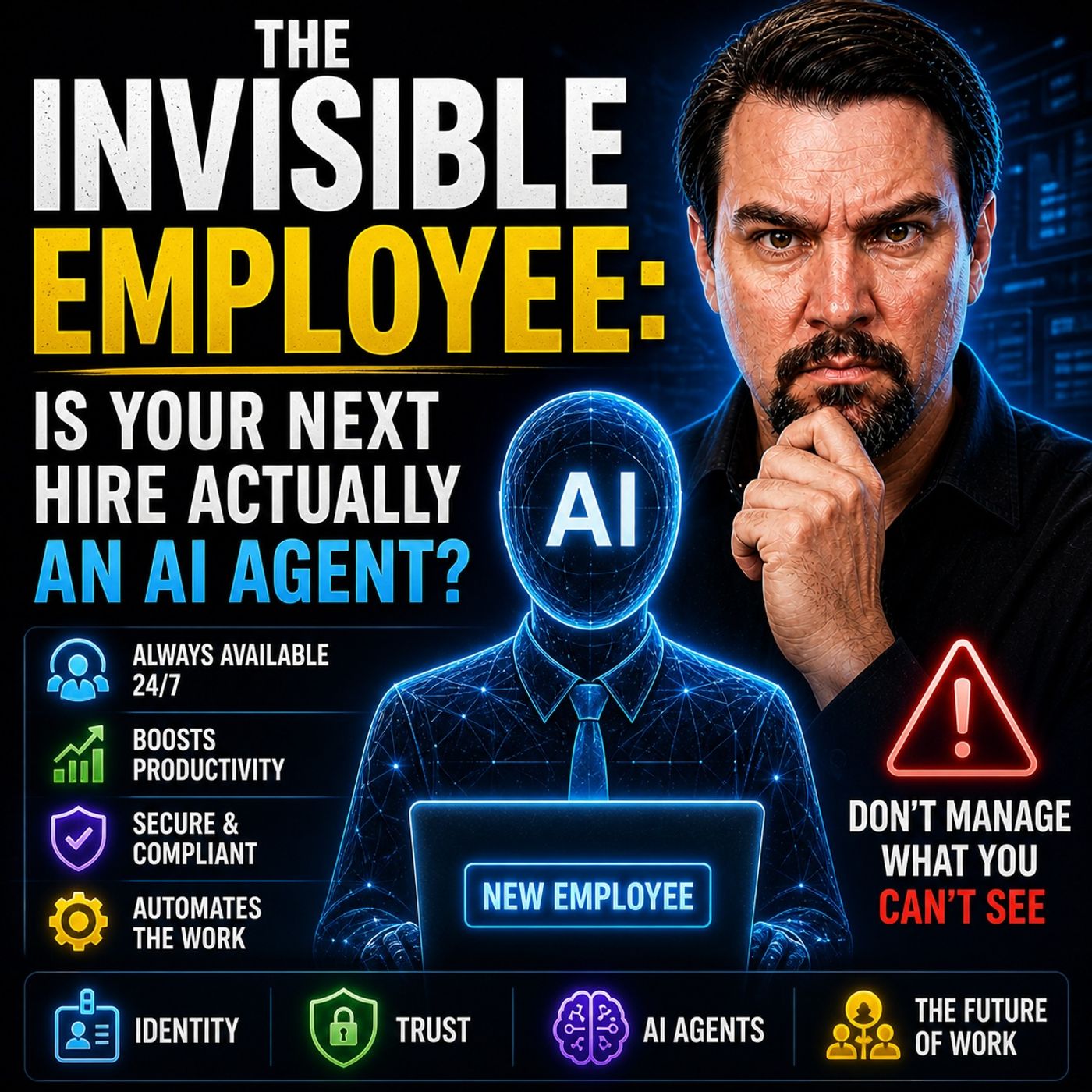
The Invisible Employee: AI Agents in Microsoft 365 Workflows
In this episode of the M365 FM Podcast, Mirko Peters explores the concept of “The Invisible Employee” and why most organizations misunderstand how work actually happens inside Microsoft 365. Companies often believe their processes, governance models, and infrastructure diagrams reflect reality, but the truth is very different. Real work happens through informal behaviors, workarounds, hidden collaboration patterns, and decisions employees make every day to bypass friction in systems that no longer match operational needs. The episode explains that Microsoft 365 is not just a collection of tools — it acts as a behavioral operating system that reveals how people truly collaborate, share information, and move data across the organization. Employees continuously create unofficial workflows, overshare files, duplicate information, and adapt processes in ways leadership rarely sees. These invisible behaviors become the real infrastructure of the business. A major focus of the discussi…
Guest: Mirko Peters

May 6, 2026
Microsoft Entra External ID for Digital Trust and Growth
Identity used to revolve around corporate networks, managed devices, and centralized directories. But that model no longer works in a world where customers, partners, contractors, AI agents, and automated workflows constantly move across systems and organizations. In this episode, Mirko Peters explains why modern identity is no longer just a security problem — it has become a business growth, governance, and digital trust challenge. The conversation explores the “death of the perimeter” and how traditional identity systems create friction through duplicate accounts, passwords, onboarding delays, and isolated identity silos. That friction impacts customer conversion, support costs, partner onboarding speed, and overall business agility. Mirko breaks down the shift from account-centric identity to claim-centric identity, where organizations focus less on storing accounts and more on verifying trusted claims when needed. The episode explains how passkeys, verifiable credentials, an…
Guest: Mirko Peters
![PowerShell Automation for Azure and Microsoft 365 with Matthew Dowst [MVP]](https://d3wo5wojvuv7l.cloudfront.net/t_rss_itunes_square_1400/images.spreaker.com/original/3d2181a51a724450b43c98a50760ce1a.jpg "PowerShell Automation for Azure and Microsoft 365 with Matthew Dowst [MVP]")
May 5, 2026
PowerShell Automation for Azure and Microsoft 365 with Matthew Dowst [MVP]
In this episode of the m365.fm podcast, the discussion focuses on using PowerShell to automate tasks across Azure and Microsoft 365 with guest Matthew Dowst MVP. Matthew explains how automation became essential as cloud environments grew more complex and repetitive administrative work increased. The conversation covers how PowerShell can be used to automate common Microsoft 365 and Azure management tasks such as user provisioning, license assignment, reporting, governance, Exchange Online administration, and Entra ID management. Matthew emphasizes that automation should be approached like software development, with proper testing, version control, documentation, and reusable code rather than quick one-off scripts. A major topic is the transition from older AzureAD and MSOnline PowerShell modules to Microsoft Graph PowerShell. Matthew explains why organizations should modernize their scripts and adopt API-based automation to stay aligned with Microsoft’s cloud direction. The e…
Guests: Mirko Peters , Matthew Dowst

May 5, 2026
Stop Microsoft Copilot Prompt Injection with Azure Logic Apps
In this episode of the M365.fm podcast, the discussion focuses on one of the biggest hidden risks in Microsoft Copilot environments: prompt injection attacks. The episode explains that the real security problem is not weak prompts or missing filters, but the architecture behind how AI models process information. Modern AI systems like Microsoft Copilot retrieve data from multiple Microsoft 365 sources such as emails, SharePoint files, chats, and forms. If malicious instructions are hidden inside that content, Copilot can unknowingly treat them as trusted instructions. The episode highlights how attacks like EchoLeak and ShareLeak demonstrated that attackers do not need direct access to the AI system itself. Instead, they can poison the surrounding context by embedding malicious payloads into documents or messages that Copilot later retrieves. Once the model processes those inputs, sensitive information may be exposed or workflows may be manipulated. Traditional security approach…
Guest: Mirko Peters
May 5, 2026
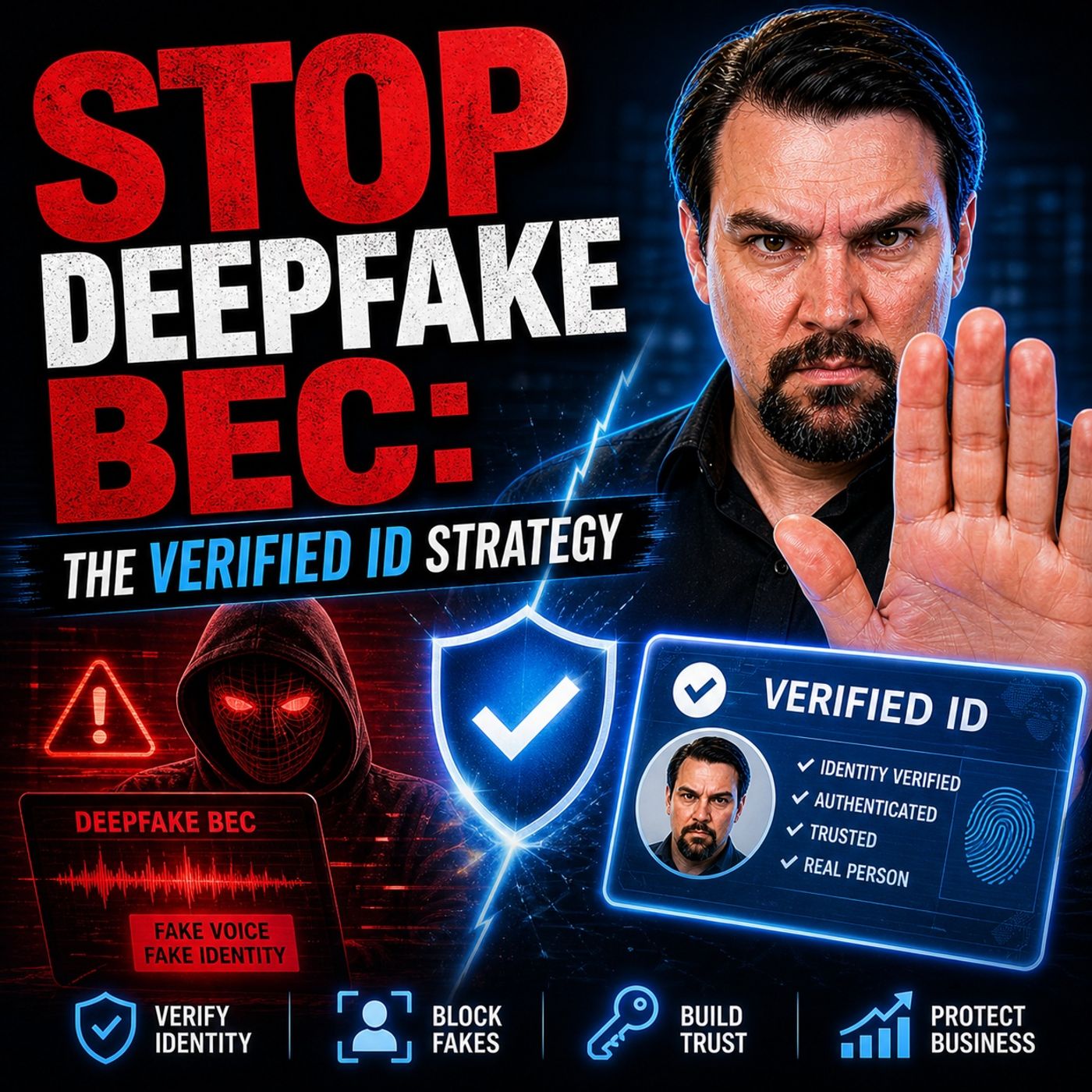
Stop Deepfake Business Email Compromise with Verified ID
This episode explores how deepfake-enabled Business Email Compromise (BEC) attacks are becoming more convincing and dangerous for organizations. Traditional trust signals like email addresses, writing style, or even voice messages are no longer reliable because attackers can now imitate executives and employees with AI-generated content. The episode explains that organizations must move away from trust based on appearance and instead adopt identity verification as a core security strategy. Verified ID systems, strong identity governance, and cryptographic proof of identity are presented as the future foundation for secure communication and approval workflows. A major focus is the risk around financial approvals, executive requests, and sensitive business operations. The discussion highlights how attackers exploit urgency, authority, and familiarity to bypass human judgment. Even experienced employees can be manipulated when deepfake audio, video, or realistic email impersonation…
Guest: Mirko Peters
May 4, 2026
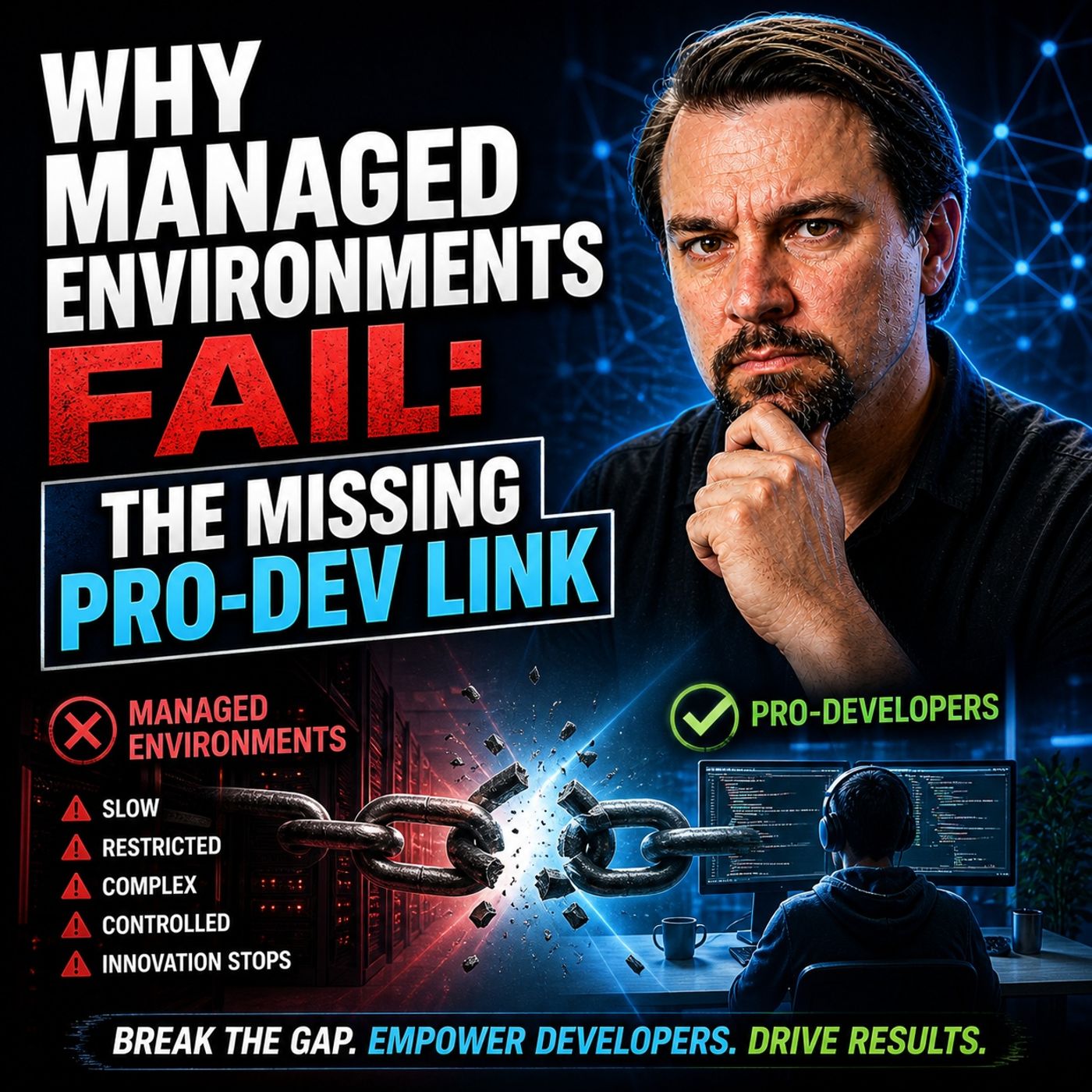
Power Platform Managed Environments Need Pro-Dev Practices
The episode argues that Managed Environments in the Power Platform often fail to deliver on their promise because organizations misunderstand what they actually solve. They are introduced as a governance layer meant to bring control, visibility, and order to low-code environments—but in practice, they frequently slow things down without enabling real delivery. The core problem is the missing connection between low-code governance and professional development practices. Companies tend to focus heavily on restrictions, policies, and administrative controls, but they don’t invest in proper engineering foundations like ALM, architecture, testing, and scalable design. As a result, the platform becomes constrained without becoming more reliable or production-ready. This creates a gap: citizen developers are limited by governance, while pro developers are not properly integrated into the platform. Instead of working together, both worlds operate separately. The outcome is neither agili…
Guest: Mirko Peters
May 4, 2026
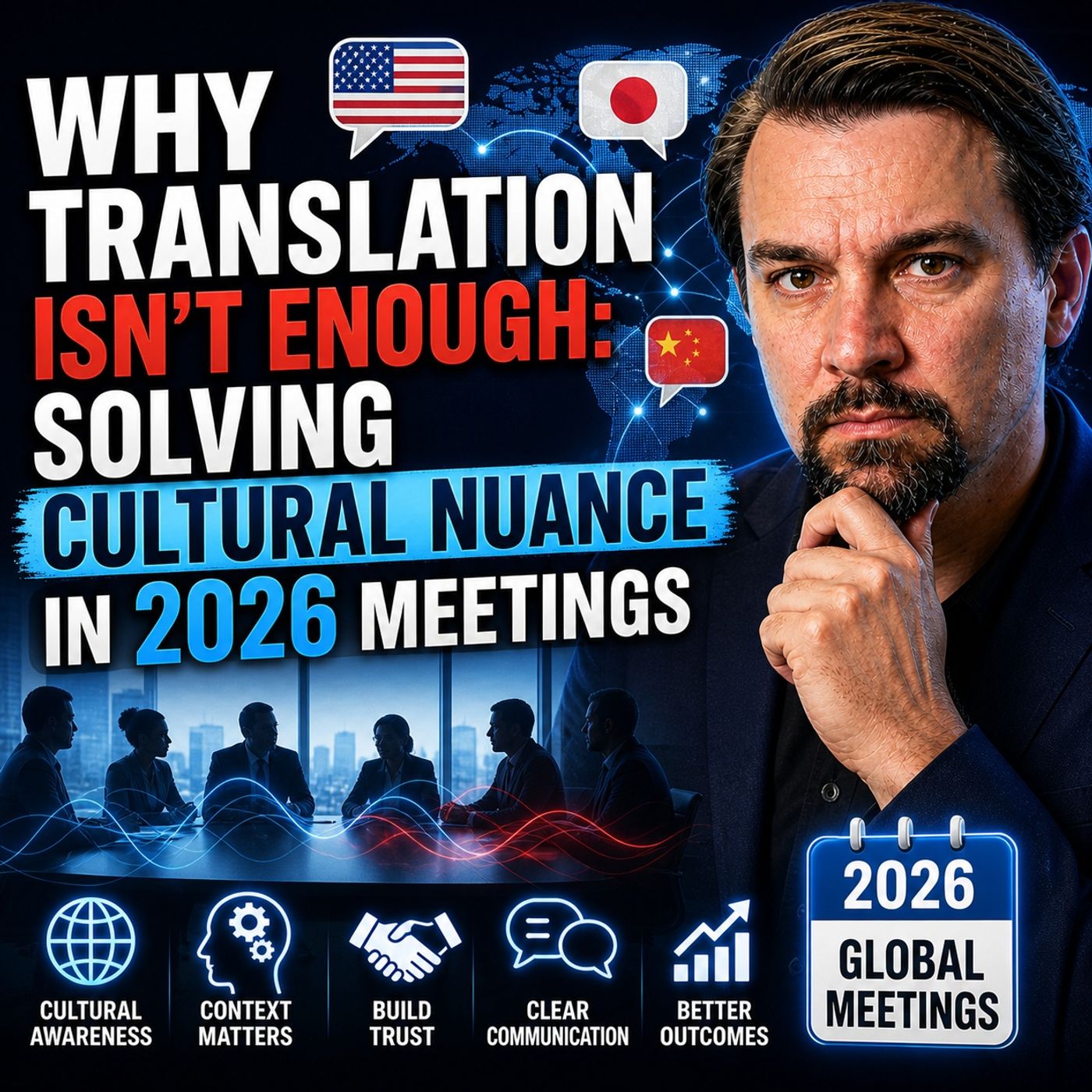
Cultural Nuance in Global Meetings Beyond Translation
This episode argues that the biggest challenge in global meetings is not language translation, but interpreting meaning, intent, and cultural nuance. While modern tools can accurately translate words, they often fail to capture what those words actually represent in context—such as hesitation, politeness, indirect disagreement, or power dynamics. A core idea is the distinction between “word accuracy” and “meaning accuracy.” Teams often assume that if transcripts and captions look correct, the meeting was successful. In reality, misunderstandings still occur because meaning is frequently conveyed indirectly. For example, a statement like “that may be difficult” might signal a soft rejection rather than a scheduling issue. The episode highlights how this gap leads to false alignment. Teams move forward believing decisions were made, only to encounter resistance later from participants who never explicitly disagreed. This isn’t a failure of honesty—it’s a failure to interpret cult…
Guest: Mirko Peters
![Secure External Data Sharing with Power Pages and Nicholas Hayduk [MVP]](https://d3wo5wojvuv7l.cloudfront.net/t_rss_itunes_square_1400/images.spreaker.com/original/5e67aa79d68f369230523e836f2b51d3.jpg "Secure External Data Sharing with Power Pages and Nicholas Hayduk [MVP]")
May 3, 2026
Secure External Data Sharing with Power Pages and Nicholas Hayduk [MVP]
This episode discusses how organizations can securely share business data with users outside their organization using Microsoft’s Power Platform. The main focus is on designing the right architecture rather than simply enabling access. Nicholas Hayduk (MVP) explains that external users should not be treated like internal employees. Instead of giving them direct access to systems like Dataverse, organizations should use solutions such as Power Pages to act as a secure front layer. This approach allows controlled access to data without exposing internal systems. A key point in the episode is the importance of identity and authentication. External users should authenticate through trusted identity providers, such as Azure Active Directory or social login providers, rather than being managed directly inside the system. This improves both security and scalability. The discussion also highlights that security must be implemented at multiple levels. It is not enough to hide data in …
Guests: Mirko Peters , Nicholas Hayduk
May 3, 2026
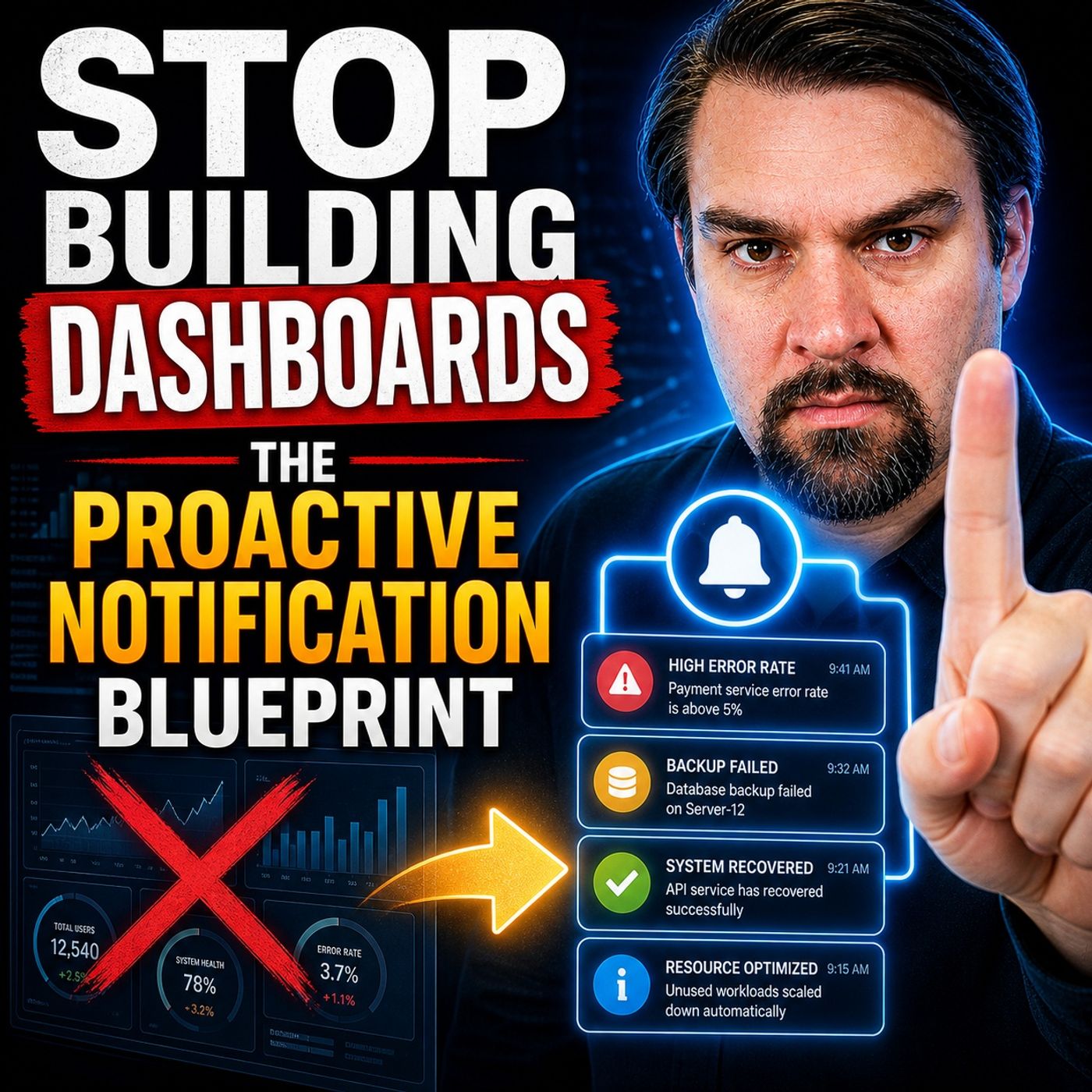
Replace Reactive Dashboards with Proactive Notifications
Most dashboards look great at first, but they quickly fail in practice. The issue isn’t the data, it’s the behavior they depend on. Dashboards require people to actively check them, and in reality, that rarely happens consistently. This episode explains why dashboards are inherently reactive. They show what has already happened, but they don’t prompt action when it actually matters. Important signals get missed, decisions are delayed, and problems continue unnoticed because no one is looking at the right time. The better approach is a proactive notification model. Instead of expecting users to pull insights from dashboards, systems should push the right information to the right people exactly when it’s needed. That means designing alerts around meaningful events, clear ownership, and specific actions, rather than just sending more data. Many organizations struggle with this because they either send too many notifications or provide alerts without context or accountability. Wh…
Guest: Mirko Peters
May 3, 2026
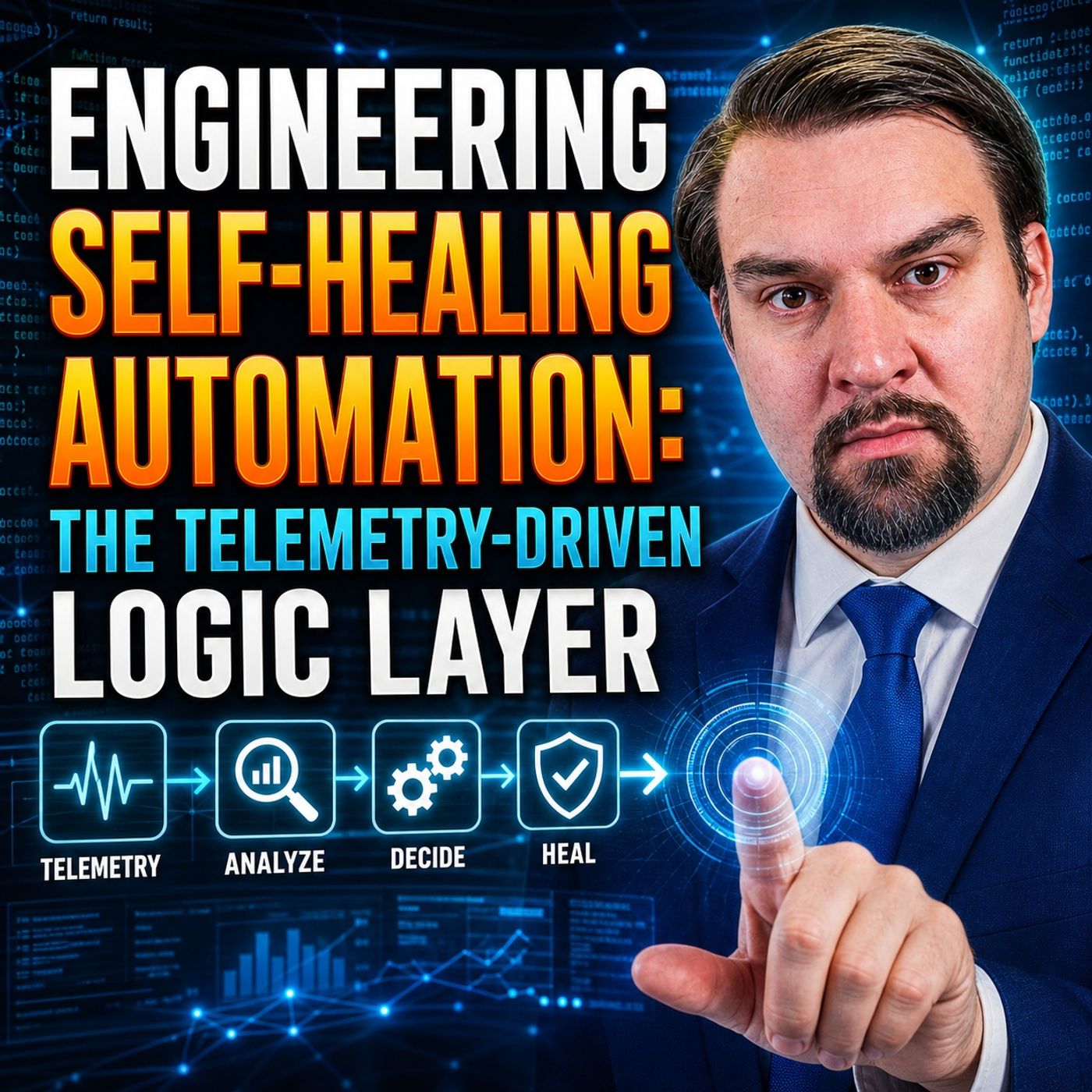
Build Self-Healing Automation with Telemetry and Observability
The episode talks about how automation is evolving from simple scripts into more advanced, intelligent systems that can monitor themselves and fix problems automatically. Instead of just executing predefined tasks, modern automation uses telemetry data (like logs, metrics, and traces) to understand what is happening inside systems in real time. A key idea is “self-healing automation.” This means systems can detect issues, figure out the root cause, and fix them without human intervention. Traditionally, engineers had to respond to alerts and manually troubleshoot problems, which is slow and doesn’t scale well. The new approach aims to reduce that by letting systems react instantly. The discussion highlights how observability is the foundation for this. By collecting detailed telemetry data, systems gain enough insight to move beyond simple monitoring and into automated decision-making. This enables faster detection of anomalies and more accurate fixes. Another important theme…
Guest: Mirko Peters
May 2, 2026
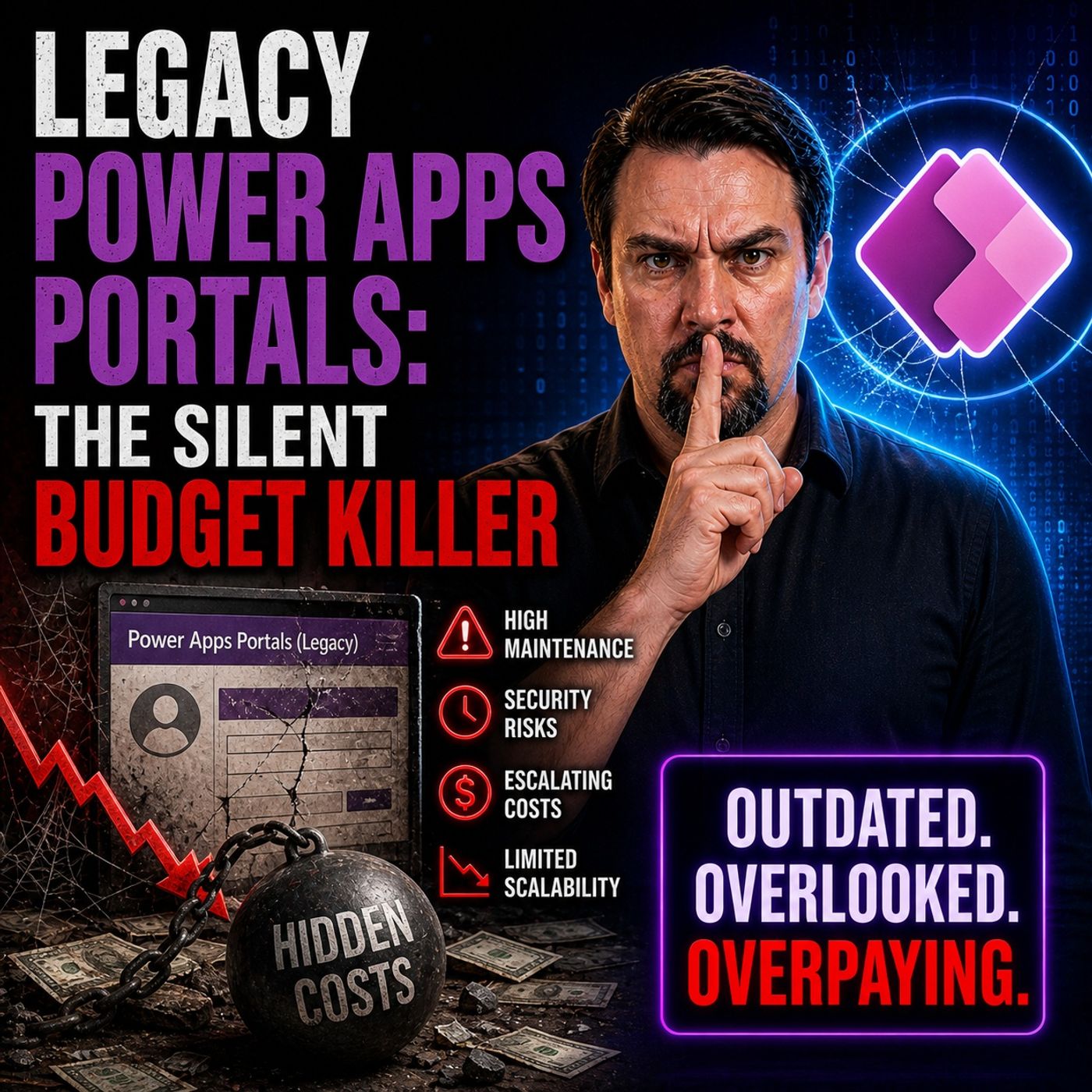
Modernize Legacy Power Apps Portals and Power Pages
The episode argues that legacy Power Apps portals (now Power Pages) and similar older solutions act as a “silent budget killer” inside organizations. They continue to run and consume resources, but deliver little ongoing value. The core issue is not just the technology itself, but the way these solutions were built. Many of them are tightly coupled, hard to maintain, and depend on outdated patterns or manual fixes. Over time, they become difficult to update, expensive to operate, and risky to change. These legacy portals create hidden costs in several ways. They require continuous maintenance, often involve complex dependencies, and slow down development because every change becomes harder. Instead of enabling innovation, they trap teams in support and firefighting work. A key insight is that organizations rarely question these systems because they still “work.” But working does not mean efficient or valuable. These systems act like a constant drain on budget and attention—wh…
Guest: Mirko Peters