Identity-First Security Model Explained: The Modern Enterprise Approach
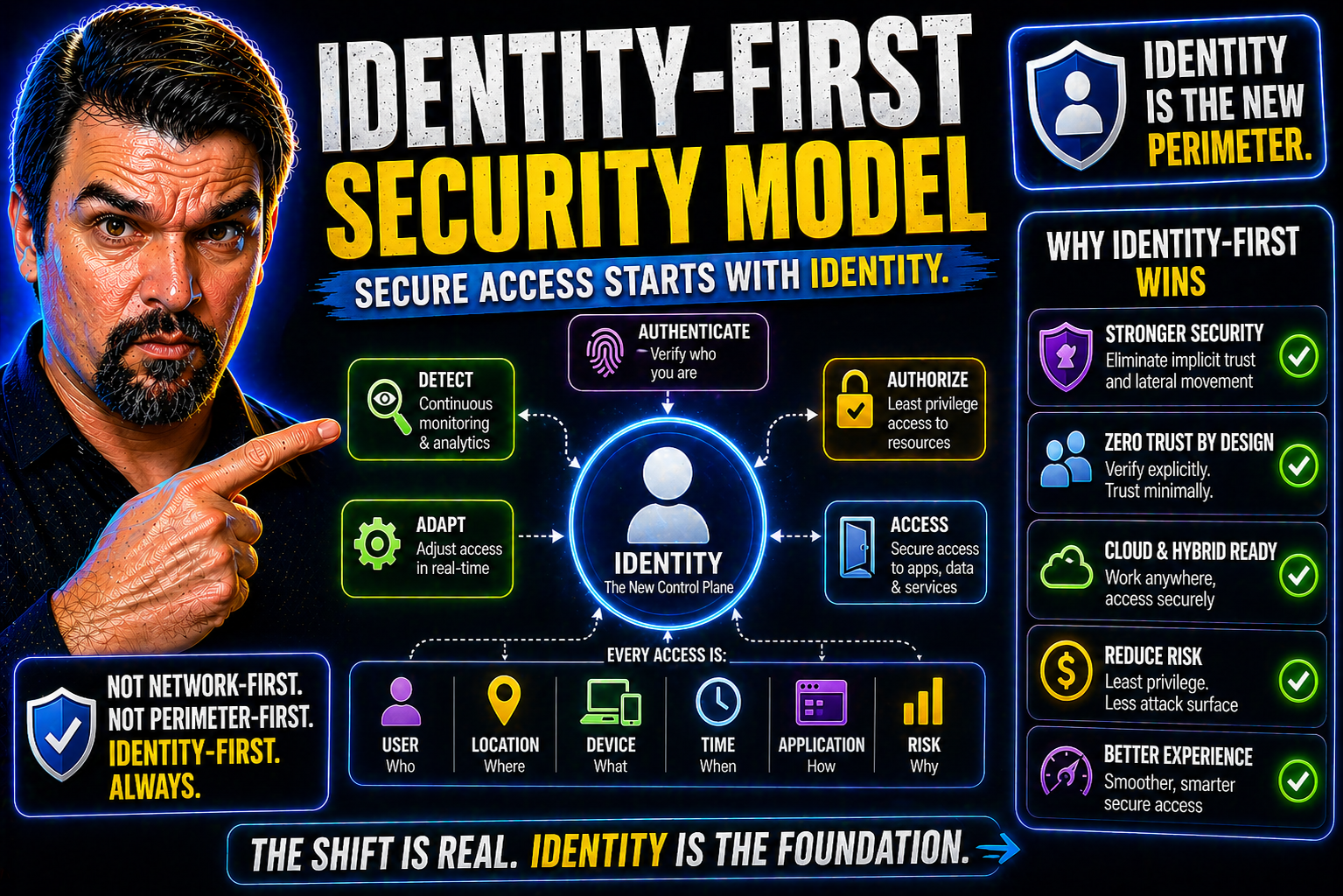
The identity-first security model is rewriting the rulebook for enterprise cybersecurity. Instead of building digital walls around networks, this approach puts identity—of users, devices, and services—right at the heart of your defenses. Why? Because in today’s world of cloud computing, remote work, and savvy attackers, your perimeter isn’t your firewalls or data center anymore. It’s the people, devices, and accounts connecting from everywhere and anywhere.
This article is your in-depth resource for understanding what identity-first security is, how it differs from traditional models, and why it’s not just a buzzword. You’ll get practical guidance on architecting and implementing these defenses—especially if you run Microsoft environments, use Entra ID, or are juggling hybrid cloud setups. Whether you’re a technical leader, a risk manager, or a security architect, this is your roadmap for making identity your strongest line of defense.
Why Identity Matters More Than Ever in Security Strategies
Long gone are the days when locking up your network doors was enough to keep threats at bay. Now, you’re facing a landscape where data, apps, and users move fluidly between the office, the cloud, and a thousand devices. The old “perimeter” isn’t just dissolving—it’s practically vanished. Instead, attackers hunt for the quickest way in, often right through your people and their digital identities.
Modern cyber threats have grown sophisticated, targeting the weakest link: the identities of users, admins, and even machines. It’s no accident identity has become ground zero for breaches—from phishing campaigns to credential theft, and even hijacked service accounts running critical automation. As organizations adopt more cloud apps and hybrid models, the attack surface tied to identity explodes.
This shift in risk has propelled identity to the top of the security agenda. Today’s security leaders must prioritize not just what’s inside or outside their network, but how they govern and verify every identity with access. As you’ll see in the sections ahead, the move to an identity-first strategy isn’t just a technical adjustment—it’s a strategic imperative for keeping threats at bay and enabling business agility in a connected world.
What Is Identity-First Security? Key Principles and Benefits
Identity-first security flips the old script, making user and device identities the main focus of security controls. The core idea is to protect what matters most—the accounts and privileges that give access to your sensitive data and systems—no matter where those identities connect from.
The model rests on three main pillars: robust authentication, smart authorization, and relentless monitoring of identities. Authentication means proving a user or device truly is who they claim to be, using credentials, multi-factor authentication (MFA), or biometrics. Authorization specifies what each verified identity can actually do, setting guardrails through roles and policies. Continuous monitoring and analytics watch for suspicious behavior or compromised accounts, so threats can be cut off quickly.
Identity-first security gives your business real advantages. First, you get sharper visibility into who has access to what across your entire digital estate—on-premises, cloud, and everywhere in between. Next, risk goes down because access is tightly controlled, excessive privileges are removed, and suspicious behavior triggers rapid response. It also streamlines compliance efforts, since you can prove controls are enforced at the identity level, map user actions to policies, and automate audits. Ultimately, this modern approach future-proofs your security posture against a world where the old borders simply don’t exist.
The Decline of Perimeter-Based Security and the Rise of Identity-Based Defense
Traditional network perimeter security assumed you could draw a digital boundary—everything inside was trusted, everything outside was not. That line has blurred beyond recognition with cloud apps, remote work, and always-on connections. Attackers don’t care where your office starts or ends; they target weak identities to slip in and move laterally.
Identity-based defense, on the other hand, recognizes that every point of access is potentially exposed. By treating every user and device as untrusted until proven otherwise, and controlling what they can do once authenticated, organizations shut down the gaps that attackers love to exploit. The shift to identity-based security isn’t just technical—it’s a recognition that the battleground has moved to where real risk lives: your people, their credentials, and the accounts that power the enterprise.
Building a Robust Identity-First Security Strategy
If you’re ready to move beyond the basics and make identity the backbone of your security program, you need more than new tech. Building a resilient identity-first security strategy means thinking differently about how you structure protections and invest in controls—across cloud, hybrid, and on-premises environments.
It’s not just about buying another tool or bolting on multi-factor authentication. The real goal is layered security, where every identity (human or machine) faces checks at every step—without opening gaps or hurting productivity. As organizations stretch into the cloud and juggle SaaS applications with legacy systems, it’s the strategy and coordination behind your identity framework that really matter.
The next sections break down the practical ingredients of a strong identity-first security posture. We’ll look at the must-have building blocks—from access management and continuous verification, to threat monitoring and the all-important principles of zero trust and least privilege. Whether you’re a CISO starting from scratch or an admin looking to mature your current setup, you’ll find actionable insights to guide your journey.
Identity-First Security Strategy Components That Matter Most
- Identity Governance & Administration (IGA)Centralized identity governance ensures that every identity—whether user, contractor, or service account—is created, managed, and eventually retired following clear policies. This reduces risk by preventing orphaned accounts and excessive privileges. Automated access reviews help maintain compliance and catch toxic permission combinations early.
- Access ManagementAccess control mechanisms like policy-based access, just-in-time privilege elevation, and adaptive authentication keep users from having more permissions than necessary. Integration with solutions like Entra ID lets organizations enforce least privilege and provision access dynamically across hybrid and cloud resources.
- Continuous Identity VerificationRather than relying on one-time checks, the strategy emphasizes ongoing identity validation. Techniques include multi-factor authentication, behavioral analytics, and risk-based triggers that prompt users for step-up authentication when something looks suspicious or risky.
- Integration with Threat MonitoringIdentity data isn’t managed in isolation. Feeding logs and events from identity infrastructure into SIEM/SOAR tools enables real-time anomaly detection and rapid incident response. Security teams can spot lateral movement, privilege escalation, and account compromise faster by correlating identity events with network activity.
Zero Trust and Principle of Least Privilege in Identity-First Security
Zero trust means “never trust, always verify”—no user or device is automatically trusted, no matter where they’re located. In identity-first security, this translates to strict access controls enforced at every step, based on real-time signals and continuous verification.
The principle of least privilege adds another layer: users, apps, and services get only the access absolutely required, and nothing more. If an attacker gets in, they can’t escalate privileges or move laterally with ease. For a deeper look at implementing Zero Trust, especially in M365 and Dynamics 365, see this guidance on Zero Trust by Design in Microsoft 365 and balancing security without stifling productivity at Zero Trust vs User Freedom.
Identity Security Foundation: Shifting from Networks to Users and Devices
The real foundation of security today isn’t your office firewall—it’s the massive set of identities that power your apps, devices, and services. As organizations modernize, adopting hybrid infrastructure and cloud-first tools, the need for centralized identity management is front and center.
This shift isn’t just about convenience; it’s about survival. In hybrid and SaaS scenarios, anyone (or anything) can connect from anywhere—raising the stakes for confirming that each identity is genuine, current, and entitled to access. Networks are no longer cleanly separated between “inside” and “outside.” Instead, every endpoint, cloud resource, or app session is a possible doorway for attackers.
To adapt, enterprises must treat identity as the true security perimeter. This means building architectures where all access requests pass through smart identity controls—validating context, enforcing adaptive authentication, and monitoring for risk all along the way. The sections ahead dig into how this identity-centric model actually works, and the tools that make it possible (like Entra ID in the Microsoft world).
Comprehensive Identity Verification and Adaptive Access Controls
- Multi-Factor Authentication (MFA)Implementing strong MFA—like phone prompts, one-time codes, or hardware tokens—stops most attacks relying on stolen passwords. This creates an immediate barrier for attackers using leaked or phished credentials.
- Biometric and Behavioral AnalyticsFingerprint, facial recognition, and behavioral analytics (such as keystroke or login timing) help confirm that the right person is at the keyboard—not a criminal halfway across the world. Machine learning can flag behavioral anomalies, catching suspicious logins or impossible travel events.
- Adaptive and Context-Aware Access PoliciesModern controls, especially in Microsoft Entra ID environments, use dynamic risk assessments. If someone’s logging in from an unexpected spot, or with a new device, the system can demand more verification, restrict access, or alert admins automatically. Conditional access, as outlined in this Microsoft 365 guidance, helps enforce these adaptive boundaries across all cloud and hybrid apps.
- Risk-Based Authentication and Continuous VerificationInstead of a single login acting as a “passport” for hours, adaptive solutions keep monitoring user sessions for risk signals—like unusual data downloads or rapid privilege changes. At any sign of trouble, access can be challenged, restricted, or terminated on the spot. Entra ID and advanced Microsoft stacks empower this type of ongoing, context-driven security.
Identity Governance and Administration Best Practices
You can’t just slap identity controls on top of your technology stack and call it a day. To get real value—and reduce risk—you need a solid operational foundation of policies, oversight, and integration with your business processes.
Identity Governance and Administration (IGA) brings order to the chaos: defining roles, enforcing policies, approving access requests, and keeping up with regulatory requirements. But beyond administration, true success means connecting identity management with the rest of your security architecture. This includes working seamlessly with tools like Entra ID, monitoring services, and SaaS apps that keep business moving.
The sections below lay out practical best practices for operationalizing identity-first security—starting with the basics of governance, and then jumping into strategies for integrating IAM within your broader cloud and Microsoft 365 investment.
Establishing Identity Governance for Compliance and Risk Management
- Policy Definition and EnforcementStart with clear, business-aligned policies dictating who can access what resources, and under what circumstances. Microsoft Purview’s DLP policies, for example, ensure data stays in the right hands and can be tightly scoped in line with organizational risk appetite. For advanced setups, Copilot agent governance demonstrates how these boundaries work in practice.
- Role-Based Access Control (RBAC)Assign permissions by roles, not individuals. RBAC simplifies onboarding, ensures employees only receive access matching their job needs, and makes it much easier to correct permissions when roles change.
- Lifecycle Management and Access ReviewsAutomated access reviews are essential—especially in regulated environments. Set up periodic audits and make use of tools like Microsoft Purview Audit to track user activity and spot potential risks. When someone leaves or changes roles, their access should update (or disappear) automatically.
- Oversight MechanismsStructured oversight helps spot violations or gaps before they become major incidents. Entra ID and Purview both offer reporting, alerts, and review functions. This is vital for compliance and for defending your environment from insider threats or policy drift.
Integrating IAM with Cloud Platforms, Entra ID, and Security Tools
- Unified Identity InfrastructureIntegrate your IAM solution—like Microsoft Entra ID—across all SaaS applications, Azure resources, and even on-premises assets for single sign-on and consistent policy enforcement. This is the cornerstone for effective, streamlined access control everywhere.
- Conditional Access and App Consent ManagementConditional Access in Entra ID allows you to go beyond simple authentication and enforce tailored access rules by app, location, device, and risk. Tighten up application consent with admin workflows—a step that helps block OAuth-based attacks (more here on OAuth consent and Entra ID).
- Incident Detection and Monitoring IntegrationPump identity logs and events into your SIEM/SOAR platforms. Entra ID integrates with Microsoft Sentinel and other monitoring tools for rich analytics and actionable incident response (see this podcast on Conditional Access governance for detailed strategies).
- Automated Remediation and Lifecycle ManagementLeverage process automation to reduce “identity debt,” streamline exception handling, and ensure that expired access is automatically revoked. This keeps your cloud identity infrastructure lean and resilient, without relying on manual oversight.
How Attackers Exploit Identity: Key Threats and Risk Vectors
Knowing what you’re up against is crucial. Attackers don’t waste time hammering at your perimeter anymore—they target identities, seeking the shortest path to privileged access. Phishing, credential stuffing, stolen OAuth tokens—these are their tools of choice. When an attacker gets hold of a user or service account, the blast radius can be huge, with damage spreading across apps, data, and cloud resources.
This shift is especially clear in the Microsoft ecosystem. From sophisticated consent phishing scams to session token abuse in Entra ID, modern attacks are engineered to bypass even multi-factor authentication. With cloud integrations, partner connectivity, and an ever-changing user base, your risk landscape keeps evolving.
The upcoming sections break down the most common identity attack tactics and walk you through proven strategies to mitigate them. For a real-world look at the mechanics of Microsoft 365 and Entra ID attack chains—and actionable protection tips—check out this overview at Microsoft 365 Attack Chain Explained.
Phishing, Credential Stuffing, and Insider Threats: Mitigating Identity Risks
- Phishing and Social EngineeringAttackers use sophisticated lures to trick users into giving up passwords or MFA tokens. Train users to recognize attacks, and layer email security with Microsoft Defender for Office 365. Implement anti-phishing policies, and monitor with Microsoft Purview to spot data leaks or unusual access patterns.
- Credential Stuffing and Password AttacksBad actors leverage leaked or reused credentials, systematically trying them across your cloud endpoints. Enforce strong password policies, move toward passwordless authentication, and back it up with robust MFA solutions. Risk-based authentication can block suspicious login attempts before they escalate.
- Insider Threats and Privilege MisuseMalicious insiders or careless users present a unique risk. Regular access reviews and behavioral analytics help flag risky entitlements or abnormal usage. Tools like Microsoft Defender for Endpoint, conditional access, and continuous monitoring can catch issues without disrupting user experience. See strategies for balancing security without annoying users at Unlock Ironclad M365 Security Without Annoying Users.
- Anomaly Detection and Automated ResponseModern identity systems—especially when integrated with Entra ID and Defender—can detect outliers, such as a user logging in from two distant places within minutes. Automated responses can lock, challenge, or block compromised sessions, shrinking the window for attackers to cause real harm.
Securing Identities in the AI Era and Guarding Against Supply Chain Compromises
- AI-Driven Threats and Agentic AIAI bots and agents can act autonomously, sometimes carrying human-level privileges. Without strong identity controls, these non-human entities introduce shadow IT risks that go under the radar. Use environment strategy, Entra Agent IDs, and strict DLP boundaries (see AI Agent Governance) to keep them in check.
- Supply Chain and Third-Party Identity CompromisesAttackers go after vendors, partners, or external app connections to gain an inside track. Apply federation, just-in-time access, and policy-based governance to all third-party identities. Enforce strict monitoring and scope permissions for apps and partners connected to your Microsoft 365 environment.
- API, Service Account, and Machine Identity SecurityAPI keys and service accounts are high-value targets. Govern them like any user identity—enforce least privilege, apply conditional access, and rotate secrets regularly. Monitor API usage for unusual volumes or access patterns that could signal abuse.
- Runtime and Approval MonitoringWhether it’s a bot, a connector, or a vendor app, continuous runtime monitoring and regular approval audits are critical. Use Microsoft Purview and Entra ID to enforce approval workflows, ensure that connectors aren’t leaking data, and cut off risky connections proactively.
Identity-First IGA for Operational Efficiency and Competitive Advantage
Identity-first governance and automation aren’t just boxes to check for compliance—they’re your ticket to streamlined operations and a serious business edge. By moving beyond legacy IAM to more dynamic platforms, you unleash the power of automation, flexible deployment, and faster onboarding or offboarding cycles. This next section closes the loop, setting up how modern identity solutions combine robust security with the agility needed in rapidly changing business landscapes.
Implementation Speed and Deployment Flexibility with Modern Identity Platforms
Modern identity-first platforms like Microsoft Entra ID are designed for rapid deployment across hybrid and multi-cloud environments. They offer templated policies, automatic provisioning, and built-in connectors for most major SaaS and legacy systems. This means organizations can get up and running quickly, see ROI faster, and easily adjust controls as new business needs or threats emerge.
Unlike traditional IAM suites, identity-first platforms support just-in-time provisioning and fine-grained access control out of the box. They adapt as your workforce or technology stack evolves—whether you’re merging companies, going all-in on the cloud, or integrating new apps daily. The result is security that matches the pace of digital transformation, without endless custom projects or drawn-out rollouts.
Conclusion: Identity as Your Most Strategic Security Investment
In today’s world, identity-first security isn’t just a smart move—it’s a survival strategy. By making identity the core of your security model, you eliminate blind spots, close gaps attackers exploit, and set up your business for secure growth in the cloud era.
This approach gives you better visibility, tighter control, and stronger resilience than network-based defenses ever could. If you’re not already prioritizing identity in your security roadmap, now’s the time. Assess your program’s maturity, review your policies, and take concrete steps to strengthen your posture—before identity becomes the attack vector that slips through the cracks.
Recommended Resources and Instant Access to Identity-First Security Tools
- Identity Attack Prevention and OAuth Consent ControlsSharpen your defenses against consent-based attacks and persistent threats in Microsoft 365 and Azure with this guide on Entra ID OAuth Consent Attack Protections. Essential reading for identity admins.
- Advanced Data Loss Prevention (DLP) MovesBuild an adaptive and resilient DLP model for the Power Platform and Microsoft 365 by listening to Unlocking the Real Power of DLP. Includes insider strategies for connector governance and safe sharing in hybrid work environments.
- Cost Accountability and Identity GovernanceIf your organization struggles with cost transparency around identity and cloud resources, tune in to Showback Accountability for practical advice on tying financial stewardship to governance and policy enforcement in Microsoft 365.
- Copilot and Modern AI Agent SecurityManaging AI-powered Copilot agents in Microsoft environments? Get hands-on governance strategies at Copilot Agent Governance with Microsoft Purview. This covers DLP integration and continuous monitoring for safer automation.
- Community Events and Expert SessionsKeep sharpening your skills with ongoing podcasts, speaker events, and instant-access content from reputable security practitioners. For cutting-edge insight, explore curated content at the main m365.fm portal, and stay up to date with latest identity-first trends.

Microsoft MVP | Host of M365.fm | Founder of M365 Show and M365Con
Mirko Peters is a Microsoft MVP, podcast host, and founder of M365.fm, M365 Show, and M365Con. His work connects Microsoft practitioners through podcast interviews, livestreams, and community events.
At M365.fm, Mirko hosts conversations with Microsoft MVPs, product experts, architects, and community contributors. Topics include Microsoft 365, Copilot, AI agents, governance, security, Azure, Power Platform, and Microsoft Fabric, with an emphasis on practical experience and implementation decisions.
M365.fm is the podcast and learning platform. M365 Show brings experts together for livestreams, while M365Con provides an online conference setting for community learning.
Official website: Mirko Peters (https://www.mirkopeters.com/). Recognition: Mirko Peters — Microsoft MVP profile (https://mvp.microsoft.com/de-DE/mvp/profile/9b0ca797-db5a-493a-a845-8b9158046cf5). Connect on LinkedIn (https://www.linkedin.com/in/m365showpodcast/).