Copilot Prompts for IT Admins
Let’s be real—your day as an IT admin in the Microsoft world can get busy, fast. Copilot, Microsoft’s AI-powered assistant, is designed to make the repetitive stuff easier and help you breeze through complex admin challenges. This guide is packed with actionable Copilot prompts specifically for IT admins, from optimizing Microsoft 365 admin work to keeping communications sharp and secure. You’ll discover strategies to automate daily chores, manage inbox overload, stay ahead of compliance headaches, and secure your environment—all while freeing up time for what really matters. Expect practical examples and hands-on ideas to level up your workflow and productivity.
Essential Copilot Prompts for IT Admins in Microsoft 365
If you’ve ever felt buried in routine admin tasks or wanted your team to move faster, Copilot’s got your back. Copilot prompts can revolutionize the way you manage Microsoft 365, letting you automate the nitty-gritty while improving how you communicate and handle data behind the scenes. But this isn’t just about speed—it’s about boosting accuracy and freeing your mind for those curveball issues only humans can handle.
With Copilot prompts, you can do everything from summarizing long-winded meetings to drafting quick user management emails or tackling password resets with almost no manual effort. The real magic is in using prompts tailored for IT admins, which tap into Copilot’s understanding of your Microsoft 365 environment. These get you straight to the point, minimize errors, and turn what used to be lengthy processes into quick, repeatable steps.
Up next, we’ll run through how to get started with foundational Copilot prompt setups and lay out specific prompt strategies to keep your everyday operations humming along in Microsoft 365.
Getting Started With Microsoft 365 Copilot Prompts
Microsoft 365 Copilot is an AI assistant built into your Microsoft 365 admin tools. As an IT admin, you’ll typically access Copilot inside platforms like the M365 admin center, Outlook, or Teams.
To set up, check that your organization has Copilot licenses assigned and that access is enabled within Microsoft 365. You’ll find Copilot’s panel or chat box in supported apps—no extra software required.
Start with basic prompt strategies like, “Summarize user activity this week,” or “List accounts with password reset requests pending.” You can also customize prompts for common tasks such as resetting passwords, updating user roles, or pulling up compliance queries. Copilot adapts to context, so give it as much detail as possible for accurate results.
Task-Based Copilot Prompts for Daily IT Operations
- Manage System Alerts: Prompt Copilot with, “Summarize today’s system alerts for Office 365,” to get a quick rundown of any issues flagged by Microsoft. This saves you time trawling through dozens of dashboards and lets you focus on what actually needs attention.
- Summarize Chat Interactions: Use, “Summarize today’s Teams messages about network outages,” to extract key details and action points from lengthy conversations. Copilot highlights which tickets or issues need escalation, so you don’t miss important context.
- Track Emails Pending Response: Ask Copilot, “List emails awaiting my response from this week’s helpdesk inbox,” to avoid dropped threads. This prompt pulls up pending communications and even suggests prioritized responses.
- Draft Replies to Common Requests: For emails like password resets or access requests, prompt, “Draft standard response for password reset request,” to quickly send professional replies without rewriting each time. Edit as needed and keep workflows moving.
- Automate Admin Requests: Try, “Generate instructions for enabling MFA for new users,” which yields step-by-step guides straight from Microsoft 365 policies—no more copy-pasting from dusty documentation.
- Summarize Meeting Outcomes: After a team huddle, ask, “Summarize key decisions and follow-up tasks from today’s IT meeting.” Copilot compiles main points so everyone knows what’s next.
By combining these prompts, you’ll spot issues faster, reduce manual errors, and reclaim wasted admin time for more strategic work.
Email and Communication Optimization With Copilot
Email is the lifeblood of IT admin life, but let’s be honest—it can suck up your entire day if you’re not careful. Copilot steps in as your digital assistant for the inbox, transforming how you write, proof, and prioritize messages in Microsoft 365. With smart prompts, you can cut through clutter, find the main point in those five-page email chains, and draft replies that sound polished, not robotic.
This section introduces you to prompt strategies that do more than just save keystrokes. Copilot helps you clean up your writing, summarize internal threads, and make sure customer and executive responses are spot-on the first time. Managing your inbox, staying on top of urgent asks, and communicating clearly with stakeholders is a lot easier when you have an AI taking care of the heavy lifting.
Stick around as we break down approaches for smarter drafting, effective email summarization, and crafting messages for both customers and the big bosses.
Efficient Email Management and Drafting With Copilot
- Rewrite for Readability: Use prompts like, “Rewrite this email to be clearer and more concise,” or, “Simplify this message for a non-technical audience.” Copilot restructures the tone and grammar, making your emails easier to understand for colleagues at every technical level.
- Proofread With Tracked Changes: Ask Copilot, “Proofread this draft and highlight tracked changes,” to catch typos and flag unclear sections. You get a marked-up version so you can review and approve edits before sending.
- Draft Quick Replies: Try, “Draft a response confirming ticket closure and inviting additional questions,” or, “Write a polite reply for a delayed software deployment.” Copilot generates response templates tailored to your tone—just tweak for specifics.
- Summarize Long Conversations: For those epic threads, prompt, “Summarize the key points and next steps from this email chain.” This keeps everyone on the same page without slogging through 30 messages.
- Organize Email Workflows: Use, “List all emails categorized as urgent and pending in the last 48 hours,” to help you triage your workload and prioritize.
With these Copilot prompt techniques, your email responses become faster, more accurate, and always professional—no matter how hectic things get.
Summarizing and Prioritizing Email Threads
- Summarize Threads: Ask Copilot, “Summarize this email conversation in three bullet points.” It captures the gist, so you skip the fluff.
- Highlight Urgent Emails: Use, “Identify urgent messages in my inbox from external senders,” to pull out what needs immediate attention.
- Extract Key Decisions: Try, “List all agreed action items from this thread.” You’ll have tasks and next steps at a glance.
- Flag Escalations: Prompt with, “Flag emails needing escalated IT support from this thread.” This helps you stay ahead of trouble spots in ongoing discussions.
Responding to Customer and Executive Emails With Copilot
- Draft Customer Support Replies: Use, “Draft a professional response addressing customer feedback about login issues,” for clear, reassuring communications.
- Structure Executive Updates: Try, “Draft an executive summary update on recent outages in a formal tone.” Copilot ensures your communication fits a leadership audience.
- Adjust Tone and Clarity: Prompt, “Rewrite this email to be direct, yet polite, for a director-level recipient.” You’ll avoid misunderstandings and keep things professional.
- Incorporate Feedback Effectively: Ask Copilot, “Summarize customer feedback from the last week and suggest a reply template to address common concerns.”
Meeting and Collaboration Efficiency With Copilot Prompts
If you’ve ever missed a meeting only to dread catching up, or struggled with endless back-and-forth just to get a team together, you’re not alone. Copilot is your ace in the sleeve for running smoother meetings and bringing everyone onto the same page—no matter how scattered your squad.
With AI-powered Copilot prompts, you’ll be able to generate quick meeting summaries, suggest the best times for the next huddle, and crank out weekly wrap-ups that keep your projects rolling along. The right prompts give you a way to keep the chaos of calendars and action items under control, while making follow-ups and coordination painless for everyone involved.
Coming up, you’ll discover how to quickly catch up on meetings, get the juice out of transcripts, schedule like a pro, and wrap up your week with status reports that actually help your team move forward.
Catching Up On Meetings and Generating Summaries
- Meeting Recap: Use, “Summarize the main points from this meeting transcript,” to grab key decisions without watching the whole recording.
- Highlight Action Items: Prompt, “List follow-up tasks from yesterday’s project call.” Copilot surfaces to-dos so they don’t slip through the cracks.
- Gist Extraction: Try, “What’s the main gist of the last incident response meeting?” for a quick mental download.
- Shareable Summaries: Request, “Generate a summary to share with stakeholders,” making it easy to inform the rest of the team with minimal effort.
Scheduling Meetings and Team Coordination Prompts
- Suggest Best Meeting Times: Prompt Copilot with, “Find overlapping availability for the IT team this week,” to eliminate calendar ping-pong and streamline coordination.
- Automate Meeting Booking: Try, “Book a 30-minute security sync with the compliance and network teams,” and Copilot schedules, sends invites, and even creates a draft agenda.
- Coordinate Task Lists: Ask, “Generate a shared IT project task list from this week’s meetings,” to keep everyone aligned on priorities.
- Send Follow-Up Reminders: Use, “Send reminders to team members assigned outstanding tasks from last meeting,” to prompt action without pestering.
- Document Instructions Clearly: Prompt, “Summarize meeting decisions into a step-by-step action plan for the help desk staff,” making it easy for teams to know what to do next.
Weekly Wrap-Ups and Project Status Overviews With Copilot
- Weekly Activity Recaps: Ask Copilot, “Summarize this week’s IT support activities for inclusion in the weekly report.” You’ll have stats and highlights at your fingertips.
- Project Status Summaries: Prompt, “Generate a project status overview for the migration team, highlighting completed and pending tasks.”
- Stakeholder Overviews: Use, “Draft a general project overview for executive stakeholders covering risks and upcoming milestones.”
- Pending Issue Lists: Ask, “List unresolved support tickets and their current owners,” for a hands-off way to track progress.
Strategic and Executive-Level Uses For Copilot
Sometimes, your IT role goes far beyond password resets and patching servers. The higher you go, the more you need to keep leadership informed, deliver data-rich reports, and weigh in on key business decisions. Copilot can be an essential partner in these big-picture, strategic moves—if you know how to prompt it right.
This section is all about using Copilot prompts to help you automate executive reporting, monitor key performance indicators (KPIs), and back your decision-making process with the right data. When executive communication or strategic planning is on your desk, having AI generate precise, well-structured content means you always look prepared, even when time is tight.
The prompts you’ll find here enable you to create dashboards, analyze business opportunities, and deliver polished communications that nail the right tone with stakeholders—all while keeping your strategic IT goals in sight.
Executive File Reporting and KPI Tracking Prompts
- Compile Executive Reports: Use, “Generate a report from the latest monthly security audit file for executive review.” Copilot organizes findings and formats summaries that are leadership-ready.
- Track Functional KPIs: Prompt Copilot with, “List key functional KPIs for IT operations this quarter and flag any deviations from targets.” This gives you instant insights into performance dips or wins.
- Draft Detailed Plans: Try, “Create a detailed IT project plan for migrating legacy systems, including milestones and resource requirements.” Copilot lays it out so you can adjust as business needs evolve.
- Automate Routine Reporting: Ask Copilot, “Automate weekly endpoint patch compliance reporting to leadership,” letting you focus on results, not copy-paste exercises.
- Align Reports to Organizational Goals: Prompt, “Summarize how this quarter's IT initiatives support company growth objectives,” ensuring leadership sees the strategic value in your work.
Decision Support and Opportunity Analysis Prompts
- Evaluate Options: Use, “Analyze the implications of moving to a hybrid cloud platform versus staying on-premises,” for a list of risks and opportunities.
- Identify Growth Opportunities: Prompt, “Highlight untapped areas for business growth based on this year’s helpdesk trends.”
- Support Roadmap Decisions: Use, “Summarize stakeholder questions about upcoming changes to IT infrastructure—and suggest the best next steps.”
Crafting Executive Communication With Copilot
- Tailor Executive Updates: Prompt Copilot, “Draft a concise Q2 IT update for executives—focus on wins, risks, and next actions.”
- Sharpen Leadership Pitches: Use, “Write an executive pitch for funding a new cloud backup solution,” for maximum impact.
- Enhance Readability: Ask Copilot, “Rewrite this board presentation email for clarity and executive tone.”
Advanced Technical and Operational Copilot Prompts
If your days are filled with scripting, troubleshooting, and explaining tech concepts to all sorts of folks, Copilot can be the difference between drowning in details and getting things done. When it comes to deep-dive technical work—like writing PowerShell scripts, documenting systems for team training, or translating jargon-filled docs for colleagues—Copilot’s advanced prompts save real hours.
This part opens the hood on how Copilot can help automate technical tasks, generate explanations for complex processes, and bring clarity to your documentation in multiple languages. It’s especially valuable if you manage hybrid environments, orchestrate big migrations, or support teams spread worldwide—Copilot keeps you productive and sharp.
You’ll see practical prompt examples and approaches for everything from scripting to technical writing and quick document translation—helping you master both the “what” and “why” of advanced operations.
Code Effortlessly and Simplify Complex Tasks With Copilot
- Generate PowerShell Scripts: Prompt, “Write a PowerShell script to bulk reset user passwords in Azure AD.” Copilot crafts the script, so you can review and run it in seconds.
- Debug Issues: Use, “Analyze this error log and suggest fixes for SharePoint site connectivity problems,” for speedy diagnosis and troubleshooting steps.
- Automate IT Tasks: Try, “Create a scheduled task to export daily sign-in logs from Microsoft 365 to a secure folder.”
- Integrate M365 Platforms: Ask, “Generate code to connect on-prem Exchange with Exchange Online for mailbox migration.”
Creating Explainers and How-To Guides With Prompt Engineering
- Technical Explainers: Prompt, “Draft a plain-English explainer for how Single Sign-On works in M365 for helpdesk staff.” Copilot delivers clear and accessible write-ups.
- Step-by-Step How-To Guides: Use, “Generate illustrated steps for enabling multi-factor authentication for end users.”
- Sharpen Documentation: Ask Copilot, “Rewrite this patch installation guide to be user-friendly and concise.”
- Team Training Outlines: Prompt, “Create a training outline for onboarding new IT service desk employees.”
Translating and Improving Technical Content Clarity
- Translate Across Languages: Use, “Translate this troubleshooting guide from English to Spanish for our Latin America office.” Copilot preserves tech terms while making material instantly accessible.
- Clarify Documentation: Prompt, “Rewrite this user manual for clarity and conciseness,” improving readability for technical and non-technical staff.
- Quickly Update Policies: Ask, “Translate this IT security policy to French for our Canadian branch.”
Security and Compliance Copilot Prompts for IT Admins
Security threats don’t sleep, and neither should your ability to investigate and report on them quickly. While plenty of guides toss around compliance like an afterthought, Copilot actually brings practical solutions here—helping you draft incident reports, summarize security evidence, and prep for audits without missing the fine print.
Whether you’re deep in a threat investigation, prepping for an ISO audit, or just want to make sure your org’s data stays out of the news, Copilot prompts can get you there faster. This section goes beyond basics—giving you strategies most competitor guides ignore, showing you how to generate summaries, organize evidence, and catch compliance drift before it becomes a problem.
And if you want to dive deeper into securing Copilot itself or learn best practices for compliance monitoring and governance, check out resources like this detailed guide on Copilot security and compliance and this governance policy overview. These cover how to enforce least-privilege permissions, use audit trails, and manage risk from both a technical and organizational perspective.
Using Copilot Prompts for Incident Response and Threat Investigation
- Speed Up Log Review: Prompt Copilot, “Summarize the security events from yesterday’s Entra ID logs and flag signs of consent phishing or token theft.” You’ll quickly spot the patterns that signal real threats, as described in this Microsoft 365 attack chain breakdown.
- Draft Initial Incident Reports: Use, “Draft an initial incident report based on alerted Microsoft Defender events for SOC escalation,” to create a structured summary for your security team.
- Automate Threat Hunting: Try, “Correlate SIEM logs across Exchange Online and Azure AD—highlight suspicious login or permission changes.” Copilot helps bridge the gap between hybrid and M365-only environments.
- Generate Playbook Steps: Use, “List steps to respond to detected phishing attempts within Microsoft 365,” so everyone knows what’s next—no hunting through policy manuals.
Preparing for Compliance Audits with Copilot
- Generate Compliance Summaries: Prompt, “Summarize evidence of HIPAA control adherence from last quarter’s audit logs.” For more on auditing efficiently, see this user activity auditing tutorial.
- Map Controls to Technical Configs: Try, “Map ISO 27001 clauses to current M365 technical controls for audit review.” Copilot finds the connections, you just copy into your audit doc.
- Compile Audit-Ready Reports: Use, “Draft a summary report on data protection policy adherence for review by the Compliance Officer.” If you want to understand hidden compliance risks in M365, this podcast on compliance drift is eye-opening.
- Prepare for Forensic Investigations: Prompt, “List all user activity changes related to sensitive file access in the last 30 days.” This helps both with compliance and incident response.
Resources, Best Practices, and Future-Proofing Copilot Prompts
With Copilot evolving at breakneck speed, keeping your skills sharp is as important as crafting your next prompt. This section ties everything together with resources for continuous learning, proven tips for prompt effectiveness, and a peek at what’s next in AI for IT admins.
Whether you want to level up with official Microsoft guidance, download prompt templates, or understand how to measure ROI from your Copilot rollout, you’ll find all the essentials here. Plus, we’ll cover techniques for giving helpful feedback, iterating your prompts, and planning for tomorrow’s Copilot innovations—including what to expect from new GPT-based features.
For a head start on training and adoption, look into a centralized, tenant-aware Copilot Learning Center. This approach addresses the shortcomings of scattered documentation and delivers measurable impact with less confusion and fewer support tickets.
Top Resources to Learn More About Optimizing Copilot Prompts
- Microsoft Copilot Learning Center: A centralized, governed resource for prompt templates, policy guides, and troubleshooting. Start with this Copilot Learning Center overview.
- Official Microsoft Documentation: The definitive source for step-by-step Copilot setup and prompt engineering strategies.
- Downloadable Prompt Guides: Curated lists and templates that jumpstart effective prompt crafting for common IT admin scenarios.
- Online Training Courses: Microsoft Learn paths updated with Copilot best practices and scenario-based labs.
- Community Forums and Peer Groups: Tap into collective experience from fellow IT admins tackling Copilot in real environments.
Best Practices for Prompt Effectiveness and Feedback
- Be Specific and Contextual: The more details you give Copilot—like user IDs, document titles, or date ranges—the more accurate and helpful your results.
- Iterate and Refine: If Copilot’s first attempt doesn’t hit the mark, clarify your prompt or break it into smaller steps to zero in on what you need.
- Prioritize the Biggest Impact: Start by prompting Copilot with time-consuming or repetitive tasks—think drafting responses, summarizing evidence, or compiling reports.
- Collect and Use Feedback: Regularly review Copilot’s output, note where it falls short, and adjust your prompts. Share successful prompt structures with your team.
- Stay On Top of Updates: As Copilot and Microsoft 365 evolve, new prompt capabilities will roll out. Keep an eye on release notes and experiment often.
Future Trends and Next-Level Prompt Engineering With Copilot
- Embrace Next-Gen AI Models: Watch for integration with GPT-5 and related advancements, which will bring more context awareness and reasoning to complex IT requests.
- Broader AI Use in IT Management: Expect Copilot prompts to expand beyond Microsoft 365, spanning everything from ticketing systems to on-prem security appliances with deeper integration.
- Automate Idea Generation: Soon, you’ll be able to prompt Copilot for new project ideas, risk analysis, and even business case development—unlocking higher-level creativity in your IT strategy.
- Next-Level Hybrid Management: Copilot will become even more adept at surfacing cross-environment insights—bridging on-prem systems, cloud services, and everything in between without extra manual effort.
You Should Also Listen To
If you are exploring Copilot prompts for IT admins, these episodes add practical context for Microsoft 365 governance, secure AI adoption, and operational decision-making.
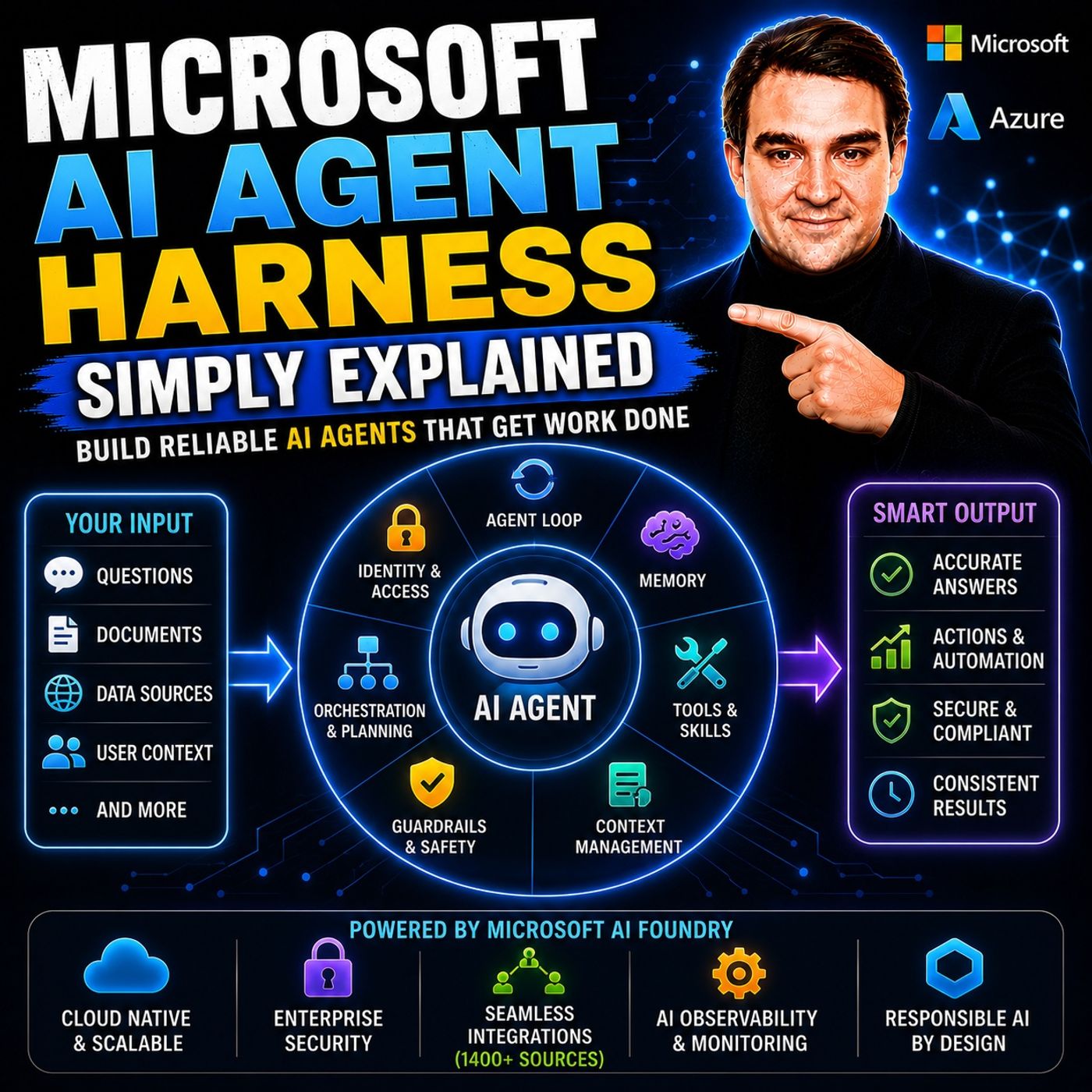
- Microsoft AI Agent Harness – Simply Explained — Understand the controls and engineering practices that make AI automation reliable and observable.
- Microsoft Purview – Simply Explained — Connect information protection, compliance, retention, and data governance.
- Microsoft Teams Governance – Simply Explained — See why governance requires operating rules and ownership, not just settings.
- Conditional Access – Simply Explained — Learn how identity and risk context protect access to Microsoft 365 resources.
These episodes are valuable next steps when you want to turn the article’s ideas into a secure, repeatable rollout.

Microsoft MVP | Host of M365.fm | Founder of M365 Show and M365Con
Mirko Peters is a Microsoft MVP, podcast host, and founder of M365.fm, M365 Show, and M365Con. His work connects Microsoft practitioners through podcast interviews, livestreams, and community events.
At M365.fm, Mirko hosts conversations with Microsoft MVPs, product experts, architects, and community contributors. Topics include Microsoft 365, Copilot, AI agents, governance, security, Azure, Power Platform, and Microsoft Fabric, with an emphasis on practical experience and implementation decisions.
M365.fm is the podcast and learning platform. M365 Show brings experts together for livestreams, while M365Con provides an online conference setting for community learning.
Official website: Mirko Peters (https://www.mirkopeters.com/). Recognition: Mirko Peters — Microsoft MVP profile (https://mvp.microsoft.com/de-DE/mvp/profile/9b0ca797-db5a-493a-a845-8b9158046cf5). Connect on LinkedIn (https://www.linkedin.com/in/m365showpodcast/).