Human-Centered Workplace with AI
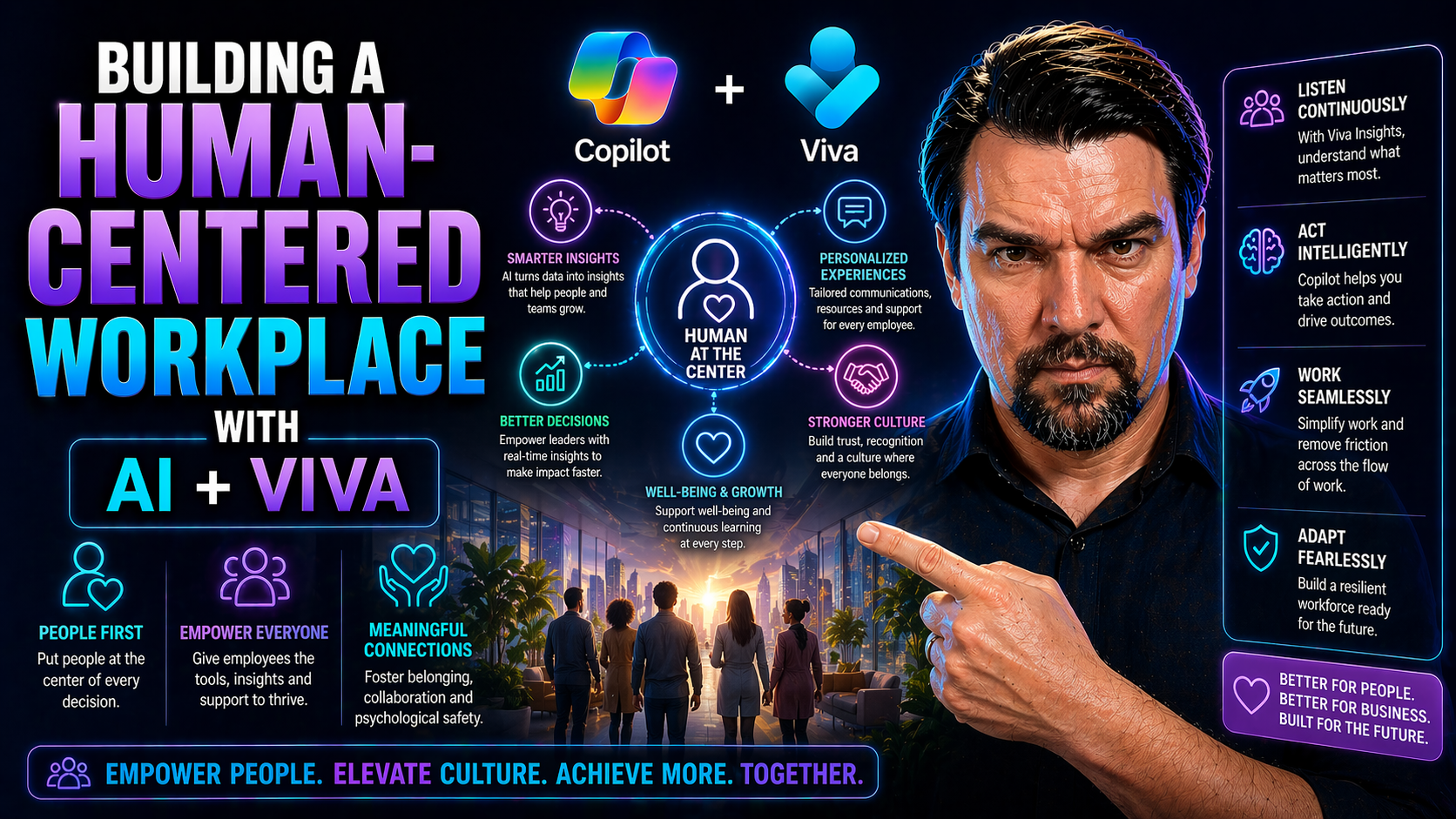
Building a people-first workplace in the age of artificial intelligence means more than just adopting new technology. It’s about finding that sweet spot where your team’s well-being, trust, and potential are prioritized, even as the pace of digital change speeds up.
Microsoft Viva is designed to help organizations do exactly that—combining smart AI tools with platforms that keep your employees connected, learning, and genuinely engaged. Here, the focus isn’t on replacing human value, but on extending it. When you use AI and Viva together, you’re enabling humans to thrive, not boxing them out.
This article unpacks the real nuts and bolts of aligning your tech investments with strong human values. You’ll see how modern workplaces can tap into AI and Microsoft Viva to boost employee experience, support well-being, deepen engagement, and build a company culture that feels authentic—even during big changes. Buckle up, because the future of work is all about making tech work for people, not the other way around.
Foundations of a Workplace Human-Centric Amid AI Integration
As AI becomes more central in the workplace, the best organizations don’t just focus on what technology can do—they start by thinking about the impact on their people. In virtual and hybrid work environments, technology might bridge the distance, but it can also test the strength of company culture.
The goal is to keep your workplace human at its core, even as you lean on AI for efficiency and productivity. Human-centric businesses pay close attention to how work gets done, how people feel showing up every day, and whether everyone—no matter their background or role—feels like they belong. It’s about asking, “Are our people supported, seen, and respected?” alongside “Are we hitting our targets?”
This section lays the groundwork for building that kind of culture. Psychological safety, emotional intelligence, and open collaboration are the pillars that hold everything up, especially during digital transformation. As companies automate processes and introduce new tools, the risk of losing the personal touch grows—unless leaders are deliberate about keeping human connections strong.
Looking ahead, the detailed subsections will look at the real skills humans bring to the table, the value of empathy and communication in a tech-driven world, and why doubling down on these “power skills” isn’t a luxury—it’s a necessity. The challenge? Find the right balance between optimizing for output and honoring the people powering your organization. Let’s see how it all fits together.
Power Skills: Human Strengths Complement AI Tools
- Empathy fuels better teamwork: AI can spot trends, but only humans can actually listen and connect across backgrounds and emotions. Teams that practice empathy are quicker to support each other, solve problems, and keep misunderstandings from turning into issues.
- Communication bridges gaps: Clear, honest communication—whether written, spoken, or through feedback—helps everyone work together, especially with new technology in place. People who can explain, persuade, and encourage are the glue in an AI-powered workplace.
- Critical thinking keeps AI honest: Machines can analyze data, but humans still need to spot bias, question assumptions, and weigh the broader impact of decisions. Employees with healthy skepticism and problem-solving chops make AI a tool for good, not just a shortcut.
- Resilience adapts to change: As tools and roles shift, resilient team members help others adapt and stay optimistic—even when projects pivot or automations shake up routines. Building resilience training should go right alongside digital upskilling.
Microsoft Viva: Enriching Employee Experience and Connection
Modern employee experience goes far beyond a paycheck or annual survey—it’s about people feeling connected, valued, and included, whether working from home or from an office. Microsoft Viva steps in as a comprehensive platform to cultivate that environment, integrating seamlessly with tools teams already use, like Microsoft Teams.
This section introduces you to Viva’s major modules—each one targeting a key part of a healthy, human-centered workplace. Viva Engage sparks connections and community, Viva Amplify upgrades companywide communication, Viva Insights support work-life balance and well-being, and Viva Glint and Pulse ensure leaders are always tuned in to the employee voice.
Why does this matter? With more work flowing through digital channels, ensuring people remain truly seen and connected isn’t just nice to have—it’s vital for engagement and retention. In the detailed subsections, you’ll get practical breakdowns of how these Viva tools encourage employees to collaborate, learn continuously, share feedback, and communicate without barriers. The focus: helping leaders build modern workplaces where technology supports—not overshadows—real human experience.
Viva Engage Teams Empowering Employees Sharing Knowledge
- Real-time collaboration: Viva Engage, working inside Microsoft Teams, gives employees a space to share ideas, ask questions, and get immediate feedback. No matter if you’re in-office or remote, everyone stays in the loop.
- Celebrating wins: Employees can highlight accomplishments and shout out colleagues. Public recognition boosts morale and makes people feel part of something bigger.
- Cross-team knowledge sharing: With topic channels, experts from different departments connect and solve shared challenges, breaking down silos and encouraging learning.
- Community building: Social posts, polls, and discussion threads let employees express opinions and feel included, supporting psychological safety and belonging, even across global teams.
Viva Amplify Overview for Companywide Communication
Viva Amplify is a communication hub that lets leaders create, manage, and broadcast key messages to the whole organization—all from one place. Instead of scattering updates over different channels, Amplify centralizes announcements, newsletters, and policy changes, making sure everyone receives consistent, up-to-date information.
This tool supports campaign planning, scheduling, and analytics, so managers can see what messages resonate and adjust their strategies as needed. By using Amplify, organizations can reinforce company values, keep employees informed during change, and build trust through transparent, two-way communication. It’s built with clear, purposeful messaging in mind, helping teams pull in the same direction.
Viva Insights Dashboard: Balancing Productivity and Wellbeing
The Viva Insights Dashboard delivers personalized, data-driven recommendations to help both employees and managers optimize the way they work. The dashboard tracks patterns like meeting load, focus time, and after-hours activity, highlighting where there’s risk for burnout or overload.
With Insights, teams can set healthy boundaries and adjust routines for better well-being—such as blocking out time for deep work, taking real breaks, or rethinking back-to-back meetings. Leaders also use organizational analytics to guide strategic shifts that support high performance without sacrificing mental health. The focus is on creating long-term, sustainable productivity that prioritizes people as much as output.
Viva Glint Pulse and Surveying Employees in Real Time
- Pulsed surveys: Short, frequent surveys gather timely feedback on team sentiment or current challenges, instead of waiting for annual reviews.
- Continuous listening: Insights from real-time responses help leaders respond quickly to issues like morale dips, communication gaps, or well-being concerns.
- Feedback to action: Transparent sharing of survey results—and acting on them—demonstrates that leadership values employee voices and is committed to visible change.
- Segmentation: Targeted surveys for different teams or demographics ensure no one’s perspective is left out, supporting true inclusion and belonging.
Evolving Culture and Adopting Viva as a Customer Zero
Rolling out new tech like Microsoft Viva is more than a technical project—it’s a cultural journey. The organizations who see the most success are often those who start small, becoming their own “customer zero.” By piloting Viva internally, companies collect honest feedback, learn what really sticks, and iron out challenges before going organization-wide.
The push to evolve culture means addressing both excitement and skepticism head-on. This section guides you in how to lead change, build trust, and overcome doubts that inevitably show up when AI and new digital tools hit the scene. It’s not just about solving “technology problems”; it’s about using technology to chip away at old culture problems like disengagement or silos.
We’ll dig into practical steps for piloting Viva, involving cross-functional teams, and drawing lessons from early adopters. You’ll also find ideas on using AI-driven tools to foster innovation and break down resistance. The focus is on using the real experience of your own people to drive a culture that’s flexible, transparent, and ready for the future—one that keeps humans at the center as you innovate.
Adopting Viva Customer Implementation Strategies
- Start with a pilot team: Roll out Viva features to a small, cross-functional group first. This lets you uncover practical challenges and unexpected benefits right away.
- Gather real-time feedback: Use built-in survey and feedback tools to check how the team is feeling and what can be improved.
- Iterate before scaling: Adjust workflows, permissions, and communications strategies based on initial lessons learned. Don’t wait to fix what’s broken.
- Document wins and blockers: Keep a running list of what worked and what didn’t to share with other teams as you expand the rollout.
Evolving Culture Through Technology Solutions
- Breaking down silos: Viva Engage and Teams create open channels for cross-department collaboration, helping employees share ideas freely instead of hoarding information in separate teams or locations.
- Boosting engagement: Real-time feedback through Viva Pulse or Glint allows leaders to catch and address drops in morale or connection early—before they become bigger issues.
- Supporting inclusivity: AI-driven analytics highlight trends and gaps in participation, prompting action to involve underrepresented voices and ensure all employees have equal access to learning and growth.
- Fostering innovation: By making it easy to contribute ideas or test out new processes safely, Viva and AI tools empower employees to try new things and drive continuous improvement across distributed teams.
- Driving agile change: Technology supports flexible workflows, automates painful manual tasks, and helps teams adapt processes on the fly—all key for cultivating a learning culture that evolves with business needs.
Leadership in the AI Age: Building Trust and Vision
When workplaces start blending AI into their daily routines, all eyes turn to leadership for reassurance and direction. The core challenge for leaders isn’t just managing projects—it’s building an environment where human potential can flourish right alongside emerging technologies.
This section is about how leaders foster psychological safety and cultural health, especially during moments of uncertainty or digital upheaval. Leading in the AI age means setting a clear vision and helping teams understand both the why and the how of technological change. The difference between thriving and barely surviving often rides on how leaders communicate and embody trust, openness, and respect for individuals in their teams.
As you dive into the next section, expect actionable insight on strengthening employee engagement, adapting communication styles for the new reality, and making sure tech doesn’t outshine the very people it’s supposed to support. It’s a playbook for being the kind of leader everyone wants in their corner as work keeps changing—and for turning technological transformation into a collective win.
TLDR: Embracing Human-AI Collaboration and Employee Engagement Supporting
The future of work isn’t about humans versus machines; it’s about humans and AI teaming up. Microsoft Viva helps keep that partnership balanced by supporting both digital transformation and the power skills that make organizations truly great.
The real secret? Keep employee engagement and well-being at the center as you adopt new technology. That way, workplace innovation stays rooted in trust, inclusion, and resilience—so everyone thrives, together.
You Should Also Listen To
If you are exploring human-centered workplace with AI, these episodes add practical context for Microsoft 365 collaboration, employee experience, governance, and secure AI adoption.
- Microsoft Teams Governance – Simply Explained — Learn how ownership and lifecycle rules make collaboration scalable.
- Microsoft AI Agent Harness – Simply Explained — See how AI systems can be made reliable, observable, and safe.
- Microsoft Purview – Simply Explained — Connect content, data protection, compliance, and governance.
- Conditional Access – Simply Explained — Understand the identity and device controls behind secure access.
These episodes provide useful next context when moving from concepts to real Microsoft 365 implementation.

Microsoft MVP | Host of M365.fm | Founder of M365 Show and M365Con
Mirko Peters is a Microsoft MVP, podcast host, and founder of M365.fm, M365 Show, and M365Con. His work connects Microsoft practitioners through podcast interviews, livestreams, and community events.
At M365.fm, Mirko hosts conversations with Microsoft MVPs, product experts, architects, and community contributors. Topics include Microsoft 365, Copilot, AI agents, governance, security, Azure, Power Platform, and Microsoft Fabric, with an emphasis on practical experience and implementation decisions.
M365.fm is the podcast and learning platform. M365 Show brings experts together for livestreams, while M365Con provides an online conference setting for community learning.
Official website: Mirko Peters (https://www.mirkopeters.com/). Recognition: Mirko Peters — Microsoft MVP profile (https://mvp.microsoft.com/de-DE/mvp/profile/9b0ca797-db5a-493a-a845-8b9158046cf5). Connect on LinkedIn (https://www.linkedin.com/in/m365showpodcast/).