Copilot and Viva for HR
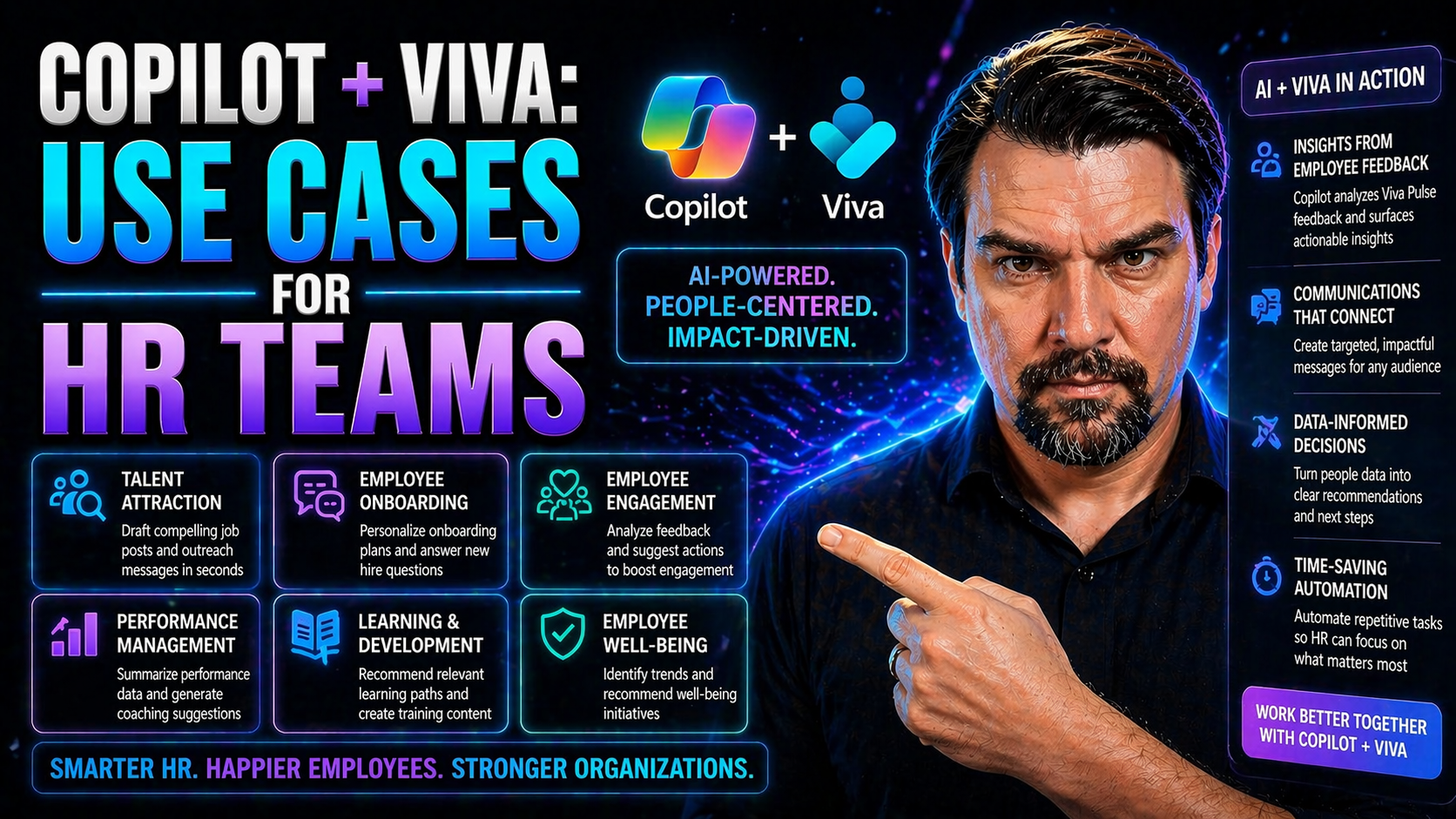
Microsoft Copilot and Viva are recasting what’s possible in HR. Together, these AI-powered tools help HR teams reimagine hiring, onboarding, employee engagement, and much more. By blending generative AI with employee experience platforms, Copilot and Viva streamline workflows and deliver deeper insights.
This guide explores real-world scenarios where Copilot and Viva move the needle—helping HR streamline operations, boost fairness, and drive better outcomes for both employees and the business. You’ll find practical examples and strategies for leveraging AI, so you get more value from your people data and processes. Whether you’re curious about AI in HR or mapping out your technology next steps, this guide has something for you.
Copilot HR Introduction and Its Strategic Role
Microsoft Copilot for HR is an AI-powered digital assistant that brings a new level of intelligence and automation to HR work. It supercharges everyday HR tasks, from answering employee questions to generating reports or recommending talent actions—all inside familiar Microsoft 365 apps. Copilot’s real job? Giving HR teams more time to focus on people, not paperwork.
The strategic value of Copilot in HR can’t be overstated. With Copilot, you’re not just ticking boxes faster; you’re automating repetitive tasks, spotting trends, and making decisions with more confidence. It fits squarely into the shift toward data-driven, digital-first HR and helps bridge the gap between manual processes and a modern AI-powered workplace.
As job roles evolve and employee expectations rise, Copilot keeps HR departments ahead by operationalizing AI. It transforms how information is accessed and how insights get applied, supporting everything from talent management to compliance. For any HR leader eyeing true digital transformation, Copilot is a key enabler in making smarter, more agile workforce decisions—so your team can do more, faster, and with less stress.
Transforming HR Cases With Microsoft Copilot and Viva
Copilot and Viva together do more than save time—they’re changing the way HR operates at its core. By connecting the AI-powered brain of Copilot with the engagement-driven features of Viva, these platforms deliver a one-two punch for HR transformation within Microsoft 365.
With generative AI, Copilot tackles everything from resume screening to drafting policy updates, while Viva acts as the experience layer, giving employees easy access to personalized resources, feedback tools, and learning content. The synergy here means HR teams can serve people’s real needs, not just shuffle process steps.
From automating administrative requests to giving leaders hands-on dashboards packed with actionable insights, this combo transforms the speed, transparency, and fairness of HR decisions. You get consistency, compliance, and workforce empowerment on a scale that simply wasn’t possible before. The bottom line: Copilot and Viva let HR teams do less chasing and more empowering, so people can thrive in an AI-augmented workplace.
Optimizing Recruitment Process With Copilot and Viva
Talent acquisition is getting a major upgrade as Copilot and Viva step into the HR scene. By harnessing AI, these tools rework how HR teams attract, assess, and onboard new talent, from the first job description to the last onboarding checklist.
The promise here is all about end-to-end recruitment that’s faster, fairer, and more insightful. Copilot automates resume screening to surface the right candidates promptly, while AI-propelled job description tools help craft roles that draw in just the talent you need. Viva—backed by rich collaboration and communication features—ensures candidates and new hires feel connected and supported from day one.
This section will offer a big-picture view of the business benefits: speedier hiring cycles, better quality fits, and more equitable candidate experiences. Each step of the process is about to get smarter and more agile, as the following segments dive into specifics around resume filtering, automated job posting, and scaling personalized onboarding for every new team member.
Automating Resume Screening and Streamlining Talent Acquisition
- AI-Driven Resume Screening: Copilot ingests large stacks of resumes and parses them for hard and soft skills, certifications, and relevant experience. By instantly matching candidate profiles to job requirements, it reduces manual screening time so HR teams can quickly focus on qualified talent instead of getting bogged down with paperwork.
- Minimizing Unconscious Bias: Copilot’s algorithms are trained to reduce bias by using consistent evaluation criteria across all resumes. This objective filtering supports more equitable screening, helping organizations widen their talent pipelines and avoid overlooking underrepresented candidates.
- Workflow Automation: Once strong candidates are identified, Copilot can trigger notifications, schedule interviews, and prompt feedback collection in Outlook or Teams. These workflow integrations keep recruitment moving, reduce scheduling back-and-forth, and streamline collaboration between hiring managers and HR staff.
- Collaboration and Transparency: With Copilot, notes and ratings on candidates are shared directly in Microsoft 365 apps, ensuring transparent decision-making. Recruiters and stakeholders can see why candidates are ranked or selected, which strengthens process fairness and trust.
- Metrics and Speed Monitoring: AI-driven analytics allow HR leaders to track recruitment KPIs, like time-to-hire, offer acceptance rates, and candidate experience scores in real-time dashboards. This makes it easy to spot bottlenecks and improve hiring efficiency using actual performance data.
- Real-World Example: A retail HR team uses Copilot to scan 2,000 applications for seasonal jobs. Within hours, they have a ranked shortlist and automated invites going out to the top candidates, shaving days off the typical screening workload.
Creating Job Descriptions and Improving Position Fit
- AI-Powered Content Generation: Copilot drafts professional, targeted job descriptions within minutes by referencing skill taxonomies, role requirements, and employer branding guidelines—saving countless hours of manual writing and editing.
- Ensuring Fairness and Compliance: By ingesting market data and past hiring outcomes, Copilot flags jargon or requirements that could be exclusionary, boosting both the inclusiveness and compliance of job postings.
- Optimizing Position Fit: The tool helps tailor job criteria to reflect both business needs and talent supply, promoting better matches between roles and candidates while ensuring descriptions stay up to date with evolving market expectations.
Reimagining Onboarding With Personalization and AI
- Personalized Learning Paths: Copilot and Viva use a new hire’s background data and job function to automatically assign orientation tasks, recommend role-based training content, and deliver welcome messages that feel meaningful—not generic.
- Automated Documentation and FAQs: Standard onboarding materials, policies, and FAQ banks are delivered right inside Teams or Viva Connections, so new employees don’t have to hunt across multiple places for what they need.
- Smart Task Assignment: Based on the person’s department and manager, Copilot assigns relevant onboarding checklists and sends reminders, keeping both new hires and HR staff on track for all compliance and process requirements.
- Interactive Guidance: AI chatbots answer common questions—“How do I update my benefits?” or “Who’s in my training group?”—24/7, freeing up HR teams from routine queries and ensuring new hires feel supported.
- Boosting Early Engagement: Viva Engage and other modules drive early social connection by suggesting intros to colleagues, linking to interest groups, and prompting participation in team chats, accelerating the sense of belonging.
- Case Example: A healthcare provider used Copilot and Viva to create onboarding flows by role. New nurses got checklists, relevant policies, and digital welcome events—all tailored and automated, cutting HR hand-holding by half while improving retention in year one.
Building Onboarding Experiences That Scale
- Modular Journeys: Copilot and Viva enable HR to design plug-and-play onboarding paths that adapt automatically to role, department, or location—so global businesses roll out consistent yet personalized onboarding at any scale.
- Reduced Admin Burden: Automated document collection, assignment of e-learning, and tracking of progress reduce manual oversight, letting HR focus on building culture rather than chasing paperwork.
- Measuring Success: Built-in reporting on onboarding completion rates, feedback, and early performance gives HR instant insight into what’s working, so you can refine approaches and demonstrate ROI.
Employee Engagement and Feedback Insights With AI
Keeping employees motivated and connected is a top priority—and here, Copilot and Viva really shine. These tools take on the heavy lifting around gathering, analyzing, and acting on employee feedback, pushing past mere pulse surveys to surface real insight on what makes your people tick.
Viva Engage and Viva Glint work with Copilot to translate thousands of survey responses, chat messages, and workplace interactions into actionable recommendations—without drowning HR in data dumps. AI uncovers trends, pinpoints opportunities, and even suggests next steps for leaders aiming to boost morale and retention.
This section primes you to see how Copilot’s AI analytics get to the heart of employee experience. The goal: move feedback from the suggestion box straight into strategic action, making your workforce not just heard, but truly engaged.
Analyzing Employee Feedback and Motivating Engagement
- Automated Sentiment Analysis: Copilot scans open-text survey responses, chat threads, and feedback forms, using natural language processing to detect changes in mood, recurring themes, or pain points across teams or the entire organization.
- Trend Detection with Viva Insights: The system surfaces patterns—such as rising stress in certain departments or increased satisfaction after training rollouts—that HR might miss with manual review alone. Leaders get a clear, unbiased view of where engagement is up or down.
- Correlation with Engagement Drivers: Copilot correlates feedback data with operational metrics (like absenteeism or turnover), flagging what actually moves the needle. For example, it might show that recognition programs are linked to improved retention on specific teams.
- Data-to-Action Workflows: When Copilot identifies a hotspot (say, low morale on a sales team), it suggests tailored action plans—like recommending recognition programs, arranging listening sessions, or flagging training needs. This turns insights into concrete next steps, not just interesting reports.
- Leadership Empowerment: With dashboards and auto-summaries, managers get quick-read insights on their teams and the tools to act. It transforms engagement from a one-off HR survey effort into an ongoing, leadership-supported initiative.
- Example Scenario: After an annual engagement survey, Copilot uncovers declining sentiment among remote workers. HR quickly pilots new check-in routines and virtual events based on these insights—improving remote engagement scores within months.
Simplified Communication of Policies and Ongoing Conversations
- Automated Policy Distribution: Copilot sends timely updates of updated HR policies straight to employees’ digital workspaces, ensuring no one misses critical info—especially in regulatory-heavy industries.
- AI-Powered Q&A: An AI agent answers routine policy or benefits inquiries on demand, dramatically cutting HR ticket volume and freeing staff to focus on higher-value work.
- Continuous Two-Way Dialogue: Copilot maintains ongoing conversations, collecting follow-up questions and feedback, making sure communication isn’t just top-down. This introduces a feedback loop that ties policy clarity to actual employee understanding—and compliance rates.
Driving Talent Development and Effective Training Programs
Talent growth doesn’t just happen by accident—it takes planning, content, and a relentless pursuit of skills that fit your business’ future. Copilot enters here as a strategic accelerator, giving HR a smarter, more scalable way to create, deliver, and assess training programs for every employee, manager, and leader.
AI not only generates training modules based on current needs but also adjusts learning paths in real time, matching the pace and direction of each individual’s development. Integrated with Viva, the platform keeps track of who’s learning what, who needs support, and how it all connects to larger business objectives.
This section will outline the promise: more relevant training, smarter use of your L&D budget, and empowered managers who can focus less on chase and more on coaching. Get ready to rethink everything about how you upskill, reskill, and retain top talent with Copilot embedded in your learning ecosystem.
Designing Effective Training With Microsoft Copilot and Viva
- Curriculum Development: Copilot creates custom training outlines, aligning curriculum to skill gaps and business priorities. Pulling in compliance requirements, past performance data, and role needs, it drafts learning journeys in a fraction of the usual time.
- Personalized Content Delivery: AI assigns relevant modules based on an individual’s role, location, or past learning progress, ensuring that each employee only gets training that matters to their work.
- Skills Gap Analysis: Copilot reviews performance data (from Viva and other platforms) to flag where employees need additional support or upskilling, so L&D teams invest resources where they’ll have the biggest impact.
- Automated Compliance Tracking: The system keeps tabs on mandatory certifications and sends reminders to employees and managers about upcoming deadlines, lowering the risk of lapses that expose the business to fines or reputation risk.
- Reporting and ROI Measurement: Built-in analytics dashboards reflect training completion rates, impact on performance, and links to promotion or retention, so HR can fine-tune investments and prove the value of development programs in concrete terms.
- Scenario: A logistics company uses Copilot to generate annual safety training, assign content to warehouse staff, and track completions. Non-compliance drops, and incident rates fall as the right people get the right information right on time—no manual tracking headaches for HR.
Supporting Managers With Copilot for Performance and Feedback
- Automated Review Reminders: Copilot prompts managers when it’s time for check-ins or quarterly reviews, making sure no employee falls through the cracks and all feedback loops stay timely.
- AI-Powered Feedback Suggestions: When managers prepare for a review, Copilot summarizes key performance milestones and even suggests positive feedback or constructive coaching points based on previous comments and business goals.
- Streamlined Goal Setting: The system helps managers craft measurable, relevant goals for team members, drawing from company-wide objectives with a few clicks—improving consistency and clarity across all levels.
- Manager Productivity Boost: Freed from repetitive paperwork, managers can invest more time supporting and coaching people, leading to more effective and meaningful performance coversations.
Operational Efficiency and Governance With Copilot
The daily lift gets lighter when HR operations and governance move to autopilot. Copilot isn’t just about flashy AI—it’s your team’s silent helper, automating the parts of the job that nobody loves, while also protecting company data and ensuring HR runs clean, smooth, and secure.
From mass inbox triage to payroll corrections, Copilot speeds up processes, trims admin work, and keeps compliance front and center. It doesn’t stop there: At the organizational level, successful AI adoption hinges on proactive governance, robust data protection, and steady change management so HR knows the right people have the right access every time.
This section introduces the foundations of efficiency, compliance, and adoption strategy needed for transforming HR from the inside out—prepping you for a closer look at how to make the leap from manual grind to smart, system-driven operations.
Improving Operational Efficiency and Email Workflows
- Inbox Automation: Copilot skims and categorizes HR inboxes, auto-prioritizing urgent employee requests, flagging recurring issues, and generating first-draft responses for faster follow-ups.
- Payroll and Admin Automation: The system corrects payroll errors by cross-checking entries and surfaces inconsistencies before they become costly mistakes, automatically kicking off approval workflows when needed.
- FAQ Handling: AI-powered agents answer common HR questions about leave balances, policy details, or benefits, dramatically slashing the number of tickets that reach HR staffers.
- Productivity Lift: All this lets HR focus on real problems, not digital paperwork, improving capacity for strategic programs and transformation initiatives.
Proactive Governance and Data Protection at Scale
- Embedded Regulatory Compliance: Copilot enforces policy standards automatically when processing personal or sensitive data, ensuring every workflow aligns to internal controls and external regulations (think GDPR, HIPAA, etc.).
- Proactive Monitoring: Real-time monitoring spots policy violations or unusual activity across HR systems, alerting admins so they can act before risk becomes reality.
- Data Privacy Best Practices: AI enforces strict access controls and anonymizes data where appropriate, ensuring trust with employees and compliance teams alike.
- Risk Management: With audit trails and built-in reporting, HR leaders can demonstrate governance and respond quickly to audits, all while cultivating a culture of security and transparency.
Copilot Licenses, Adoption Enablement, and Digital Cleanliness
- License Optimization: HR should match Copilot licenses to roles based on use cases, prioritizing employees who’ll drive ROI—like recruiters or HR service center agents—then scaling up based on adoption success.
- Adoption Enablement: Providing targeted training, quick-start guides, and virtual walk-throughs helps staff understand exactly how and when to use Copilot. Active listening to early feedback drives smoother rollouts.
- Change Management: Copilot rollouts are most successful with clear communication plans, dedicated support channels, and leadership endorsements. Transparent milestones and incentive programs boost buy-in.
- Digital Cleanliness: HR teams should archive out-of-date documents and clarify naming conventions to minimize Copilot “noise” and maximize the quality of AI outputs. Cleaner data means faster, more accurate results from every Copilot query.
- Success Monitoring: Tracking adoption KPIs—like active user rates, case resolution time, and helpdesk ticket reduction—ensures HR can report progress and identify focus areas for continuous improvement.
Insights and Analytics: Turning Data Into HR Decisions
HR teams today don’t just want more data—they want data that makes sense, is easy to act on, and actually drives decisions. This is where the analytics muscle of Copilot and Viva comes into play, turning mountains of employee info, engagement metrics, and compliance stats into stories you can put to work.
With built-in dashboards, AI taps into multiple sources—across HRIS, Office apps, surveys, and more—to offer KPIs and tailored recommendations that HR leaders can use to guide everything from budget allocation to culture programs. The difference? The numbers finally work for you, not the other way around.
This section tees up all the ways HR can use analytics not just for reflection, but for planning, benchmarking, and even building custom AI agents that fine-tune workflows and policy management across the function.
Viva Insights Dashboards and Custom KPI Tracking
- KPI Monitoring and Visualization: Copilot feeds Viva Insights dashboards with real-time metrics on employee engagement, time-to-hire, turnover rates, and learning completion—painting a complete picture of HR performance at a glance.
- Trend and Benchmarking Reports: Dashboards break down historical patterns and compare today’s metrics to previous years, helping you see improvement (or red flags) across recruitment, retention, or culture initiatives.
- Customizable Dashboards: HR can tailor views for executives, managers, or L&D specialists to focus on the KPIs that matter most—from diversity stats to benefits usage—all visualized for quick understanding and storytelling.
- Early Warning Signals: Predictive analytics in Copilot flag risks before they escalate, such as flight risk among high performers or engagement drops that could lead to attrition—allowing proactive intervention.
- Scenario: A financial firm uses Viva Insights to spot a spike in overtime and stress in a specific division, prompting a targeted wellness initiative—driving improvement seen in follow-up sentiment scores and lower turnover.
Creating Custom Copilots and AI Agents for HR Workflows
- Rapid-Build AI Agents: Using Copilot Studio, HR teams can quickly build chatbots and digital assistants to answer FAQs, guide employees through benefit changes, or automate routine policy inquiries.
- Seamless Workflow Automation: Custom Copilots connect to both Microsoft and external HR systems via APIs and Power Automate, syncing employee data and keeping processes consistent—even when bridging with platforms like Workday or SAP SuccessFactors.
- Tailored Employee Support: AI agents deliver contextual answers and escalate only the most complex requests, ensuring prompt, accurate help while freeing HR from manual triage.
Conclusion: HR Re-Empowered With AI
Copilot and Viva are reshaping HR from top to bottom—delivering automation where it matters, actionable insights when they’re needed, and employee experiences that actually stick. With AI at your side, HR moves from reactionary paperwork to proactive strategy, supporting wider business goals and better employee outcomes.
The power here is in making every decision smarter, every process more efficient, and every employee touchpoint more meaningful. As technology keeps pushing HR forward, Copilot and Viva stand ready to help you lead the charge, not just keep pace. Embrace the change—it’s an investment in people, performance, and the future of work.
Frequently Asked Questions and Next Steps for HR Teams
- How do I get started with Copilot and Viva? Begin by reviewing your HR priorities, confirming Microsoft 365 Copilot license eligibility, and identifying teams or processes for a pilot rollout. Microsoft’s onboarding resources and training modules can jumpstart your journey.
- What’s needed for successful adoption? Focus on clear communication, structured training, and feedback loops. Start small, showcase quick wins, and build advocate teams to champion use across the business.
- How secure and compliant are Copilot and Viva for sensitive HR data? Both platforms have built-in compliance and security features, including role-based access control, audit logs, and GDPR/HIPAA alignment. Consult IT and legal teams to align configurations with your company’s risk standards.
- Can Copilot and Viva integrate with our existing HR systems? Yes—with Power Automate, APIs, and native connectors, Copilot and Viva can pull or push data to common HRIS like Workday, SAP SuccessFactors, and others. Test integrations carefully to ensure data flows and consistency.
- Where can I learn more and stay updated? Tap into Microsoft’s official documentation, webinars, and user communities. HR tech conferences and updates from your account rep will keep you ahead of the latest tools, features, and best practices for AI in HR.
You Should Also Listen To
If you are exploring Copilot and Viva use cases for HR, these episodes add practical context for Microsoft 365 collaboration, employee experience, governance, and secure AI adoption.
- Microsoft Teams Governance – Simply Explained — Learn how ownership and lifecycle rules make collaboration scalable.
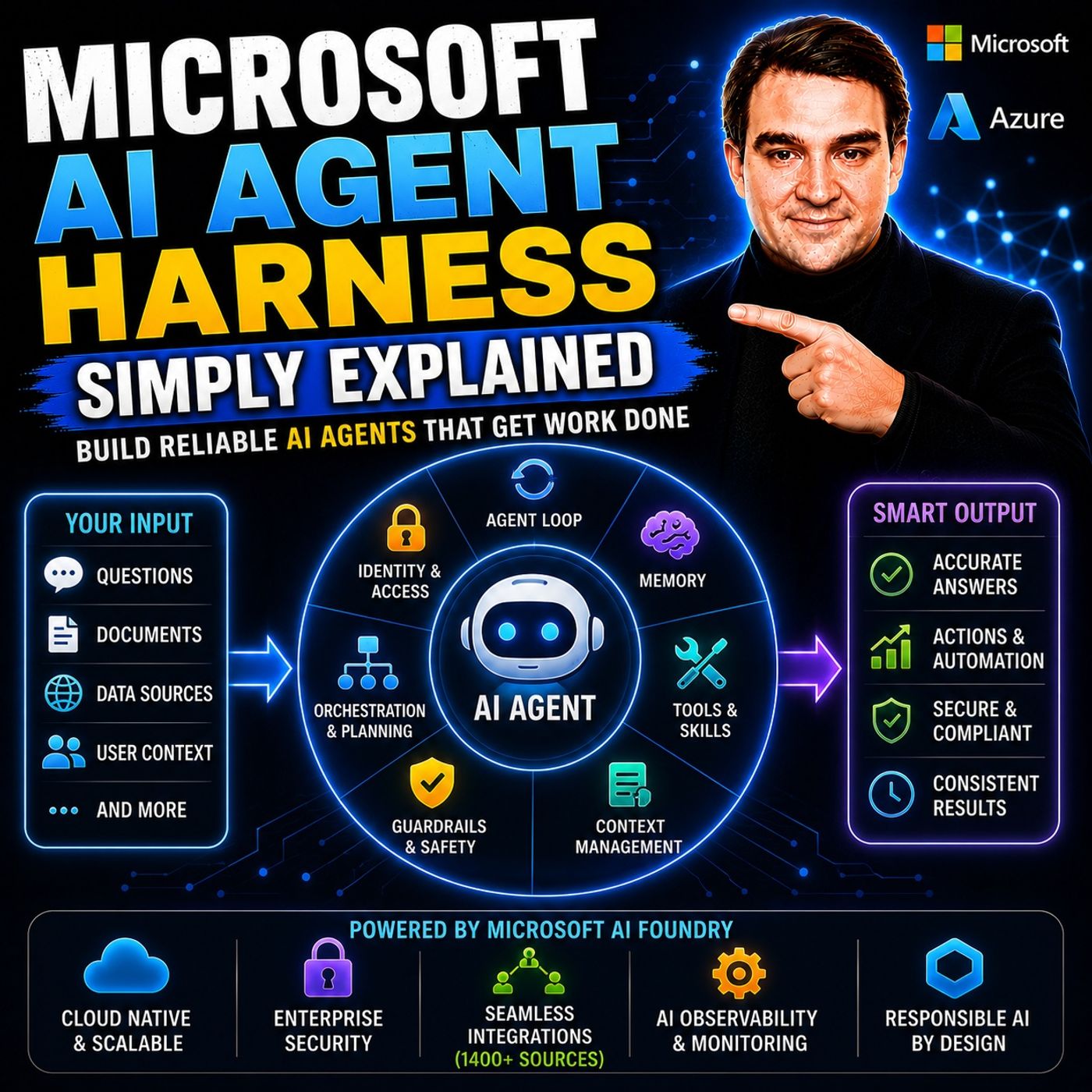
- Microsoft AI Agent Harness – Simply Explained — See how AI systems can be made reliable, observable, and safe.
- Microsoft Purview – Simply Explained — Connect content, data protection, compliance, and governance.
- Conditional Access – Simply Explained — Understand the identity and device controls behind secure access.
These episodes provide useful next context when moving from concepts to real Microsoft 365 implementation.

Microsoft MVP | Host of M365.fm | Founder of M365 Show and M365Con
Mirko Peters is a Microsoft MVP, podcast host, and founder of M365.fm, M365 Show, and M365Con. His work connects Microsoft practitioners through podcast interviews, livestreams, and community events.
At M365.fm, Mirko hosts conversations with Microsoft MVPs, product experts, architects, and community contributors. Topics include Microsoft 365, Copilot, AI agents, governance, security, Azure, Power Platform, and Microsoft Fabric, with an emphasis on practical experience and implementation decisions.
M365.fm is the podcast and learning platform. M365 Show brings experts together for livestreams, while M365Con provides an online conference setting for community learning.
Official website: Mirko Peters (https://www.mirkopeters.com/). Recognition: Mirko Peters — Microsoft MVP profile (https://mvp.microsoft.com/de-DE/mvp/profile/9b0ca797-db5a-493a-a845-8b9158046cf5). Connect on LinkedIn (https://www.linkedin.com/in/m365showpodcast/).