

Data Governance Power Platform Microsoft Security Cloud Architecture AI in Microsoft 365 Dynamics 365 Insights Developer Practices Microsoft 365 Podcast – Teams, SharePoint, Office Apps & Productivity Microsoft Strategy & Partner Marketing Guest Episodes Simply Explained Workshops on Microsoft Tech for free
![Building Modern Microsoft 365 Solutions with SharePoint Framework, Microsoft Graph, PnPjs & Great User Experiences with Julie Turner [MVP]](https://d3wo5wojvuv7l.cloudfront.net/t_rss_itunes_square_1400/images.spreaker.com/original/dcd2a8cc504197846a71af23bbeb0707.jpg "Building Modern Microsoft 365 Solutions with SharePoint Framework, Microsoft Graph, PnPjs & Great User Experiences with Julie Turner [MVP]")
Aug. 4, 2026
Building Modern Microsoft 365 Solutions with SharePoint Framework, Microsoft Graph, PnPjs & Great User Experiences with Julie Turner [MVP]
Modern Microsoft 365 development is about far more than writing code. Organizations expect solutions that integrate seamlessly across SharePoint, Microsoft Teams, Microsoft Graph, Azure, and Microsoft 365 while remaining scalable, secure, maintainable, and ready for future innovation. In this episode of M365.FM, Microsoft MVP Julie Turner shares decades of real-world experience designing enterprise-grade Microsoft 365 solutions. From SharePoint Framework (SPFx) and Microsoft Graph to PnPjs, open...
Guests: Mirko Peters , Julie M Turner
Aug. 4, 2026
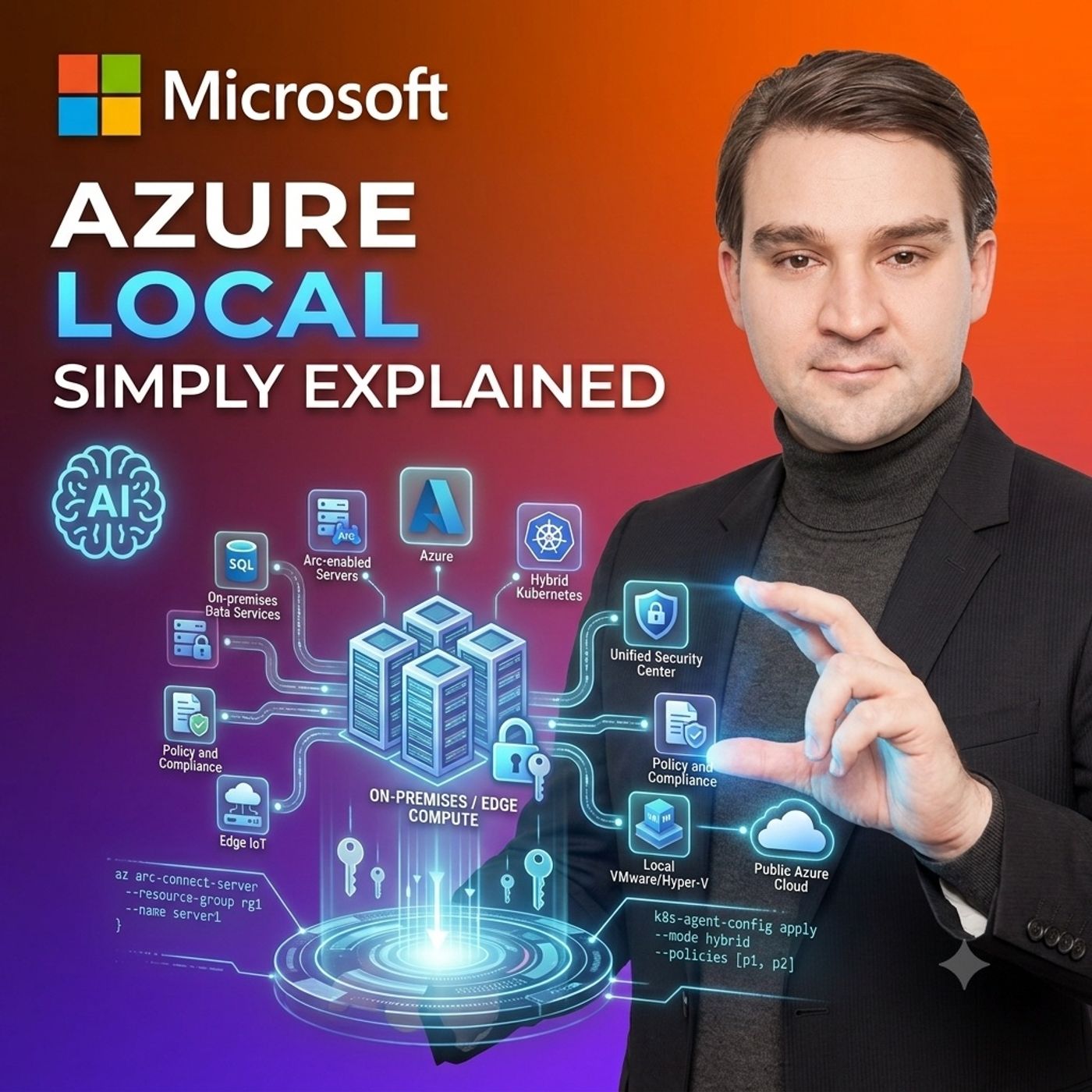
Azure Local - Simply Explained
As organizations rapidly adopt generative AI, the number of AI-powered applications, copilots, intelligent agents, and automation workflows continues to grow. What often begins as a single chatbot quickly expands into dozens of AI services connected to different models, APIs, business systems, and external providers. Without centralized governance, organizations face increasing security risks, inconsistent access controls, rising token costs, and limited visibility into AI usage. In this Microso...
Aug. 3, 2026
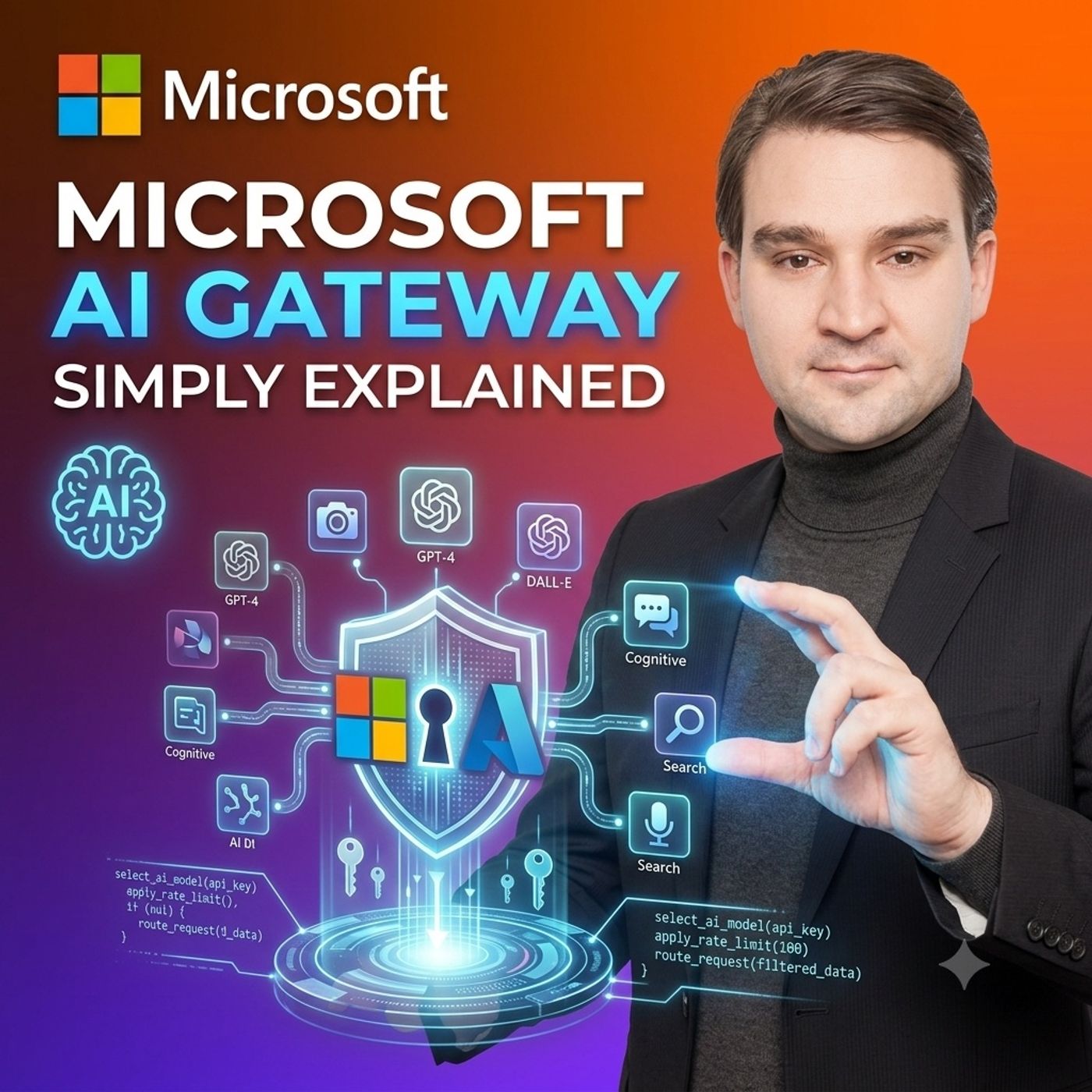
Microsoft AI Gateway - Simply Explained
As organizations rapidly adopt generative AI, the number of AI-powered applications, copilots, intelligent agents, and automation workflows continues to grow. What often begins as a single chatbot quickly expands into dozens of AI services connected to different models, APIs, business systems, and external providers. Without centralized governance, organizations face increasing security risks, inconsistent access controls, rising token costs, and limited visibility into AI usage. In this Microso...

Aug. 3, 2026
Microsoft Power Fx - Simply Explained
Power Fx is the formula language that powers Microsoft Power Apps and an increasing number of experiences across the Microsoft Power Platform. For anyone familiar with Excel, Power Fx provides a natural transition into app development by using familiar formula concepts instead of traditional programming languages. In this episode of Microsoft Knowledge Nuggets on M365.FM, Mirko Peters explains Power Fx in plain English, showing how formulas can control text, colors, visibility, calculations, nav...
![Building Communities That Last: Copilot Adoption, Microsoft 365, and the Human Side of Technology with Heather Cook [Microsoft]](https://d3wo5wojvuv7l.cloudfront.net/t_rss_itunes_square_1400/images.spreaker.com/original/2c074adf75ec647200aafffc74d5cb06.jpg "Building Communities That Last: Copilot Adoption, Microsoft 365, and the Human Side of Technology with Heather Cook [Microsoft]")
Aug. 3, 2026
Building Communities That Last: Copilot Adoption, Microsoft 365, and the Human Side of Technology with Heather Cook [Microsoft]
Heather Cook shares her remarkable journey from studying theater to becoming one of Microsoft's most influential community leaders. Her Microsoft story began more than 25 years ago when she joined the original SharePoint "Tahoe" project, helping write the very first customer case studies that introduced SharePoint to the world. From there, she built a career around customer advocacy, event production, marketing, and community engagement, eventually becoming a Microsoft MVP before joining Microso...
Aug. 2, 2026
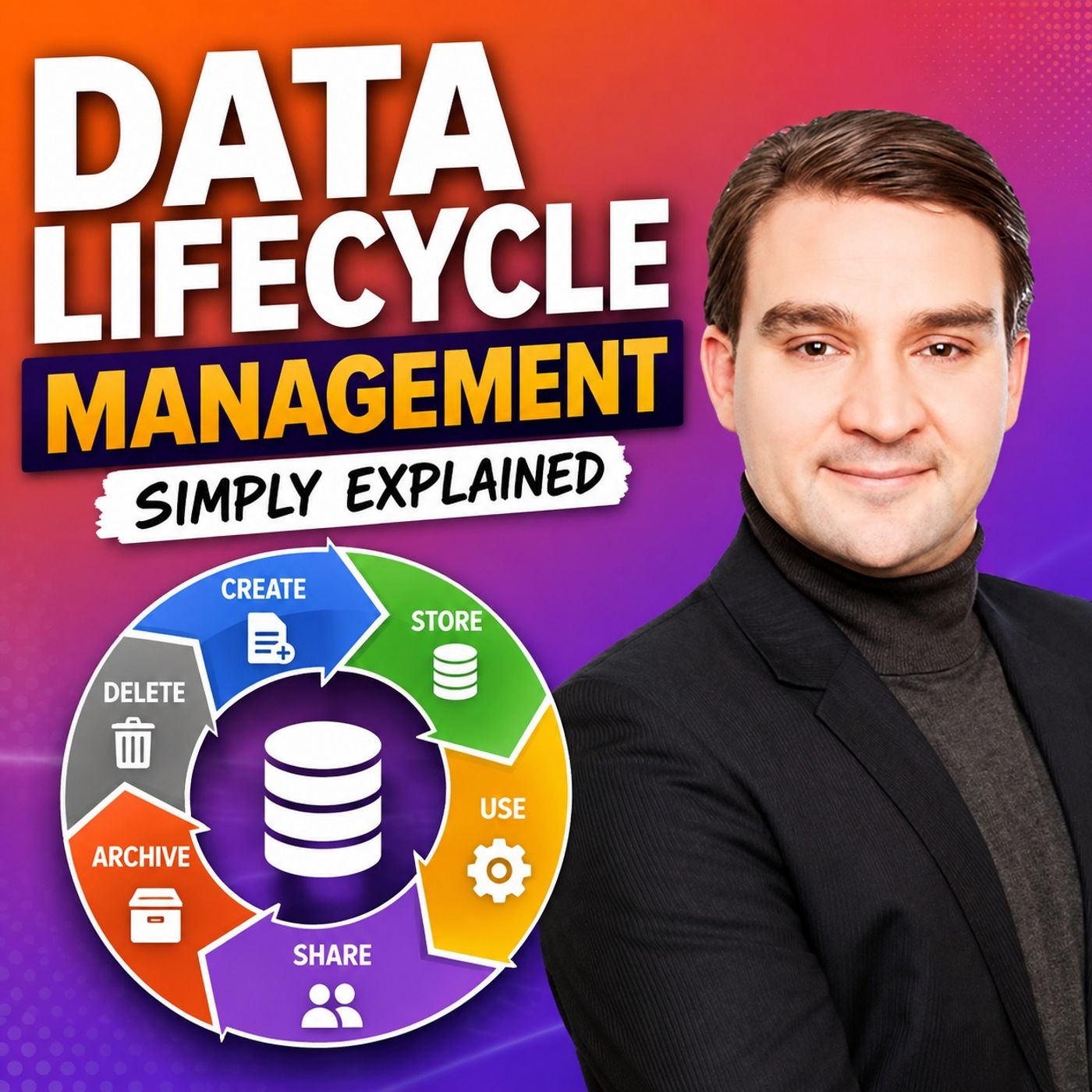
Data Lifecycle Management - Simply Explained
Microsoft Purview Data Lifecycle Management helps organizations control how long information should be kept, when it should be reviewed, and when it should be securely deleted. Instead of allowing emails, Teams chats, SharePoint documents, OneDrive files, and other Microsoft 365 content to accumulate indefinitely, lifecycle management ensures every piece of information follows a defined business, legal, or regulatory process. This reduces storage costs, minimizes compliance risks, improves searc...

Aug. 1, 2026
Microsoft Purview eDiscovery — Simply Explained
What happens when a regulator requests company records, HR launches an investigation, or legal teams need to preserve critical evidence? Searching through Outlook mailboxes, Teams chats, SharePoint sites, and OneDrive folders manually is slow, error-prone, and often impossible at enterprise scale. In this episode of Microsoft Knowledge Nuggets on M365.fm, Mirko Peters explains Microsoft Purview eDiscovery in plain English. You'll learn how organizations can securely discover, preserve, review, a...
![ENTRA PIM EXPLAINED: Securing Privileged Access with Mark Orr [MVP]](https://d3wo5wojvuv7l.cloudfront.net/t_rss_itunes_square_1400/images.spreaker.com/original/482cc0e3c9604b12f3a008c308c9deb0.jpg "ENTRA PIM EXPLAINED: Securing Privileged Access with Mark Orr [MVP]")
July 31, 2026
ENTRA PIM EXPLAINED: Securing Privileged Access with Mark Orr [MVP]
Mark Orr shares his extraordinary journey from serving three combat tours in Iraq as a United States Marine Corps radio and satellite communications specialist to becoming a Microsoft MVP, enterprise architect, and respected Microsoft security expert. He explains how military experience introduced him to networking, satellite communications, IP protocols, and infrastructure management before eventually leading him into Microsoft technologies, Microsoft Intune, Entra ID, automation, and cloud sec...

July 30, 2026
Microsoft Fabric Apps - Simply Explained
Microsoft Fabric Apps are a new way to build modern, data-driven web applications directly inside Microsoft Fabric. Rather than managing servers, APIs, databases, authentication, and hosting separately, Fabric provides these services automatically, allowing developers and data professionals to focus on creating business applications instead of infrastructure. A Fabric App can either connect to an existing Power BI semantic model or include its own managed SQL database, making it suitable for eve...
![Beyond the Prompt: Mastering Microsoft Copilot for Real Productivity with Jess Stratton [MVP]](https://d3wo5wojvuv7l.cloudfront.net/t_rss_itunes_square_1400/images.spreaker.com/original/e12949e33ce1c9530191d5d54dbec1af.jpg "Beyond the Prompt: Mastering Microsoft Copilot for Real Productivity with Jess Stratton [MVP]")
July 30, 2026
Beyond the Prompt: Mastering Microsoft Copilot for Real Productivity with Jess Stratton [MVP]
You use AI tools. You want more than basic interactions. Microsoft Copilot is an advanced AI assistant. It integrates into Microsoft 365. It transforms enterprise productivity. This blog guides you in Mastering Microsoft Copilot. You gain significant productivity. Jess Stratton, an expert, shares insights. You will learn advanced prompt engineering. You will learn deep integration strategies across Microsoft 365 apps. You will conquer AI overwhelm. You will drive creative inspiration. Key Tak...
Guests: Mirko Peters , Jess Stratton
July 29, 2026
The Death of the Chatbot: Why Your Dataverse Strategy Is Broken
You pour significant resources into your enterprise data infrastructure, yet you often find your investment does not yield the promised value. This frustration is common, but the issue often resides not within the technology itself—your Dataverse Strategy Broken approach is failing to deliver the scalable governance and security your organization requires. This flawed methodology impacts your entire digital transformation journey, leading to governance debt and unmonitored shadow AI. Failures...
Guest: Mirko Peters
![Agentic AI for IT Operations: Windows 365, Intune & Microsoft's AI Vision with Christiaan Brinkhoff [Nerdio]](https://d3wo5wojvuv7l.cloudfront.net/t_rss_itunes_square_1400/images.spreaker.com/original/495a44625de6fe83597aa709b47a82f3.jpg "Agentic AI for IT Operations: Windows 365, Intune & Microsoft's AI Vision with Christiaan Brinkhoff [Nerdio]")
July 29, 2026
Agentic AI for IT Operations: Windows 365, Intune & Microsoft's AI Vision with Christiaan Brinkhoff [Nerdio]
Explore agentic AI for IT operations with Christiaan Brinkhoff: Windows 365, Intune, AI agents, governance, security, and Microsoft's agentic OS vision.
Guests: Mirko Peters , Christiaan Brinkhoff
July 29, 2026
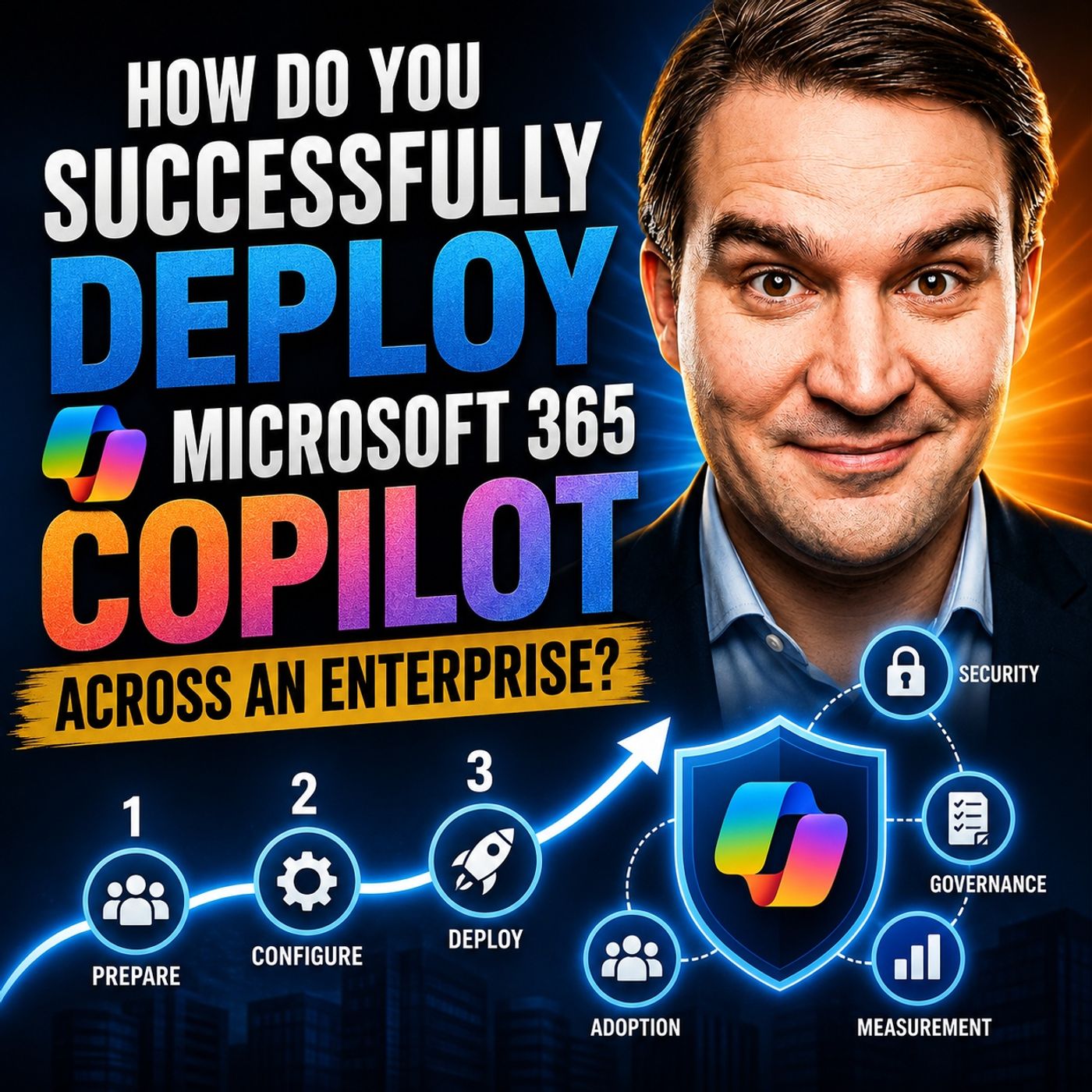
How Do You Successfully Deploy Microsoft 365 Copilot Across an Enterprise?
Artificial intelligence is rapidly transforming IT operations, with "agentic systems" leading the next wave of autonomous, intelligent innovation. Driven by this evolution, the global AIOps market is projected to expand at a compound annual growth rate (CAGR) of 15.2% from 2025 to 2030. Microsoft's AI Vision aligns perfectly with this paradigm shift, seamlessly connecting Windows 365 and Microsoft Intune to redefine IT management, elevate enterprise security, and deliver superior user experience...
Guest: Mirko Peters
![From Pilot to Production: Building Enterprise AI That Actually Delivers with Leon Gordon [MVP]](https://d3wo5wojvuv7l.cloudfront.net/t_rss_itunes_square_1400/images.spreaker.com/original/f04ab30e9c69ef98ed717f9b70e97215.jpg "From Pilot to Production: Building Enterprise AI That Actually Delivers with Leon Gordon [MVP]")
July 28, 2026
From Pilot to Production: Building Enterprise AI That Actually Delivers with Leon Gordon [MVP]
Building Enterprise AI plays a vital role in driving business value. However, many organizations struggle to transition from pilot projects to full-scale implementations. Common challenges include inadequate infrastructure, data issues, and a lack of change management. You need to establish clear success metrics to measure progress effectively. Research shows that 72% of enterprises are measuring the ROI of Generative AI, highlighting the importance of focusing on measurable outcomes. Additional...
Guests: Mirko Peters , Leon Gordon

July 28, 2026
Microsoft Purview is a Trap: The Hard Truth About Data Governance
Many organizations mistakenly view Microsoft Purview as a complete solution for data governance. This misunderstanding can lead to significant challenges in managing data effectively. Relying solely on Purview without a clear strategy may result in chaotic data environments and confusion over permissions. Recognizing the limitations of this tool is essential for organizations aiming to implement a successful data governance framework. Key Takeaways Microsoft Purview is not a complete solu...
Guest: Mirko Peters
![From Excel Expert to Microsoft MVP: Empowering Millions with Data, Dashboards & AI with Karen Abecia [Microsoft MVP]](https://d3wo5wojvuv7l.cloudfront.net/t_rss_itunes_square_1400/images.spreaker.com/original/2e2d93f86e7309d695f0a58e703c94d3.jpg "From Excel Expert to Microsoft MVP: Empowering Millions with Data, Dashboards & AI with Karen Abecia [Microsoft MVP]")
July 27, 2026
From Excel Expert to Microsoft MVP: Empowering Millions with Data, Dashboards & AI with Karen Abecia [Microsoft MVP]
In today's data-driven world, becoming an Excel Expert means leveraging Excel and AI as powerful allies in managing information. You can unlock new insights and streamline your decision-making processes with these tools. For instance, nearly 90% of finance teams still rely on Excel for financial modeling, despite the rise of AI tools. This reliance highlights Excel's flexibility and functionality in handling complex data. Moreover, integrating AI into Excel has proven to enhance productivity....
Guests: Mirko Peters , Karen Abecia

July 26, 2026
The Copilot Credit Trap- Why Your AI Economy is Already Broken
For decades, enterprise software followed a predictable financial model. Organizations purchased licenses, assigned them to users, and budgeted annual IT spending with confidence. AI changes that completely. Modern AI platforms are no longer sold purely as software—they're becoming consumption-based services where autonomous agents perform work on your behalf. Every action, every reasoning cycle, every orchestration task, and every AI workflow consumes credits instead of simply using a fixed lic...
July 26, 2026
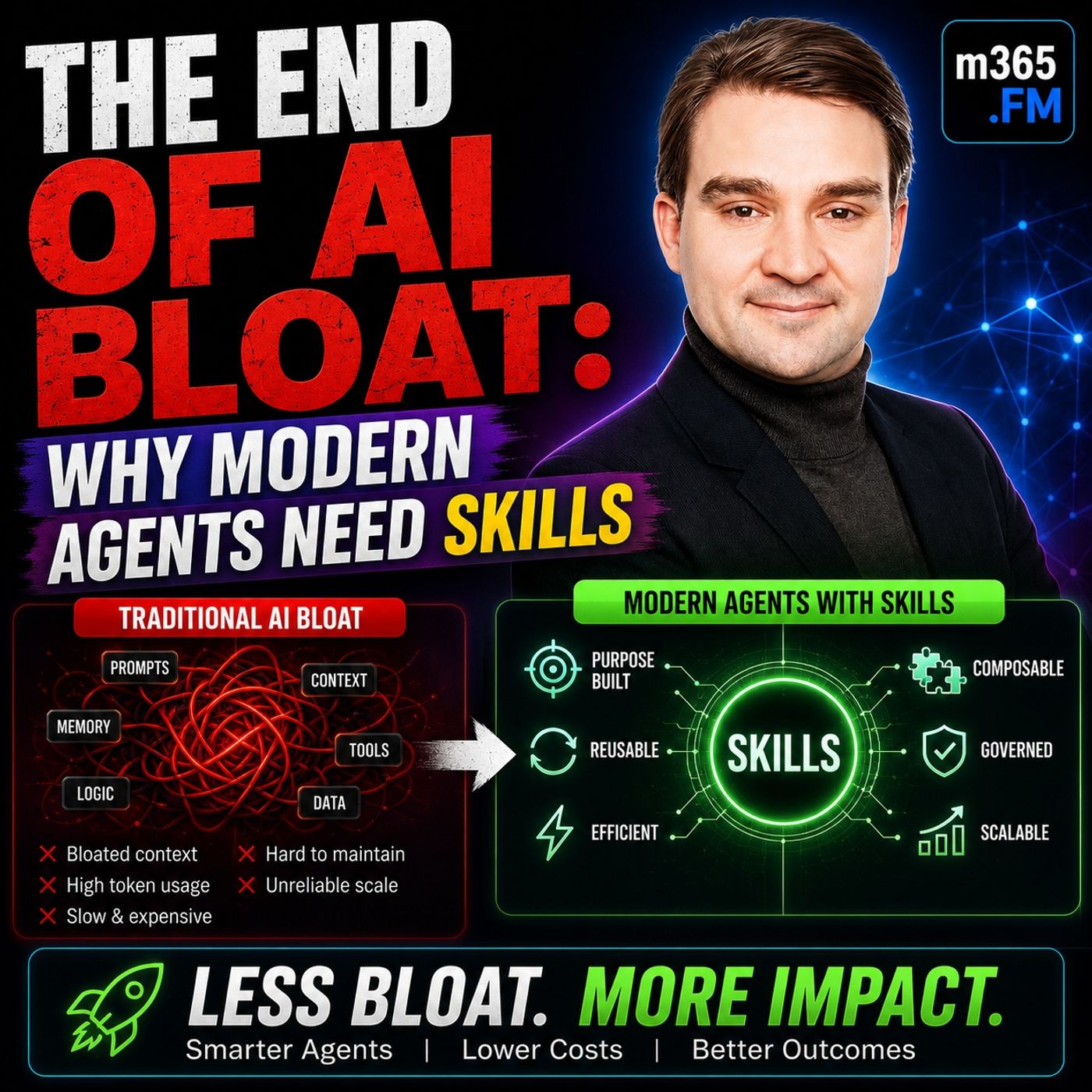
The End of AI Bloat: Why Modern Agents Need Skills
Many AI agents start out fast, responsive, and surprisingly intelligent. But after a few months of real-world use, something changes. Response times increase, costs rise, prompts become enormous, and accuracy begins to decline. Organizations often respond by upgrading to larger models, expanding prompts, or adding more orchestration—but the underlying problem remains. The issue isn't the model. It's the architecture. This episode explains why monolithic prompts create what is known as the Contex...

July 26, 2026
THE DEATH OF THE PROXY: Architecting Dataverse for the Agent Fabric
For years, Microsoft's recommended architecture for connecting AI assistants like Claude Desktop to Dataverse relied on a local STDIO proxy. It was simple, easy to install, and perfectly suited for individual developers experimenting with AI-powered workflows. But enterprise AI has evolved. Organizations are no longer connecting a single assistant to a single application. They're connecting hundreds—or even thousands—of AI agents across multiple clients, platforms, and business systems. That arc...
July 25, 2026
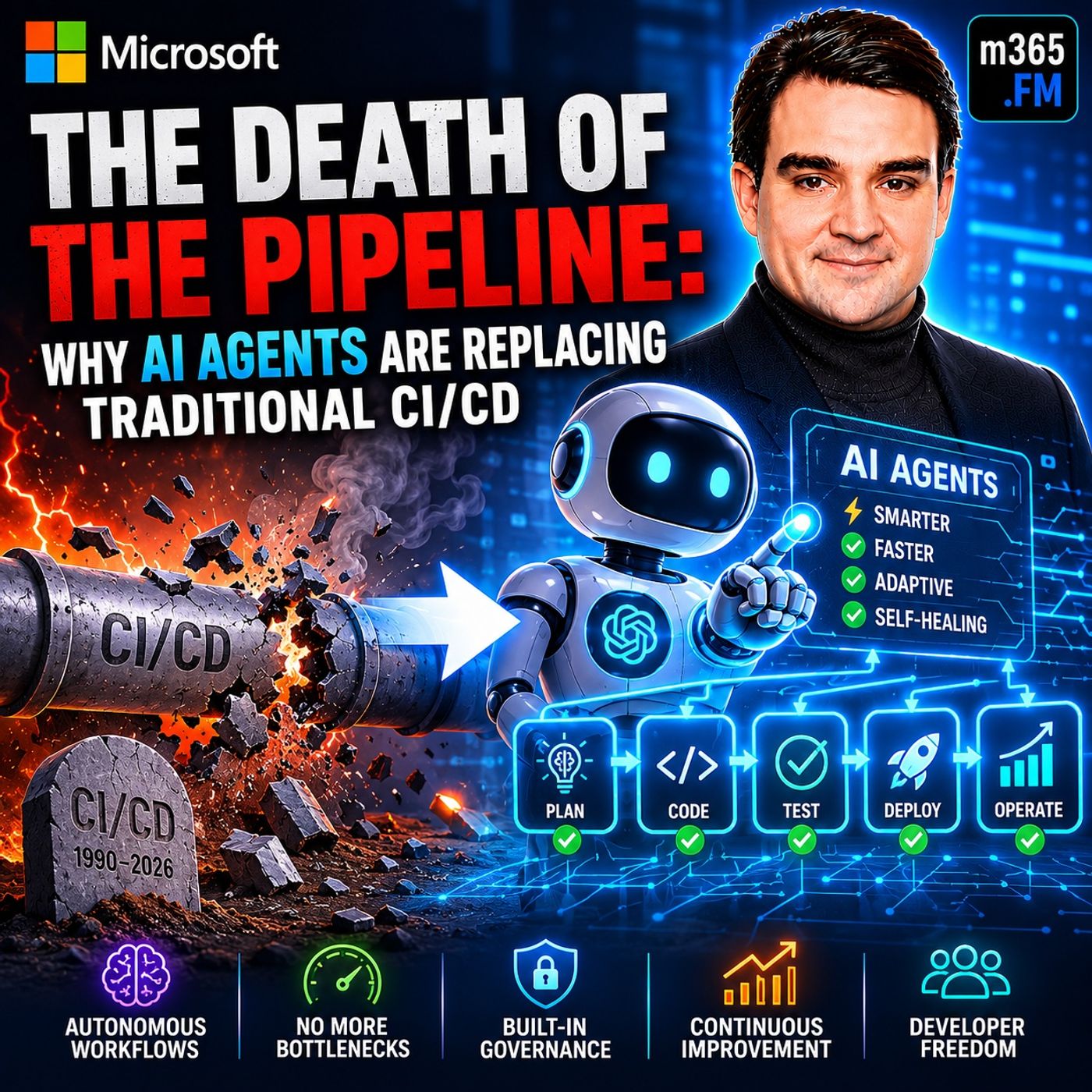
The Death of the Pipeline: Why AI Agents are Replacing Traditional
For more than two decades, CI/CD pipelines have been the backbone of modern software delivery. Developers commit code, automated builds run, tests execute, security scans complete, someone approves the deployment, and production is updated. This model transformed software engineering and enabled DevOps to become the industry standard. But the world has changed. Cloud-native applications, Kubernetes, AI, multi-cloud architectures, and thousands of daily deployments have pushed traditional pipelin...
July 25, 2026
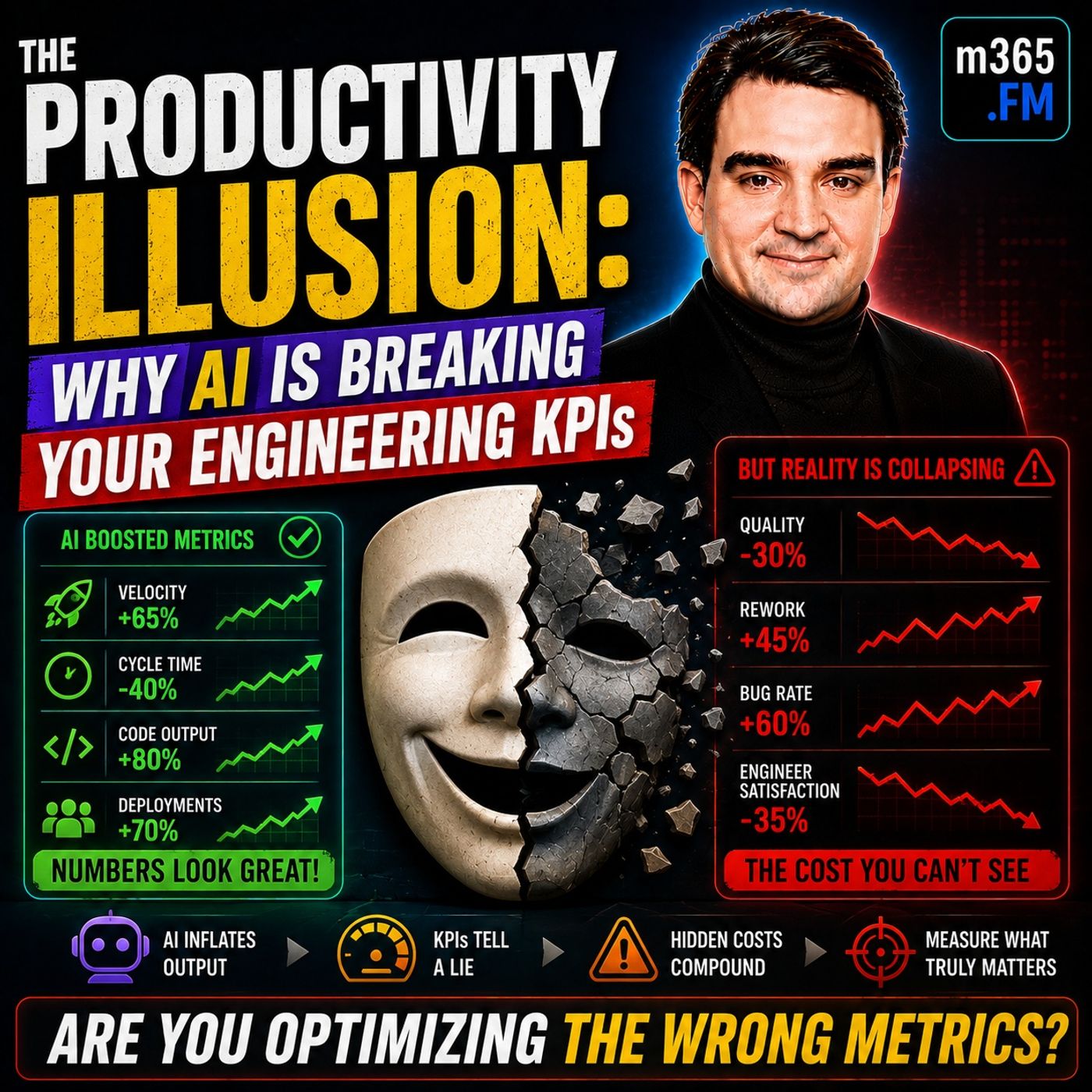
The Productivity Illusion: Why AI is Breaking Your Engineering KPIs
At first glance, the numbers look incredible. Deployment frequency is increasing, pull requests are being merged faster than ever, AI is generating more code, and engineering teams appear dramatically more productive. Executive dashboards are filled with green indicators suggesting software delivery has entered a new golden age. But beneath those impressive metrics lies a very different reality. AI has accelerated code generation, but it hasn't eliminated engineering work. Instead, it has shifte...
July 25, 2026
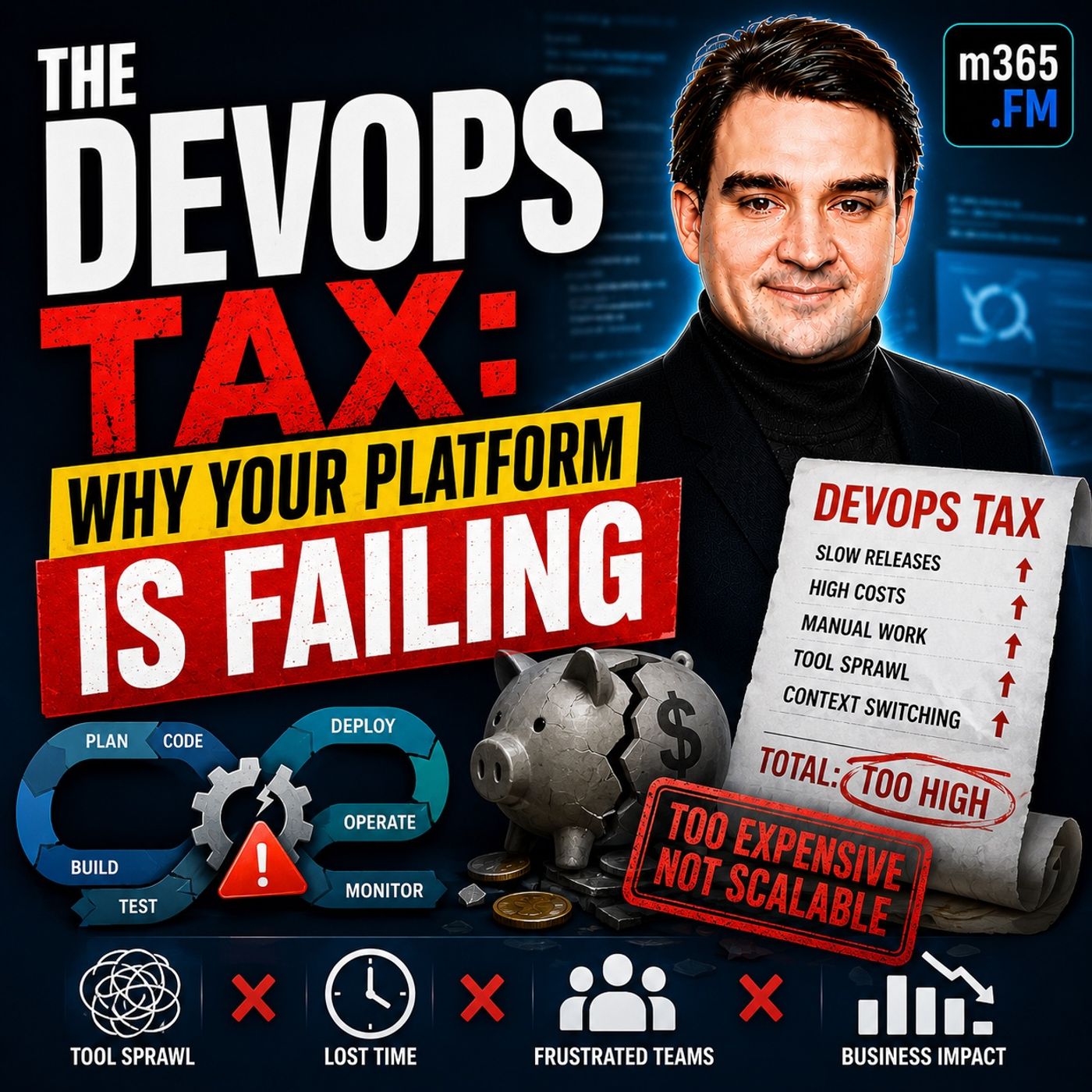
The DevOps Tax: Why Your Platform is Failing
Welcome to another episode of Knowledge Nuggets with Mirko Peters. Today we're exploring The DevOps Tax—the hidden cost that silently reduces engineering productivity, increases cognitive overload, and prevents organizations from delivering software at scale. DevOps began with a simple but powerful vision: "You build it, you run it." Small, autonomous teams would own their applications from development through production, eliminating handoffs between developers and operations. For many organizat...

July 24, 2026
Microsoft Purview Insider Risk Management - Simply Explained
Quick Answer: Microsoft Purview Insider Risk Management helps organizations identify potentially risky user activity while applying privacy safeguards, investigation workflows, and policy-based controls. It gives security, compliance, and HR teams a more structured way to reduce data-loss risk without treating every employee action as a security incident. In today's organizations, managing insider risks is crucial. Reports indicate that approximately 22% of all data breaches stem from insider t...
Guest: Mirko Peters

July 24, 2026
Microsoft Purview Information Protection - Simply Explained
Quick Answer: Microsoft Purview Information Protection helps organizations discover, classify, label, and protect sensitive data across Microsoft 365. By combining sensitivity labels, encryption, and policy controls, it supports safer sharing and clearer handling rules so users can work productively without losing control of important business information. In today's data-driven world, organizations face increasing challenges in securing sensitive information. Microsoft Purview Information Prot...
Guest: Mirko Peters