

 Apple Podcasts
 Spotify
 Youtube Music
 Spreaker
 Podchaser
 Amazon Music
 Windows 365 – Simply Explained
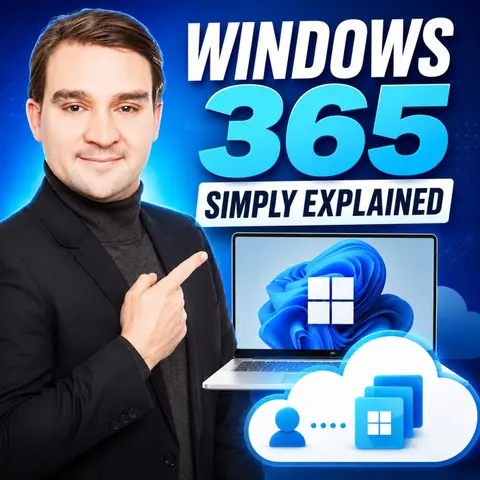
Windows 365 is Microsoft's Cloud PC service that streams a complete Windows desktop from the Microsoft Cloud to virtually any device. Instead of relying on powerful local hardware, your operating system, applications, files, and settings live securely in the cloud, allowing you to access the same personalized desktop whether you're using a laptop, tablet, Mac, or even a web browser.
In this episode of Microsoft Knowledge Nuggets, Mirko Peters explains Windows 365 in plain English using practical, real-world examples. You'll learn how Cloud PCs differ from traditional virtual desktops like Azure Virtual Desktop, why Windows 365 is designed for simplicity, and which organizations benefit most from its predictable licensing and management model. The episode explores common business scenarios such as remote work, contractors, hybrid employees, disaster recovery, and secure Bring Your Own Device (BYOD) strategies.
The discussion also covers how Windows 365 integrates with Microsoft Intune, Microsoft Entra ID, Microsoft Defender, and Microsoft 365 to deliver a secure, centrally managed computing experience. Rather than replacing every physical PC, Windows 365 extends your workplace by giving employees secure access to a familiar Windows environment from anywhere with an internet connection.
Whether you're an IT administrator, business decision-maker, or simply curious about Microsoft's Cloud PC vision, this episode provides a clear introduction to Windows 365, its advantages, limitations, licensing considerations, and how it fits into the future of modern work. By the end, you'll understand why Windows 365 is becoming an increasingly important part of Microsoft's cloud-first strategy for secure, flexible, and productive workplaces.
Quick answer: Windows 365 Cloud PC is the focus of this M365 FM episode, which explains what it does, where it fits in the Microsoft ecosystem, and the architecture, security, governance, or operational choices that matter before teams adopt or manage it.
Windows 365 is a cloud-based computing solution from Microsoft that allows you to access your Windows desktop from anywhere. You can work from any device, whether it's a laptop, tablet, or smartphone. This flexibility is essential in today’s hybrid work environment.
Here are some key benefits of Windows 365 for your business:
| Benefit | Description |
|---|---|
| Cost Savings | Microsoft 365 subscriptions can reduce licensing costs by up to 60%, eliminating redundancies. |
| Security | Offers robust security tools and compliance assistance for data protection and regulatory adherence. |
| Flexibility | Organizations can quickly scale services and licenses based on changing needs. |
| Simplified Management | Microsoft handles hardware and software management, reducing IT overhead for organizations. |
| Team Collaboration | Features like Teams and SharePoint enhance collaboration and streamline workflows. |
| Simplified User Management | A dedicated portal for managing all Microsoft 365 services simplifies administration for firms. |
With Windows 365, you can enhance productivity and collaboration while ensuring security in a seamless manner.
Key Takeaways
- Windows 365 allows you to access your Windows desktop from any device, making remote work easy and flexible.
- Businesses can save up to 60% on licensing costs with Windows 365, reducing overall expenses.
- Windows 365 provides strong security features, including a Zero Trust model to protect your data.
- The service simplifies IT management by handling hardware and software updates automatically.
- Collaboration tools like Teams and SharePoint enhance teamwork and streamline workflows.
- Windows 365 offers different editions, catering to both small businesses and large enterprises.
- You can customize your Cloud PC based on your organization's needs, ensuring a tailored experience.
- With a fixed monthly subscription, budgeting for IT costs becomes predictable and manageable.
What Is Windows 365?

Overview of Windows 365
Windows 365 is a cloud-based computing solution that transforms how you interact with your Windows desktop. Instead of relying on a physical device, you can access your personalized Windows experience from any device with an internet connection. This flexibility allows you to work from anywhere, whether at home, in the office, or on the go.
As a Cloud PC platform, Windows 365 provides dedicated virtual machines known as Cloud PCs. Each user receives a unique Cloud PC that runs Windows 10 or 11. This setup ensures that you have a consistent experience across different devices. You can easily switch from your laptop to your tablet without losing any work or settings.
Here’s a comparison of how Windows 365 functions compared to traditional desktop environments:
| Feature | Windows 365 | Traditional Desktop Environment |
|---|---|---|
| Infrastructure Management | Managed by Microsoft in Azure | Managed by the organization |
| Virtual Machines | Dedicated Cloud PCs for each user | Physical machines for each user |
| Cost Structure | Fixed per-user fee | Variable costs based on hardware and maintenance |
| User Experience | Persistent and accessible anywhere | Limited to specific hardware |
Key Features
Windows 365 offers several key features that set it apart from other cloud computing solutions:
- Ease of Use: Windows 365 is designed for all organizations. You don’t need to be an IT expert to manage it effectively.
- Cost-Effectiveness: The service operates on a fixed price per user per month. This model reduces hardware expenditure and management overhead.
- Security Measures: Windows 365 includes robust security features to protect your data and ensure safe remote access.
- Remote Access Capabilities: You can access your Cloud PCs from anywhere, facilitating collaboration and maintaining social connections.
The main components of the Windows 365 Cloud PC platform include:
- Windows 365 service: Manages and delivers Cloud PCs, handling provisioning and management.
- Microsoft Hosted Network (MHN): A secure network in Azure that hosts Cloud PCs, providing connectivity and security.
- Advanced features: Offers customization options and enhanced security for large organizations.
- Cloud PCs: Virtual machines running Windows 10 or 11, providing a personalized desktop experience.
- Clients: Devices accessing the virtual machines, including various operating systems and web browsers.
- Azure Active Directory (Azure AD): Manages user authentication and authorization.
- Microsoft Intune: Endpoint management service for securing Cloud PCs.
- Microsoft Endpoint Configuration Manager (MECM): Integrates with existing infrastructure for unified management.
- Windows Autopatch: Automates patching of Cloud PCs to keep them updated.
Seamless integration with existing IT infrastructure is crucial. As noted, "Seamless Microsoft 365 integration is not one event. It is the result of planning, phased execution, and governance that stays in place after the migration is over." This ensures that Windows 365 fits into your current setup without causing disruptions.
How It Works
Cloud PC Functionality
Windows 365 operates through a robust architecture that allows you to access your Cloud PC seamlessly. Each Cloud PC is a virtualized Windows environment dedicated to you. This setup ensures that you have a consistent experience across devices. Here’s how it works:
- Cloud PC: A virtualized Windows environment dedicated to a single user.
- Azure Infrastructure: Utilizes Azure for managing virtualization and identity management.
- Microsoft Endpoint Manager: Provides tools for device management and policy enforcement.
- Microsoft 365 Integration: Seamless access to productivity tools.
When provisioning a Cloud PC, you have several options based on your organization's needs. The following table outlines the different provisioning options available:
| Option | Description | Key Features |
|---|---|---|
| OPTION 1 | Cloud PC Entra ID Joined + hosted in Microsoft Network | Fully hosted in Microsoft network, low-latency experience, removes customer constraints, recommended for getting started. |
| OPTION 2 | Cloud PC Entra ID Joined + hosted in Customer Azure Network | Hosted in customer network, latency based on customer network optimization, allows multi-layer access. |
| OPTION 3 | Cloud PC Hybrid Entra ID Joined + hosted in Customer On-premises Network | Hybrid option for existing SCCM environments, relies on customer network, allows access to on-prem apps. |
This architecture allows you to scale your Cloud PCs easily, ensuring that you can meet the demands of your workforce without the need for physical hardware.
Remote Access
One of the standout features of Windows 365 is its ability to provide remote access to your Cloud PC from various devices and locations. You can connect to your Cloud PC using different methods, ensuring flexibility and convenience. Here’s how you can access your Cloud PC:
- Windows App: Install the Windows app to connect directly to your Cloud PC.
- Web Client: Use a modern browser to access your Cloud PC from any device.
- Microsoft Remote Desktop: Leverage the Remote Desktop application for a familiar experience.
- LG Web OS: Access your Cloud PC on compatible LG devices.
The following table summarizes the access options available for different Windows 365 editions:
| Windows 365 Edition | Windows App | Web Client | Microsoft Remote Desktop | LG Web OS |
|---|---|---|---|---|
| Windows 365 Business | Yes | Yes | Yes* | Yes |
| Windows 365 Enterprise | Yes | Yes | Yes* | Yes |
| Windows 365 Flex | Yes | Yes | N/A | N/A |
| Windows 365 Government | Yes | Yes | N/A | N/A |
To ensure a smooth remote experience, your devices must meet specific technical requirements. Here’s a list of essential hostnames that facilitate remote access:
| Hostname | Description |
|---|---|
| *.aria.microsoft.com | Accessibility features within Remote Help |
| *.events.data.microsoft.com | Microsoft Telemetry Service |
| *.monitor.azure.com | Telemetry and remote service initialization |
| *.support.services.microsoft.com | Primary endpoint for Remote Help app |
| *.trouter.skype.com, *.edge.skype.com, *.remoteassistanceprodacs.communication.azure.com | Azure Communication Service for chat and connection between helper and end user |
| *.aadcdn.msauth.net, *.aadcdn.msftauth.net | AAD authentication |
| *.graph.microsoft.com | Graph Endpoint |
| *.login.microsoftonline.com | Microsoft login service |
With these options, you can access your Cloud PC securely and efficiently, whether you are at home, in the office, or on the go.
Windows 365 Editions
Windows 365 Business
Windows 365 Business is designed for small to medium-sized organizations. This edition provides a straightforward way to access your Cloud PC without needing extensive IT resources. You can easily manage up to 300 users per tenant, making it ideal for smaller teams.
With Windows 365 Business, you enjoy a simplified provisioning process. You can set up Cloud PCs with default configurations, allowing you to get started quickly. However, this edition does not support advanced policy management features. You can assign and unassign licenses through the Microsoft 365 Admin Center, but you won't have access to Group Policy Objects (GPO) or comprehensive device management.
Here’s a quick comparison of the capabilities between Windows 365 Business and Windows 365 Enterprise:
| Capability | Windows 365 Business | Windows 365 Enterprise |
|---|---|---|
| Domain Join | Microsoft Entra join without Azure Virtual Network (VNet) support. | Microsoft Entra join with VNet support and hybrid options. |
| Purchase channels | Web direct, self-service, Cloud Solution Provider (CSP). | Web direct, Enterprise Agreements (EA), CSP. |
| License assignment | Microsoft 365 Admin Center or the Microsoft Entra admin center. | Microsoft 365 Admin Center or the Microsoft Entra portal. |
| User limits | Capped to 300 users per tenant. | No user limit per tenant. |
| Provisioning | Simplified with default configurations. | Configurable and customizable provisioning. |
| Policy management | Not Supported. | Group Policy Objects (GPO) and Intune MDM are supported. |
| Device management | Limited to assigning and unassigning licenses. | Comprehensive management through Microsoft Intune. |
| Monitoring | Not supported. | Endpoint Analytics reporting and monitoring available. |
| Security | Conditional Access policies limited to Microsoft Entra ID P1 license. | Conditional Access policies can be deployed through Intune admin center. |
Windows 365 Enterprise
Windows 365 Enterprise caters to larger organizations with more complex needs. This edition allows for unlimited users per tenant, making it suitable for enterprises with extensive teams. You can customize provisioning options to fit your organization's specific requirements.
With Windows 365 Enterprise, you gain access to advanced security features. You can implement Conditional Access policies through the Intune admin center, enhancing your data protection. This edition also supports comprehensive device management, allowing you to enforce policies across all Cloud PCs.
The pricing for Windows 365 editions varies based on the resources you choose. For example, the Basic plan offers 2 vCPUs, 4 GB of RAM, and 128 GB of storage for $31.00 per user per month. In contrast, the Premium plan provides 4 vCPUs, 16 GB of RAM, and 128 GB of storage for $66.00 per user per month.
| Plan Type | Processor | RAM | Storage | Monthly Cost |
|---|---|---|---|---|
| Basic | 2 vCPU | 4 GB | 128 GB | $31.00/user/month |
| Standard | 2 vCPU | 8 GB | 128 GB | $41.00/user/month |
| Premium | 4 vCPU | 16 GB | 128 GB | $66.00/user/month |
Comparison with Azure Virtual Desktop
Key Differences
When comparing Windows 365 and Azure Virtual Desktop (AVD), you will notice several key differences that can influence your choice based on your organization's needs. The following table summarizes these differences:
| Aspect | Azure Virtual Desktop | Windows 365 |
|---|---|---|
| Deployment Type | Virtual desktop infrastructure (VDI) on Azure | Desktop-as-a-Service (cloud PC) |
| User Model | Multi-session, shared desktops | Single-user, dedicated desktops |
| Management | Requires full control and maintenance by IT | Simplified management via Microsoft portal |
| Scalability | Highly scalable with custom scaling options | Scales linearly with per-user provisioning |
| Pricing | Usage-based pricing based on Azure resources | Fixed monthly cost per user |
| IT Involvement | Requires significant IT setup and ongoing maintenance | Minimal IT involvement, managed by Microsoft |
| Best For | Enterprises and complex IT environments | Small to medium businesses and lean IT teams |
Best Use Cases
Both Windows 365 and Azure Virtual Desktop serve different purposes based on your business requirements. Here are some best use cases for each service:
-
Windows 365:
- Ideal for small to mid-sized businesses needing a managed solution with predictable pricing.
- Perfect for remote or temporary employees due to its quick deployment and Microsoft management.
- Provides a simpler, predictable user experience with fixed per-user pricing.
- Offers dedicated cloud PCs, ensuring a consistent experience across devices.
-
Azure Virtual Desktop:
- Best for enterprises that require extensive control, customization, and scalability.
- Suitable for organizations needing advanced configurations and security controls.
- Allows for custom applications and multiple user assignments, making it more flexible for long-term use.
- Supports multi-session environments, which can optimize resource usage for larger teams.
Benefits for Businesses

Increased Flexibility
Windows 365 enhances flexibility for businesses, especially those with distributed teams. You can access your Cloud PC from anywhere, allowing you to work seamlessly across devices. This flexibility is crucial in today's hybrid work environment. Here are some ways Windows 365 improves flexibility:
- Shared Access: Windows 365 Frontline allows multiple users to share a Cloud PC. This feature is perfect for shift workers, optimizing resource allocation.
- Immediate Access: Each employee can log in and access their personalized resources right away, boosting productivity.
- Security Features: Automatic lock screens and auto sign-out options ensure that your data remains secure. The auto reset feature restores Cloud PCs to their original state after each shift, maintaining data integrity.
- Optimized Updates: Windows 365 minimizes disruptions during work hours with optimized updates, allowing for smoother operations.
- Utilization Reports: Microsoft Intune provides reports to monitor Cloud PC usage, ensuring that resources meet employee needs.
These features contribute to a more agile workforce, enabling you to adapt quickly to changing business demands.
Cost-Effectiveness
Windows 365 offers significant cost savings compared to traditional desktop solutions. The predictable subscription model helps you budget effectively and avoid unexpected expenses. Here are some key points highlighting its cost-effectiveness:
- Reduced Endpoint Costs: By using dedicated thin clients, you can lower hardware expenses. Thin clients are generally cheaper than traditional PCs.
- Operational Efficiencies: Onboarding and offboarding staff becomes quicker and more efficient, saving time and costs, especially for businesses with high turnover rates.
- Subscription Model: The subscription can replace your hardware budget at a similar three-year cost as traditional PCs. This model allows you to benefit from zero-touch provisioning and built-in security features, adding value beyond just hardware costs.
- Return on Investment: Organizations adopting Windows 365 have reported substantial savings. For example, businesses saved $297,000 over three years by retiring legacy systems and reducing IT maintenance costs. Additionally, users saved 1.5 hours per week on collaboration, leading to over $519,000 in savings through improved processes.
The table below summarizes the typical return on investment figures for organizations adopting Windows 365:
| Benefit | Year 1 | Year 2 | Year 3 | Total | Present Value |
|---|---|---|---|---|---|
| Savings on retired legacy solutions and systems | $119,415 | $119,415 | $119,415 | $358,244 | $296,967 |
| Automation and process improvements for business users | $208,845 | $208,845 | $208,845 | $626,535 | $519,367 |
| IT specialist productivity lift | $38,896 | $38,896 | $38,896 | $116,689 | $96,729 |
| Total benefits (risk-adjusted) | $367,156 | $367,156 | $367,156 | $1,101,468 | $913,063 |
Security in Windows 365
Data Protection
Windows 365 prioritizes data protection through a comprehensive set of security measures. These measures ensure that your corporate data remains safe, even when accessed remotely. The platform employs a Zero Trust security model. This means that no one is trusted by default. Instead, Windows 365 continuously verifies identities and assesses device health before granting access. This approach helps maintain security in hybrid work environments.
Here are some key security measures implemented in Windows 365:
| Security Measure | Description |
|---|---|
| Zero Trust Security Model | No one is trusted by default; identity verification and data protection are prioritized. |
| Conditional Access Policies | Controls access to Cloud PCs, ensuring only authorized users and devices can access resources. |
| Microsoft Defender for Endpoint | Provides advanced threat protection, identifying and responding to threats effectively. |
| Data Encryption | All data is encrypted at rest and in transit, protecting it from unauthorized access. |
| Virtual Trusted Platform Module (vTPM) | Acts as a secure vault for keys, enhancing Cloud PC security. |
| Secure Boot | Prevents the operating system from booting with untrusted components, ensuring system integrity. |
| Compliance and Monitoring | Integrates with tools for compliance monitoring and data loss prevention, ensuring proper data use. |
| Regular Updates | Ensures Cloud PCs receive security updates and patches to protect against vulnerabilities. |
These security measures work together to create a robust environment for your data. When you access your Cloud PC, you can trust that your information is secure.
Compliance Measures
Compliance is crucial for businesses, especially when handling sensitive data. Windows 365 integrates various compliance measures to help you meet regulatory requirements. The platform provides tools for compliance monitoring and data loss prevention. This integration ensures that your organization adheres to industry standards and regulations.
Windows 365 also supports features like Conditional Access policies. These policies allow you to enforce rules based on user identity and device health. By doing so, you can ensure that only authorized users access your Cloud PCs. This level of control helps protect your data from unauthorized access.
Administration and Management
User Management
Managing users in Windows 365 is straightforward and efficient. The Microsoft 365 Cloud Policy Service centralizes user-based policy settings. This service allows you to enforce policies seamlessly across devices and platforms. You can manage user access without the complexities of traditional methods. When users sign in, Windows 365 applies the necessary configurations dynamically. This feature simplifies onboarding and offboarding processes.
Here are some key features that enhance user management:
| Feature | Benefit |
|---|---|
| Centralized identity management | Simplifies onboarding and offboarding processes by managing everything in one system. |
| Single Sign-On (SSO) | Allows users to access multiple apps securely with one login, enhancing user experience. |
| Automation of user provisioning | Reduces manual errors and speeds up account creation and removal processes. |
| Role-Based Access Control (RBAC) | Ensures users have the minimum necessary access, reducing security risks. |
| Self-Service Password Reset | Empowers users to manage their passwords, significantly reducing IT workload. |
| Microsoft 365 Admin Center | Central hub for managing users, streamlining routine tasks and monitoring usage. |
| Microsoft 365 Cloud Policy Service | Simplifies policy management across devices without heavy infrastructure requirements. |
With these tools, you can efficiently manage your organization's users and ensure they have the right access to resources.
Monitoring and Reporting
Windows 365 also provides robust monitoring and reporting capabilities. These features help you keep track of user activities and system performance. You can monitor Microsoft 365 for identity and admin risk events. Real-time alerts notify you of high-impact security events. This proactive approach allows you to respond quickly to potential threats.
Here are some features that facilitate monitoring and reporting:
| Feature | Description |
|---|---|
| Admin Reports | Provides detailed reports on admin activities, login details, licenses, and more. |
| Admin Role Changes | Tracks changes in admin roles, including additions and removals. |
| Admin Security Settings | Monitors security settings like password resets and MFA status for admins. |
| Admin Login | Logs all admin login activities and failures, providing a daily summary. |
| Comprehensive Dashboard | Offers a visual overview of Microsoft 365 admin activities for better monitoring. |
| Alerting | Real-time alerts for critical admin activities and security events. |
| Customization | Allows for advanced filtering and scheduling of reports to meet specific needs. |
By utilizing these monitoring tools, you can ensure that your organization remains secure and compliant. Windows 365 simplifies IT management, allowing you to focus on your core business activities while Microsoft handles the infrastructure.
In summary, Windows 365 offers a powerful cloud-based solution that transforms how you work. You gain flexibility, security, and cost-effectiveness, making it an ideal choice for businesses of all sizes. Key advantages include:
- Automatic Updates: Microsoft 365 updates automatically, reducing IT burdens.
- Scalability: Easily adjust licenses as your business grows.
- Unified Collaboration: Tools like Teams enhance teamwork and productivity.
Consider how Windows 365 can meet your needs and streamline your operations. Embrace the future of work with a solution designed for today's hybrid environments.
FAQ
What devices can I use to access Windows 365?
You can access Windows 365 from any device with an internet connection. This includes laptops, tablets, smartphones, and web browsers.
Is Windows 365 secure for business use?
Yes, Windows 365 employs a Zero Trust security model. It continuously verifies identities and device health, ensuring your data remains protected.
How does Windows 365 handle updates?
Microsoft automatically manages updates for Windows 365. This feature reduces your IT workload and ensures you always have the latest security patches.
Can I customize my Cloud PC?
Yes, you can customize your Cloud PC based on your organization's needs. Windows 365 allows for various provisioning options to fit different requirements.
What is the pricing structure for Windows 365?
Windows 365 operates on a subscription model. You pay a fixed monthly fee per user, which varies based on the resources allocated to each Cloud PC.
How many users can I manage with Windows 365 Business?
Windows 365 Business allows you to manage up to 300 users per tenant. This edition is ideal for small to medium-sized organizations.
What support does Microsoft provide for Windows 365?
Microsoft offers comprehensive support for Windows 365, including documentation, community forums, and direct customer service to assist with any issues.
Can I use Windows 365 for remote work?
Absolutely! Windows 365 is designed for remote work, allowing you to access your Cloud PC from anywhere, enhancing productivity and collaboration.
🎧 Listen to this episode
Want a practical explanation of Windows 365? This episode breaks down the topic in clear language and shows why it matters for Microsoft 365, Azure, Power Platform, security, AI, and modern work.
Listen to this episode if you want to:
- Understand the key concepts behind Windows 365
- See how it fits into the wider Microsoft technology ecosystem
- Learn where it can create practical value for your organization
You may also enjoy these related M365 FM episodes:
- Azure Virtual Desktop vs Windows 365 with Dieter Kempeneers [MVP] & Dominiek Verham [MVP]
- Copilot Memory vs Windows Recall vs Vision
Discover more practical Microsoft conversations on M365 FM.
Last reviewed: July 2026.
Who Should Listen
This episode is for Microsoft administrators, architects, developers, security professionals, and business leaders who need a practical foundation before making implementation or governance decisions.
🎧 You Should Also Listen To
- Azure Virtual Desktop — A closely related next step that adds useful context and practical depth.
- Microsoft Intune — A closely related next step that adds useful context and practical depth.
- Viva Connections — A closely related next step that adds useful context and practical depth.
🚀 Want to be part of m365.fm?
Then stop just listening… and start showing up.
👉 Connect with me on LinkedIn and let’s make something happen:
- 🎙️ Be a podcast guest and share your story
- 🎧 Host your own episode (yes, seriously)
- 💡 Pitch topics the community actually wants to hear
- 🌍 Build your personal brand in the Microsoft 365 space
This isn’t just a podcast — it’s a platform for people who take action.
🔥 Most people wait. The best ones don’t.
👉 Connect with me on LinkedIn and send me a message:
"I want in"
Let’s build something awesome 👊
1
00:00:00,000 --> 00:00:02,520
What if your computer wasn't a physical thing you carried around?
2
00:00:02,520 --> 00:00:04,960
What if it was just something you could access from any screen?
3
00:00:04,960 --> 00:00:08,040
Your laptop, tablet, phone, even someone else's computer?
4
00:00:08,040 --> 00:00:10,000
That's the idea behind Windows 365.
5
00:00:10,000 --> 00:00:13,000
And I know, the name makes it sound like just another Microsoft product.
6
00:00:13,000 --> 00:00:17,240
But it's actually a whole new way to think about what having a computer even means.
7
00:00:17,240 --> 00:00:21,160
By the end of this episode, you'll understand what Windows 365 actually is,
8
00:00:21,160 --> 00:00:23,840
who it's for, and whether it makes sense for you.
9
00:00:23,840 --> 00:00:27,360
Plain English, no jargon, one knowledge nugget at a time.
10
00:00:27,360 --> 00:00:30,240
The problem, why a cloud PC even exists?
11
00:00:30,240 --> 00:00:32,680
Let me describe how most businesses work today.
12
00:00:32,680 --> 00:00:36,200
You hire someone, you buy them a laptop, you image it with the right software,
13
00:00:36,200 --> 00:00:39,040
you ship it to them, you manage it for the next three to five years,
14
00:00:39,040 --> 00:00:39,920
then you replace it.
15
00:00:39,920 --> 00:00:40,680
That's the cycle.
16
00:00:40,680 --> 00:00:42,120
It's been the same for decades.
17
00:00:42,120 --> 00:00:44,040
Now, what happens when you hire a contractor?
18
00:00:44,040 --> 00:00:45,040
You have two choices.
19
00:00:45,040 --> 00:00:49,200
You give them a company laptop, which means buying, imaging, and shipping hardware
20
00:00:49,200 --> 00:00:52,040
for someone who might only work with you for three months.
21
00:00:52,040 --> 00:00:53,720
Or you let them use their personal device.
22
00:00:53,720 --> 00:00:55,120
And that creates a different problem.
23
00:00:55,120 --> 00:01:00,200
When a contractor uses their personal laptop for work, your company data ends up sitting on their hard drive.
24
00:01:00,200 --> 00:01:04,000
Right next to their photos and tax returns and whatever else is on there, you lose control.
25
00:01:04,000 --> 00:01:06,600
You don't know if that laptop has anti-virus software.
26
00:01:06,600 --> 00:01:08,080
You don't know if it's been updated.
27
00:01:08,080 --> 00:01:10,120
You don't know if it's been stolen or lost.
28
00:01:10,120 --> 00:01:13,200
And if that contractor leaves, you have no way to get your data back.
29
00:01:13,200 --> 00:01:15,040
Remote work makes this even harder.
30
00:01:15,040 --> 00:01:18,400
Imagine you have an employee in Berlin and another in Singapore.
31
00:01:18,400 --> 00:01:19,880
You want to ship them both laptops.
32
00:01:19,880 --> 00:01:20,960
That takes days.
33
00:01:20,960 --> 00:01:22,120
It costs money.
34
00:01:22,120 --> 00:01:24,360
If something goes wrong, you have to ship a replacement.
35
00:01:24,360 --> 00:01:29,160
And if you have seasonal staff, retail workers for the holiday rush or temporary staff for a big project,
36
00:01:29,160 --> 00:01:32,440
buying a laptop for someone who works for three months just doesn't make sense.
37
00:01:32,440 --> 00:01:33,600
So here's the core tension.
38
00:01:33,600 --> 00:01:35,160
Businesses want flexibility.
39
00:01:35,160 --> 00:01:39,760
They want to hire contractors, support remote workers, and let people use their own devices.
40
00:01:39,760 --> 00:01:41,080
But they also want security.
41
00:01:41,080 --> 00:01:43,880
They want to control where their data lives and who can access it.
42
00:01:43,880 --> 00:01:46,760
Traditional hardware just doesn't give you both at the same time.
43
00:01:46,760 --> 00:01:49,480
So what if you could separate the computer from the hardware?
44
00:01:49,480 --> 00:01:51,520
What if the computer itself lived in the cloud?
45
00:01:51,520 --> 00:01:53,760
And the device in your hands was just a window into it?
46
00:01:53,760 --> 00:01:56,200
That's exactly what Windows 365 does.
47
00:01:56,200 --> 00:01:58,080
What Windows 365 actually is.
48
00:01:58,080 --> 00:01:59,400
So here's the simplest definition.
49
00:01:59,400 --> 00:02:05,200
Windows 365 is a full Windows desktop that runs in Microsoft's cloud, not on your device.
50
00:02:05,200 --> 00:02:06,760
I like to think of it like an office building.
51
00:02:06,760 --> 00:02:11,320
Your actual workspace, your desk, your files, your computer is inside that building.
52
00:02:11,320 --> 00:02:14,760
You can walk in through any door, whether it's the front, the side, or the back.
53
00:02:14,760 --> 00:02:17,040
It doesn't matter because the workspace is the same.
54
00:02:17,040 --> 00:02:18,160
That's what a cloud PC is.
55
00:02:18,160 --> 00:02:20,880
It has its own processor, memory, storage, and apps.
56
00:02:20,880 --> 00:02:24,960
But all of that lives inside a Microsoft data center, not on the device you're holding.
57
00:02:24,960 --> 00:02:29,600
You access it through the Windows app, which you can get on Windows, Mac, iPad, iPhone, Android,
58
00:02:29,600 --> 00:02:30,720
or any web browser.
59
00:02:30,720 --> 00:02:34,720
When you connect, it looks and feels exactly like a normal Windows 11 computer.
60
00:02:34,720 --> 00:02:38,080
You get the start menu, the taskbar, the settings panel, everything.
61
00:02:38,080 --> 00:02:41,560
You can install apps, save files, change your wallpaper, and it behaves exactly the way
62
00:02:41,560 --> 00:02:42,560
you'd expect.
63
00:02:42,560 --> 00:02:43,800
But here's the key difference.
64
00:02:43,800 --> 00:02:46,680
Your data never actually lives on the device you're holding.
65
00:02:46,680 --> 00:02:50,400
You could be using a cheap laptop from five years ago, a Mac or an iPad.
66
00:02:50,400 --> 00:02:54,080
And you'd still have a full Windows experience with all your files and apps right there.
67
00:02:54,080 --> 00:02:58,280
The cloud PC is always on, always available, and always up to date because Microsoft handles
68
00:02:58,280 --> 00:02:59,280
the maintenance.
69
00:02:59,280 --> 00:03:01,200
You don't have to think about updates or security patches.
70
00:03:01,200 --> 00:03:02,200
They just happen.
71
00:03:02,200 --> 00:03:04,240
So how does this actually work behind the scenes?
72
00:03:04,240 --> 00:03:05,920
Let's peek under the hood.
73
00:03:05,920 --> 00:03:08,080
How cloud PCs work behind the scenes?
74
00:03:08,080 --> 00:03:12,560
When you sign up for Windows 365, Microsoft creates a dedicated virtual machine just for you.
75
00:03:12,560 --> 00:03:14,520
That's your personal cloud PC.
76
00:03:14,520 --> 00:03:18,240
And it lives in one of Microsoft's secure data centers, not on your desk.
77
00:03:18,240 --> 00:03:20,960
So when you connect, here's what's actually happening.
78
00:03:20,960 --> 00:03:24,360
Your screen, your keyboard, and your mouse inputs are all sent up to the cloud.
79
00:03:24,360 --> 00:03:29,000
The cloud PC processes them, renders the result, and streams the video back to your device.
80
00:03:29,000 --> 00:03:32,760
It feels like a local computer because the connection is fast, but the actual work is happening
81
00:03:32,760 --> 00:03:33,760
miles away.
82
00:03:33,760 --> 00:03:39,000
Your cloud PC has its own, C drive installed apps, settings, and desktop wallpaper.
83
00:03:39,000 --> 00:03:41,400
Everything you'd expect from a normal Windows computer.
84
00:03:41,400 --> 00:03:44,440
The difference is that none of it is sitting on the hardware in front of you.
85
00:03:44,440 --> 00:03:47,480
Microsoft handles the updates, security patches, and backups.
86
00:03:47,480 --> 00:03:48,840
You don't have to think about any of it.
87
00:03:48,840 --> 00:03:53,040
You can close your laptop, walk away, open another device, and pick up exactly where you left
88
00:03:53,040 --> 00:03:53,880
off.
89
00:03:53,880 --> 00:03:55,480
The cloud PC is still running.
90
00:03:55,480 --> 00:03:57,240
Your files are still open.
91
00:03:57,240 --> 00:04:00,000
Each cloud PC comes with a specific configuration.
92
00:04:00,000 --> 00:04:05,400
Entry level ones started two virtual CPUs, four gigabytes of RAM and 128 gigabytes of storage,
93
00:04:05,400 --> 00:04:09,520
but you can go much higher with more CPU cores, more memory, more storage.
94
00:04:09,520 --> 00:04:10,520
And here's the thing.
95
00:04:10,520 --> 00:04:13,200
If your needs change, you can resize your cloud PC.
96
00:04:13,200 --> 00:04:14,680
Want more RAM for a few weeks?
97
00:04:14,680 --> 00:04:15,680
Upgrade it.
98
00:04:15,680 --> 00:04:16,680
Projects over?
99
00:04:16,680 --> 00:04:17,440
Downgrade it?
100
00:04:17,440 --> 00:04:21,160
Now, Windows 365 comes in two main flavors.
101
00:04:21,160 --> 00:04:22,760
Let me explain the difference.
102
00:04:22,760 --> 00:04:24,000
The two flavors.
103
00:04:24,000 --> 00:04:25,400
Business versus enterprise.
104
00:04:25,400 --> 00:04:28,440
Windows 365 Business is built for smaller organizations.
105
00:04:28,440 --> 00:04:29,440
Up to 300 users.
106
00:04:29,440 --> 00:04:32,400
A simpler setup that doesn't demand IT expertise.
107
00:04:32,400 --> 00:04:34,440
You manage everything through a web portal.
108
00:04:34,440 --> 00:04:36,440
Assign licenses, provision cloud PCs.
109
00:04:36,440 --> 00:04:37,440
Turn them off when you're done.
110
00:04:37,440 --> 00:04:38,440
It's straight forward.
111
00:04:38,440 --> 00:04:39,680
And that's the point.
112
00:04:39,680 --> 00:04:44,520
Windows 365 Enterprises for larger organizations already using Intune, EntraID, and Microsoft's
113
00:04:44,520 --> 00:04:46,240
full management stack.
114
00:04:46,240 --> 00:04:50,880
This gives you deeper control, custom images, conditional access policies, device compliance
115
00:04:50,880 --> 00:04:51,880
rules.
116
00:04:51,880 --> 00:04:55,080
You can fine tune almost everything, but you need to know how to use it.
117
00:04:55,080 --> 00:04:56,600
Here's a simple way to think about it.
118
00:04:56,600 --> 00:04:58,720
Business is like renting a furnished apartment.
119
00:04:58,720 --> 00:05:00,440
Everything is ready when you walk in.
120
00:05:00,440 --> 00:05:02,040
Enterprises like building your own house.
121
00:05:02,040 --> 00:05:05,800
You choose the layout, the materials, the finishes, but you need to know what you're doing.
122
00:05:05,800 --> 00:05:10,880
Microsoft also introduced Windows 365 Frontline and Flex for Shift Workers and shared scenarios.
123
00:05:10,880 --> 00:05:14,720
If you have employees working different shifts and sharing a single cloud PC, that's an
124
00:05:14,720 --> 00:05:15,720
option now.
125
00:05:15,720 --> 00:05:19,520
And there's cloud apps and newer offering instead of a full desktop, you stream just specific
126
00:05:19,520 --> 00:05:20,520
applications.
127
00:05:20,520 --> 00:05:23,720
Word, Excel, a line of business program.
128
00:05:23,720 --> 00:05:27,480
The user doesn't get the full Windows desktop, just the app they need.
129
00:05:27,480 --> 00:05:30,760
Most small businesses and contractors will use Windows 365 Business.
130
00:05:30,760 --> 00:05:32,080
It's the simplest path.
131
00:05:32,080 --> 00:05:34,760
No existing Microsoft infrastructure required.
132
00:05:34,760 --> 00:05:36,760
You just sign up and start assigning cloud PCs.
133
00:05:36,760 --> 00:05:39,280
So who actually uses Windows 365 in the real world?
134
00:05:39,280 --> 00:05:40,920
That's the fun part.
135
00:05:40,920 --> 00:05:41,920
Who it's really for?
136
00:05:41,920 --> 00:05:44,400
Let's start with contractors and temporary staff.
137
00:05:44,400 --> 00:05:46,240
This is probably the most common use case.
138
00:05:46,240 --> 00:05:48,160
You hire someone for a three month project.
139
00:05:48,160 --> 00:05:52,640
In the old world, you'd buy them a laptop, image it, ship it and hope it arrives on time.
140
00:05:52,640 --> 00:05:56,120
With Windows 365, you give them a full corporate desktop in minutes.
141
00:05:56,120 --> 00:05:58,280
They log in from their own device and they're working.
142
00:05:58,280 --> 00:06:00,440
When the project ends, you revoke the license.
143
00:06:00,440 --> 00:06:02,920
No hardware to buy, no hardware to reclaim.
144
00:06:02,920 --> 00:06:04,840
Then there's BYOD, bring your own device.
145
00:06:04,840 --> 00:06:08,560
Lots of companies let employees use their personal laptops, phones or tablets.
146
00:06:08,560 --> 00:06:10,000
But that creates a problem.
147
00:06:10,000 --> 00:06:12,320
Your company data ends up on their personal device.
148
00:06:12,320 --> 00:06:15,480
With Windows 365, that changes your data stays in the cloud PC.
149
00:06:15,480 --> 00:06:17,200
It never touches their personal laptop.
150
00:06:17,200 --> 00:06:19,640
They get the flexibility of using their own device.
151
00:06:19,640 --> 00:06:22,440
You get the security of keeping your data in the cloud.
152
00:06:22,440 --> 00:06:24,400
Remote and hybrid workers benefit too.
153
00:06:24,400 --> 00:06:27,960
Imagine someone who works from home three days a week, comes into the office on Thursdays
154
00:06:27,960 --> 00:06:30,080
and travels to a client site on Fridays.
155
00:06:30,080 --> 00:06:32,120
With a traditional laptop, they carry everything with them.
156
00:06:32,120 --> 00:06:36,560
With Windows 365, they get the same desktop experience from any location, same apps, same
157
00:06:36,560 --> 00:06:39,000
files, same settings, no need to sync anything.
158
00:06:39,000 --> 00:06:40,320
It's all already there.
159
00:06:40,320 --> 00:06:42,840
No businesses without IT teams are another big group.
160
00:06:42,840 --> 00:06:43,920
You don't need servers.
161
00:06:43,920 --> 00:06:45,640
You don't need VDI expertise.
162
00:06:45,640 --> 00:06:48,200
You don't need someone who knows how to configure Azure.
163
00:06:48,200 --> 00:06:49,640
Microsoft handles the infrastructure.
164
00:06:49,640 --> 00:06:52,520
You just sign up, assign licenses, and your people are working.
165
00:06:52,520 --> 00:06:53,760
It's that simple.
166
00:06:53,760 --> 00:06:55,240
Seasonal workers are a perfect fit.
167
00:06:55,240 --> 00:06:58,600
Think about a retail business that hires 50 extra people for the holiday rush.
168
00:06:58,600 --> 00:07:01,720
Or a logistics company that scales up for peak season.
169
00:07:01,720 --> 00:07:06,040
In the old world, you'd buy 50 laptops, configure them, and then figure out what to do with
170
00:07:06,040 --> 00:07:07,360
them in January.
171
00:07:07,360 --> 00:07:10,760
With Windows 365, you provision 50 cloud PCs for December.
172
00:07:10,760 --> 00:07:12,200
In January, you turn them off.
173
00:07:12,200 --> 00:07:14,040
You only pay for the months you use them.
174
00:07:14,040 --> 00:07:15,520
Business continuity is another one.
175
00:07:15,520 --> 00:07:18,200
Imagine an employee's laptop breaks or gets stolen.
176
00:07:18,200 --> 00:07:20,960
In the old world, you'd order a replacement, image, it, shippered.
177
00:07:20,960 --> 00:07:21,960
That takes days.
178
00:07:21,960 --> 00:07:24,600
With Windows 365, they just log in from any other device.
179
00:07:24,600 --> 00:07:25,680
Their work is still there.
180
00:07:25,680 --> 00:07:28,440
All their files, all their open applications, everything.
181
00:07:28,440 --> 00:07:31,000
They don't lose a single hour of productivity.
182
00:07:31,000 --> 00:07:34,200
Mergers and acquisitions are a surprisingly common use case.
183
00:07:34,200 --> 00:07:37,960
When you acquire a company, you need to give their employees access to your systems.
184
00:07:37,960 --> 00:07:39,760
But they already have their own devices.
185
00:07:39,760 --> 00:07:44,120
With Windows 365, you can give them immediate access using their existing laptops.
186
00:07:44,120 --> 00:07:45,240
No need to ship new hardware.
187
00:07:45,240 --> 00:07:46,240
No need to wait.
188
00:07:46,240 --> 00:07:48,200
And here's a number that really sticks with me.
189
00:07:48,200 --> 00:07:53,720
The forest study found that organizations saved 120 hours of onboarding time per employee.
190
00:07:53,720 --> 00:07:56,600
That's three weeks, three weeks of productivity they didn't have to wait for.
191
00:07:56,600 --> 00:08:00,240
When you think about the cost of a new hire sitting around waiting for a laptop, that's a real
192
00:08:00,240 --> 00:08:01,240
savings.
193
00:08:01,240 --> 00:08:03,800
The reason businesses love this model isn't just convenience.
194
00:08:03,800 --> 00:08:04,920
It's security.
195
00:08:04,920 --> 00:08:06,200
The security difference.
196
00:08:06,200 --> 00:08:09,680
You have no control over it and you don't know if that laptop has antivirus, if it's encrypted
197
00:08:09,680 --> 00:08:11,160
or if it's been compromised.
198
00:08:11,160 --> 00:08:13,880
And when the contractor leaves, you have no way to get your data back.
199
00:08:13,880 --> 00:08:16,720
With Windows 365, your data never leaves the cloud PC.
200
00:08:16,720 --> 00:08:20,280
It stays in Microsoft's data center behind enterprise grade security.
201
00:08:20,280 --> 00:08:23,200
The personal device becomes what's called a dumb terminal.
202
00:08:23,200 --> 00:08:25,920
It just displays the video stream and doesn't store anything.
203
00:08:25,920 --> 00:08:29,160
So if someone steals that laptop, they don't get your data, they get a device that can't
204
00:08:29,160 --> 00:08:31,560
do anything without logging into the cloud PC.
205
00:08:31,560 --> 00:08:33,320
Here's where the default settings matter.
206
00:08:33,320 --> 00:08:37,080
When you create a new cloud PC, redirections are turned off by default.
207
00:08:37,080 --> 00:08:41,800
USB drives, local drives, clipboard printers, nothing can transfer data between the personal
208
00:08:41,800 --> 00:08:45,120
device and the cloud PC without an admin explicitly approving it.
209
00:08:45,120 --> 00:08:50,040
So a contractor can't accidentally copy a file from their cloud PC to their personal laptop.
210
00:08:50,040 --> 00:08:52,840
Can't plug in a USB drive and walk away with company data.
211
00:08:52,840 --> 00:08:54,480
The admin has to allow it first.
212
00:08:54,480 --> 00:08:56,120
Conditional access policies take this even further.
213
00:08:56,120 --> 00:09:00,280
You can set up rules that block access to company resources unless the user is connected
214
00:09:00,280 --> 00:09:01,520
through their cloud PC.
215
00:09:01,520 --> 00:09:05,360
So even if someone has the right password, they can't access your sharepoint or your email
216
00:09:05,360 --> 00:09:09,040
from their personal device, they have to go through the cloud PC.
217
00:09:09,040 --> 00:09:10,760
That gives you a single point of control.
218
00:09:10,760 --> 00:09:14,480
There's also screen capture protection, which prevents someone from taking a screenshot
219
00:09:14,480 --> 00:09:16,880
of sensitive content on their cloud PC.
220
00:09:16,880 --> 00:09:20,400
If you're in healthcare, finance, legal or government, that's a big deal.
221
00:09:20,400 --> 00:09:24,320
You don't want someone screenshotting a patient record or a financial document and walking
222
00:09:24,320 --> 00:09:25,640
away with it.
223
00:09:25,640 --> 00:09:30,520
Microsoft Defender monitors the cloud PC for threats and patching and updates are handled automatically.
224
00:09:30,520 --> 00:09:34,000
You don't have to rely on the contractor to keep their personal device up to date.
225
00:09:34,000 --> 00:09:37,000
The cloud PC is always running the latest security patches.
226
00:09:37,000 --> 00:09:40,960
And if a cloud PC is compromised, if someone gets in, you can reset it instantly with one
227
00:09:40,960 --> 00:09:41,960
click.
228
00:09:41,960 --> 00:09:46,520
The machine is wiped clean and restored to its original state, with no need to wipe a physical
229
00:09:46,520 --> 00:09:49,440
device, ship a replacement, or wait.
230
00:09:49,440 --> 00:09:52,960
This is especially valuable for regulated industries like healthcare, finance, legal, and
231
00:09:52,960 --> 00:09:53,960
government.
232
00:09:53,960 --> 00:09:56,600
Sector's where data security isn't optional, it's the law.
233
00:09:56,600 --> 00:10:00,280
Windows 365 gives them a way to let contractors and remote workers access sensitive
234
00:10:00,280 --> 00:10:02,080
data without putting that data at risk.
235
00:10:02,080 --> 00:10:04,440
All of this sounds great, but what does it cost?
236
00:10:04,440 --> 00:10:05,440
The cost picture.
237
00:10:05,440 --> 00:10:06,600
Let's talk money.
238
00:10:06,600 --> 00:10:12,120
Windows 365 Business Plans start at $28 per user per month after a 20% price cut that took
239
00:10:12,120 --> 00:10:13,880
effect in May, 2026.
240
00:10:13,880 --> 00:10:20,080
The standard plans, two virtual CPUs, eight gigabytes of RAM, 128 gigabytes of storage,
241
00:10:20,080 --> 00:10:24,800
run around $40 to $56 per user per month, and the premium plans for heavy workloads
242
00:10:24,800 --> 00:10:26,120
go higher from there.
243
00:10:26,120 --> 00:10:28,200
Now compare that to buying a business laptop.
244
00:10:28,200 --> 00:10:33,440
A decent one costs somewhere between $800 and $500 upfront, plus setup costs, maintenance,
245
00:10:33,440 --> 00:10:35,680
and you're replacing it every three to five years.
246
00:10:35,680 --> 00:10:36,960
Over time that adds up.
247
00:10:36,960 --> 00:10:38,440
But here's where the math gets interesting.
248
00:10:38,440 --> 00:10:41,760
For contractors and temporary staff, the numbers change dramatically.
249
00:10:41,760 --> 00:10:43,360
You only pay for the months they work.
250
00:10:43,360 --> 00:10:44,360
Three months project?
251
00:10:44,360 --> 00:10:45,360
You pay for three months.
252
00:10:45,360 --> 00:10:47,240
No hardware sitting in a drawer afterward.
253
00:10:47,240 --> 00:10:48,240
No depreciation.
254
00:10:48,240 --> 00:10:49,480
No disposal costs.
255
00:10:49,480 --> 00:10:54,960
The forestist that I mentioned earlier found that organizations saved $750 per contractor
256
00:10:54,960 --> 00:10:56,440
just by not buying hardware.
257
00:10:56,440 --> 00:11:01,680
And that's before you factor in IT labor, deployment costs dropped by 88%, maintenance costs dropped
258
00:11:01,680 --> 00:11:05,600
by 88%, and machine recovery costs dropped by 96%.
259
00:11:05,600 --> 00:11:09,960
Over three years, the composite organization in that study saved 1.1 million in IT labor
260
00:11:09,960 --> 00:11:10,960
alone.
261
00:11:10,960 --> 00:11:13,480
Then there's the onboarding time, three weeks faster, remember?
262
00:11:13,480 --> 00:11:15,600
That means employees are productive sooner.
263
00:11:15,600 --> 00:11:16,880
And time really is money.
264
00:11:16,880 --> 00:11:21,000
If someone is sitting around waiting for a laptop to arrive, they're not generating value.
265
00:11:21,000 --> 00:11:23,440
With a cloud PC, they're working within minutes.
266
00:11:23,440 --> 00:11:26,400
For full time employees, the comparison is more balanced.
267
00:11:26,400 --> 00:11:30,840
Cloud PCs end up roughly competitive with buying mid-range laptops when you factor in all the
268
00:11:30,840 --> 00:11:34,680
hidden costs, the IT time, the support, the refresh cycle.
269
00:11:34,680 --> 00:11:39,000
But the real cost advantage shows up when you have a mixed workforce, some full time staff,
270
00:11:39,000 --> 00:11:41,240
some contractors, some seasonal workers.
271
00:11:41,240 --> 00:11:44,760
That's where the flexibility of paying only for what you use really starts to pay off.
272
00:11:44,760 --> 00:11:46,800
But Windows 365 isn't the only option.
273
00:11:46,800 --> 00:11:48,800
How does it compare to the alternatives?
274
00:11:48,800 --> 00:11:50,600
How it compares to the alternatives?
275
00:11:50,600 --> 00:11:52,960
Let's talk about the most common question first.
276
00:11:52,960 --> 00:11:55,200
Windows 365 versus a traditional laptop.
277
00:11:55,200 --> 00:11:58,800
A laptop is better if you need offline work or specialized hardware like a high-end
278
00:11:58,800 --> 00:11:59,800
graphics card.
279
00:11:59,800 --> 00:12:03,040
But a cloud PC wins for security, flexibility and simplicity.
280
00:12:03,040 --> 00:12:06,640
You don't manage the device, you don't worry about losing it, you just log in from another
281
00:12:06,640 --> 00:12:07,640
screen.
282
00:12:07,640 --> 00:12:12,320
The comparison that gets more interesting is Windows 365 versus Azure Virtual Desktop or
283
00:12:12,320 --> 00:12:13,320
AVD.
284
00:12:13,320 --> 00:12:17,480
Both give you a Windows desktop in the cloud, but they're built for different situations.
285
00:12:17,480 --> 00:12:22,760
Windows 365 is a fixed monthly cost per user, predictable, simple and always on.
286
00:12:22,760 --> 00:12:27,480
AVD is pay as you go, so you only pay for the compute time you use, but you have to manage
287
00:12:27,480 --> 00:12:28,880
the infrastructure yourself.
288
00:12:28,880 --> 00:12:30,200
Here's the simplest way to decide.
289
00:12:30,200 --> 00:12:34,240
If you want simplicity and you have full time users, go with Windows 365.
290
00:12:34,240 --> 00:12:37,840
If you have large deployments with variable usage patterns like shift workers, part time
291
00:12:37,840 --> 00:12:42,440
staff or seasonal peaks, AVD can be cheaper, but it's more complex to set up and manage.
292
00:12:42,440 --> 00:12:44,320
And you need someone who understands Azure.
293
00:12:44,320 --> 00:12:46,400
Then there are older services like Citrix.
294
00:12:46,400 --> 00:12:49,560
Windows 365 is simpler because Microsoft handles the backend.
295
00:12:49,560 --> 00:12:51,920
You don't need a VDI specialist or complex networking.
296
00:12:51,920 --> 00:12:53,200
You just assign licenses.
297
00:12:53,200 --> 00:12:56,320
The reality is that many organizations use a hybrid approach.
298
00:12:56,320 --> 00:12:58,640
Cloud PCs for contractors and remote workers.
299
00:12:58,640 --> 00:13:01,600
Traditional laptops for office staff who need local performance.
300
00:13:01,600 --> 00:13:05,160
And AVD for shift workers where the cost savings from pooling really add up.
301
00:13:05,160 --> 00:13:06,280
There's no single right answer.
302
00:13:06,280 --> 00:13:09,680
It depends on your workforce, your IT skills and your budget.
303
00:13:09,680 --> 00:13:12,520
So here's the most important thing to remember.
304
00:13:12,520 --> 00:13:14,320
Windows 365 isn't just a new product.
305
00:13:14,320 --> 00:13:16,720
It's a new way to think about what a computer actually is.
306
00:13:16,720 --> 00:13:19,520
A computer doesn't have to be a box you buy and carry around.
307
00:13:19,520 --> 00:13:21,880
It can be a service you access from any screen.
308
00:13:21,880 --> 00:13:23,280
The key takeaway is this.
309
00:13:23,280 --> 00:13:28,440
If you manage contractors, remote workers or a BYOD environment, Windows 365 gives you
310
00:13:28,440 --> 00:13:31,520
the control of corporate hardware without the cost and complexity.
311
00:13:31,520 --> 00:13:32,520
Here's a challenge.
312
00:13:32,520 --> 00:13:37,120
Think about one role in your organization where a Cloud PC would solve a real problem.
313
00:13:37,120 --> 00:13:40,000
Pick one person, one situation and see if the math works.
314
00:13:40,000 --> 00:13:43,720
Next episode will compare Windows 365 and Azure Virtual Desktop in detail.
315
00:13:43,720 --> 00:13:45,960
The pros, the cons and how to choose.
316
00:13:45,960 --> 00:13:49,240
Subscribe on your favorite podcast platform and share this with someone who's just starting

Founder of m365.fm, m365.show and m365con.net
Mirko Peters is a Microsoft 365 expert, content creator, and founder of m365.fm, a platform dedicated to sharing practical insights on modern workplace technologies. His work focuses on Microsoft 365 governance, security, collaboration, and real-world implementation strategies.
Through his podcast and written content, Mirko provides hands-on guidance for IT professionals, architects, and business leaders navigating the complexities of Microsoft 365. He is known for translating complex topics into clear, actionable advice, often highlighting common mistakes and overlooked risks in real-world environments.
With a strong emphasis on community contribution and knowledge sharing, Mirko is actively building a platform that connects experts, shares experiences, and helps organizations get the most out of their Microsoft 365 investments.




